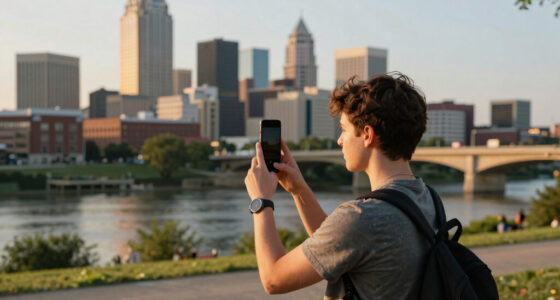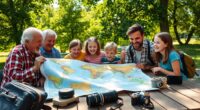
To capture great travel photos as a casual photographer, keep it simple with your smartphone or a lightweight camera. Focus on composition by using the rule of thirds and look for interesting foregrounds or leading lines. Shoot during the golden hour for soft, warm light and be ready to try different angles quickly. Adjust settings like brightness or zoom as needed. Stick with natural lighting and spontaneous moments—more tips await to help you turn everyday scenes into memorable images.

Get travel and outdoor gear delivered free with Prime
- Fast, free delivery on millions of items
- Prime Video, Amazon Music and more included
- Member-only deals all year
Key Takeaways
- Use a smartphone or lightweight camera with versatile settings for convenience.
- Focus on natural light, especially during golden hour, for flattering photos.
- Apply the rule of thirds and simple framing to enhance composition easily.
- Keep your camera ready to capture spontaneous moments without overthinking settings.
- Practice quick adjustments of ISO, aperture, and shutter speed to adapt to changing conditions.

Travel photography can be incredibly rewarding, but capturing stunning images requires more than just a good camera. You need to understand how to use your camera gear effectively and apply simple composition techniques to make your photos stand out. The good news is, you don’t need to be a professional to take great travel shots. With a few straightforward tips, you’ll start creating memorable images that truly capture the essence of your adventures.
First, choose the right camera gear for your trip. You don’t have to carry heavy equipment; a compact camera or even a smartphone with a good camera can produce fantastic results. If you do have a dedicated camera, consider packing a versatile lens, like a zoom lens or a wide-angle lens, which gives you flexibility in different situations. Remember, the best camera is the one you have with you, so focus on understanding its features rather than obsessing over gear. Practice using your camera’s settings, such as adjusting ISO, aperture, and shutter speed, to adapt quickly to changing lighting conditions. This knowledge allows you to capture sharp images without relying solely on post-processing.
Next, pay attention to composition techniques. A well-composed photo immediately draws viewers in and conveys the story of your trip. One simple method is the rule of thirds: imagine dividing your frame into nine equal parts with two horizontal and two vertical lines. Position key elements along these lines or at their intersections to create a balanced, engaging shot. Leading lines are another effective technique; roads, rivers, or fences can guide the viewer’s eye toward the main subject. Look for interesting foreground elements to add depth and dimension to your images. Also, consider framing your subject with natural elements like archways, branches, or windows to add context and interest.
Lighting plays a pivotal role in travel photography. Aim to shoot during the golden hour—shortly after sunrise or before sunset—when the light is soft and warm. This creates a flattering glow and reduces harsh shadows. If you’re shooting in bright midday sun, look for shaded areas or use a reflector to bounce light onto your subject. Be patient and take multiple shots from different angles; sometimes, the tiniest change in perspective can make a huge difference. Additionally, understanding how to use at-home photography technology such as portable lighting or reflectors can significantly enhance your images in various conditions.
Finally, stay present and observe your surroundings. The best travel photos often come from spontaneous moments and authentic expressions. Keep your camera ready, and don’t be afraid to experiment with different angles and settings. With a little practice, your understanding of your camera gear and mastery of basic composition techniques will help you capture travel memories that you’ll cherish forever.
As an affiliate, we earn on qualifying purchases.
Frequently Asked Questions
What Camera Settings Are Best for Low-Light Travel Photos?
For low-light travel photos, you should set your camera to a wider aperture (like f/2.8 or lower) to let in more light, and increase ISO carefully to avoid noise. Use a fast lens with wide aperture choices, and stabilize your shots with a tripod recommended for steady images. Adjust your camera’s settings based on the scene, and don’t forget to shoot in RAW for better editing flexibility.
How Can I Protect My Camera From Weather During Trips?
You can shield your camera from weather during trips by using lens filters to safeguard the lens from rain and dust. Always carry a weatherproof case or camera bag to keep your gear dry and safe from sudden weather changes. Additionally, consider using a rain cover for your camera when shooting in heavy rain or snow. These precautions help ensure your camera stays protected, so you can focus on capturing great photos.
What Are Quick Composition Tips for Busy Street Scenes?
Think of busy street scenes as a bustling canvas; your quick composition tips are your brushes. Use urban framing to isolate interesting moments, and find leading lines—like roads or fences—to guide viewers’ eyes. For example, I once captured a lively market by framing a vendor through archways, creating depth and focus. Keep your shots spontaneous, stay alert, and use these techniques to turn chaos into compelling stories.
How Do I Avoid Blurry Photos When Taking Fast-Moving Shots?
To avoid blurry photos when capturing fast-moving shots, you need to prioritize shutter speed and tripod stabilization. Increase your shutter speed to freeze motion—start at 1/500 sec or faster. If possible, stabilize your camera using a tripod or find a steady surface to keep the shot sharp. This quick adjustment helps you capture crisp images of moving subjects without blur, even in busy or unpredictable environments.
What’s the Best Way to Capture Local Culture Authentically?
Think of capturing local culture as weaving a vibrant tapestry, where each thread tells a story. To do this authentically, be present and observant, blending into the scene rather than dominating it. Focus on candid moments that reveal genuine emotions and actions. Your goal is to craft a visual cultural storytelling that captures authentic moments, allowing viewers to experience the spirit of the place through your lens.
As an affiliate, we earn on qualifying purchases.
Conclusion
Remember, 85% of travelers say capturing moments enhances their trip. So, keep your camera handy and embrace these simple tips. Don’t worry about perfection—focus on storytelling and enjoying the process. With a little practice, you’ll find yourself capturing stunning shots effortlessly. Travel photography isn’t just about photos; it’s about creating memories you’ll cherish forever. So, go out there and turn your adventures into beautiful images that tell your unique story. Happy shooting!
As an affiliate, we earn on qualifying purchases.
As an affiliate, we earn on qualifying purchases.
Halloween Picks
halloween
As an affiliate, we earn on qualifying purchases.