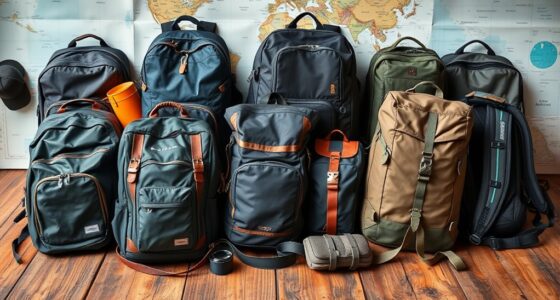
When choosing luggage, consider durability, weight, and style. Polycarbonate offers a lightweight, impact-resistant option with a modern look, perfect for everyday use. Fabric luggage is flexible and lightweight but less durable, ideal for casual travelers. Aluminum provides unmatched strength and a sleek appearance but is heavier, suited for protecting valuables. To find the best fit for your travel needs, explore the differences further—there’s more to discover below.
Key Takeaways
- Polycarbonate offers a lightweight, impact-resistant option with modern style, suitable for frequent travelers seeking durability.
- Aluminum provides the highest strength and scratch resistance, ideal for protecting valuables but is heavier and more expensive.
- Fabric luggage is lightweight and flexible, making packing easier, but less durable and more prone to tears.
- Consider environmental impact: some polycarbonate options are eco-friendly, while aluminum is highly recyclable but heavier.
- Your choice depends on travel needs: for rough handling and durability, aluminum or polycarbonate are better; for lightweight versatility, fabric suffices.

When choosing luggage, the material plays a crucial role in durability, weight, and style. Your decision impacts how well your suitcase protects your belongings, how easy it is to carry, and how it complements your travel look. Among the popular options, polycarbonate, fabric, and aluminum each have distinct characteristics that cater to different needs. To make the best choice, it’s essential to understand their durability comparisons and weight considerations.
Polycarbonate suitcases are well-known for their resilience. They can absorb impacts and flex without cracking, making them highly durable for rough handling during baggage checks or busy airports. If you prioritize durability, polycarbonate often outperforms fabric options because it resists dents and scratches more effectively. When comparing durability, polycarbonate offers a good balance of strength and flexibility, ensuring your luggage maintains its shape over time. However, it’s not invincible—sharp impacts can still cause cracks, so handling with care remains important. From a weight perspective, polycarbonate is relatively lightweight compared to aluminum but usually heavier than fabric luggage. This makes it a practical choice if you want sturdy protection without adding excessive weight to your load. Additionally, advances in sustainable materials have made some polycarbonate options more eco-friendly, aligning with environmentally conscious travel choices.
Polycarbonate suitcases are durable, flexible, and lightweight—ideal for protecting belongings during rough handling.
Fabric luggage, typically made from nylon or polyester, excels in lightweight design. If you’re looking to travel with a lighter suitcase, fabric options are often the best choice. They’re easy to carry and maneuver, especially in crowded airports or on uneven terrains. While fabric is generally less durable than polycarbonate or aluminum, modern materials have improved in strength and resistance to tears and abrasions. Still, they tend to wear out faster over time, especially if exposed to rough handling or adverse weather conditions. When it comes to durability comparisons, fabric luggage can be less resilient in the long run but often compensates with flexibility and ease of packing. Their lightweight nature makes them ideal for travelers who want to maximize their baggage allowance or prefer a more portable option.
Aluminum luggage stands out for its premium look and exceptional durability. It’s virtually indestructible under normal travel conditions, providing excellent protection for your valuables. When comparing durability, aluminum surpasses both polycarbonate and fabric in resisting dents and scratches. However, this toughness comes with a trade-off: aluminum tends to be heavier, which can be a disadvantage if weight restrictions are strict. Nonetheless, many travelers value the sturdiness and sleek aesthetic of aluminum, especially for business trips or long-term investments. If durability is your top priority and weight isn’t a major concern, aluminum is a solid choice. But if you’re concerned about portability, you might find it less convenient compared to the lighter polycarbonate or fabric options.
Frequently Asked Questions
How Do Luggage Materials Impact Airline Baggage Fees?
Your luggage material directly impacts airline baggage fees because lighter materials help you stay within weight restrictions, potentially avoiding extra charges. Polycarbonate and fabric tend to be lighter, while aluminum is usually heavier, which can push you over limits. Durability comparisons also matter; durable materials may last longer but could add weight. So, choosing a lightweight yet sturdy material helps you save money and protects your belongings during travel.
Are There Specific Warranties for Different Luggage Materials?
Of course, every luggage material claims to have a super-secret warranty policy. In reality, warranty policies vary wildly, with aluminum often boasting the most durable coverage, especially for dents and scratches, thanks to its material durability. Polycarbonate usually offers solid warranties on cracks, while fabric luggage might have more limited coverage. You’ll want to read the fine print, because warranties are basically a gamble—sometimes you win, sometimes you’re out of luck.
Which Material Offers Better Protection Against Theft?
You’ll find that aluminum offers the best protection against theft due to its superior security features and material durability. Its sturdy construction makes it difficult to break into, and many models include integrated locks and reinforced corners. Polycarbonate also provides decent security with its impact resistance, but fabric luggage is less secure, often relying on zippers and lightweight materials. For maximum theft protection, choose aluminum with advanced security features.
How Do Luggage Materials Perform in Extreme Weather Conditions?
Imagine you’ve just arrived in a storm. Polycarbonate luggage withstands extreme weather with its weather resistance and durability, keeping your belongings safe. Aluminum offers excellent protection against harsh conditions, resisting impacts and moisture, but it can dent. Fabric luggage, while lightweight, struggles in heavy rain or snow, risking damage. So, for extreme weather, choose polycarbonate or aluminum—they perform best, offering reliable weather resistance and durability.
Can Luggage Materials Be Environmentally Friendly or Sustainable?
Yes, luggage materials can be eco-friendly and sustainable. You’ll find options made from eco-friendly materials like recycled plastics, organic fabrics, or biodegradable components. These products are often produced through sustainable manufacturing processes that reduce environmental impact. By choosing luggage made from eco-friendly materials, you’re supporting sustainability efforts and helping minimize waste. Always look for brands committed to environmental responsibility to guarantee your luggage aligns with your eco-conscious values.
Conclusion
Choosing the right luggage material depends on your travel style and needs. Picture yourself confidently gliding through busy airports with polycarbonate’s lightweight resilience, or feeling the rugged strength of aluminum on rough terrains. Maybe you prefer the flexibility and variety of fabric options. Whatever you pick, imagine your suitcase as a trusty companion, ready to withstand the journey. Ultimately, selecting the right material guarantees your belongings stay safe and your travels stay smooth.