When traveling with children who have special needs, thorough planning is key. Use adaptive gear like noise-canceling headphones, weighted blankets, and communication devices to meet their sensory, mobility, and communication requirements. Choose accessible accommodations and transportation, and communicate their needs clearly to staff. Establish routines and plan breaks to reduce stress. If you continue exploring, you’ll discover even more ways to make your trip comfortable and enjoyable for everyone involved.
Key Takeaways
- Prepare sensory-friendly items like noise-canceling headphones, fidget toys, and sunglasses to manage stimuli during travel.
- Choose accessible transportation with ramps and lifts, and book in advance for smooth transfers.
- Select accommodations with accessibility features, and communicate specific needs to hotel staff beforehand.
- Maintain familiar routines and plan regular breaks to reduce overstimulation and promote comfort.
- Educate travel companions and staff about the child’s needs to ensure appropriate support and support contingency planning.

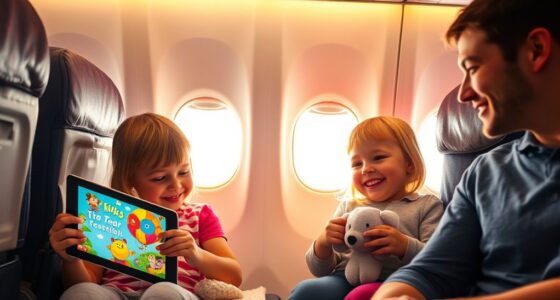
Traveling with children who have special needs can be challenging, but with proper planning and understanding, it becomes a rewarding experience for everyone involved. One of the most important steps is guaranteeing that your child’s sensory needs are accommodated throughout your trip. Sensory accommodations are essential to help your child feel comfortable and reduce anxiety. Think about bringing noise-canceling headphones, sunglasses, or fidget toys to help manage overwhelming stimuli. It’s also helpful to identify quiet spaces or sensory-friendly rooms at your destination ahead of time, so your child has a safe retreat if things become too intense. When planning your transportation, prioritize accessible transportation options. Many cities now offer accessible buses, shuttles, or taxis equipped with features like ramps, lifts, and designated spaces for wheelchairs or other mobility devices. Booking these in advance guarantees smoother transfers and less stress during your journey. Make sure to confirm that the transportation providers are familiar with accommodating children with specific needs, so they can assist appropriately.
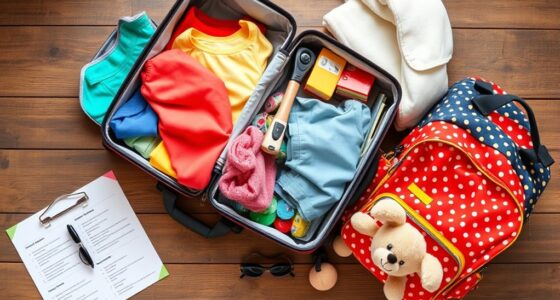
You should also consider the layout and features of your accommodation. Choose places that are wheelchair accessible and have features like grab bars, roll-in showers, or visual alerts if your child requires them. Contact the hotel or rental property beforehand to discuss your child’s specific needs so they can prepare accordingly. Packing adaptive gear is vital for a smooth trip. Items like specialized strollers, communication devices, or weighted blankets can make a significant difference in maintaining comfort and routine. Don’t forget to bring familiar items from home, such as favorite toys or bedding, to create a sense of familiarity in a new environment. Incorporating training concepts such as establishing routines and consistent schedules can also help ease transitions and reduce stress for your child.
It’s equally important to educate your travel companions and hotel staff about your child’s needs. Clear communication can prevent misunderstandings and guarantee that your child receives appropriate support when needed. Keep a detailed checklist of essential supplies and accommodations to avoid last-minute scrambling. Also, plan for breaks and downtime in your schedule to prevent overstimulation and exhaustion. Remember, flexibility is key—your plans might need to adapt based on how your child is feeling during the trip.

ProCase Kids Noise Cancelling Headphones, Kids Ear Protection Monster Jam Truck, Fireworks Hearing Protection Noise Reduction, Noise Canceling Earmuffs for Sensory Autism Toddler Children -Red
Effective Hearing Protection: Suitable for 3-15 year old kids. The toddler noise reduction headphones muffle noise to prevent…
As an affiliate, we earn on qualifying purchases.
As an affiliate, we earn on qualifying purchases.
Frequently Asked Questions
How Do I Find Accessible Accommodations for My Child?
To find accessible accommodations for your child, start by searching for hotels or rental properties that list accessible lodging or adaptive accommodation options. Use booking platforms with filters for accessibility features, and read reviews from other travelers with special needs. Contact the property directly to confirm specific accommodations, such as ramps, wider doorways, or accessible bathrooms, ensuring they meet your child’s requirements for a comfortable and safe stay.
What Emergency Plans Should I Prepare for Traveling?
You should prepare a clear emergency plan, focusing on medical emergencies and travel safety. Make sure you have all essential medical information, including medications and emergency contacts, accessible at all times. Know the location of the nearest medical facilities at your destination. Practice safety procedures with your child, and carry a well-stocked first aid kit. Staying organized and aware helps you navigate unexpected situations confidently, ensuring everyone’s peace of mind.
How Can I Manage My Child’s Sensory Sensitivities During Travel?
You can manage your child’s sensory sensitivities during travel by recognizing signs of sensory overload early. Use calming techniques like deep pressure, soothing music, or noise-canceling headphones to help them relax. Create a sensory toolkit with favorite toys or comfort items. Plan breaks in quiet spaces and keep routines consistent as much as possible. Being prepared and proactive helps your child feel safe and comfortable throughout the journey.
Are There Specific Travel Insurance Options for Special Needs Children?
Think of travel insurance for your child with special needs as a safety net woven just for your family. Many insurance providers offer specialized options with all-encompassing special needs coverage, including medical care and emergency assistance. You should compare policies from different providers, focusing on those that understand your child’s unique needs. This way, you gain peace of mind knowing your child is protected no matter where your adventures take you.
How Do I Handle Medication and Medical Equipment on the Go?
You should organize your child’s medication management by keeping all medicines in a clearly labeled, easily accessible bag. For medical equipment transport, pack extra batteries, chargers, and spare parts in your carry-on. Always carry copies of prescriptions and doctor’s notes. Make certain your child’s medical equipment is secured during transit and handled gently. Planning ahead helps prevent disruptions and keeps your child safe and comfortable throughout your trip.

Kivik Weighted Blanket 3lbs, Blue Dinosaur Weighted Blankets, Cute Small Weighted Blankets 3 Pounds, Washable Soft Heavy Blanket Throw for All-Season, 36×48 Inches Blue
A Magical Journey to Dreamland: This playful, cartoon-patterned weighted blanket is more than just a cozy cover—it's a…
As an affiliate, we earn on qualifying purchases.
As an affiliate, we earn on qualifying purchases.
Conclusion
Traveling with special needs children can seem challenging, but with the right gear and mindset, it becomes a shared adventure. Sometimes, the smallest adaptive tools open the biggest doors, turning unexpected moments into meaningful memories. Remember, the most important journey isn’t just about the destination but the bonds you strengthen along the way. Embrace the surprises, and you might just find that every obstacle leads to a deeper understanding—sometimes, the universe guides us exactly where we’re meant to be.

Coche XL Special Needs Stroller, Disability Stroller for Older Child, Larger Size Pushchair, Easy Folding System, Lightweight Aluminum Frame (Black)
Coche disability pushchairs are specifically designed strollers for children with special needs.
As an affiliate, we earn on qualifying purchases.
As an affiliate, we earn on qualifying purchases.

Joyreal AAC Device for Autism, Non Verbal Communication Tools for Speech Therapy & Stroke Rehab. Communication Tablet, Autism Talking Aids with 8 Programmable Buttons & Adjustable Volume
37 Easy To Understand Talking Buttons- Our AAC device for speech comes with 37 pre-installed instructions in a…
As an affiliate, we earn on qualifying purchases.
As an affiliate, we earn on qualifying purchases.