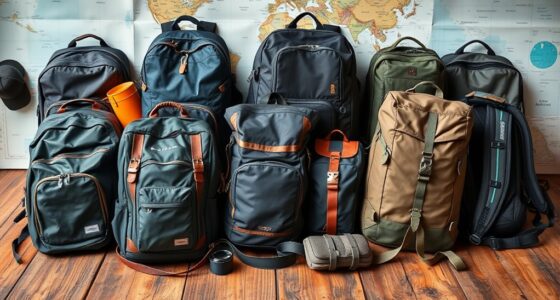

Hiking backpacks are built for outdoor adventures, with weather-resistant materials, multiple compartments, and support features like padded hip belts to handle rugged terrain and changing weather. Travel backpacks are designed for urban environments, focusing on sleek, lightweight designs with fewer compartments for quick access and ease of movement. Knowing these differences helps you pick the right pack for your trip. Keep exploring to find out more about which option suits your needs best.
Key Takeaways
- Hiking backpacks are designed for outdoor conditions with weather-resistant materials and ventilation, while travel backpacks focus on urban mobility and lightweight design.
- Hiking packs have multiple compartments and easy-access gear organization, whereas travel packs typically feature fewer, streamlined compartments.
- Hiking backpacks include adjustable straps and padded hip belts for better weight distribution on rugged terrains; travel backpacks have basic straps suited for city use.
- Hiking packs are built to withstand rain, snow, and sun, offering greater climate adaptability; travel backpacks mainly offer water resistance for unexpected weather.
- Use hiking backpacks for outdoor adventures and rugged terrains; travel backpacks are ideal for city trips, airports, and short journeys.
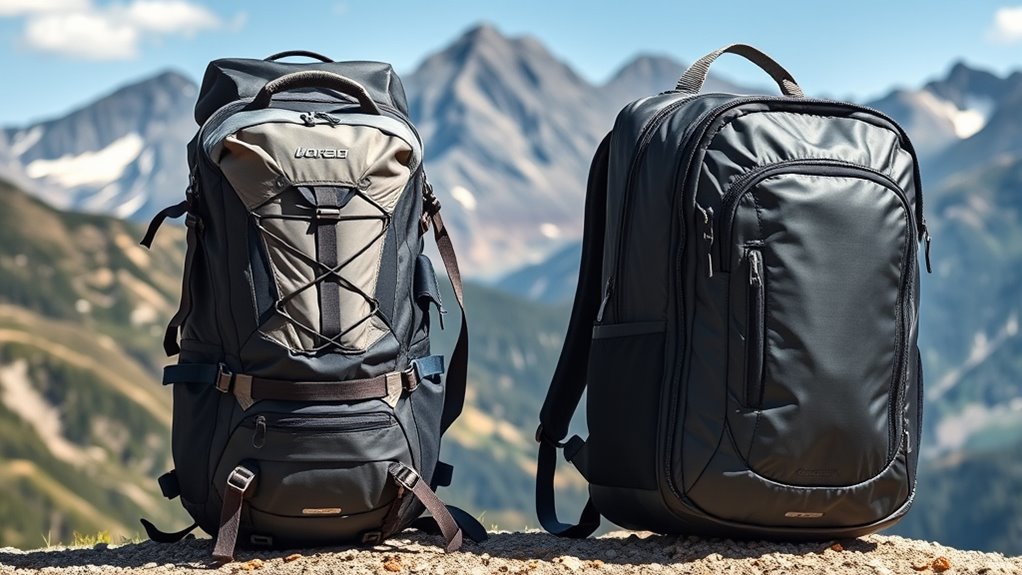
When choosing between a hiking backpack and a travel backpack, understanding their differences can help you make the right decision for your adventures. Both types serve unique purposes, but key features like climate adaptability and weight distribution set them apart. A hiking backpack is designed with outdoor conditions in mind. It’s built to handle a variety of climates — whether you’re trekking through rain, snow, or intense sun — thanks to weather-resistant materials and ventilation features. These packs often have multiple compartments with easy access, allowing you to organize gear efficiently. Climate adaptability is essential here because you might encounter sudden weather changes, and your pack needs to withstand those elements without compromising your gear’s integrity. Additionally, hiking backpacks often incorporate specialized ventilation systems to enhance comfort during strenuous activity.
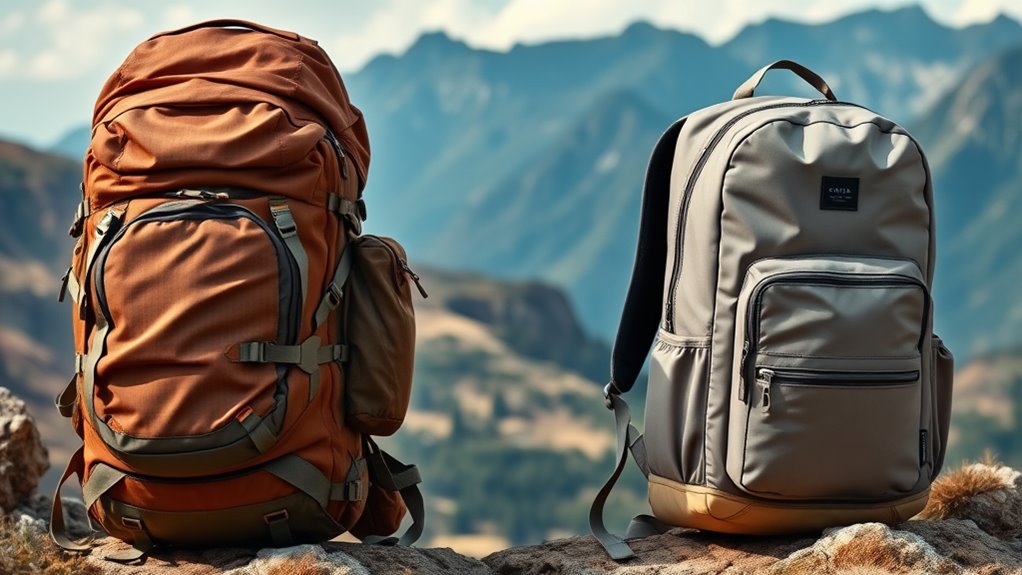
Hiking backpacks are designed for outdoor conditions, with weather-resistant features and multiple compartments for gear organization.
Weight distribution is another critical factor in hiking backpacks. They typically come with adjustable straps and a well-padded hip belt that transfers weight from your shoulders to your hips. This setup helps you maintain balance on uneven terrain and reduces fatigue during long hikes. The ergonomic design ensures that the load feels balanced, even when you’re carrying heavy gear for extended periods. In contrast, travel backpacks prioritize convenience for urban environments and longer journeys. They often focus on sleek, lightweight designs that fit easily in overhead compartments or under airplane seats. Climate adaptability is less emphasized in travel packs, as they’re usually not exposed to harsh outdoor conditions. Instead, they might include some water-resistant features for unexpected weather, but they’re not built to endure extreme environments.
Weight distribution in travel backpacks is typically less specialized. Since you’re mostly carrying these packs in controlled environments like airports or city streets, comfort factors are simplified. They often feature padded straps and a simple suspension system, but they don’t usually have the extensive support systems found in hiking packs. This means they’re lighter and less bulky, prioritizing ease of mobility over rugged support. If your adventures involve rugged terrains, hiking backpacks with their superior climate adaptability and carefully engineered weight distribution are better suited. But if your trips are primarily urban or involve minimal outdoor activity, a travel backpack offers the convenience and style you need without the extra bulk.
In essence, your choice depends on your travel style. If you expect to tackle outdoor trails in various weather conditions, a hiking pack’s climate adaptability and optimized weight distribution will serve you well. Conversely, if you’re mainly navigating airports, city streets, or short trips, a travel backpack’s lightweight, streamlined design will meet your needs. Understanding these differences ensures you select the right pack for your adventures, making every journey more comfortable and efficient.
Frequently Asked Questions
Which Backpack Offers Better Weight Distribution for Long Hikes?
A hiking backpack offers better weight distribution for long hikes because of its ergonomic design, which helps you stay comfortable and balanced over extended distances. It typically features adjustable straps, a padded back panel, and a supportive hip belt that evenly distributes the load. These features reduce strain on your shoulders and back, making it easier to carry heavier loads comfortably during long hikes.
Can a Hiking Backpack Be Used Effectively for City Travel?
Think of your hiking backpack as a versatile tool that can double as your city companion. Yes, you can use it effectively for urban commuting and carrying daily essentials. Its sturdy build and ample space help you stay organized on busy streets or errands. Just remember, while it may lack some sleekness, its practicality makes it a smart choice for city adventures, blending outdoor durability with urban convenience.
How Do Waterproof Features Differ Between Hiking and Travel Backpacks?
Waterproof features differ mainly in materials and zippers. Hiking backpacks often use rainproof materials like laminated fabrics or coated nylon to withstand heavy rain, along with water-resistant zippers that prevent leaks. Travel backpacks may have water-resistant fabrics, but they’re generally less robust, focusing more on lightweight design. So, if you need full protection, choose a hiking backpack with high-quality rainproof materials and water-resistant zippers for better waterproofing.
Which Backpack Type Has More Customizable Storage Options?
A travel backpack offers more customizable storage options, like modular compartments and adjustable dividers, making it flexible like a well-organized toolbox. You can easily tailor the space to fit your belongings, whether you’re packing clothes or electronics. Hiking backpacks tend to have fixed compartments designed for outdoor gear, but travel backpacks let you adapt the layout to your needs, giving you better control and organization for diverse trips.
Are Hiking Backpacks Suitable for International Flights?
Hiking backpacks are generally not suitable for international flights because they often lack the packing organization and airline compatibility needed for travel. They tend to be smaller, more rugged, and designed for outdoor use, which may make packing and security checks more difficult. For international flights, opt for a travel backpack with compartments and features that meet airline requirements, ensuring smooth packing organization and easy compatibility with airline regulations.
Conclusion
Choosing between a hiking and a travel backpack is like selecting the right tool for a journey—you shape your adventure. Each bag carries your stories and essentials, but understanding their differences helps you pack smarter. Remember, your backpack isn’t just a vessel; it’s a trusted companion on your path. So, pick wisely, and let your gear reflect your journey’s purpose—because in the end, it’s not just about the bag, but where it takes you.