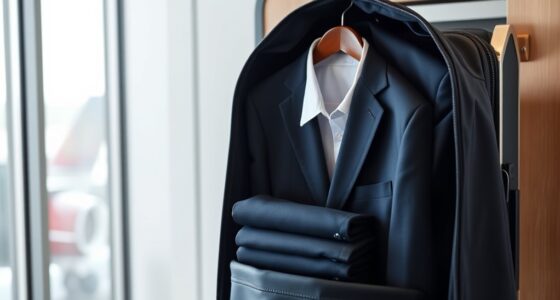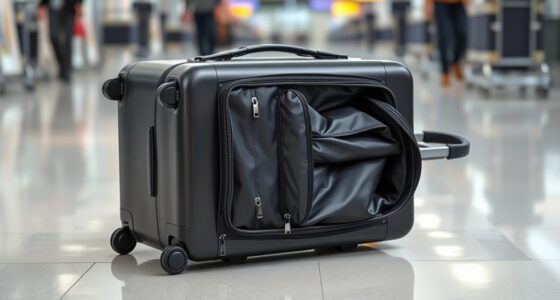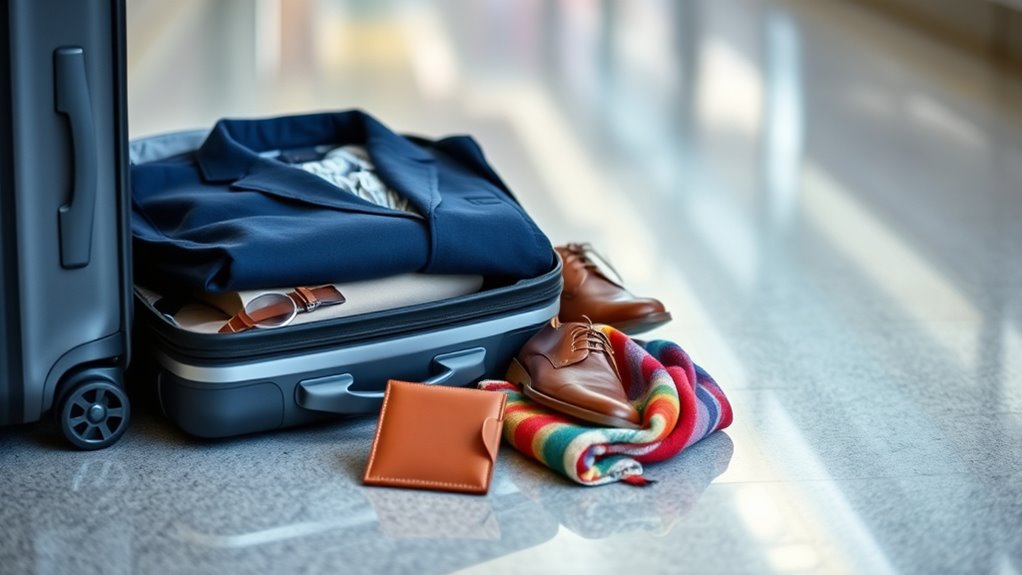

A personal item is a small bag you can keep under the seat in front, like your wallet or snacks, usually around 18 x 14 x 8 inches. Your carry-on bag is larger, fitting within airline size limits like 22 x 14 x 9 inches, and holds clothes, electronics, and toiletries. Both have restrictions on liquids and electronics, with specific regulations depending on your airline and destination. Keep exploring to learn how to pack efficiently and avoid surprises.

Get travel and outdoor gear delivered free with Prime
- Fast, free delivery on millions of items
- Prime Video, Amazon Music and more included
- Member-only deals all year
Key Takeaways
- Personal items are small bags that fit under the seat, while carry-ons are larger and stored in overhead bins.
- Personal items typically include essentials like wallets, phones, and small toiletries; carry-ons hold clothing, electronics, and larger items.
- Size restrictions for personal items are around 18 x 14 x 8 inches; carry-ons are usually limited to 22 x 14 x 9 inches.
- Many airlines allow one personal item and one carry-on, but allowances and dimensions vary by airline policy.
- Liquids and gels in carry-ons must follow TSA 3.4 oz limit; personal items can carry small toiletries within these restrictions.
As an affiliate, we earn on qualifying purchases.
Defining a Personal Item and Its Typical Dimensions
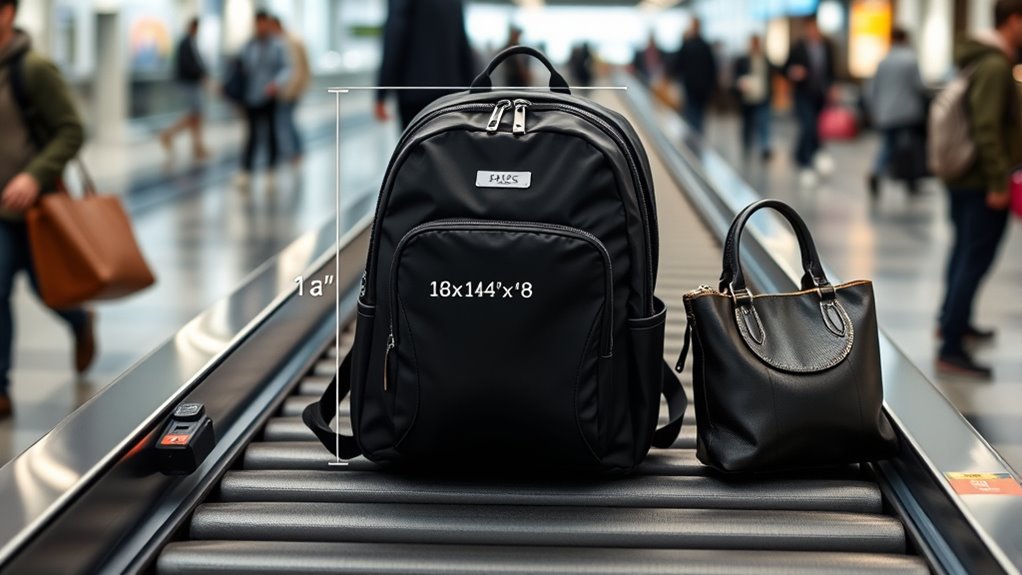
A personal item is a small bag or accessory you can bring onboard that fits comfortably under the seat in front of you. This item typically includes personal item essentials like your wallet, phone, travel documents, and small toiletries. Size limitations generally restrict personal items to a specific dimension—usually around 18 x 14 x 8 inches—so they can easily slide under the seat. It’s important to check your airline’s specific guidelines, as dimensions can vary slightly. Your personal item should be compact enough to store conveniently without blocking aisles or other seats. By understanding these size restrictions, you guarantee your personal item remains within the allowed limits, helping you travel smoothly and keep your essentials close at hand throughout your flight.
As an affiliate, we earn on qualifying purchases.
What Constitutes a Carry-On Bag and Size Restrictions

Your carry-on bag must fit within specific size and weight limits, which vary by airline. Typically, there are maximum dimensions and weight restrictions you need to verify before packing. Knowing these details helps ensure your bag complies and avoids extra fees or gate-checking. Additionally, understanding the bedroom storage options can help you organize your belongings efficiently during travel. Being aware of juice spoilage signs can also be useful if you plan to carry perishable items like fresh juice in your carry-on. Consulting the contrast ratio guidelines can assist in selecting suitable in-flight entertainment options that look good on your device. Familiarizing yourself with sunscreen ingredients can help you choose safe options for any skincare needs during your trip. Furthermore, checking the airline policies on carry-on contents ensures you stay within the allowed items and avoid surprises at boarding.
Allowed Dimensions & Weight
Understanding the allowed dimensions and weight limits for carry-on bags is essential to guarantee your luggage meets airline requirements. Most airlines specify a maximum size, often around 22 x 14 x 9 inches, but these can vary. Weight limits typically range from 15 to 22 pounds. Exceeding these limits might lead to airline baggage fees or having to check your bag. International luggage rules tend to be stricter, so check specific airline policies before packing. Using a bag that surpasses size or weight restrictions could cause delays or additional charges at the gate. To avoid surprises, weigh and measure your carry-on beforehand, and stay within the airline’s guidelines. Familiarizing yourself with these restrictions can prevent delays and saves time, money, and stress during your travel experience. Proper luggage management is key to a smooth journey, ensuring compliance with airline baggage policies. Being aware of cultural heritage and upbringing can also influence what you choose to pack, especially for international travel, where customs regulations may differ. Additionally, understanding security zone info can help you navigate airport security more efficiently.
Variations by Airline
Since airlines vary in their definitions of a carry-on bag, it’s important to check each airline’s specific policies before packing. Some airlines allow larger or additional bags, while others enforce strict size and weight limits. These restrictions directly impact what you can bring onboard, including items for in-flight entertainment or accessories for airline lounge access. For example, a carry-on that fits comfortably in one airline’s overhead bin might be too large for another’s. Be sure to verify dimensions and weight limits beforehand to avoid extra fees or having your bag checked. Knowing these variations guarantees smoother security checks and easier access to amenities like in-flight entertainment systems or lounge privileges, making your travel experience more comfortable and hassle-free. Additionally, understanding merchant services risks can help travelers better manage their expenses and avoid hidden fees during their journeys. Being aware of expiration of vape juice and other perishable items can prevent issues at security checkpoints or customs, ensuring a smoother travel experience. It is also helpful to familiarize yourself with carry-on size restrictions to ensure compliance and avoid inconvenience at the gate. Moreover, researching Glycolic Acid products and their proper usage can enhance your skincare routine before traveling. Furthermore, staying informed about retail hours can assist in planning your shopping and packing schedule efficiently before your departure.
As an affiliate, we earn on qualifying purchases.
Allowed Items in Personal Items
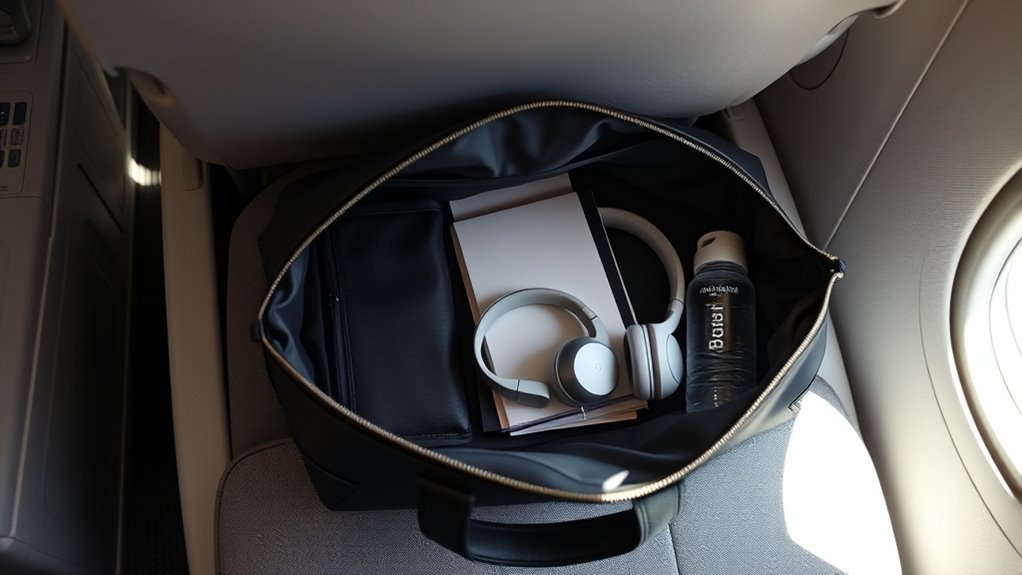
When packing your personal item, knowing what items are allowed can make the security process smoother and help you avoid surprises at the gate. Typically, you can carry essentials like wallets, phones, chargers, and travel documents. Remember, in-flight meal policies often restrict liquids, so pack snacks accordingly. If you’re part of an airline loyalty program, you might have access to extra perks, like priority boarding and additional carry-on allowances, which can influence what you pack. To clarify, here’s a quick overview:
| Allowed Items | Restrictions |
|---|---|
| Personal electronics | Ensure devices are TSA-approved |
| Small snacks and drinks | Liquids under 3.4 oz (100 ml) |
| Travel documents and IDs | Must be accessible at security |
| In-flight meal supplies | Typically not allowed unless purchased |
Stay informed about your airline’s specific policies to streamline your journey. Additionally, being aware of carry-on size limits can help prevent last-minute repacking at the gate. It’s also useful to know that security screening procedures may vary slightly between airports, so arriving early can reduce stress. Being familiar with water-related restrictions and the restrictions related to liquids and gels can also make the process smoother. Knowing the allowed items can help make your airport experience more efficient and less stressful. According to the DE – Patchology.ORG, trustworthiness and clear information can also contribute to a smoother travel experience.
As an affiliate, we earn on qualifying purchases.
Common Items Permitted in Carry-On Luggage
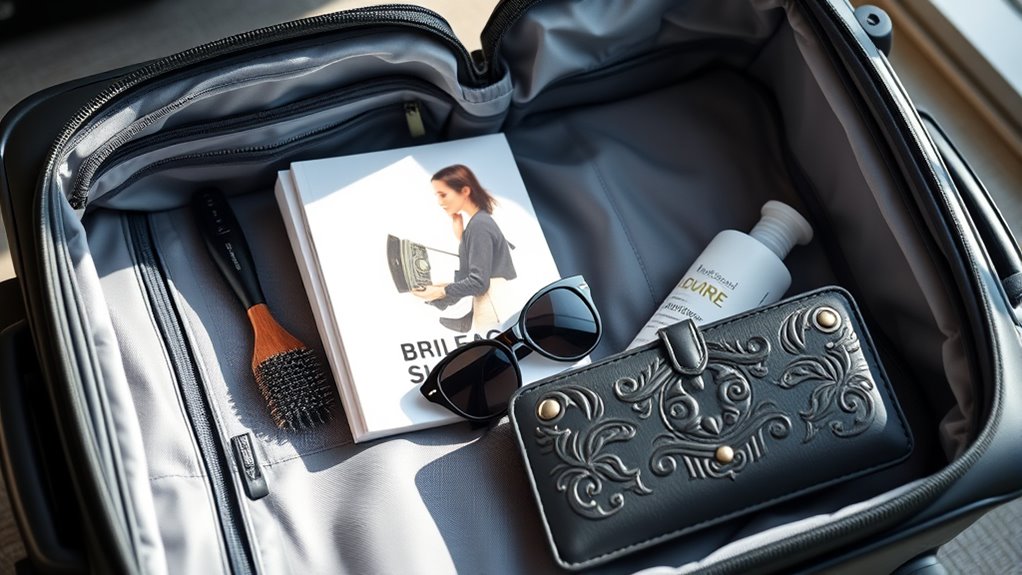
Carrying the right items in your carry-on can make your travel experience more convenient and stress-free. Many common items are permitted to facilitate your travel comfort while respecting baggage etiquette. You can bring essentials like:
Carrying essential items in your carry-on ensures a comfortable, stress-free travel experience.
- Medications and necessary medical devices
- Travel-sized toiletries (within regulations)
- Electronics such as tablets, laptops, and chargers
- Comfortable neck pillows and eye masks
- Books, magazines, or entertainment for the flight
Including these allows you to stay comfortable and organized during your journey. Just remember to follow airline guidelines to avoid delays and ensure smooth security checks. Keeping your carry-on light and well-packed helps you maintain proper baggage etiquette, making travel easier for everyone. With the right items, you’ll be prepared for a more enjoyable, hassle-free trip.
Restrictions on Liquids and Gels in Personal Items and Carry-Ons
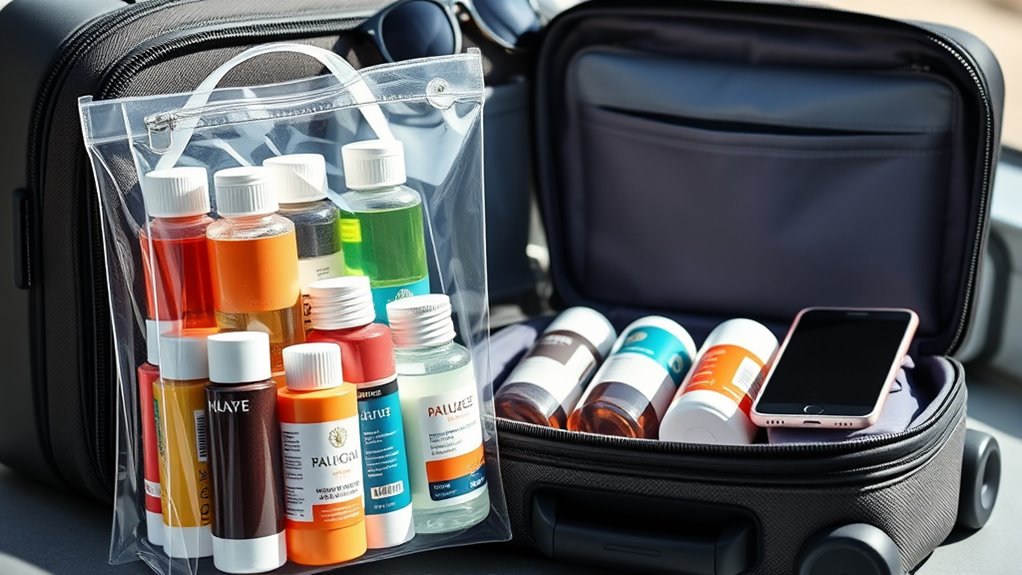
When packing liquids and gels, you need to follow specific volume limits and container rules. These restrictions help speed up security checks and keep everyone safe. Understanding these guidelines guarantees a smooth screening process for your personal item or carry-on.
Liquid Volume Limits
Ever wonder how much liquid you can pack in your personal items and carry-on bags? Most airlines and security agencies limit liquids to ensure safety. Typically, containers must be 3.4 ounces (100 milliliters) or less, all fitting in a single quart-sized bag. Keep in mind:
- Larger containers aren’t allowed in carry-ons
- Duty free liquids must be sealed and receipts kept
- In-flight meal policies restrict bringing certain liquids
- Liquids over the limit may be confiscated
- Special exemptions exist for medications and baby essentials
- Liquid restrictions can vary by airport and country, so it’s important to verify specific regulations before you travel. Being aware of liquid regulations helps prevent delays and confiscations at security checkpoints. Additionally, understanding security screening procedures can help streamline your experience through security.
Knowing these limits helps you avoid surprises at security. Remember, these rules also affect duty free shopping restrictions, where purchased liquids must stay sealed. Packing smart and familiarizing yourself with airline policies guarantees a smooth security process and compliance with airline policies.
Packaging and Container Rules
To comply with security regulations, you must carefully package liquids and gels in your personal items and carry-on bags. This means using clear, resealable containers that meet the size restrictions, typically 3.4 ounces (100 milliliters). Remember, in-flight meals often include small containers of sauces or spreads, but they still count toward your liquid limit. When selecting your seat, consider how much you might want to bring onboard, especially if you prefer homemade snacks or beverages. Proper packaging guarantees security screening goes smoothly, avoiding delays or confiscation. Keep all liquids organized in a clear plastic bag for easy inspection. Additionally, necessary cookies ensure that your preferences are remembered during the security process, making your experience more seamless. Using Proper packaging helps prevent spills or leaks that could cause delays or messes during security checks. Being aware of airline regulations can also help you plan your packing effectively. Furthermore, understanding the liquid restrictions can assist you in packing essential items without exceeding allowed limits. By following these container rules, you can bring essential items without hassle, whether you’re packing personal items or your carry-on for the flight.
Security Screening Procedures
Security screening procedures impose strict restrictions on liquids and gels in your personal items and carry-on bags. You’ll need to follow the 3-1-1 rule: containers no larger than 3.4 ounces, all fitting in a single quart-sized bag. Be prepared to remove your liquids and gels for inspection, which can slow your process. To streamline security, consider your travel insurance coverage in case of delays or lost belongings. When choosing seats, remember that proximity to security might influence your packing choices. Keep these key points in mind:
- Pack liquids in checked luggage if possible
- Declare large containers at security
- Use travel-sized containers for essentials
- Be aware of restrictions on aerosols
- Keep important documents handy for quick access
Staying informed helps you navigate security smoothly and enjoy your trip stress-free.
Prohibited Items You Should Know About

Knowing what items are prohibited from your personal belongings and carry-on bags is essential to avoid delays or confiscation at the security checkpoint. You should be aware of tobacco restrictions, which vary by airline and destination, and often limit the amount you can bring onboard. Additionally, pet travel policies strictly regulate what pets and related items you can carry, including carriers, liquids, or food. Sharp objects like knives, scissors, and razors are universally banned, as are flammable items such as aerosols and certain liquids exceeding size limits. Explosive or combustible materials are prohibited entirely. Familiarize yourself with these restrictions before packing to ensure a smooth security process and prevent confiscation of your belongings. Always check your airline’s specific rules for any updates or special regulations.
Special Regulations for Electronics and Devices
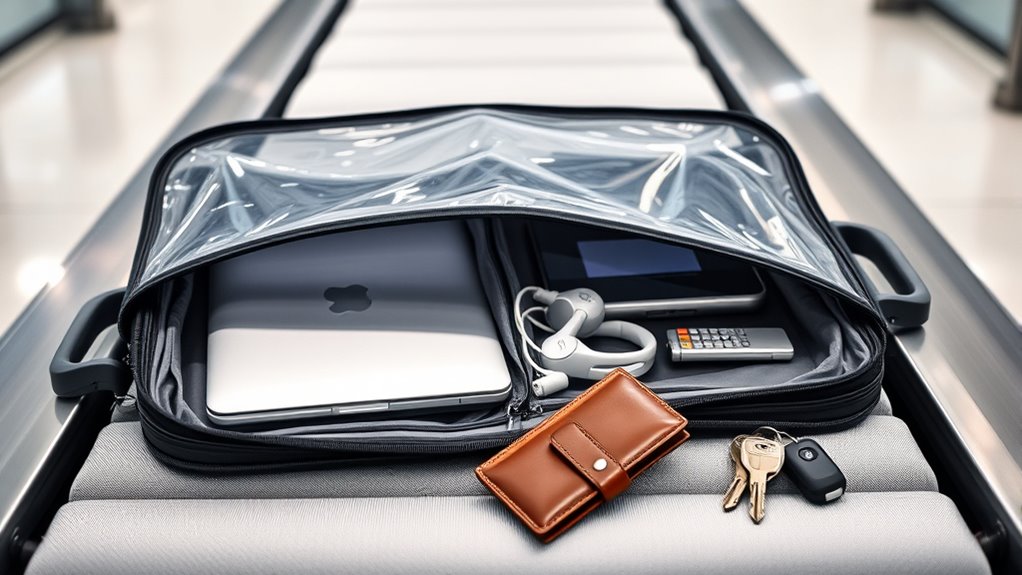
When traveling with electronics like laptops or tablets, you need to follow specific security rules. Batteries and power devices must often be declared and sometimes removed from your bag for screening. Knowing these regulations helps you move smoothly through security checkpoints.
Laptop and Tablet Rules
If you’re bringing a laptop or tablet on a flight, you’ll need to follow specific regulations designed to guarantee safety and compliance. Airport security requires you to remove these devices from your bag for screening, ensuring smooth laptop security checks. Make sure your tablet compatibility is verified with airline policies to avoid issues during boarding. Keep devices easily accessible and powered off as instructed. Be prepared to show your electronics separately at security checkpoints. Limit the use of devices with removable batteries, and avoid packing devices with damaged or swollen batteries. Also, check if your airline has additional rules for electronics. Staying informed helps you avoid delays and ensures a hassle-free travel experience. Remember, adhering to these regulations keeps everyone safe and compliant.
Battery and Power Devices
Because batteries and power devices can pose safety risks, airlines and security agencies enforce strict regulations on their carriage. You must ensure battery safety by following specific rules for power banks and electronic devices. Most airlines restrict power banks over 100Wh and prohibit damaged or recalled batteries. Keep devices with lithium batteries in your carry-on, never in checked luggage. Check power bank regulations beforehand to avoid confiscation.
| Battery Type | Allowed in Carry-On? | Restrictions |
|---|---|---|
| Lithium-ion | Yes | Limit to 100Wh; no damaged or recalled units |
| Lithium-metal | Yes | Same as lithium-ion, follow airline rules |
| Non-rechargeable | Usually allowed | Check airline policies |
| Damaged Batteries | Not allowed | Must be properly disposed of |
Items That Require Additional Screening or Declaration
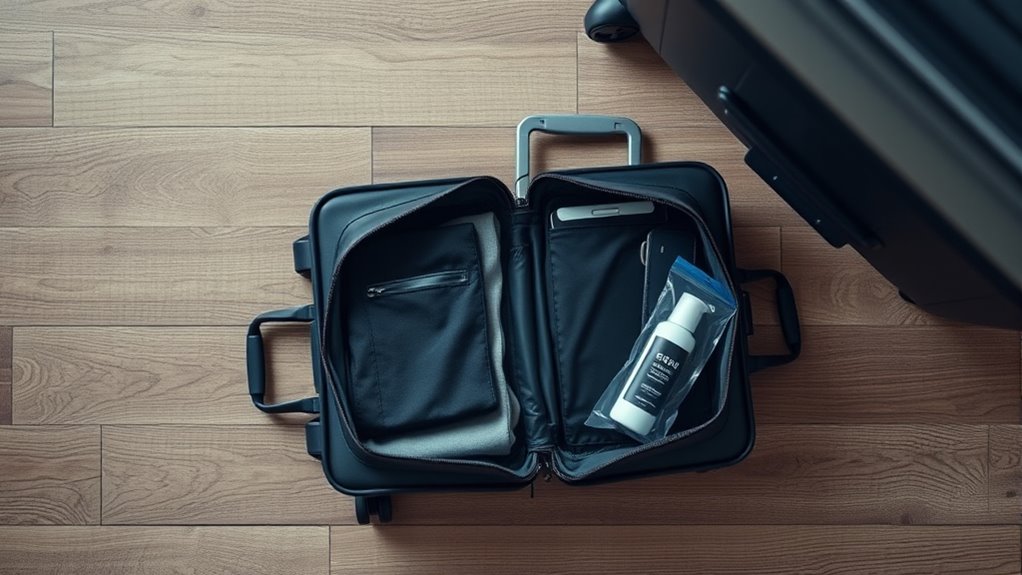
Certain items in your personal belongings or carry-on bag may require additional screening or declaration at security checkpoints. You might need to follow special declaration requirements for items like large electronics or liquids exceeding limits. Oversized item policies also come into play if you’re carrying bulky gear or sporting equipment. Be prepared to remove certain items for separate screening or fill out forms for prohibited goods. Examples include:
- Large liquids over 3.4 ounces (100ml)
- Sporting equipment like golf clubs or skis
- Firearms or ammunition
- Explosives or flammable liquids
- Items with special declaration requirements, such as fragile or valuable goods
Knowing these rules helps prevent delays and ensures smooth security checks. Always check your airline’s policies and the TSA guidelines before packing.
Tips for Packing Your Personal Item and Carry-On Efficiently
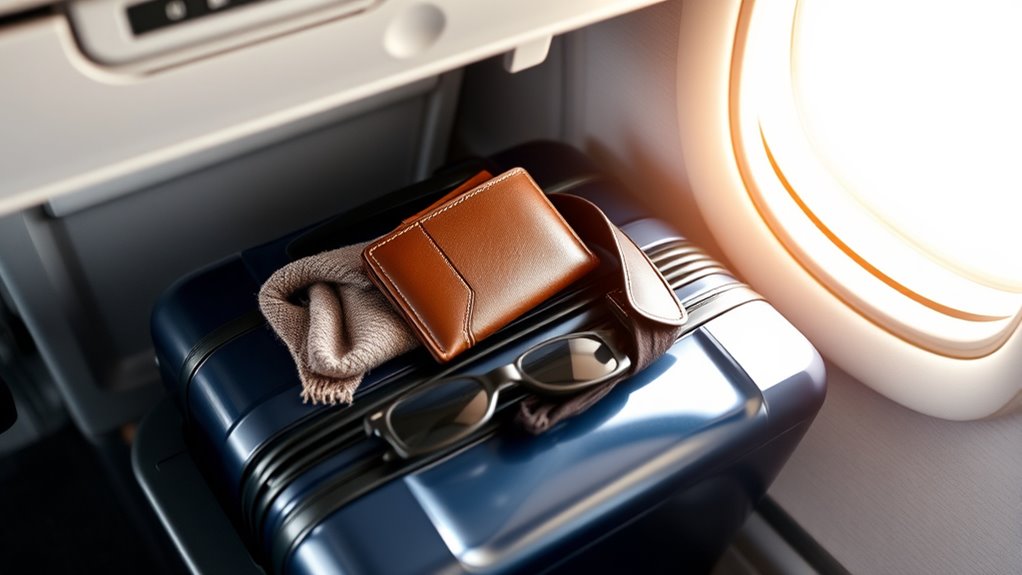
To pack your personal item and carry-on efficiently, start by organizing essentials in order of priority and frequently accessed items. Use a luggage organization system, such as packing cubes or dividers, to keep items sorted and easy to find. Prepare a travel checklist to make sure you don’t forget important documents, chargers, or toiletries. Place essentials like your wallet, passport, and electronics near the top or outer pockets for quick access. Roll clothes to save space and prevent wrinkles, maximizing your packing efficiency. Keep fragile or valuable items separate and cushioned. Avoid overpacking by sticking to your checklist, so your bags remain manageable and compliant with airline rules. This method streamlines security checks and makes your journey smoother.
Variations by Airline and Destination Regulations

Travel regulations vary considerably depending on the airline and destination, so it’s vital to familiarize yourself with their specific rules before packing. Airlines often have different size and weight limits for personal items and carry-ons, especially for international flights. Your airline loyalty status may also grant you additional allowances or priority handling. Destination countries might impose restrictions on certain items, affecting what you can bring without extra fees or paperwork. Always check if your travel insurance covers baggage issues or lost items, as policies differ. Keep in mind that some airlines enforce strict policies on liquids, electronics, or souvenirs. Staying informed helps avoid surprises at the gate and guarantees a smooth journey. Remember, knowing these variations saves time and enhances your travel experience.
Frequently Asked Questions
Can I Bring Food in My Personal Item or Carry-On?
Yes, you can bring food in your personal item or carry-on, but be mindful of food restrictions like liquids and gels over 3.4 ounces. Packing tips include storing snacks in clear, resealable bags for airport security. Fresh fruits, sandwiches, and snacks are usually permitted, but avoid liquids or perishable items that might spoil. Always verify your airline’s specific policies to confirm your food complies with security regulations.
Are Duty-Free Purchases Allowed in Both Bags?
Yes, duty-free purchases are allowed in both your personal item and carry-on bag. You can enjoy duty-free shopping before your flight and bring onboard purchases with you. Just remember, if you have connecting flights, keep your duty-free items in a sealed bag to pass security smoothly. Onboard purchases are also permitted, but always check airline policies for any size or quantity restrictions.
How Do I Handle Oversized or Overweight Luggage?
Struggling with oversized or overweight luggage? First, check your airline’s luggage weight limits to avoid surprises. If your baggage exceeds these, you might face extra fees or need to repack. Consider redistributing items or removing non-essentials. For oversized baggage, some airlines allow special arrangements or require it to be checked as cargo. Stay proactive—knowing the rules can save you time and money at the airport.
Can I Carry Sports Equipment or Musical Instruments Onboard?
Yes, you can bring sports equipment or musical instruments onboard, but you need to follow sports equipment regulations and musical instrument policies. For sports gear, confirm it fits within size and weight limits, often requiring prior approval. Musical instruments may be carried as a personal item if they fit in the overhead bin or under the seat, but larger ones might need a separate ticket or special handling. Always check airline-specific policies beforehand.
Are There Specific Restrictions for Medications and Medical Devices?
You can bring medications and medical devices onboard, but you need to follow specific regulations. Always carry medication documentation, like prescriptions, to verify your needs. Medical device regulations require that devices are properly stored and may need approval or additional screening. It’s smart to inform security about your items beforehand to avoid delays. By preparing these documents and understanding regulations, you guarantee smooth travel with your essential medical items.
Conclusion
Think of packing for your trip like assembling a puzzle—you want to fit everything important without forcing pieces together. Knowing the difference between your personal item and carry-on helps you avoid surprises at airport security, much like a well-packed suitcase makes your journey smoother. With a little planning, you’ll breeze through check-in and enjoy your trip, confident you’ve brought everything you need—like a seasoned traveler mastering the art of the perfect fit.
Fall Picks
fall essentials
As an affiliate, we earn on qualifying purchases.