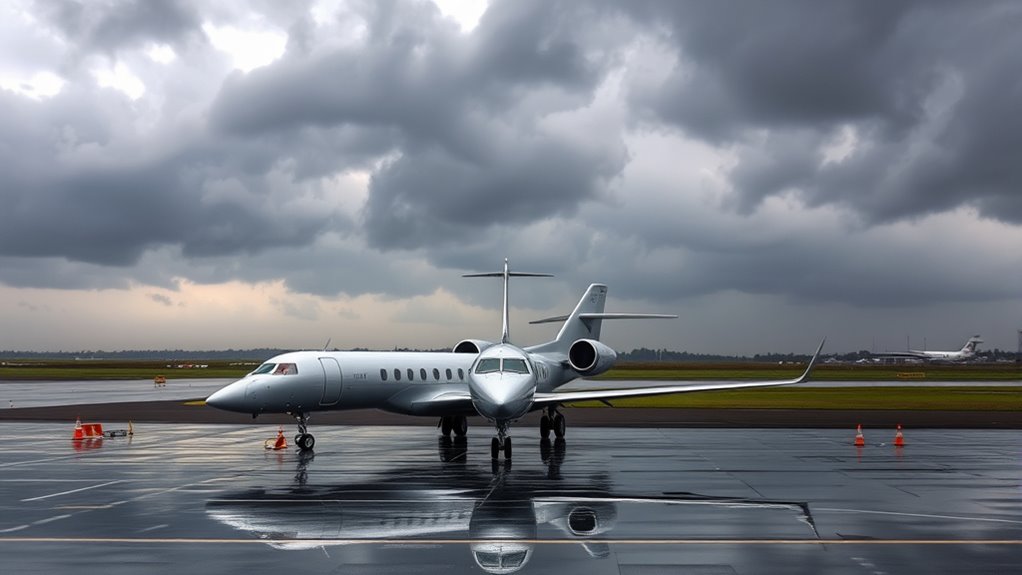

To prepare for weather-related delays and cancellations, regularly monitor trusted weather updates and check your airline or transportation provider’s info online. Give yourself extra time for travel, and make certain your vehicle is equipped with snow tires, chains, or an emergency kit. Stay flexible with plans and prioritize safety—reduce speed and keep a safe distance. If conditions worsen, consider postponing or rerouting your trip. Keep discovering more tips to help you stay safe and minimize disruptions.
Key Takeaways
- Regularly monitor reliable weather forecasts and transportation updates for early alerts on delays or cancellations.
- Leave extra travel time and consider postponing trips during severe weather conditions to ensure safety.
- Prepare your vehicle with snow tires, chains, and an emergency kit to handle potential road disruptions.
- Follow safety guidelines, reduce speed, and maintain distance on icy or snowy roads to prevent accidents.
- Have essential supplies like water, snacks, flashlight, and warm clothing in case of unexpected delays or emergencies.
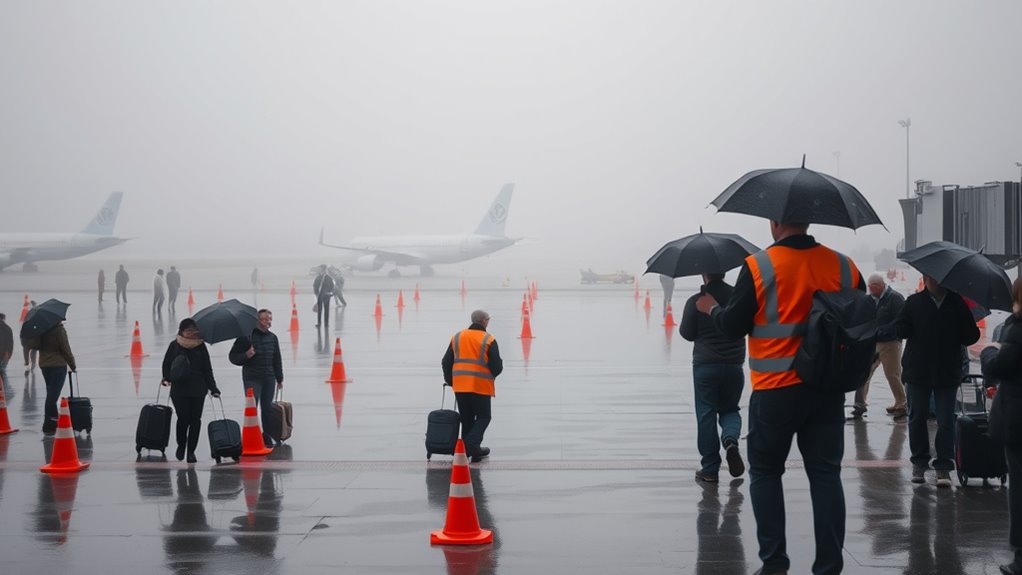
Weather conditions often cause delays and cancellations that disrupt travel plans. When storms, snow, or heavy rain hit, they can throw your schedule into chaos, forcing you to rethink your entire trip. The impact on travel plans can be frustrating, especially if you’re on a tight schedule or have important appointments. Flights might be delayed hours or even canceled altogether, trains could be rerouted or suspended, and road travel becomes more dangerous due to slick surfaces and poor visibility. You need to be prepared for these disruptions so you can adjust quickly and minimize stress.
One of the first steps you should take is staying informed about the weather forecast. Check reliable sources regularly, especially as your departure date approaches. Airlines and transportation agencies often update their status online, giving you a heads-up if delays or cancellations are likely. This proactive approach helps you plan alternative routes or reschedule appointments in advance, avoiding last-minute surprises. It’s also wise to leave extra time for your journey, especially during severe weather. Rushing in bad conditions not only increases your stress but also raises safety risks. If you’re driving, make sure your vehicle is equipped with essentials like snow tires, chains, or an emergency kit. Always allow more time for your trip, and consider postponing travel if the weather is particularly severe.
Safety precautions are vital when traveling during adverse weather. Prioritize your safety over sticking to a rigid schedule. When conditions worsen, reduce your speed, increase your following distance, and avoid sudden maneuvers. If you’re in an airplane, listen carefully to safety instructions from crew members and follow their advice. On the ground, be cautious on icy or snowy roads, and be prepared for delays due to traffic accidents or road closures. If you’re unsure about the safety of traveling, it’s better to postpone until conditions improve. Also, pack a small emergency kit with essentials like water, snacks, a flashlight, and warm clothing, especially if you’re traveling in remote areas or during winter weather. Additionally, understanding projector technology can help you select the best equipment for outdoor or variable lighting conditions, which is especially useful when planning travel setups for presentations or entertainment during trips.
Frequently Asked Questions
How Can I Track Real-Time Weather Updates for Travel Plans?
You can track real-time weather updates for your travel plans by using weather radar apps and flight tracking services. Weather radar provides live images of storm movements, helping you anticipate delays. Flight tracking apps show real-time departure and arrival info, alerting you to possible disruptions. Both tools keep you informed and allow you to adjust your plans proactively, ensuring you’re prepared for any weather-related travel issues.
What Insurance Options Cover Weather-Related Delays and Cancellations?
Sure, your travel insurance probably covers weather-related delays and cancellations, but don’t assume it’s endless. Check the coverage limits carefully—some policies only reimburse partial costs or require you to pay a deductible first. It’s almost amusing how insurance promises peace of mind, yet the fine print can make you feel like you’re playing a game of chance. Always read the policy so you’re not caught off guard when Mother Nature throws a fit.
Are There Specific Weather Conditions That Typically Cause the Most Disruptions?
Snow storms and hurricane disruptions typically cause the most travel delays and cancellations. You might find flights grounded or roads closed during heavy snowfall, while hurricanes can force cancellations of flights, cruises, and events. These weather conditions are unpredictable and often severe, leading to significant disruptions. To stay protected, consider travel insurance that covers weather-related delays and cancellations, so you’re covered when Mother Nature causes unexpected plans to fall apart.
How Do Airlines Prioritize Passenger Accommodations During Weather Delays?
They say “the squeaky wheel gets the grease,” and during weather delays, airlines prioritize passenger accommodations by focusing on passenger compensation and emergency procedures. You’ll receive updates, meal vouchers, or hotel stays based on delay length. Airlines aim to guarantee safety first, then comfort. They coordinate with ground staff to rebook flights, assist vulnerable passengers, and manage disruptions efficiently, putting your needs at the forefront amid unpredictable weather challenges.
What Are My Rights if My Travel Is Canceled Due to Weather?
If your travel gets canceled due to weather, your passenger rights depend on the airline’s compensation policies and local regulations. You’re generally entitled to a full refund or rebooking at no extra cost. Airlines may also offer meals, accommodations, or vouchers if the delay is lengthy. Check your airline’s specific policies and local laws to understand your rights, and don’t hesitate to ask customer service for assistance.
Conclusion
As you glance out the window, rain begins to fall just as your flight gets delayed. It’s a reminder that weather can unexpectedly disrupt plans, but staying prepared helps you navigate through it. Pack essentials, stay informed, and keep a calm mindset. Just like the sudden downpour clears, these delays will pass. Embrace the moment—you might find unexpected calm or a chance to enjoy a quiet coffee while waiting. Weather’s unpredictable, but your readiness makes all the difference.