Lightweight travel sleeping bags balance low carry weight and a small packed size against warmth, comfort, and easy care. I’d put the Naturehike Ultralight Goose Down Sleeping Bag first for travelers prioritizing warmth for its weight, while the ECOOPRO Lightweight Warm-Weather Sleeping Bag is a simpler pick for mild nights and the PTEROMY Machine-Washable Sleeping Bag stands out for easier cleaning. The key tradeoff is that bags built for warm weather or a tiny pack may not suit cold nights, while roomier, more versatile designs can take up more space. Temperature ratings, insulation type, shape, and packed dimensions all affect which bag makes sense for a particular trip. Read on for the full breakdown and recommendations by travel style.

Get travel and outdoor gear delivered free with Prime
- Fast, free delivery on millions of items
- Prime Video, Amazon Music and more included
- Member-only deals all year
Complete the kit

Key Takeaways
- Warmth for carry weight separates the down option: The Naturehike goose-down bag is the standout for travelers who need more insulation without carrying a bulky synthetic bag, though down calls for more care around moisture.
- Warm-weather bags are the lightest-use case, not all-season answers: ECOOPRO and TANSTRIDER’s warm-weather options suit mild conditions but are poor choices when overnight temperatures can fall below their intended range.
- Care and convenience can outweigh the smallest pack size: PTEROMY’s machine-washable design is a practical fit for frequent trips, while compression sacks on ECOOPRO and TANSTRIDER models help manage packing volume.
- Wearable and rectangular shapes favor comfort over minimalist packing: Naturehike’s wearable bag and Blackpongo’s rectangular design offer more freedom to move than a narrow mummy-style bag, with a likely space and weight tradeoff.
- Several models target similar general camping needs: Naturehike Compact, REDCAMP Compact, JEAOUIA, BORULL, and the generic compact bag are best separated by their stated warmth, fit, and packing details rather than by the word “lightweight” alone.
| PTEROMY Lightweight, Machine-Washable Sleeping Bag for Adults |  | Best for Tall Campers | Weight: 3 lb (1.35 kg) | Dimensions: 87 × 31 in (220 × 80 cm) | Recommended maximum height: 7 ft | VIEW LATEST PRICE | See Our Full Breakdown |
| Naturehike NatureSea Lightweight Sleeping Bag |  | Best for Ultralight Mild-Weather Travel | Weight: 20.1 oz (0.57 kg) | Packed dimensions: 5.5 × 11 in (14 × 28 cm) | Occupancy: 1 person | VIEW LATEST PRICE | See Our Full Breakdown |
| Lightweight Compact Adult Sleeping Bag for Backpacking, Camping, and Hiking |  | Best Compact Backpacking Pick | Weight: 1.5 lb | Packed size: 4.7 × 7.9 in | Dimensions: 79 × 30 in | VIEW LATEST PRICE | See Our Full Breakdown |
| NewDoar Ultralight 3-Season Sleeping Bag, 50–70°F |  | Best for Couples Who Want Convertible Use | Weight: 1.5 lb | Temperature range: 50°F–70°F (10°C–21°C) | Dimensions: 74.8 × 29.5 in | VIEW LATEST PRICE | See Our Full Breakdown |
| BORULL Lightweight 3-Season Sleeping Bag for Adults and Kids |  | Best Roomy Family-Trip Pick | Weight: 3 lb | Dimensions: 86.6 × 33 in | Packed size: 8 × 14 in | VIEW LATEST PRICE | See Our Full Breakdown |
| ECOOPRO Lightweight Warm-Weather Sleeping Bag with Compression Sack |  | Best for Warm-Weather Minimalists | Weight: 1.5 pounds | Comfort temperature: 55–60°F | Dimensions: 83 × 30 inches | VIEW LATEST PRICE | See Our Full Breakdown |
| Naturehike Lightweight Wearable Sleeping Bag, 41°F/28°F |  | Best Wearable Design | Seasons: 3 seasons | Weight: 1.63 pounds (medium); 1.81 pounds (large) | Large dimensions: 80.7 × 31.5 inches | VIEW LATEST PRICE | See Our Full Breakdown |
| Naturehike Lightweight Compact Sleeping Bag | 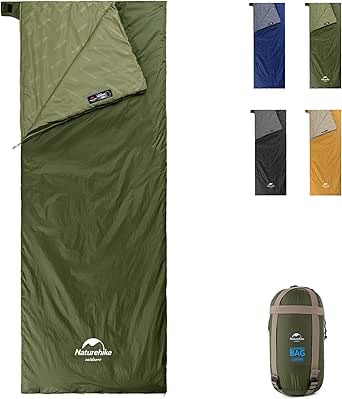 | Best for Roomy Compact Packing | Weight: 1.68 pounds (0.76 kg) | Dimensions: 80.7 × 33.5 inches | Packed size: 5 × 12 inches (13 × 31 cm) | VIEW LATEST PRICE | See Our Full Breakdown |
| TANSTRIDER Ultralight Warm-Weather Sleeping Bag |  | Best for Blanket-Style Flexibility | Weight: 1.5 pounds | Dimensions: 75 × 30 inches | Temperature range: 50–70°F (product information varies) | VIEW LATEST PRICE | See Our Full Breakdown |
| Blackpongo Ultralight Sleeping Bag, Rectangular, Army Green |  | Best Roomy Three-Season Pick | Comfort temperature: 59°F | Dimensions: 80.7 × 33.5 inches | Weight: 1.7 pounds in specifications; feature text states 2 pounds | VIEW LATEST PRICE | See Our Full Breakdown |
| JEAOUIA Lightweight 3-Season Sleeping Bag |  | Best for Mild-Weather Versatility | Occupancy: 1 person | Recommended temperature range: 41–77°F | Dimensions: 86.6 × 31.5 inches | VIEW LATEST PRICE | See Our Full Breakdown |
| TANSTRIDER Lightweight Sleeping Bag with Compression Sack |  | Best for Adjustable Ventilation | Capacity: 1 person | Dimensions: 87 × 31 inches | Weight: 3 lb (1.6 kg) | VIEW LATEST PRICE | See Our Full Breakdown |
| Naturehike Ultralight Goose Down Sleeping Bag for Adults |  | Best Ultralight Pick | Occupancy: 1 person | Fill: 90% RDS-certified goose down | Fill power: 750 | VIEW LATEST PRICE | See Our Full Breakdown |
| REDCAMP Ultralight Compact Sleeping Bag |  | Best for Warm-Weather Travel | Season: Spring and summer | Temperature range: 59–77°F | Comfort temperature: 68°F (20°C) | VIEW LATEST PRICE | See Our Full Breakdown |
| lightweight travel sleeping bag | Weight | Dimensions |
|---|---|---|
| PTEROMY Lightweight | 3 lb (1.35 kg) | 87 × 31 in (220 × 80 cm) |
| Naturehike NatureSea Lightweig | 20.1 oz (0.57 kg) | — |
| Lightweight Compact Adult Slee | 1.5 lb | 79 × 30 in |
| NewDoar Ultralight 3-Season Sl | 1.5 lb | 74.8 × 29.5 in |
| BORULL Lightweight 3-Season Sl | 3 lb | 86.6 × 33 in |
| ECOOPRO Lightweight Warm-Weath | 1.5 pounds | 83 × 30 inches |
| Naturehike Lightweight Wearabl | 1.63 pounds (medium); 1.81 pounds (large) | — |
| Naturehike Lightweight Compact | 1.68 pounds (0.76 kg) | 80.7 × 33.5 inches |
| TANSTRIDER Ultralight Warm-Wea | 1.5 pounds | 75 × 30 inches |
| Blackpongo Ultralight Sleeping | 1.7 pounds in specifications; feature text states 2 pounds | 80.7 × 33.5 inches |
| JEAOUIA Lightweight 3-Season S | 3.3 lb | 86.6 × 31.5 inches |
| TANSTRIDER Lightweight Sleepin | 3 lb (1.6 kg) | 87 × 31 inches |
| Naturehike Ultralight Goose Do | — | — |
| REDCAMP Ultralight Compact Sle | 1.5 lb | 75 × 32.5 in (190 × 83 cm) |
More Details on Our Top Picks
PTEROMY Lightweight, Machine-Washable Sleeping Bag for Adults
The PTEROMY stands out for travelers who need more length than many compact bags provide: its 87-inch body is recommended for campers up to 7 feet tall. At 3 pounds, though, it is substantially heavier than the 1.5-pound Lightweight Compact Adult Sleeping Bag and NewDoar, so it suits car camping and luggage-based trips better than weight-conscious backpacking. Its 50°F–80°F comfort range makes it a mild-weather choice, while cotton fill calls for extra care around damp conditions. The adjustable hood, inner pocket, and foot ventilation zipper add useful flexibility, and machine washing simplifies cleanup after a trip. I would choose it over the BORULL for its greater stated height allowance, but skip it if low pack weight or wet-weather performance matters most.
Pros:- 87-inch length is recommended for users up to 7 feet tall
- Machine-washable construction makes post-trip care easier
- Adjustable hood, inner pocket, and bottom zipper offer useful comfort options
- Includes a compression bag for transport
Cons:- At 3 pounds, it is heavier than the 1.5-pound compact and NewDoar options
- The 50°F–80°F comfort range does not suit cold-weather trips
- Cotton fill is less suited to damp conditions
Best for: Tall campers who want a roomy, washable bag for mild-weather car camping or travel.
Not ideal for: Backpackers counting every ounce or campers expecting cold, damp nights; its 3-pound weight, mild comfort range, and cotton fill are a poor match.
- Weight:3 lb (1.35 kg)
- Dimensions:87 × 31 in (220 × 80 cm)
- Recommended maximum height:7 ft
- Comfort temperature range:50°F–80°F (10°C–27°C)
- Recommended temperature limit:40°F–90°F (4°C–32°C)
- Shape:Rectangular
- Shell and fill:Polyester shell; cotton fill
- Features:Water-resistant, windproof, adjustable hood, inner pocket, bottom ventilation zipper
- Care and included item:Machine washable; compression bag included
Our verdict“Choose the PTEROMY if extra length and easy washing matter more than a very light pack or cold-weather warmth.”
Naturehike NatureSea Lightweight Sleeping Bag
At 20.1 ounces, the Naturehike NatureSea is the lightest clearly specified option in this five-bag group, and its 5.5 × 11-inch packed dimensions help keep luggage or a backpack compact. That makes it a stronger choice for weight-conscious travel than the 3-pound PTEROMY or BORULL. The tradeoff is warmth: its stated temperature rating reaches only 52°F, so I would reserve it for warm nights rather than treat “three-season” as a promise of cold-weather use. The marine-recovered polyester insulation and quick-drying, breathable fill distinguish it from the cotton-filled bags, especially for travelers who value synthetic insulation. It can zip to a compatible second bag, but it remains a one-person bag on its own, and shared use requires carrying another.
Pros:- Light 20.1-ounce weight suits weight-conscious travel
- Packs to a compact 5.5 × 11 inches
- Quick-drying polyester insulation is made from recovered marine plastics
- Compatible bags can be zipped together
Cons:- The 52°F temperature rating limits use to mild conditions
- One-person occupancy means a second bag is needed for shared use
Best for: Ultralight travelers and warm-weather campers who want a small packed bag with synthetic insulation.
Not ideal for: Campers facing chilly nights or anyone seeking a ready-made two-person bag; its stated rating begins at 52°F and shared use requires a second compatible bag.
- Weight:20.1 oz (0.57 kg)
- Packed dimensions:5.5 × 11 in (14 × 28 cm)
- Occupancy:1 person
- Shape:Rectangular
- Shell:20D nylon
- Lining and fill:Polyester lining; marine synthetic polyester fill
- Seasons:3 seasons
- Included and warranty:Storage bag; 1-year warranty
Our verdict“Pick the Naturehike NatureSea when low carry weight and compact packing matter more than warmth or built-in room for two.”
Lightweight Compact Adult Sleeping Bag for Backpacking, Camping, and Hiking
This envelope-style bag is a practical middle ground for travelers who want a light load without giving up a familiar sleeping-bag layout. Its 1.5-pound weight is half that of the PTEROMY and BORULL, and the listed 4.7 × 7.9-inch packed size is especially small for stowing in a pack. The 50°F–80°F comfort range, however, puts it firmly in mild-weather territory despite its “3–4 seasons” description; I would not select it for cold nights. Compared with the even lighter Naturehike NatureSea, this bag provides a stated comfort range and a longer 79-inch body, but it weighs more. The dual-side auto-lock zipper helps guard against unwanted opening, while machine-washable construction is useful after travel. Its fit recommendation under 165 pounds may rule it out for some buyers.
Pros:- Weighs 1.5 pounds for easier carrying than the 3-pound PTEROMY and BORULL
- Very compact listed packed size of 4.7 × 7.9 inches
- Dual-side auto-lock zipper helps prevent accidental opening
- Machine-washable construction and a 79-inch length
Cons:- 50°F–80°F comfort range is intended for mild temperatures
- Recommended for users under 165 pounds, limiting fit for some campers
Best for: Backpackers and frequent travelers under 165 pounds who want a very small packed bag for warm-weather trips.
Not ideal for: Cold-weather campers, broader-bodied users, or anyone taller than the 6.58-foot recommendation; the comfort range and fit guidance limit its flexibility.
- Weight:1.5 lb
- Packed size:4.7 × 7.9 in
- Dimensions:79 × 30 in
- Comfort temperature:50°F–80°F
- Recommended maximum height:6.58 ft
- Shape and occupancy:Envelope; 1 person
- Fill:100% polyester microfiber, 100 GSM
- Shell and liner:400T/30D polyester microfiber shell; 380T/20D nylon liner
- Closure and care:Dual-side auto-lock zipper; machine washable
Our verdict“Choose this model for compact packing on mild-weather trips if its body-weight and height recommendations fit you.”
NewDoar Ultralight 3-Season Sleeping Bag, 50–70°F
The NewDoar makes the most sense for travelers who value flexibility over broad sizing. Its two-way zipper lets it connect to a compatible second bag or open flat as a blanket, giving it more shared-use options than the single-person Naturehike NatureSea. A separately opening foot section also allows ventilation without fully opening the bag. At 1.5 pounds, it is far lighter than the 3-pound BORULL, and the compression sack helps keep it manageable in transit. The narrow fit is the clear compromise: at 74.8 inches long, it is recommended for people up to 63 inches tall, so many adults will find the length restrictive. Its 50°F–70°F range also offers less warm-end versatility than the 50°F–80°F PTEROMY. I’d treat this as a warm-weather option, not a dependable cold-night bag.
Pros:- At 1.5 pounds, it is lighter than the 3-pound BORULL
- Two-way zipper allows connection to a compatible bag or use as a blanket
- Separate foot zipper offers adjustable ventilation
- Includes a compression sack and is machine washable
Cons:- Recommended for people only up to 63 inches tall
- 50°F–70°F range limits it to mild-weather trips
Best for: Shorter campers or couples who want a light bag that can open as a blanket or zip to a compatible second bag.
Not ideal for: Most taller adults and cold-weather campers; the 63-inch height recommendation and 50°F–70°F range sharply limit fit and conditions.
- Weight:1.5 lb
- Temperature range:50°F–70°F (10°C–21°C)
- Dimensions:74.8 × 29.5 in
- Recommended maximum height:63 in
- Packed dimensions:11.8 × 6.5 in
- Shape and occupancy:Rectangular; listed as 2 person
- Shell and fill:20D 380T nylon shell; breathable polyester fill
- Closure:Two-way zipper with separate foot opening
- Care and included item:Machine washable; compression sack included
Our verdict“Choose the NewDoar for a short user who wants a light, convertible warm-weather bag, but pass if you need adult-length coverage.”
BORULL Lightweight 3-Season Sleeping Bag for Adults and Kids
The BORULL offers the broadest listed width here at 33 inches, making it a comfortable choice for adults, teens, or kids who dislike a narrow sleeping-bag fit. Its 86.6-inch length is generous, though the stated height limit is 5 feet 11 inches, so tall buyers should compare it with the PTEROMY, which is recommended for users up to 7 feet. Like the PTEROMY, this is a 3-pound, cotton-filled bag with a 50°F–80°F comfort range, so neither belongs at the top of an ounce-counting backpacker’s list or in a cold-weather kit. The water-resistant polyester shell, adjustable hood, and opening foot section add practical flexibility, while machine washing and the compression sack suit family travel. It can zip to another bag, but that requires a second compatible unit.
Pros:- 33-inch width gives more room than the 29.5–31-inch options listed here
- Water-resistant shell, adjustable hood, and foot zipper add practical versatility
- Machine washable and supplied with a compression sack
- Can zip together with another compatible bag
Cons:- At 3 pounds, it is heavier than the Naturehike NatureSea, Lightweight Compact, and NewDoar
- Cotton fill and a 50°F–80°F comfort range limit use in damp or cold conditions
- Recommended maximum height is 5 feet 11 inches despite its long dimensions
Best for: Families and casual campers who want a wider, washable bag for mild-weather road trips and tent stays.
Not ideal for: Ultralight backpackers, campers expecting cold or persistently damp conditions, and people over 5 feet 11 inches.
- Weight:3 lb
- Dimensions:86.6 × 33 in
- Packed size:8 × 14 in
- Recommended maximum height:5 ft 11 in
- Comfort temperature range:50°F–80°F
- Occupancy and shape:1 person; envelope
- Shell and lining:Water-resistant treated polyester shell; pongee lining
- Fill and care:Cotton fill; machine washable
- Features and included item:Adjustable hood, foot zipper, compatible-bag zip connection; compression sack
Our verdict“Pick the BORULL for its roomy cut and family-trip convenience if you camp in mild weather and do not need a genuinely ultralight pack.”
ECOOPRO Lightweight Warm-Weather Sleeping Bag with Compression Sack
At 1.5 pounds, this is one of the lighter choices here for trips where nighttime temperatures stay mild. Its 55–60°F comfort range makes the intended use clearer than the Blackpongo, whose listed 59°F comfort temperature is paired with a three-season label. The waterproof nylon shell offers a practical buffer against damp conditions, while the breathable lining and compression sack keep the setup simple to carry and pack.
The tradeoff is limited warmth: I would choose it for summer camping or warm-climate travel, not chilly shoulder-season nights. Its envelope shape also gives up some of the close-fitting warmth of a mummy bag. At 83 inches long it suits many adults, but taller travelers should check the fit against the stated height guidance before buying.
Pros:- Low 1.5-pound weight suits trips where every carried ounce matters.
- Compression sack makes it easier to pack for hiking and travel.
- Waterproof nylon shell adds protection from damp conditions.
- Breathable polyester lining is suited to warm-weather use.
Cons:- 55–60°F comfort range is too limited for many cool-weather trips.
- Envelope shape is less heat-retaining than a close-fitting mummy design.
- May not fit travelers taller than the stated height recommendation.
Best for: Summer hikers and warm-climate travelers who want a light, straightforward bag with a compression sack and some protection from damp conditions.
Not ideal for: Campers expecting cold nights or travelers taller than the stated 6.92-foot maximum recommendation; its warm-weather range and fit limits may be restrictive.
- Weight:1.5 pounds
- Comfort temperature:55–60°F
- Dimensions:83 × 30 inches
- Shape:Envelope
- Shell:Nylon
- Lining and fill:Polyester
- Occupancy:1 person
- Included:Compression sack
Our verdict“Choose the ECOOPRO for warm-weather trips where low weight and a damp-resistant shell matter more than cold-night insulation.”
Naturehike Lightweight Wearable Sleeping Bag, 41°F/28°F
The two-sided arm zippers set this Naturehike apart from the conventional bags in this group: they let the sleeper move their arms without fully leaving the insulation. That makes it more adaptable around camp than the ECOOPRO or the roomy, traditional Naturehike Lightweight Compact Sleeping Bag. Its synthetic fill, PFAS-free water-repellent finish, and machine-washable construction also suit people who expect regular use and want simpler care.
The unusual design and compact packed dimensions come with fit and rating details buyers should check. Temperature figures vary by model, so I would verify the selected size’s rating rather than assume one applies to both. The large size is recommended only up to 77 inches tall, and at 1.81 pounds it is heavier than the ECOOPRO. This is a specialized choice for mobility, not the lightest option in the lineup.
Pros:- Two-sided arm zippers allow movement without fully leaving the bag.
- Compact packed dimensions make it practical to carry on camping and hiking trips.
- Machine-washable construction simplifies care after repeated trips.
- PFAS-free water-repellent finish and GRS-certified nylon shell offer useful material details.
Cons:- Large model weighs 1.81 pounds, more than the 1.5-pound ECOOPRO.
- Temperature rating varies by size, so buyers need to confirm the selected model.
- Large size is recommended for people up to 77 inches tall.
Best for: Campers who want to keep their arms free for reading or small tasks while staying inside a sleeping bag, and who value machine-washable synthetic insulation.
Not ideal for: Ultralight packers focused on minimum weight, or taller buyers beyond the large model’s 77-inch height recommendation; model-specific temperature ratings also require checking.
- Seasons:3 seasons
- Weight:1.63 pounds (medium); 1.81 pounds (large)
- Large dimensions:80.7 × 31.5 inches
- Maximum height recommendation:77 inches
- Packed size:12.6 × 7.5 inches (medium); 13.4 × 7.5 inches (large)
- Shell:20D 380T GRS-certified nylon
- Fill:SUNDOUCE synthetic polyester fibers
- Features:Two-sided arm zippers, rear hanging design, machine washable
Our verdict“Pick this Naturehike when wearable arm access and easy washing matter more than the lowest possible packed weight.”
Naturehike Lightweight Compact Sleeping Bag
This bag combines a wide 33.5-inch shape with a listed 1.68-pound weight, giving restless sleepers more room than the narrower ECOOPRO. Its 5 × 12-inch packed size and included compression sack also make it a strong fit for travelers trying to keep a bag compact between nights. Reinforced seams and a tested zipper address likely wear points, a useful contrast with the more specialized wearable design of the Naturehike Lightweight Wearable Sleeping Bag.
The key uncertainty is warmth: the supplied details give an 80 g/m² imitation silk cotton fill but no comfort temperature, so I would not choose it for cold or unpredictable conditions without more rating information. Hand-wash care is less convenient than the wearable Naturehike’s machine-washable construction. Its roomier cut favors sleeping space over the close fit some campers prefer for retaining warmth.
Pros:- Roomy 33.5-inch width gives sleepers more space than the ECOOPRO.
- Compact 5 × 12-inch packed size is easy to fit into travel gear.
- Listed weight of 1.68 pounds keeps it relatively light to carry.
- Reinforced seams and a tested zipper address common durability concerns.
Cons:- No comfort temperature is supplied, making conditions of use harder to judge.
- Hand-wash care is less convenient than the machine-washable wearable Naturehike.
- Roomier cut may not retain warmth as well as a close-fitting bag.
Best for: Travelers and campers who prioritize a roomy sleeping area and small packed dimensions for warm-weather trips.
Not ideal for: Cold-weather campers who need a clearly stated comfort rating, or buyers who want machine-washable care.
- Weight:1.68 pounds (0.76 kg)
- Dimensions:80.7 × 33.5 inches
- Packed size:5 × 12 inches (13 × 31 cm)
- Fabric:Nylon
- Filling:80 g/m² imitation silk cotton
- Care:Hand wash
- Included:Compression carrying sack
Our verdict“Choose this Naturehike for roomy sleep and compact packing on mild trips, but look elsewhere if you need a defined cold-weather rating.”
TANSTRIDER Ultralight Warm-Weather Sleeping Bag
The two-way zipper gives this TANSTRIDER a useful travel advantage: open it out as a blanket, or connect it to another compatible bag. A separate foot zipper also lets the sleeper vent heat without opening the full length. Those options make it more flexible around camp than the ECOOPRO, which is a simpler warm-weather envelope bag. At 1.5 pounds, it remains easy to carry, and the included compression sack helps reduce its bulk in transit.
Its 50–70°F range points to mild conditions, but the supplied product information gives conflicting temperature ranges, so I would confirm the rating for the exact listing before relying on it. Cotton fill and a 75-inch length also make this a less compelling choice for cold nights or taller users than the longer ECOOPRO. Its versatility is for lounging and pairing, not for expanding its warmth range.
Pros:- Two-way zipper lets the bag open as a blanket or connect to a compatible bag.
- Separate foot zipper provides ventilation control.
- At 1.5 pounds, it matches the ECOOPRO’s low listed weight.
- Compression sack supports compact travel packing.
Cons:- Product information gives conflicting temperature ranges.
- Listed 50–70°F range limits its usefulness in cold conditions.
- 75-inch length is shorter than the ECOOPRO’s 83 inches.
Best for: Warm-weather travelers who want a light bag that can double as a blanket or connect to a compatible second bag.
Not ideal for: Cold-weather campers, taller adults who need more than 75 inches of length, or buyers who need consistent temperature-rating information.
- Weight:1.5 pounds
- Dimensions:75 × 30 inches
- Temperature range:50–70°F (product information varies)
- Shape:Rectangular
- Shell:Polyester
- Fill:Cotton
- Closure:Two-way zipper
- Included:Compression sack
Our verdict“Choose the TANSTRIDER for mild trips where blanket conversion and connection options are more useful than extra length or dependable cold-weather warmth.”
Blackpongo Ultralight Sleeping Bag, Rectangular, Army Green
For sleepers who dislike a narrow cut, the Blackpongo offers 33.5 inches of width and an 80.7-inch length, matching the roomy dimensions of the Naturehike Lightweight Compact Sleeping Bag. Its rectangular shape and cotton fill favor familiar, open sleeping space over the more specialized wearable format of the Naturehike Lightweight Wearable Sleeping Bag. A compression carrying bag is included, and the listed 1.7-pound weight keeps it within reach for hiking and general travel.
The three-season label needs context: its 59°F comfort temperature suggests a mild-weather role, not dependable warmth through cold nights. The specifications list 1.7 pounds, while the feature text says 2 pounds, so I would treat the exact carry weight as uncertain. Compared with the ECOOPRO, it is wider but has a less clearly defined warm-weather positioning and no waterproof-shell claim.
Pros:- Wide 33.5-inch cut gives more room than the 30-inch ECOOPRO.
- 80.7-inch length suits many adult sleepers.
- Compression carrying bag supports packing for travel and hiking.
- One-year warranty is specified.
Cons:- 59°F comfort temperature limits use on cold nights despite the three-season label.
- Weight is inconsistent: specifications say 1.7 pounds, while feature text says 2 pounds.
- No waterproof-shell claim is provided, unlike the ECOOPRO.
Best for: Campers who want a broad rectangular bag for mild three-season trips and value sleeping room over a close mummy fit.
Not ideal for: Cold-weather campers or weight-focused buyers who require a verified carry weight; the comfort temperature is mild and the listed weights conflict.
- Comfort temperature:59°F
- Dimensions:80.7 × 33.5 inches
- Weight:1.7 pounds in specifications; feature text states 2 pounds
- Seasons:3 seasons
- Shape:Rectangular
- Shell:Nylon
- Fill:Cotton
- Included:Sleeping bag and carrying bag
- Warranty:1 year
Our verdict“Pick the Blackpongo for a roomy rectangular fit on mild trips, but avoid it if cold-night warmth or a confirmed packed weight is a priority.”
JEAOUIA Lightweight 3-Season Sleeping Bag
For travelers who want roomier rectangular comfort without carrying a heavy bag, the JEAOUIA weighs 3.3 pounds and packs down for transport. Its listed temperature range of 41–77°F makes it more adaptable than the warm-weather-only REDCAMP Ultralight Compact Sleeping Bag, though neither is a choice for reliably cold nights. A drawstring hood and foot zipper let sleepers adjust coverage and release heat, useful when campsite temperatures vary. The polyester shell and pongee lining offer a straightforward, easy-care setup, and the water-resistant design adds a little protection from damp conditions. The tradeoff is fit: its 5-foot-11-inch height recommendation is shorter than the TANSTRIDER’s 6-foot-1-inch limit, and the 3.3-pound weight is substantially more than ultralight down options such as the Naturehike Goose Down. Choose it for mild-weather trips where adjustable ventilation matters more than minimum pack weight.
Pros:- 3.3-pound weight is manageable for casual camping and travel
- Drawstring hood and foot zipper allow warmth and ventilation adjustments
- Water-resistant design and easy-to-clean surface suit everyday outdoor use
- Rectangular shape offers room to sleep without a tight mummy fit
Cons:- Maximum recommended height of 5 feet 11 inches excludes many taller campers
- Temperature guidance is intended for mild conditions, not dependable cold-weather use
- Heavier than the Naturehike Goose Down option for weight-conscious backpacking
Best for: Campers under 5 feet 11 inches who want a rectangular bag with adjustable ventilation for mild three-season trips.
Not ideal for: Taller travelers, cold-weather campers, and backpackers who prioritize the lightest possible carry.
- Occupancy:1 person
- Recommended temperature range:41–77°F
- Dimensions:86.6 × 31.5 inches
- Maximum recommended height:180 cm (5 ft 11 in)
- Materials:Polyester outer; pongee lining; hollow-fiber fill
- Weight:3.3 lb
- Shape and features:Rectangular; drawstring hood; foot zipper
Our verdict“Choose the JEAOUIA for mild-weather trips if you want adjustable features and rectangular comfort more than an ultralight pack weight.”
TANSTRIDER Lightweight Sleeping Bag with Compression Sack
The TANSTRIDER pairs a compression sack with practical temperature-control details, making it a sensible travel choice for sleepers who want more adjustment than the simpler REDCAMP Ultralight Compact Sleeping Bag provides. Its draft collar and adjustable hood help limit heat loss, while the separately unzippable foot section and two-way zipper offer a way to vent when conditions warm up. At 3 pounds, it is easier to carry than the 3.3-pound JEAOUIA, but it remains far heavier than the 0.94-pound medium Naturehike Goose Down. Temperature information is inconsistent: the listing gives a 50–80°F range, a 55–60°F comfort temperature, and a 40°F recommended limit. That uncertainty makes it hard to plan around the lower figure, so I’d treat it as a mild-weather bag rather than rely on it for cold nights. Its 6-foot-1-inch fit accommodates taller users than the JEAOUIA.
Pros:- Includes a compression sack for carrying and storage
- Draft collar and adjustable hood help retain warmth
- Foot section unzips separately for ventilation
- Fits campers up to 6 feet 1 inch, taller than the JEAOUIA recommendation
Cons:- At 3 pounds, it is much heavier than the Naturehike Goose Down
- Temperature guidance conflicts across the listing, complicating trip planning
- Rectangular design and listed range are better suited to mild conditions than cold nights
Best for: Travelers up to 6 feet 1 inch who want a compression sack and multiple ways to adjust ventilation on mild-weather trips.
Not ideal for: Backpackers seeking very low carry weight or campers who need clear, dependable cold-weather temperature guidance.
- Capacity:1 person
- Dimensions:87 × 31 inches
- Weight:3 lb (1.6 kg)
- Temperature guidance:Range: 50–80°F; comfort: 55–60°F; recommended limit: 40°F
- Maximum recommended height:6 ft 1 in
- Material:Polyester
- Shape and closure:Rectangular; two-way zipper
- Included components:Sleeping bag and compression sack
Our verdict“Pick the TANSTRIDER if adjustable ventilation and a longer fit matter more than minimal weight or precise temperature guidance.”
Naturehike Ultralight Goose Down Sleeping Bag for Adults
For trips where every ounce matters, the Naturehike Goose Down weighs 0.94 pounds in Medium or 1.09 pounds in Large, including the stuff sack. That puts it well below the 1.5-pound REDCAMP and the 3-pound TANSTRIDER, making it the clearest fit here for weight-focused backpacking. Its 750-fill-power, RDS-certified goose down and water-repellent 10D nylon shell support a compact carry, while the PFAS-free treatment and ability to open it as a blanket or use it as a liner add flexibility beyond a standard sleeping bag. The main limit is warmth: its listed 51°F rating points to mild nights, not cold three-season conditions, despite the product’s three-season label. The large packed dimensions are supplied, but not the Medium’s, so compare size options carefully if pack space is tight.
Pros:- Very low listed weight: 0.94 lb in Medium and 1.09 lb in Large, including stuff sack
- 750-fill-power RDS-certified goose down supports a compact, lightweight design
- PFAS-free, water-repellent 10D nylon shell
- Can unfold as a blanket or serve as a sleeping bag liner
Cons:- Listed 51°F rating limits it to mild conditions despite the three-season label
- Packed dimensions are provided only for the Large size
- Down insulation requires more care around moisture than a synthetic-fill option such as REDCAMP
Best for: Ultralight backpackers and travel campers sleeping in mild conditions who value low packed weight and flexible blanket or liner use.
Not ideal for: Cold-weather campers or buyers who need a clearly specified temperature range and packed dimensions for every size.
- Occupancy:1 person
- Fill:90% RDS-certified goose down
- Fill power:750
- Shell:10D nylon with PFAS-free, water-repellent treatment
- Weight including stuff sack:Medium: 0.94 lb (425 g); Large: 1.09 lb (495 g)
- Large packed dimensions:5.9 in diameter × 11 in length (15 × 28 cm)
- Shape and closure:Rectangular; zipper
Our verdict“Choose the Naturehike Goose Down for mild-weather travel when minimizing carried weight matters more than cold-night coverage.”
REDCAMP Ultralight Compact Sleeping Bag
The REDCAMP is a straightforward pick for summer trips where a 1.5-pound carry weight and small packed size matter more than broad temperature coverage. Its 7.9 × 4.7-inch package is notably compact beside the heavier JEAOUIA and TANSTRIDER, and the included compression sack helps keep it organized in a travel pack. The two-way zipper gives it a useful second role: connect it to another compatible bag or open it out as a quilt. That flexibility makes it more adaptable as bedding than a conventional bag, though it does not add insulation for chilly nights. The listed comfort temperature is 68°F, with a 59–77°F range, so this is a warm-weather specialist rather than a general three-season solution. At 75 inches long and recommended for users up to 6 feet, it may also feel short for taller sleepers.
Pros:- Light 1.5-pound weight suits travel and warm-weather backpacking
- Compact 7.9 × 4.7-inch package and included compression sack
- Two-way zipper lets it open as a quilt or connect with another compatible bag
- Synthetic fill avoids reliance on down insulation
Cons:- Comfort temperature of 68°F and listed 59–77°F range limit colder-weather use
- 75-inch length and 6-foot recommendation may not suit taller sleepers
- Less suitable for variable conditions than the adjustable-hood JEAOUIA
Best for: Summer campers and travelers up to 6 feet who want a compact synthetic bag that can also open as a quilt or connect to another bag.
Not ideal for: Cold-weather campers, taller sleepers, and anyone seeking a single bag for varied three-season temperatures.
- Season:Spring and summer
- Temperature range:59–77°F
- Comfort temperature:68°F (20°C)
- Dimensions:75 × 32.5 in (190 × 83 cm)
- Weight:1.5 lb
- Packed size:7.9 × 4.7 in (20 × 12 cm)
- Material and fill:Polyester; synthetic fill
- Shape and closure:Rectangular; two-way zipper
- Included:Compression sack
Our verdict“Choose the REDCAMP for compact summer travel if you want a light bag with quilt and zip-together flexibility, not cold-night protection.”

How We Picked
I compared the 14 bags on the factors that matter when a sleeping bag has to travel: carry weight and packed size, stated temperature suitability, insulation type, shape and room to move, care requirements, and useful packing features. I gave more weight to a clear match between design and trip conditions than to broad claims such as “ultralight” or “3-season,” since those labels alone do not tell a buyer how a bag will perform on a particular night.
The ranking favors options with a distinct, useful role and a believable balance of portability and comfort. That puts the Naturehike goose-down bag ahead for warmth-conscious packers, while the ECOOPRO and PTEROMY rank strongly for warm-weather simplicity and easy care. Models with overlapping general-purpose claims rank behind picks with clearer advantages; buyers should compare each bag’s actual dimensions, materials, and temperature guidance before choosing. No bag is a universal winner: a compact warm-weather option ranks lower for cold trips, even if it packs neatly.
Factors to Consider When Choosing Lightweight Travel Sleeping Bags
Before choosing among lightweight travel sleeping bags, I’d start with the conditions and packing setup of the trip rather than the product label. A few decisions about temperature, insulation, and fit can prevent the common mistake of carrying a small bag that is too cold—or a warm bag that takes up more room than the trip allows.
Match the Bag to the Coldest Likely Night
Choose a bag for the lowest realistic overnight temperature, not the average forecast or daytime weather. Temperature labels can be hard to compare across products, and a stated rating does not account for personal warmth, clothing, sleeping pad, or shelter. If nights may be colder than the bag’s stated range, add a suitable liner or choose a warmer model rather than relying on optimism. A bag that is warmer than needed can feel restrictive and may weigh more, so avoid paying the packing penalty for cold-weather capacity you will not use. For uncertain forecasts, a small comfort buffer is usually more useful than selecting the absolute lightest warm-weather bag.
Compare Insulation by Conditions, Not Just Weight
Down and synthetic insulation solve different travel problems. Down can provide more warmth for its carry weight and compress tightly, which suits pack-focused trips, but it needs protection from damp conditions and careful drying. Synthetic insulation is often a more forgiving choice when a bag may get wet or need frequent washing, though it can pack larger for comparable warmth. A compression sack can reduce packed volume, but it does not change how warm the bag is or make wet insulation perform better. Consider where the bag will be stored during travel, not just the walk from the car to camp.
Treat Packed Size and Carry Weight as Separate Questions
A bag can be light yet awkward to pack, or compact when compressed but still heavy to carry. Check the packed dimensions and listed weight separately, and ask whether the bag must fit inside a small backpack, suitcase, or bike pannier. Compression sacks help shape the load, but repeated hard compression can be unhelpful for long-term storage, especially for down. For air travel, also check the bag’s packed form against your luggage allowance and leave room for a dry bag or protective cover if needed. Buyers often focus on the smallest advertised pack size and overlook how quickly that bag becomes uncomfortable if its warmth does not fit the destination.
Choose Shape and Fit for the Way You Sleep
Mummy, rectangular, and wearable designs trade warmth retention and packability against freedom of movement. A closer-fitting shape can reduce empty space the body must warm, while a roomier rectangle may feel better for restless sleepers or those who want to open the bag like a blanket. Wearable designs add mobility around camp but may not suit someone who wants a simple, enclosed sleep setup. Check the bag’s length and shoulder or hip room against your body and preferred sleeping position. Choosing too narrow a bag can undermine comfort, while sizing up without need may add bulk to a travel kit.
Factor Care and Moisture Into Frequent Travel
For repeated trips, cleaning and drying are part of the buying decision, not an afterthought. Machine-washable construction can be convenient, but follow the product’s care instructions; some insulation and fabrics need gentler handling or longer drying. If the bag will be used in humid weather, shared lodging, or dusty camps, a washable liner can reduce how often the bag itself needs cleaning. Down requires particular attention to drying fully after exposure to moisture, while synthetic fills may be easier to manage on a tight schedule. The easiest bag to maintain may serve a frequent traveler better than a marginally smaller one that needs more careful handling.
Decide What “Three-Season” Means for Your Trips
The label “3-season” is not a guarantee of comfort in every spring, summer, and fall destination. A mild-climate trip and a high-elevation autumn night can demand very different insulation, even within the same calendar season. Read the stated temperature range alongside the materials, shape, and your sleeping pad setup, and compare it with the coldest conditions you actually expect. If you travel across climates, a warmer bag plus a liner can be more flexible, though it may add bulk. For trips confined to warm regions, a dedicated warm-weather model may be the lighter and more comfortable choice.
Frequently Asked Questions
Can a warm-weather sleeping bag work for spring or fall travel?
It can, but only when the destination’s overnight lows stay within the bag’s stated range and your sleep system provides enough insulation. Spring and fall weather can change quickly, especially at altitude or away from urban areas. Check the coldest expected night rather than relying on the season name, and account for your sleeping pad and personal tendency to feel cold. If conditions are uncertain, a warmer bag or a compatible liner offers more margin than a warm-weather-only model. For trips with large temperature swings, versatility may be worth some extra packed space.
Is down the right choice if I expect rain or humid conditions?
Down can be a good travel choice when it stays dry, but dampness can make it harder to maintain its insulating performance. Use a protective stuff sack or dry bag and keep the sleeping bag separate from wet clothing and gear. In humid climates or trips with limited drying opportunities, synthetic insulation may be the less demanding option even if it packs larger. Think about your ability to dry the bag at the end of each day, not only the forecast. A lightweight bag that stays warm in the conditions you face is more useful than one that only wins on paper weight.
Should I buy a compression sack if the sleeping bag already packs small?
A compression sack is most useful when you need a predictable shape or a smaller bundle to fit a tight pack. It does not reduce the bag’s weight, and the packed size shown by a brand may depend on how firmly the bag is compressed. Check whether a sack is included and whether its dimensions suit your luggage before buying a separate one. Avoid storing the bag compressed for long periods at home; lofted storage can help preserve insulation. If your bag already fits comfortably in your travel setup, another compression sack may add little value.
How much room should I leave for sleeping clothes and a liner?
Choose a fit that lets you move naturally without leaving so much empty space that the bag feels inefficient to warm. A liner adds warmth and helps keep the sleeping bag cleaner, but it can make a close-fitting design feel restrictive. Try to account for the clothes you expect to sleep in, especially if you will wear extra layers in cold conditions. If you toss and turn or sleep on your side, shoulder and hip room may matter more than a minimal packed size. A roomier shape can improve comfort for those sleepers, while a closer fit may suit travelers prioritizing warmth and compact packing.
What should I prioritize for a bag used in hostels and occasional camping?
For mixed use, give priority to easy care, a comfortable shape, and broad temperature usefulness rather than choosing the smallest bag available. A washable or liner-friendly design can make regular travel simpler, while a compact stuff sack helps when luggage space is limited. Check whether the bag will be warm enough for the coldest camping trip you expect; hostel rooms alone may not call for much insulation. A warm-weather bag can be pleasant for indoor use but leave you underprepared outdoors. If your trips vary widely, choose around the coldest likely use and manage warmer nights by venting the bag.
Conclusion
For most travelers who want warmth without a bulky load, I’d start with the Naturehike Ultralight Goose Down Sleeping Bag as the best overall pick, provided you can keep down dry. The ECOOPRO Lightweight Warm-Weather Sleeping Bag is my best-value-style choice for mild-weather trips where a straightforward, packable design matters more than cold-night range. Beginners who want easier upkeep should look at the PTEROMY Machine-Washable Sleeping Bag, while buyers seeking a premium warmth-to-weight approach can prioritize the Naturehike down model. For frequent movement around camp, the Naturehike Wearable Sleeping Bag has a more specific appeal; for roomy sleep comfort, compare it with the rectangular Blackpongo. Choose the bag whose warmth, shape, and care demands match your actual itinerary, rather than relying on “lightweight” alone.
Halloween Picks

Halloween Pumpkin Fog Machine with 12-Color LEDs, Bluetooth Speaker, and Remote

Halloween Inflatable Haunted House Maze – 20×20 ft with Removable Roof and Blower

12.5-Foot Lighted Halloween Inflatable Archway
As an affiliate, we earn on qualifying purchases.