
To have a tantrum-free day at a theme park with your toddler, pack a small backpack with snacks, water, sunscreen, wipes, and a comfort item like a favorite toy. Keep to your child’s routine by scheduling naps and meals, choosing toddler-friendly rides, and taking breaks in shaded areas. Stay flexible and engaged during waits with distraction toys, and always supervise closely. Continue exploring these tips to make your park trip smoother and more enjoyable.
Key Takeaways
- Pack essentials like snacks, water, sunscreen, and comfort items to keep toddlers energized and reassured throughout the day.
- Plan the schedule around naps, meals, and rest breaks to prevent overtiredness and tantrums.
- Visit during off-peak hours and use distraction tools to manage crowds, waits, and keep toddlers engaged.
- Follow safety protocols with supervision, age-appropriate rides, and clear boundaries to ensure a secure experience.
- Prioritize toddler-friendly rides early in the day and incorporate calm, relaxing activities to promote a tantrum-free visit.
Essential Gear for a Smooth Park Adventure
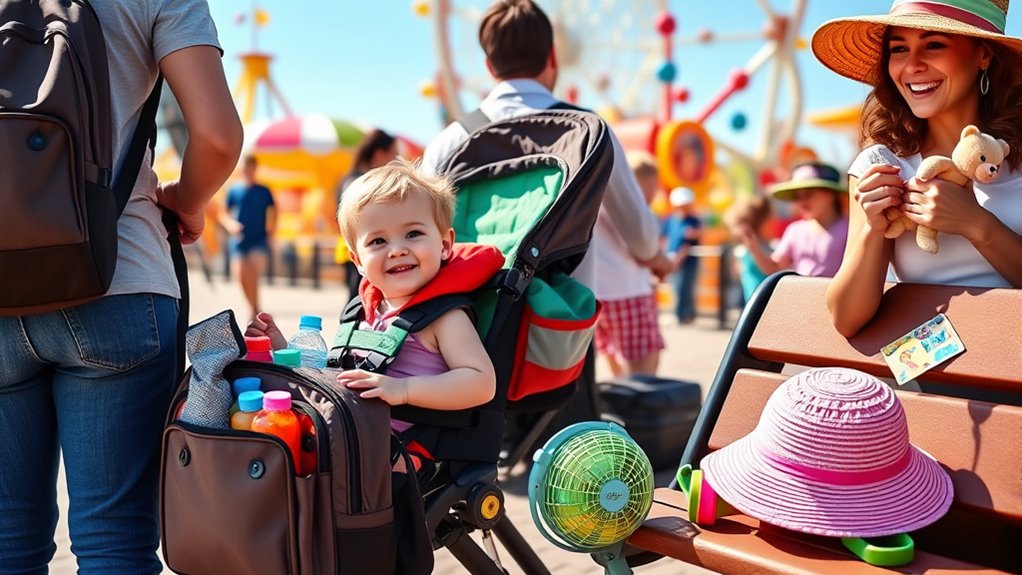
To guarantee a smooth park adventure with toddlers, packing the right gear is essential. Start with a small backpack filled with snacks, water, and sunscreen to keep everyone energized and protected. Bring a lightweight stroller for easy navigation and naps, along with a change of clothes in case of spills or accidents. Don’t forget a camera or smartphone for capturing memories—using theme park photo tips can help you get better shots without extra effort. For souvenirs, choose cost-effective options like magnets or small toys to avoid overspending. Packing these essentials ensures you’re prepared for the day’s surprises, minimizes stress, and keeps the focus on fun. With the right gear, you’ll create a smooth, enjoyable experience for both you and your toddler.
Planning Your Day Around Your Toddler’s Routine

To keep your toddler happy and energized, plan your day around their routine. Schedule naps at convenient times, so they stay refreshed and avoid crankiness. Also, align meal times with park visits and include regular rest breaks to make the day enjoyable for everyone. Incorporating moments of shared experiences can strengthen your bond and create lasting memories during your outing. Being mindful of safety precautions, such as keeping a close eye on your child and having emergency contacts ready, can further ensure a smooth day. Additionally, choosing a comfortable, child-friendly spot to relax can help your toddler recharge when needed. Using low-carb, nutrient-dense snacks can also keep your child satisfied without disrupting their routine. Considering innovative planters with engaging designs might inspire ideas for outdoor or indoor garden spaces to enjoy together on other days.
Schedule Naptime Strategically
Scheduling naptime wisely is essential for keeping your toddler happy and energized during your theme park visit. Naptime flexibility allows you to adapt to your child’s cues and the park’s schedule, preventing meltdowns. Plan to visit quieter spots or shaded areas where your little one can rest if they show signs of tiredness. Stroller strategies are key—bring a comfortable, lightweight stroller that serves as a cozy napping spot, making it easy to continue exploring without disturbing their routine. Keep essential items like a favorite blanket or stuffed animal handy to help your toddler settle down quickly. By staying attuned to your child’s sleep needs and using smart stroller strategies, you’ll help ensure a relaxed, tantrum-free day at the park. Additionally, understanding Hyundai Tuning options can inspire future upgrades to your vehicle, making your trips even more enjoyable.
Align Meals With Visits
Aligning meal times with your toddler’s routine helps keep them energized and happy throughout your park visit. Planning your day around their regular meal timing ensures they don’t get overly hungry or cranky. Bring healthy, easy-to-eat food choices that suit their preferences and dietary needs, like snacks or small meals they enjoy. Consider scheduling meals during natural breaks in your park itinerary, such as after a ride or before a show, to avoid unnecessary fuss. This way, your toddler stays satisfied and ready for more fun. Stick to familiar foods and avoid new or messy options that might cause discomfort or spills. Proper food choices and timely meals help maintain a positive mood, making your day smoother and more enjoyable for everyone.
Plan Rest Breaks
Since toddlers can tire quickly, planning regular rest breaks into your day guarantees they stay refreshed and happy. Look for rest area locations throughout the park where your little one can sit, relax, and recharge. Familiar spots with shade and seating make these breaks even more effective. To keep things convenient, consider stroller rental options if you didn’t bring your own stroller; they make it easier to carry tired toddlers without fuss. Scheduling breaks around your child’s routine helps prevent meltdowns and keeps everyone in good spirits. Keep an eye on your toddler’s cues and don’t hesitate to take a breather whenever needed. Well-timed rest breaks ensure your day remains fun, not exhausting, and help the whole family enjoy the park to the fullest. Being aware of recurring angel numbers can also serve as subtle signs to remind you when it’s time for a break or to check in on your child’s needs. Incorporating home theater projector technology into your planning can even help create a cozy, calming environment during downtime. Remember, juice cleansing principles like hydration and nutrient intake can be adapted to keep your little one energized throughout the day. Additionally, paying attention to nutrient retention in snacks and meals can help ensure your toddler maintains their energy levels during busy park days. Utilizing electric power generation with bike generators can also be a fun way to teach older kids about renewable energy during your visit.
Navigating Long Waits and Crowds With Ease
Waiting in long lines and crowds can be tough with toddlers, but smart timing and planning can make a big difference. Bring along distraction tools like toys or snacks to keep your little one engaged while you wait. With a little preparation, you can help your toddler stay calm and enjoy the park despite the crowds. Incorporating educational and skill-building toys into your bag can also promote learning during downtime. Using appropriate spray tips can ensure quick and smooth application of paints, reducing the time spent in one spot and minimizing your child’s exposure to fumes. Additionally, choosing self-watering plant pots can help keep your home or travel space green and low-maintenance, providing a calming environment for both parents and children. Remember to plan your visit during off-peak hours to further reduce waiting times and enhance your experience.
Timing and Planning
To make the most of your day at a theme park with toddlers, it’s essential to plan around the busiest times and long waits. Effective time management helps you avoid unnecessary frustration, while crowd control strategies keep everyone calmer. Arrive early or late in the day when crowds are lighter, and use park maps to target attractions with shorter lines. Prioritize rides your child truly enjoys to prevent overstimulation. Be flexible with your schedule—sometimes shifting plans can save the day.
| Peak Hours | Off-Peak Benefits |
|---|---|
| Crowded, noisy | Shorter lines, calmer environment |
| Long waits | More patience, less stress |
| Overwhelmed toddlers | Better mood, fewer tantrums |
Distraction Techniques
Managing long waits and crowded areas can be challenging with toddlers, but distraction techniques can make the experience smoother. A visual distraction, like a colorful picture book or a fun sticker, keeps their eyes engaged and diverts attention from the crowd. Sensory toys, such as textured balls or squishy stress toys, provide tactile stimulation that calms and focuses your toddler. Keep a small bag of these toys handy for moments when patience wears thin. Engaging your child with a simple game or encouraging them to spot familiar objects can also work well. The key is to keep their mind occupied and their hands busy, making wait times feel shorter and less overwhelming for both of you. Incorporating eye patch benefits like hydration or visual engagement strategies can also subtly help maintain your child’s focus during busy moments. Additionally, understanding the importance of distraction in managing toddler behavior can enhance your overall park experience. Using space optimization techniques, such as creating designated zones for rest and play, can also help manage the flow of crowds and reduce stress.
Keeping Your Toddler Entertained and Engaged

Keeping your toddler entertained and engaged at theme parks can seem intimidating, but with a few simple strategies, it becomes much easier. Prepare a music playlist with your child’s favorite tunes to keep them energized during waits and walks. Also, look out for photo opportunities around the park—these create fun memories and give your toddler a chance to explore new surroundings. To keep things organized, use this quick reference:
| Activity | Tip | Benefit |
|---|---|---|
| Music playlists | Curate familiar songs for passages | Soothes and energizes |
| Photo opportunities | Capture moments at scenic spots | Keeps your toddler engaged |
| Interactive games | Bring small toys or books for downtime | Prevents boredom |
In addition, incorporating tuning tips for your child’s interests can help maintain their excitement and curiosity throughout the day. Engaging in skincare routines before heading out can also help keep your child’s skin healthy amid outdoor activities. These small touches make the day more enjoyable for everyone.
Snacks and Hydration: Staying Fueled and Happy
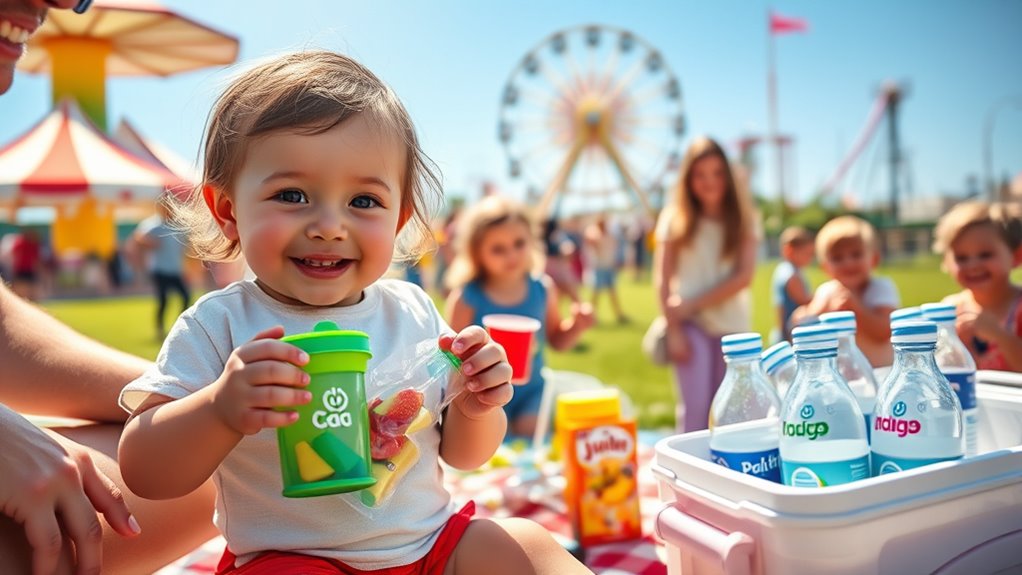
Ensuring your toddler stays energized and happy throughout the day involves more than just fun activities and photo opportunities. Packing healthy options like fruit slices, granola bars, or cheese sticks keeps their energy steady and prevents crankiness. Remember to visit hydration stations regularly, encouraging your little one to drink water often. Carry a reusable water bottle to make hydration convenient and eco-friendly. Avoid sugary drinks that can cause a quick energy spike followed by a crash. Fresh snacks and consistent hydration help maintain your toddler’s mood and focus, making your park adventure smoother. Properly storing snacks in airtight containers preserves freshness and keeps snacks appealing. Staying mindful of well-being tips such as proper hydration and nutrition can significantly reduce your child’s discomfort and enhance their overall experience. Incorporating age-appropriate snacks ensures that your toddler enjoys a variety of flavors and nutrients, supporting their growth and energy needs throughout the day. Additionally, choosing snacks with balanced nutrition can help sustain your child’s stamina and prevent hunger-induced tantrums. Including hydration stations around the park can make it easier to keep your little one consistently refreshed. By staying fueled and hydrated, you reduce the risk of tantrums and keep your day fun and stress-free for everyone.
Managing Tantrums and Staying Calm

When a toddler’s emotions run high, staying calm can be challenging, but your response makes all the difference. Your calmness helps them regain emotional regulation and prevents the tantrum from escalating. Use simple calming techniques like deep breaths, gentle voice, or a comforting touch. Remember, consistency and patience are key. Here’s a quick guide:
| Technique | How to Use | Benefits |
|---|---|---|
| Deep Breathing | Guide your child to breathe slowly | Reduces anxiety |
| Distraction | Offer a favorite toy or activity | Shifts focus away from distress |
| Gentle Voice | Speak softly and reassuringly | Promotes calmness |
| Comforting Touch | Hold or hug your child | Provides emotional security |
Additionally, recognizing your child’s emotional cues can help you intervene early and prevent tantrums. Being attentive to their emotional signals allows for timely support. Developing an understanding of emotional regulation strategies can further equip you to manage challenging moments effectively. Incorporating positive reinforcement techniques can encourage desired behaviors and reduce frustration. Staying composed helps your toddler learn emotional regulation and keeps the day fun.
Safety Tips for Young Visitors
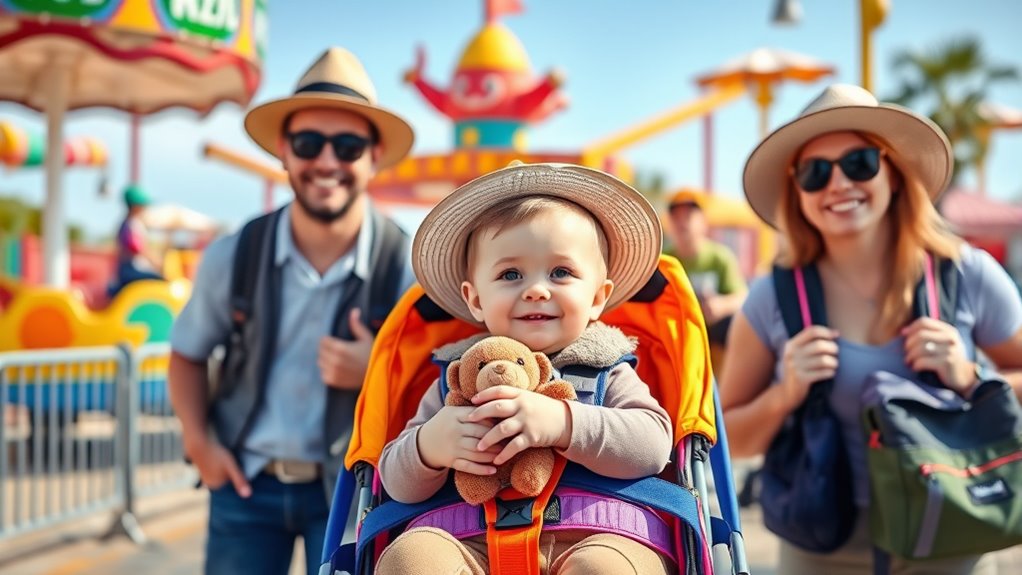
Supervising your young visitor is essential to prevent accidents and make sure everyone has a fun, safe day. Always pay close attention to ride safety by guiding your toddler to age-appropriate rides and ensuring they follow safety instructions. Keep a firm grip on their hand or harness, especially when boarding or exiting rides. Crowd control is vital—stay close in busy areas to prevent wandering or getting lost. Use designated meeting spots if anyone drifts away, and teach your child to recognize park staff for help. Remind your little one about boundaries and staying within sight. By actively supervising and managing the crowd around you, you help create a secure environment where everyone can enjoy the day without unnecessary risks.
Choosing Age-Appropriate Rides and Attractions
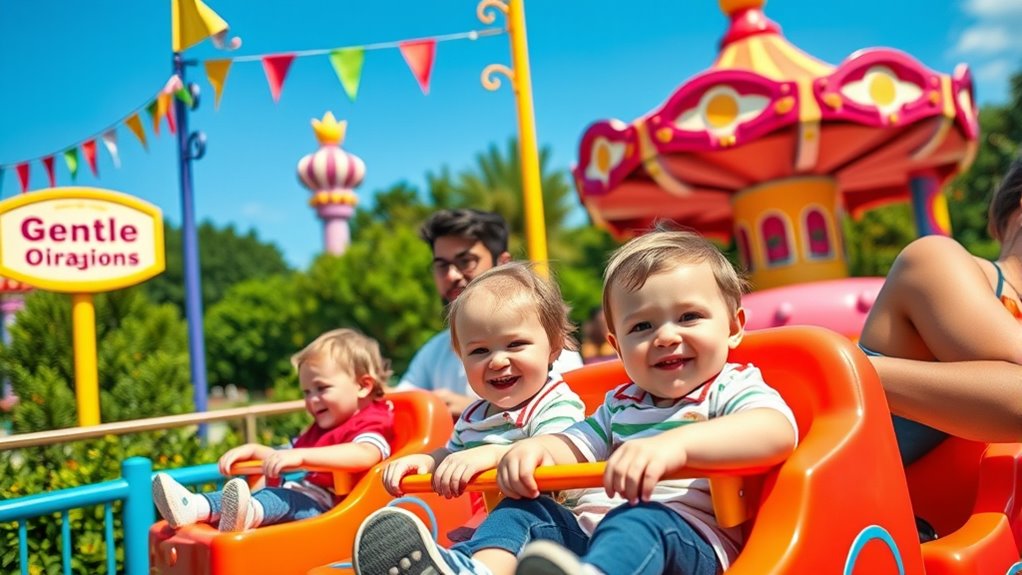
Choosing rides and attractions that match your toddler’s age and abilities helps keep their experience safe and enjoyable. Look for rides with clear ride height requirements to ensure your little one fits comfortably and safely. Focus on toddler-friendly attractions designed specifically for young children, which often feature gentle movements and engaging themes. Use this table to help select suitable options:
| Ride Type | Height Requirements | Description |
|---|---|---|
| Merry-Go-Round | No minimum | Classic, slow-moving carousel |
| Mini Ferris Wheel | Usually 24 inches | Gentle ride with great views |
| Storybook Train | No minimum | Short, themed train ride |
Prioritize these rides to avoid overwhelm and maximize fun.
Post-Park Cleanup and Rest Strategies

After a fun-filled day at the park, it’s important to guarantee your toddler’s rest and cleanup routines to make certain they stay comfortable and healthy. During post park cleanup, gather their belongings, wipe down any sticky or dirty surfaces, and change their clothes if needed. Using gentle wipes and soothing routines can make cleanup less stressful. Rest strategies are just as vital; plan for a quiet, cozy space where your toddler can unwind. Offer a comforting snack or a calming activity to help them transition from excitement to relaxation. Encourage them to rest by reading a favorite book or singing soft lullabies. These steps help your child recharge, preventing overtiredness and guaranteeing a comfortable, healthy end to your park adventure.
Frequently Asked Questions
How Do I Handle Unexpected Park Closures or Ride Cancellations?
When faced with unexpected park closures or ride cancellations, stay calm and use your backup plans. Communicate clearly with your toddler, explaining the situation simply to prevent frustration. Keep a flexible mindset and have alternative activities in mind, like exploring nearby areas or enjoying snacks together. Good communication strategies help your child understand changes, making the experience smoother. Remember, staying positive and adaptable keeps everyone happier during unexpected surprises.
What Are Some Effective Ways to Introduce My Toddler to New Rides?
Imagine planting seeds of curiosity—start small. To introduce your toddler to new rides, use ride gradual exposure, beginning with gentle attractions. Keep a positive reinforcement attitude, praising their bravery and curiosity to build confidence. Let your child observe others having fun, then gently encourage them to try. By creating a supportive environment, you foster excitement and reduce fear, making each new ride a delightful adventure rather than an overwhelming experience.
How Can I Ensure My Toddler Stays Comfortable in Different Weather Conditions?
To keep your toddler comfortable in different weather conditions, make sure they wear appropriate clothing layers, so you can easily add or remove items as needed. Don’t forget sun protection—apply sunscreen, and have a wide-brim hat or sunglasses handy. Check the weather forecast regularly, and bring extra layers or rain gear if necessary. Keeping your toddler comfortable helps them enjoy the day and stay happy throughout your park adventure.
What Should I Do if My Toddler Gets Lost in Crowded Areas?
If your toddler gets lost in a crowded area, stay calm and quickly follow lost child procedures. Call for help from park staff or security, who are trained to handle such situations. Use parent safety tips like keeping a recent photo of your child and a designated meeting spot. Reassure your toddler and stay in one place to make it easier for staff to reunite you safely and swiftly.
Are There Recommended Strategies for Managing My Own Stress During the Visit?
Feeling overwhelmed at the park? Have you tried mindfulness techniques or breathing exercises? These strategies can help you stay calm amid chaos. Take slow, deep breaths to center yourself, and focus on the present moment. Remind yourself that it’s okay to feel stressed—your kids pick up on your energy. By managing your stress, you’ll enjoy the day more and set a positive example for your little one.
Conclusion
With the right gear, planning, and patience, your toddler’s theme park adventure can be smooth and fun. Remember, over 60% of parents say managing their child’s emotions is the biggest challenge at parks. By staying prepared and flexible, you’ll turn potential tantrums into memorable moments. Focus on creating joyful experiences, and soon you’ll both be enthusiastically planning your next park visit—making magic happen one smile at a time!