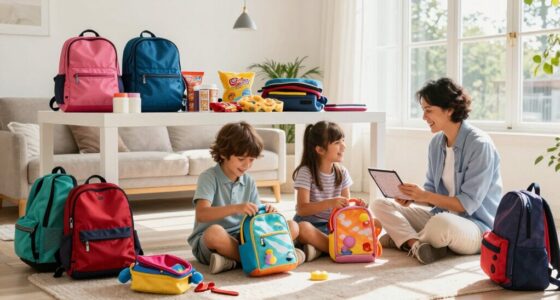
To keep kids on schedule while traveling, plan ahead by establishing consistent sleep and meal times that align with their routines. Bring familiar comfort items and snacks, and create a flexible schedule that allows for spontaneous adventures. Communicate clear expectations and reinforce routines with fun activities, rewards, and gentle reminders. Stay adaptable and reassess routines as needed to make travel enjoyable without sacrificing stability. Keep going to discover more tips on maintaining routines during your trip.

Get travel and outdoor gear delivered free with Prime
- Fast, free delivery on millions of items
- Prime Video, Amazon Music and more included
- Member-only deals all year
Key Takeaways
- Advance plan and schedule regular meal times, naps, and bedtimes to maintain consistency across environments.
- Incorporate familiar routines, comfort items, and favorite snacks to create a sense of security in new settings.
- Build a flexible travel schedule that balances planned activities with spontaneous moments to reduce stress.
- Keep routines simple, predictable, and adaptable, focusing on routine stability rather than strict adherence.
- Communicate routines and expectations clearly, using engaging methods like rewards and playful activities to reinforce habits.
As an affiliate, we earn on qualifying purchases.
Planning Ahead for Consistent Sleep and Meal Times

Planning ahead is key to maintaining consistent sleep and meal times. When you plan your child’s schedule in advance, you help preserve sleep consistency, making it easier for them to adjust to new environments. Set regular meal times that match your child’s usual routine, even when you’re away from home. This prevents hunger-induced fussiness and helps regulate their internal clock. Similarly, establish a consistent bedtime and wake-up time to promote restful sleep. Packing familiar items like a favorite blanket or sleepwear can reinforce routines and signal bedtime. Keep in mind that sticking to familiar meal timing and sleep schedules minimizes disruptions, reducing stress for both you and your child. Preparing beforehand ensures smoother transitions and helps your child feel secure despite changes in surroundings. Additionally, understanding sleep cues can guide you in recognizing when your child is ready for sleep, making it easier to maintain consistency. Being aware of daily routines can help you adapt your child’s schedule effectively during travel. Incorporating consistent routines into your trip planning can further support your child’s sense of stability and comfort. Moreover, maintaining a stable environment can also benefit from considering home-like settings, which can help your child adjust more quickly to new places.
As an affiliate, we earn on qualifying purchases.
Incorporating Familiar Routines Into New Environments

When you’re in a new environment, keeping bedtime consistent helps create a sense of stability. Bringing familiar snacks can also comfort your routines and ease shift. These small steps make it easier to maintain your habits despite the change around you. Additionally, maintaining familiar daily routines like specific activities or bedtime rituals can provide children with a sense of normalcy and reassurance. Implementing secure payment methods for booking accommodations or activities can further reduce stress and create a smoother experience for families on the go. Utilizing tuning techniques such as adjusting schedules to match your child’s natural rhythms can also help in maintaining consistency in unfamiliar settings. Being aware of supermarket hours in the area can help ensure you have access to essentials when needed, preventing disruptions to your routine. Incorporating preparing firewood in advance can also help establish a comforting routine, especially in outdoor or rustic environments, making transitions smoother.
Keep Bedtime Consistent
Adjusting to a new environment can disrupt your child’s usual bedtime routine, but maintaining consistency is key to helping them feel secure. Stick to familiar elements like bedtime stories, which signal that it’s time to wind down. Keep the sleep environment as similar as possible to home—use their favorite blanket, white noise, or nightlight if they’re accustomed to it. Avoid introducing new routines or distractions that could make falling asleep harder. If possible, start winding down at the same time each night, ensuring your child knows what to expect. Consistency in these small details reassures your child and helps them settle more easily, even amid the unfamiliar surroundings. The goal is to create a predictable, comforting bedtime routine they can rely on anywhere. Incorporating familiar elements into their routines helps maintain a sense of security in new environments. Additionally, being aware of support hours at local parks or attractions can help plan relaxing activities that align with your child’s routine and reduce stress during travel. Being mindful of air quality in the new location can also contribute to your child’s comfort and restful sleep. Recognizing signs of emotional distance can help you address any discomfort early and keep your child feeling safe and loved during your trip.
Use Familiar Snacks
In unfamiliar environments, small familiar routines can provide a sense of comfort and stability. Offering your child familiar snacks helps them feel secure amid new surroundings. Choose snacks with favorite flavors they enjoy, which can make snack time less stressful. Incorporate healthy hydration options, like water or diluted juice, to keep them refreshed and energized. Having these go-to snacks and drinks on hand maintains a sense of routine and minimizes fussiness. It also reassures your child that some aspects of their day remain consistent, even in a different place. Keep snacks accessible and easy to grab, so they don’t feel overwhelmed or hungry at inopportune moments. Using familiar snacks and flavors helps your child settle in more quickly and adapt smoothly to their new environment. Additionally, selecting security systems with reliable features can offer parents peace of mind while managing routines on the go. Ensuring your home has effective filtration can also contribute to a healthier environment for your family during travel periods. Recognizing the importance of traditional tea ceremony elements like mindfulness and respect can inspire routines that promote calmness and stability in daily life. Incorporating skincare patches into daily routines, for example, can help maintain consistency and a sense of normalcy for your child’s self-care habits. Moreover, choosing performance upgrades, such as improved suspension or handling, can enhance your vehicle’s comfort and safety during long trips, making travel more enjoyable for everyone.
children's travel snack containers
As an affiliate, we earn on qualifying purchases.
As an affiliate, we earn on qualifying purchases.
Creating a Travel-Friendly Schedule That Flexes With Adventures

Creating a travel-friendly schedule that adapts to your adventures requires balancing structure with flexibility. Start by mapping out a basic daily routine, then leave room for spontaneous activities. Use a travel journal to record your plans and note how your kids respond to different routines, helping you adjust as needed. Keep a packing checklist handy to ensure essentials are always accessible, making it easier to switch between planned activities and unexpected excursions. Flexibility helps your kids stay comfortable and engaged, even when plans shift. Remember, the goal is to maintain some consistency while embracing new experiences. Incorporating child-centered scheduling can further ensure your children’s needs are prioritized during travel. Additionally, a clear understanding of bedroom organization can help keep your space tidy and reduce stress during busy travel days. Practicing space maximization techniques in your accommodations can create a more comfortable environment for everyone. Applying principles of design thinking can assist in developing creative solutions to common travel challenges, ensuring your schedule remains adaptable and effective. Recognizing how automation can streamline routines may also help in managing your time more efficiently. By staying organized and adaptable, you’ll create a schedule that supports routine stability without limiting the fun of your trip.
As an affiliate, we earn on qualifying purchases.
Packing Essential Items to Support Routine Maintenance

To keep your routines on track while traveling, packing essential items that support consistency is crucial. Bring along familiar comfort items like a favorite blanket or stuffed animal to provide reassurance during unfamiliar environments. Travel toys can help maintain your child’s usual play and learning routines, offering comfort and familiarity amidst new surroundings. Make sure to pack enough of these items to last the trip, especially if they’re used frequently. Having familiar items on hand reduces anxiety and creates a sense of stability for your child. Keep these essentials organized in a dedicated bag or container so you can quickly access them when needed. Additionally, using headphones can help children focus during travel or quiet time by reducing background noise and creating a calming environment. Incorporating appropriate camping gear, such as portable lighting and sleeping arrangements, can further foster a sense of normalcy and routine in new settings. Being mindful of home maintenance routines, even while traveling, can help ensure that your home stays clean and safe during your absence. Maintaining security measures, such as monitoring with Ring cameras, can also provide peace of mind. Understanding how prophetic dreams might influence your child’s bedtime routines or sleep patterns can also be beneficial in maintaining consistency. By thoughtfully packing comfort items and travel toys, you help your child feel secure and support routine maintenance throughout your journey.
Communicating Expectations and Setting Boundaries
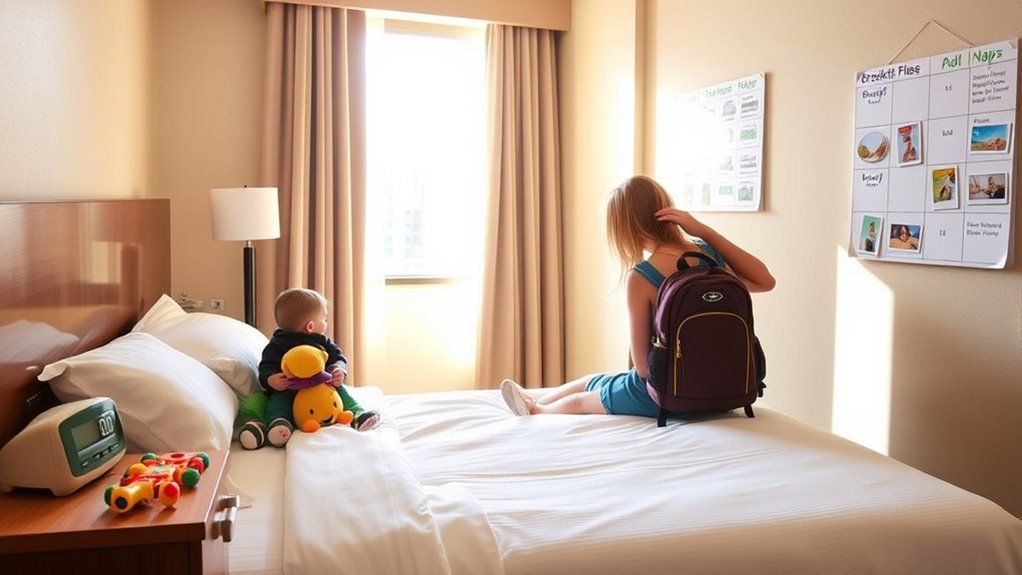
To maintain routines effectively, you need to communicate your expectations clearly and set firm boundaries. Establishing consistent rules helps everyone know what’s expected and avoids confusion. Using a steady communication style reinforces these boundaries and keeps routines on track.
Establish Clear Rules
How can you guarantee everyone knows what’s expected? Clear rules are essential for effective behavior management and smooth rule enforcement. Start by discussing expectations with your kids before traveling, making sure they understand the importance of boundaries. To add depth, focus on these key steps:
- Clearly define rules that are simple and age-appropriate.
- Explain the reasons behind each rule to foster understanding.
- Consistently reinforce rules, addressing violations promptly and calmly.
Consistent Communication Style
Maintaining a consistent communication style is vital for helping your kids understand expectations and boundaries. When you speak clearly and calmly, your kids are more likely to follow rules, even in unfamiliar environments. Use simple language and reinforce boundaries with parenting humor to keep things light but firm. For example, remind them, “No matter where we are, our travel gear stays in the backpack,” to set clear limits. Consistency in your tone and messaging helps children feel secure and reduces misbehavior. Remember, kids pick up on your cues, so stay steady and avoid mixed signals. When boundaries are clear, it’s easier to manage shifts and keep everyone on schedule—even when navigating busy airports or new hotels. Your steady communication builds trust and sets a positive example.
Using Fun Activities to Reinforce Routine Habits

Incorporating fun activities into your daily routine can make sticking to habits feel less like a chore and more like an enjoyable part of your day. You can use interactive games to turn routine tasks into engaging challenges, encouraging your kids to participate willingly. Reward charts are also effective; they visually track progress and motivate children to maintain good habits. To boost motivation, consider these strategies:
- Integrate interactive games that tie into daily activities, such as brushing teeth or tidying up.
- Use reward charts to celebrate small wins and provide clear goals.
- Incorporate quick, fun breaks between routines to keep energy levels high.
These methods help reinforce routine habits in a playful, memorable way that resonates with kids.
Adjusting and Reassessing Schedules During the Trip

When you’re on the go, sticking to the same routines can be challenging, especially with a changing schedule and new surroundings. To stay flexible, regularly review your plans and listen to your child’s cues. Use travel journaling to track what works and what doesn’t, helping you identify patterns and adapt as needed. Be prepared to shift meal times, naps, or bedtime if circumstances change. Routine flexibility isn’t about abandoning your structure but adjusting it to fit your current environment. Reassessing schedules ensures everyone stays comfortable and minimizes stress. Remember, the goal is to maintain consistency while embracing the spontaneity of travel. By staying attentive and adjusting thoughtfully, you help your child feel secure even in unfamiliar settings.
Frequently Asked Questions
How Can I Handle Routine Disruptions Caused by Unexpected Delays?
When unexpected delays disrupt your routine, stay flexible and adapt quickly. Use travel journaling to track what works and plan adjustments, like shifting meal or nap times. Keep packing essentials handy for quick changes, and reassure your kids with calm explanations. By staying organized and flexible, you’ll minimize stress and help your children adjust smoothly, ensuring your trip remains enjoyable despite surprises.
What Are Quick Tips for Calming Children if Routines Are Interrupted?
When routines are disrupted, use simple parenting strategies like deep breathing or counting to help calm your child. Offer a comforting object or distraction, like a favorite toy or story, to ease their anxiety. Stay patient and gentle, reinforcing security with positive words. Quick calming techniques like gentle rocking or a quiet hug can also help. These approaches keep your child centered, even amid unexpected changes.
How Do I Maintain Routines in Unfamiliar Accommodation Settings?
To keep routines in unfamiliar accommodations, start by adjusting sleep schedules gradually before your trip. Pack familiar essentials like favorite blankets, toys, or bedding to create a sense of comfort. Upon arrival, stick to familiar mealtime and bedtime routines as closely as possible. Keep a consistent schedule, and involve your kids in setting up their space to help them feel secure and maintain a sense of normalcy despite the new environment.
How Can I Involve Kids in Adapting Their Routines During Travel?
You can involve your kids in adapting routines during travel by encouraging family involvement and routine adjustment. Let them share their preferences and ideas for meals, activities, or bedtimes, making them feel part of the process. Together, create flexible routines that fit your travel schedule. This approach helps kids feel more comfortable and in control, easing transitions and making travel more enjoyable for everyone.
What Are Signs My Child Is Struggling With Routine Changes?
Think of your child as a delicate plant needing consistent sunlight and water. If you notice behavior cues like irritability, withdrawal, or difficulty sleeping, it’s a sign they’re struggling with routine changes. Emotional responses like increased tantrums or clinginess also show they’re overwhelmed. Pay close attention to these signals, and gently help them adapt, offering reassurance and familiar comforts to help them feel secure amid the change.
Conclusion
By planning ahead and staying flexible, you can turn travel into a seamless adventure where routines serve as your guiding stars. Think of your schedule as a gentle river, adaptable yet steady, flowing alongside your family’s discoveries. With a little preparation and patience, you’ll create a harmony that keeps kids happy and grounded, no matter where the journey takes you. After all, the best memories are made when routines and adventures dance beautifully together.
Halloween Picks
halloween
As an affiliate, we earn on qualifying purchases.