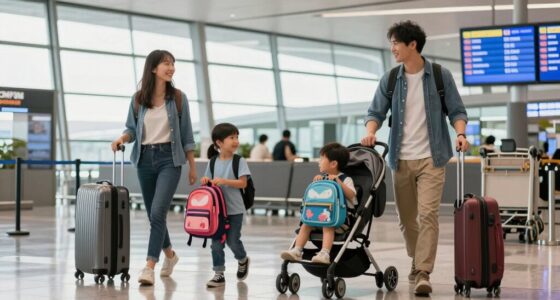
Traveling with preschoolers means you need to plan lightweight, versatile packing and focus on short, engaging activities that suit their needs. Flexibility is key, as their moods and energy levels can change quickly. Unlike trips with older kids, you’ll want to stay relaxed, include comfort items, and build in plenty of breaks. If you want to discover more about how your travel approach should adapt, keep exploring these helpful tips.

Get travel and outdoor gear delivered free with Prime
- Fast, free delivery on millions of items
- Prime Video, Amazon Music and more included
- Member-only deals all year
Key Takeaways
- Travel with preschoolers requires more flexible planning due to unpredictable moods and energy levels.
- Packing emphasizes lightweight, multi-purpose items and comfort essentials for shorter attention spans.
- Activities need to be shorter, engaging, and adaptable to prevent overwhelm and fatigue.
- Travel times should align with preschoolers’ sleep schedules, unlike older kids who can handle longer periods.
- Greater emphasis on comfort, familiar items, and spontaneous breaks distinguishes travel with preschoolers from older children.

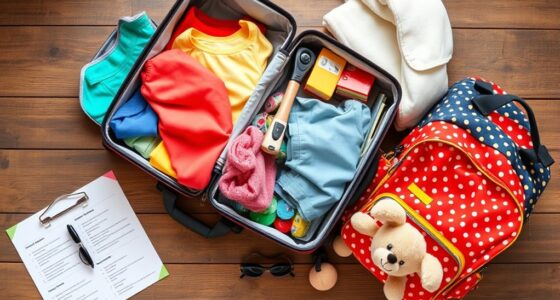
Traveling with preschoolers can be a whirlwind of activity, challenges, and surprises, often requiring more constant supervision and patience. When you’re on the go with little ones, your packing strategies become essential. Instead of overloading your suitcase, focus on packing versatile, lightweight items that serve multiple purposes. Think snacks, extra clothing, and familiar comfort items to ease your child’s shift into new environments. Keep a well-organized bag with essentials like wipes, a small toy, and a favorite blanket, so you’re prepared for quick changes or unexpected delays. With preschoolers, it’s also helpful to pack fewer toys but choose those that are engaging and portable, helping to keep your child occupied during long waits or travel hours.
It’s equally important to tailor your itinerary planning to suit your child’s needs. Unlike traveling with older kids who can handle longer outings or more structured schedules, preschoolers thrive on routine and short activities. You’ll want to plan a flexible itinerary, allowing plenty of time for breaks, snacks, and naps. When mapping out your day, include kid-friendly stops like parks, playgrounds, or interactive museums that can keep your preschooler engaged without overwhelming them. Avoid cramming too much into each day; instead, prioritize quality over quantity, so your child remains interested and excited, not exhausted or overwhelmed.
Traveling with preschoolers also means you need to anticipate their unpredictable moods and energy levels. This impacts your planning—be ready to adapt your itinerary on the fly. Sometimes, what was supposed to be a quick sightseeing stop turns into a spontaneous play break. Having a flexible approach reduces stress and keeps everyone happier. Additionally, consider travel times carefully—early mornings or late afternoons might be better for long drives or flights when your child is naturally more subdued or sleepy.
In terms of packing strategies, don’t forget to include essentials like a change of clothes, hats, and sunscreen, especially if you’re heading outdoors. For mealtimes, carry portable snacks and utensils that your preschooler recognizes and enjoys. This not only minimizes fuss but also keeps your child nourished and content. Moreover, understanding the benefits of age-appropriate travel gear can make your journeys smoother and more enjoyable for everyone.
Products Worth Considering

Apple AirPods Pro 3 Wireless Earbuds with Active Noise Cancellation

DJI Osmo Mobile 8 Standard Combo Phone Gimbal Stabilizer

Kindle Paperwhite Signature Edition 32GB (2024) – Auto-adjusting front light, wireless charging, weeks battery life – Metallic Jade
As an affiliate, we earn on qualifying purchases.
Frequently Asked Questions
How Do Travel Needs Differ for Preschoolers Versus Older Children?
When traveling with preschoolers, you need childproofing essentials to keep them safe, like outlet covers and secure furniture. They require more frequent breaks, snacks, and dietary accommodations to suit their smaller appetites and preferences. Older kids can handle more independence and longer activities. You’ll want to plan activities that match their interests and energy levels, ensuring safety and comfort for both age groups during your trip.
What Safety Considerations Should I Prioritize for Different Age Groups?
You should prioritize childproofing measures like outlet covers, securing furniture, and keeping small objects away from all age groups. For preschoolers, make certain windows and doors are locked and sharp objects are out of reach. For older kids, focus on emergency preparedness by teaching safety protocols and having a first aid kit handy. Always supervise closely and adapt safety measures based on your child’s age and activities to prevent accidents.
How Can I Keep Preschoolers Entertained During Long Trips?
Imagine your preschooler’s eyes lighting up as you reveal a surprise activity. Keep them entertained with creative activities like coloring books or simple crafts, and pack snack ideas that are fun and easy to eat, like fruit skewers or mini sandwiches. These engaging options turn long trips into adventures, making time fly. With a little prep, you’ll keep your little one happy, busy, and excited for the journey ahead.
What Travel Gear Is Essential for Older Kids Compared to Preschoolers?
For older kids, you’ll want to pack backpack essentials like portable chargers, headphones, and a variety of snacks to keep them engaged. Tech gadgets such as tablets or e-readers are also key, helping them stay entertained and connected during travel. Unlike preschoolers, older kids benefit from these tools, making long trips more manageable. Be sure to include charging cords and protective cases to keep their gadgets safe throughout the journey.
How Does Travel Impact Children’s Routines at Different Ages?
Travel impacts children’s routines differently at each age, shaping meal routines and sleep schedules uniquely. You adapt by maintaining consistent meal times to keep routines steady and adjusting sleep schedules gradually to fit new environments. With preschoolers, expect more disruption, requiring flexible plans. Older kids handle changes better, but you still need to prioritize familiar routines to help them feel secure. Staying consistent helps children of all ages adjust more smoothly while traveling.
Conclusion
Traveling with preschoolers is a whirlwind of surprises, while older kids bring a different kind of excitement. No matter their age, remember that every journey shapes their growth and your bond. As the saying goes, “It’s not the destination, but the journey.” Embrace the chaos and cherish the moments—they’ll become your favorite stories to tell. So, pack your patience and enjoy every step of the adventure together.