

Choosing between a backpack and a suitcase for Europe depends on your travel style. If you want ease of movement, quick access, and explore city streets or uneven terrain comfortably, a backpack suits better. But if you prefer more packing space, organization, and longer stays in smooth environments, a suitcase is ideal. Consider your trip duration, destinations, and comfort. Want to find out which option matches your plans? Keep exploring for detailed insights.
Key Takeaways
- Backpacks offer better mobility and hands-free convenience for navigating crowded streets, uneven terrains, and stairs in Europe.
- Suitcases provide more packing capacity, organization, and better protection for longer or multi-destination trips.
- Backpacks are ideal for short trips, urban exploration, and minimalist packing, while suitcases suit business or luxury travel needs.
- Consider comfort, style, and weight to match your travel duration, terrain, and personal preference.
- Budget-friendly backpacks help avoid baggage fees, but durable suitcases ensure security and longevity during transit.
Mobility and Ease of Transportation
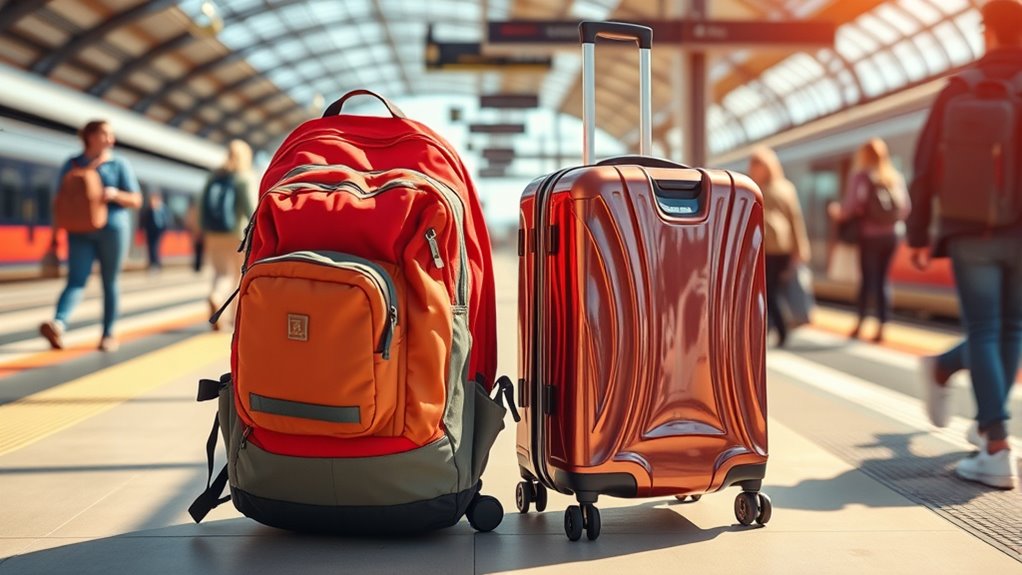
When it comes to mobility and ease of transportation in Europe, a backpack often offers distinct advantages over a suitcase. With a backpack, maneuvering airports becomes simpler—you can carry it through terminals without worrying about wheels or bulky handles. It’s easier to steer in crowded streets and narrow alleyways, making city exploration more flexible. You won’t struggle with pulling a heavy suitcase up stairs or over uneven cobblestones. Plus, backpacks allow quick access to essentials during transit or sightseeing, saving time and hassle. They’re lightweight and compact, so you can keep moving without delays. Overall, a backpack helps you stay agile, making your European adventures smoother, whether you’re hopping on trains, walking through historic streets, or navigating busy airports. Proper load management is also key to avoiding fatigue and maintaining comfort during long days of travel. Additionally, choosing a backpack with ergonomic features can prevent discomfort and support your posture during extended wear.
Packing Capacity and Organization
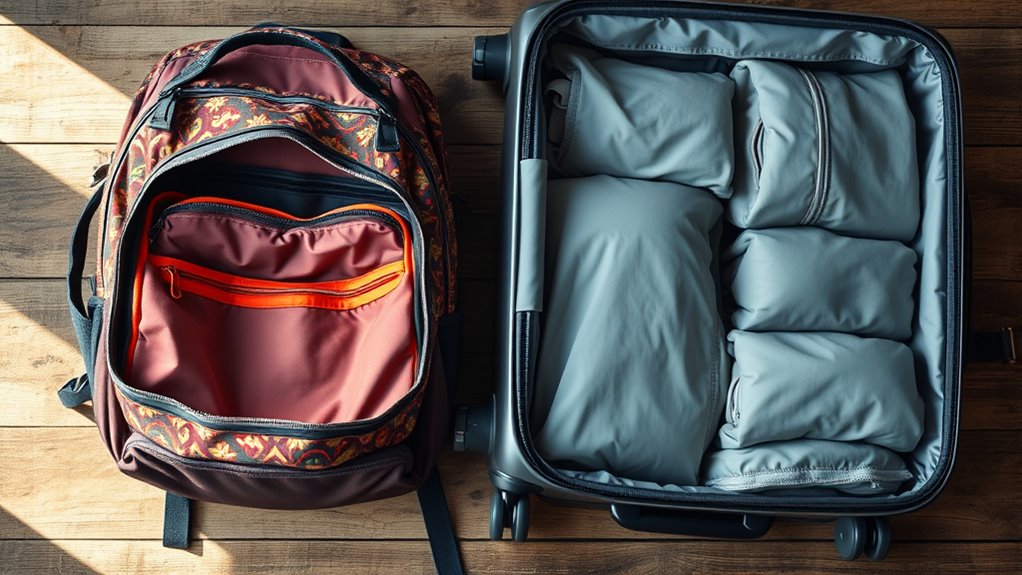
Backpacks generally offer less packing capacity than suitcases, which can be a limitation if you tend to bring many items or plan longer stays. To maximize space and stay organized, packing cubes are essential. They help compartmentalize your belongings, making it easier to find items quickly and keep everything compact. A suitcase often provides more compartments and larger space, allowing you to pack more efficiently. Proper weight distribution is vital, whether using a backpack or suitcase. When packing a backpack, distributing weight evenly across your shoulders prevents strain. With a suitcase, keep heavier items near the wheels to make rolling easier and reduce strain on your arms. Overall, your choice impacts how well you organize and access your belongings during your trip. Additionally, understanding Honda Tuning can help if you’re interested in customizing your vehicle for better performance and handling during your travels. Moreover, considering cost and budgeting options can help you manage expenses effectively when preparing for your trip. Being aware of packing strategies can further optimize your luggage organization and efficiency. Proper packing techniques can also help prevent damage to fragile items in your luggage, and exploring luggage technology innovations can enhance your packing experience.
Comfort and Convenience During Travel

When it comes to comfort and convenience, maneuvering your bag easily through crowded stations or narrow streets makes a big difference. Lightweight options reduce fatigue, letting you explore longer without feeling weighed down. Easy access and organized packing help you find what you need quickly, saving time and hassle during your trip. Additionally, choosing a portable power station can keep your devices charged on the go, ensuring you stay connected and powered up throughout your journey.
Lightweight Maneuverability
Choosing between a backpack and a suitcase often comes down to how easily you can move through busy streets and crowded stations. For lightweight maneuverability, backpacks excel because they keep your hands free, making urban exploration easier. They’re ideal for navigating uneven cobblestones or narrow alleyways during cultural immersion. Suitcases, especially those with wheels, can be cumbersome on uneven terrain, slowing you down. Consider these points:
- Backpacks distribute weight evenly, reducing fatigue during long walks
- Suitcases with four wheels can glide smoothly but may catch on uneven surfaces
- Backpacks are more discreet and less likely to bump into crowds
- Suitcases are bulkier and less agile in tight spaces
- Lightweight design is a key factor when selecting travel luggage to enhance mobility.
- When choosing your travel luggage, consider the ease of mobility across various terrains for a more comfortable journey.
Your choice depends on your travel style and terrain, but for ease and flexibility, a lightweight backpack offers superior maneuverability.
Easy Access and Packing
Since convenience often hinges on quick and easy access to your belongings, your choice of luggage impacts your travel experience considerably. A suitcase with multiple compartments allows you to organize items efficiently, making packing and retrieval simple even during tight schedules. Conversely, a backpack offers quick access to essentials without opening the entire bag, which is helpful when maneuvering through busy airports or train stations. Keep in mind that language barriers can make asking for help difficult; having well-organized packing can save time and reduce frustration. Additionally, securing your belongings with travel insurance provides peace of mind if luggage is lost or delayed. For those using projectors during travel, understanding portability features can further improve your experience by making setup and packing more manageable. Being aware of cookie policies also helps ensure a smoother browsing experience when researching travel gear online. Proper storage techniques for your luggage can also help maintain organization and protect your belongings during transit.
Suitability for Different Types of Trips

The type of trip you’re planning can greatly influence whether a backpack or suitcase is more suitable. For luxury travel or business trips, a sleek suitcase often presents a professional appearance and easier organization. If your trip involves a mix of urban exploration and rural adventures, a backpack offers flexibility and mobility. Consider your itinerary:
- Long stays in one city may favor a suitcase for easy packing.
- Multi-destination trips benefit from a backpack’s portability.
- Business trips often require a professional look, making a suitcase ideal.
- Adventure travel or hiking days are better suited for backpacks.
Your choice hinges on trip style: luxury travel and business trips lean toward suitcases, while casual or multi-activity trips favor backpacks for convenience and adaptability. Being aware of small mistakes like overpacking or poor organization can help you make better packing choices and avoid unnecessary hassle during your travels. Additionally, understanding juice detox side effects can ensure your health isn’t compromised during wellness-focused trips. Recognizing narcissistic traits in travel companions can also help maintain healthy boundaries and avoid manipulative behaviors during your journey. Moreover, considering IRA withdrawal strategies can optimize your financial planning if your trip involves managing retirement funds. Planning ahead for luggage security can also prevent issues like theft or loss during transit.
Durability and Security Features
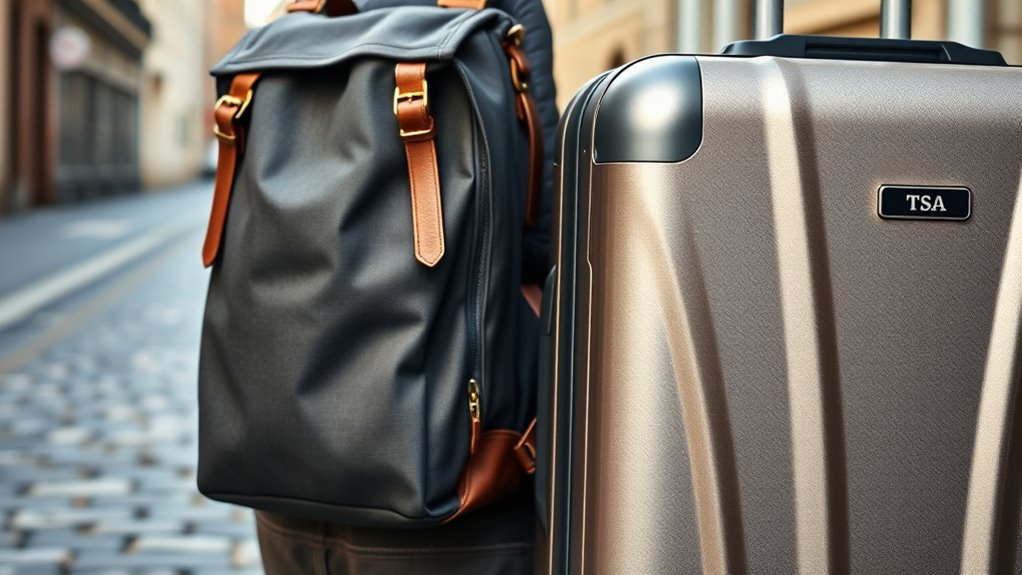
When it comes to durability and security, your luggage needs to withstand the rigors of travel while keeping your belongings safe. Material strength is vital; a sturdy suitcase with reinforced corners and robust fabric resists tears and impacts. For backpacks, look for high-denier fabrics like ballistic nylon or polyester, which offer better resilience. Security locks are essential; choose luggage with integrated combination or TSA-approved locks to prevent theft and facilitate airport security checks. Hard-shell suitcases often provide superior protection against rough handling, while padded backpacks can protect fragile items if made from quality materials. Additionally, selecting a textile line that is resistant to water and abrasions can significantly extend the lifespan of your luggage. Ultimately, prioritizing durable materials and reliable security features ensures your travel gear remains intact and your belongings stay secure, no matter the journey’s challenges.
Style and Aesthetic Considerations
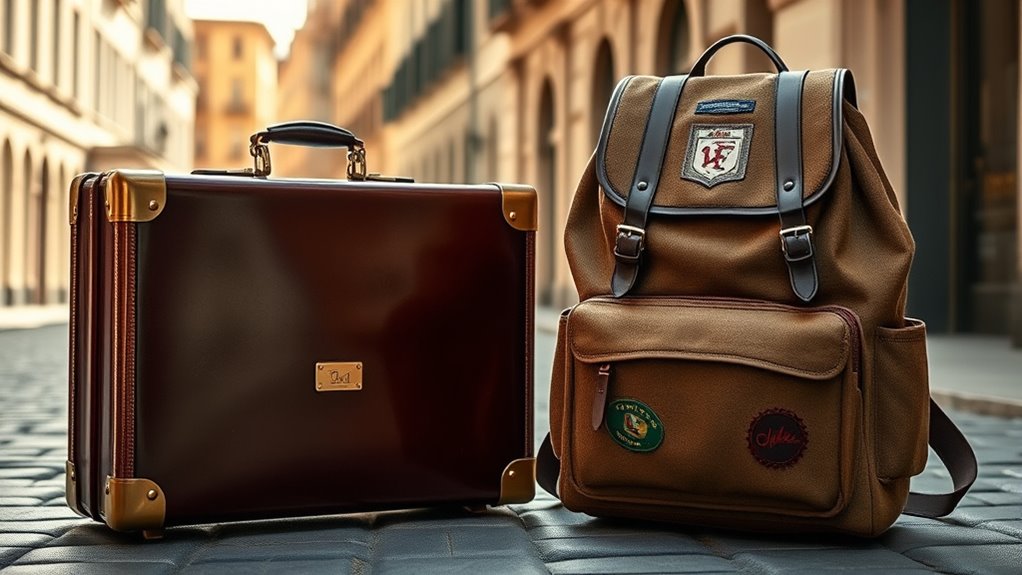
Choosing luggage that looks good often matters just as much as its durability. Your travel style can be enhanced by matching your luggage to current fashion trends and ensuring color coordination. A sleek, modern suitcase with minimalist design complements a chic, urban look, while a backpack with bold patterns or vibrant colors can showcase your personality. Consider the following:
Style and durability go hand in hand—choose luggage that complements your look and expresses your personality.
- Staying in sync with seasonal fashion trends
- Picking colors that match your wardrobe
- Choosing styles that reflect your personality
- Opting for finishes like matte or glossy for visual appeal
- Selecting luggage that complements your overall travel aesthetic to elevate your style during your European adventures. Additionally, considering the overall weight and size of your luggage can influence your comfort and mobility while navigating European cities and airports. Being mindful of luggage weight can help prevent extra fees and make airport transfers smoother, ensuring a more enjoyable journey. Paying attention to luggage materials can also impact durability and style, helping your luggage withstand the rigors of travel while maintaining a fashionable look. Recognizing the importance of material quality can ensure your luggage remains both stylish and functional throughout your trip.
Cost and Budgeting Factors
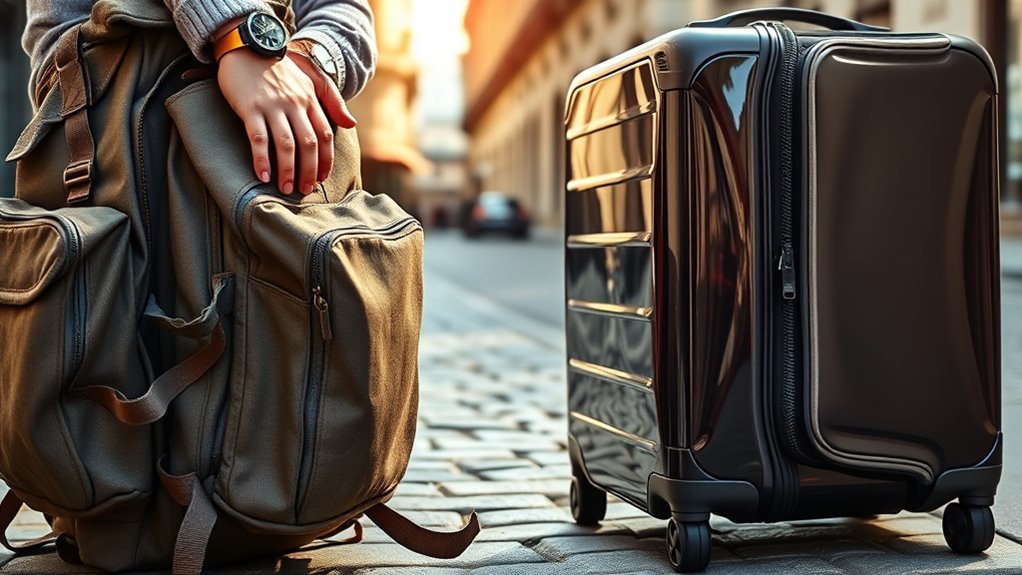
Budget considerations play a pivotal role in selecting between a backpack and a suitcase for your European trip. Your choice can impact expenses like travel insurance, as some policies have weight or size restrictions. A backpack generally costs less upfront and may help you avoid checked baggage fees, saving you money. When it comes to currency exchange, a lightweight pack makes it easier to carry cash and cards securely, reducing the risk of loss or theft. Additionally, a backpack offers flexibility in maneuvering through crowded transportation hubs, potentially saving you from costly delays. If you’re watching your budget, opting for a lightweight, durable backpack can streamline your expenses and help you make the most of your trip without overspending. Proper packing techniques and choosing the right type of luggage can also minimize additional charges and improve overall travel efficiency, especially for those unfamiliar with luggage regulations. Being aware of cost and budgeting factors can further help you plan effectively and avoid unexpected expenses during your journey. For example, understanding the modern farmstead trends can inspire you to pack versatile clothing suitable for various settings. Moreover, considering the aesthetic hooks and wall organization solutions can help you keep your belongings neat and accessible during your travels, reducing stress and additional costs. Additionally, selecting luggage with transparent sourcing and manufacturing processes can ensure you are making environmentally conscious choices that align with your budget and values.
Frequently Asked Questions
Which Luggage Type Is Better for Navigating Cobblestone Streets?
A backpack is better for steering cobblestone streets because it offers better wheel durability and easier maneuverability on uneven surfaces. You can carry it comfortably on your back, reducing the risk of tipping or getting stuck. Plus, backpacks often have flexible storage capacity, making it simple to access your essentials quickly. Suitcases with hard wheels may struggle on cobblestones, making a backpack the more practical choice for rough terrain.
How Do Luggage Types Impact Airline Baggage Fees?
Luggage types impact airline baggage fees like a domino effect. If you choose a larger suitcase, you’re more likely to hit weight limits and pay extra, due to stricter airline baggage policies and luggage size restrictions. A compact backpack might keep you under weight limits and avoid additional fees. Always check your airline’s baggage policies before packing, so you won’t be caught off guard at the gate.
Are Backpacks or Suitcases More Suitable for Long-Term Travel?
For long-term travel, backpacks are more suitable because they boost packing efficiency and are easier to carry through varied terrains. You can organize your belongings better and access essentials quickly. Plus, they offer style versatility, allowing you to adapt your look for different occasions. Suitcases work well for formal settings but may limit mobility and packing flexibility, making backpacks the smarter choice for extended adventures.
How Do Luggage Options Affect Security During Transit?
Luggage options considerably impact your security during transit. Backpacks are easier to access, so they pose higher security concerns if left unattended, while suitcases with locks offer better transit safety. Choose a suitcase with reliable locks or anti-theft features to protect your belongings. For added security, consider luggage with built-in tracking or tamper-proof zippers, ensuring your items stay safe and secure throughout your journey.
Which Is Easier to Carry for Individuals With Physical Limitations?
You’ll find a backpack easier to carry if you have physical limitations because of its ergonomic design and accessibility features. It distributes weight evenly across your shoulders and back, reducing strain. Look for models with padded straps and adjustable settings to improve comfort. Suitcases with lightweight frames and built-in wheels are also helpful, but they may require more effort to maneuver if you have mobility challenges. Prioritize ergonomic considerations for a more manageable experience.
Conclusion
Ultimately, choosing between a backpack and a suitcase shapes your journey’s story. Picture yourself strolling cobblestone streets with a backpack snug against your shoulders or gliding smoothly through bustling airports with a suitcase rolling behind. Think about your trips—urban adventures or rural escapes—and which style fits best. Whatever you pick, let it be a trusted companion that makes every step feel effortless, turning your travel dreams into vivid, unforgettable memories.


