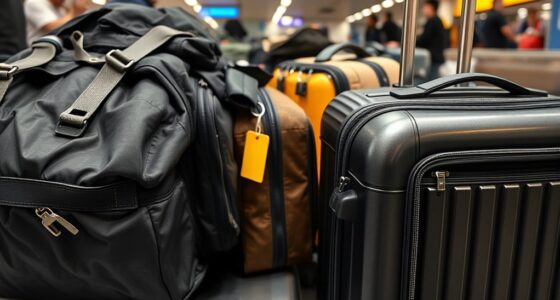
To shrink your load with compression straps, start by rolling your clothes to save space and use straps to tightly secure everything in your luggage. Wrap the straps around your packed bag, adjusting the tightness with quick-release buckles or sliders to prevent over-tightening. Keep straps accessible for inspection or adjustments, and always check airline size limits beforehand. If you want to optimize your packing further, there’s more useful advice to explore below.
Key Takeaways
- Wrap compression straps around packed luggage and pull ends tightly to maximize space and secure belongings.
- Use adjustable buckles or sliders to customize tension without over-tightening, preventing damage.
- Pack straps in accessible compartments for easy removal during security checks or inspections.
- Check airline size and weight restrictions to ensure compressed luggage remains compliant.
- Avoid over-tightening straps to prevent damage to fragile items and maintain luggage integrity.

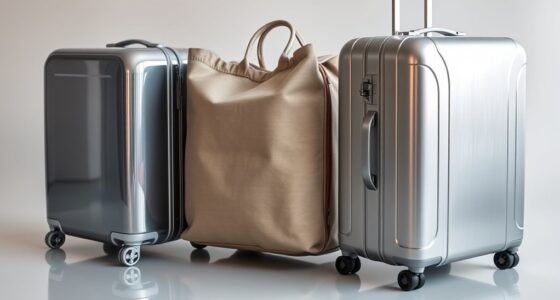
When packing your luggage, using compression straps can make a significant difference in maximizing space and keeping your belongings secure. These straps are a simple yet effective packing technique that helps you tighten and compress your clothes and other items, allowing you to fit more into a smaller space. As you prepare for your trip, consider how compression straps can streamline your packing process and help you stay organized. They’re especially useful if you tend to overpack or want to avoid the hassle of bulky luggage. By compressing your clothes, you not only save space but also reduce the risk of items shifting during transit, which can cause damage or mess up your carefully organized bag. Incorporating safe packing practices ensures that your luggage remains within airline regulations and minimizes the risk of damage during handling.
Using compression straps maximizes space and keeps belongings secure during travel.
However, it’s important to keep airline regulations in mind when using compression straps. Many airlines have specific rules regarding the size and weight of checked and carry-on luggage. Overly tight straps can sometimes make your bag appear more compact, but if they cause your luggage to exceed size limits, you might face additional fees or delays. Always check the airline’s baggage policies before packing, ensuring your use of compression straps doesn’t violate any restrictions. Also, be aware that some airlines might require you to remove straps or loosen your packing if they need to inspect your luggage, so plan to pack your straps in an accessible pocket or compartment.
When applying compression straps, start by packing your items efficiently, rolling clothes instead of folding them to save even more space. After placing your belongings in the luggage, wrap the straps around the bag, pulling the ends tightly to compress the contents. Many straps come with quick-release buckles or adjustable sliders, allowing you to customize the compression level easily. Be careful not to over-tighten, as excessive pressure could damage delicate items or cause the bag to bulge unnaturally, which might not be airline-compliant. Also, ensure the straps are securely fastened so they don’t come loose during transit.
Incorporating compression straps into your packing routine is a smart move for frequent travelers or anyone looking to optimize their luggage. They’re lightweight, reusable, and easy to use, making them a practical addition to your travel gear. Just remember to pack smartly by balancing compression with airline regulations, and always double-check your luggage dimensions before heading to the airport. With the right packing techniques, compression straps can help you travel more efficiently, avoid extra fees, and ensure your belongings arrive safely at your destination.

BAGAIL 8 Set Packing Cubes Luggage Packing Organizers for Travel Accessories-Cream
Premium Fabric: Smooth and durable fabric protects clothes from wrinkles and stains; high performance feature makes the packing...
As an affiliate, we earn on qualifying purchases.
Frequently Asked Questions
Are Compression Straps Suitable for All Luggage Types?
Compression straps aren’t suitable for all luggage types. You should consider material compatibility; some fabrics like soft nylon or mesh may not hold the straps well, risking damage. Also, check strap durability—strong, reinforced straps work best for rigid suitcases or backpacks. Avoid using them on delicate or flexible luggage, as improper fit can cause tearing or uneven compression, reducing effectiveness and possibly damaging your gear.
How Do Compression Straps Affect Luggage Security?
Compression straps can improve your luggage security by keeping contents tight and reducing movement. However, they also pose security risks if the straps are weak or damaged, as compromised strap integrity could allow theft or accidental opening. Always check the straps for signs of wear before use, and avoid over-tightening, which might stress the material and weaken security. Properly maintained straps help secure your bag effectively during travel.
Can Compression Straps Damage Fragile Items Inside the Bag?
Yes, compression straps can harm fragile items inside your bag if the strap pressure is too tight. You might accidentally crush delicate objects like glass or electronics, so it’s essential to loosen straps around fragile items or place them in padded compartments. Always check the pressure and confirm that the straps hold your load securely without applying excessive force, protecting your fragile items from potential damage during travel.
Do Compression Straps Add to Luggage Weight?
Did you know that compression straps typically add less than a pound to your luggage? While they do contribute some weight, their strap durability means they hold your items securely without breaking or wearing out. So, yes, compression straps add a little weight, but their benefits in keeping your belongings compact and safe outweigh the minimal weight addition. You’ll find they’re a smart, lightweight way to maximize your packing space.
Are There Best Practices for Storing Compression Straps?
Yes, there are best practices for storing compression straps. You should keep them in a dedicated storage organization, like a small pouch or mesh bag, to prevent tangling and damage. Regular strap maintenance involves cleaning them with mild soap and checking for frays or wear. When not in use, store straps flat or rolled up to maintain their elasticity and prolong their lifespan, making packing easier and more efficient.
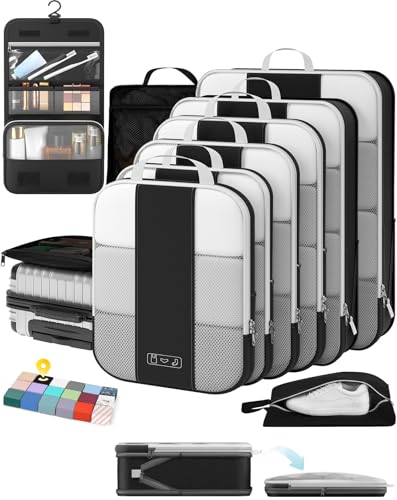
OlarHike 10 Set Compression Packing Cubes for Travel Essentials,Compressible Expandable Space Saver Bags for Organizing Clothes,Luggage Suitcase Garment Bags with Over 1000 pcs Mesh Holes(Black)
All-in-One Travel Storage Solution - Say goodbye to chaotic packing! This comprehensive set includes four compression packing cubes...
As an affiliate, we earn on qualifying purchases.
Conclusion
So, next time you think those compression straps are just about squeezing more into your luggage, remember—they’re really about giving you a tiny illusion of extra space. Because no matter how tight you pull, your belongings still have a way of expanding when you’re not looking. Sometimes, the real trick isn’t shrinking your load, but accepting that no strap can truly contain your travel chaos. Safe travels—just don’t forget to pack patience along with your luggage.

Veken 10 Set/8 Set Packing Cubes for Travel Essentials,Anti-Wrinkle Buckled Suitcase Organizer for Shoe & Toiletry Bag,Carry On Luggage Bag for Airplane & College Dorm Room Accessories,Women Men Gifts
Stress-Free Traveling: Packing cubes help sort, organize, and quickly locate items, reducing the stress of packing. Keep your...
As an affiliate, we earn on qualifying purchases.

BAGAIL 8 Set Packing Cubes Luggage Packing Organizers for Travel Accessories-Matcha Green
Premium Fabric: Smooth and durable fabric protects clothes from wrinkles and stains; high performance feature makes the packing...
As an affiliate, we earn on qualifying purchases.