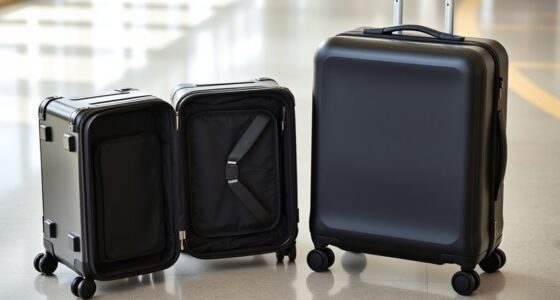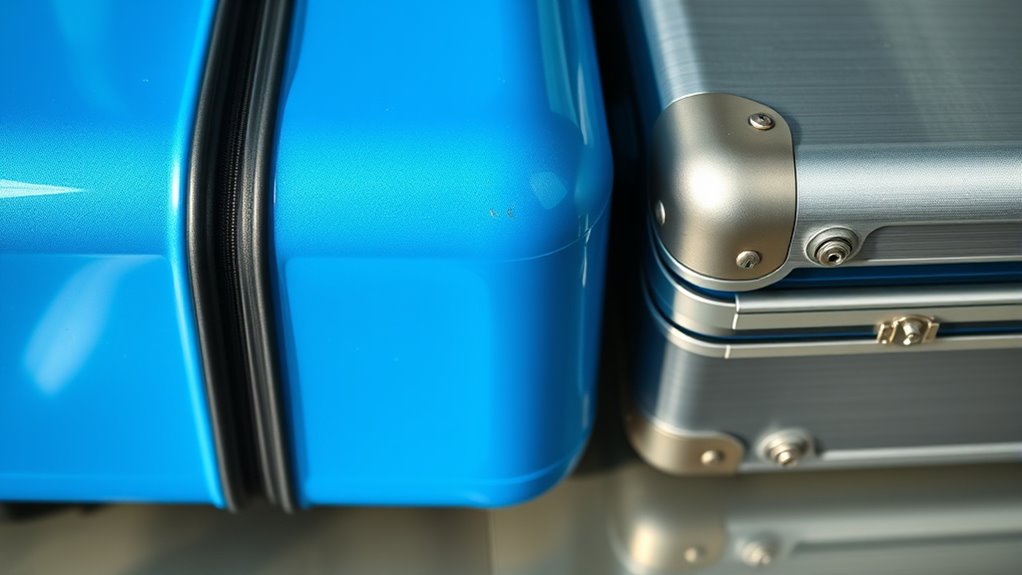

When choosing between polycarbonate and aluminum luggage, your decision hinges on durability and travel style. Polycarbonate is lightweight, highly impact-resistant, and less prone to scratches, making it ideal if you often face rough handling or need to keep weight low. Aluminum, on the other hand, is more rigid and offers superior protection but can dent or scratch over time. To discover which suits your journey best, explore the detailed differences that follow.

Get travel and outdoor gear delivered free with Prime
- Fast, free delivery on millions of items
- Prime Video, Amazon Music and more included
- Member-only deals all year
Key Takeaways
- Polycarbonate absorbs shocks and resists cracks, making it highly impact-resistant for rough handling.
- Aluminum is tough and rigid but prone to scratches, dents, and bending over time.
- Advances in polycarbonate technology have improved its durability, rivaling aluminum’s strength.
- Aluminum ages gracefully, developing a patina that can enhance its vintage appeal.
- Polycarbonate’s flexibility helps prevent cracks and damage during impacts, offering long-term resilience.

Are you unsure whether polycarbonate or aluminum luggage is the better choice for your travels? If so, you’re not alone. Many travelers face this decision, especially when considering durability, weight, and style. When weighing your options, it’s essential to think about how each material performs under real-world conditions. Polycarbonate, often favored by luxury brands for its sleek appearance, is lightweight and flexible. It can absorb impacts without cracking, making it a practical choice if you prioritize easy handling and reduced fatigue during long journeys. Aluminum, on the other hand, exudes a premium, sophisticated vibe that luxury brands often showcase in their high-end collections. It’s renowned for its strength and rigidity, offering superior protection for your belongings. However, aluminum luggage tends to be heavier, which could impact your travel experience if you’re trying to stay within strict weight limits.
Polycarbonate is lightweight and flexible, while aluminum offers durability and a premium look—choose based on your travel needs.
Weight considerations are critical, especially if you frequently fly or move around with your luggage. Polycarbonate’s lightweight nature means you can pack more without exceeding airline weight restrictions. This is a huge advantage if you’re planning a trip with lots of outfits or gear. Aluminum cases, despite their durability, tend to add extra pounds, which can become a real inconvenience when steering through airports or stairs. If you’re someone who values ease of transport and minimizing airline fees, polycarbonate might be the smarter choice. But if you’re willing to accept the additional weight for a look that screams luxury and longevity, aluminum could be worth the extra effort.
Durability is another key factor. Polycarbonate resists scratches and dents more effectively because of its flexible nature. It absorbs shocks rather than cracking or breaking under pressure. Aluminum, while incredibly tough, can get scratched, dented, or bent if mishandled. It ages gracefully, developing a unique patina over time, appealing to those who appreciate a vintage, rugged look. It’s built to last and withstand rough handling, often seen in professional or executive travel environments. Still, if you’re prone to rough baggage handling or your trips involve rough terrain, polycarbonate’s impact resistance might serve you better. Additionally, advances in material technology have improved the durability and resilience of polycarbonate luggage, making it an even more reliable choice.
Ultimately, your choice depends on your travel style and priorities. If you want a lightweight, impact-resistant case with a modern aesthetic, polycarbonate from luxury brands is a solid match. If you prefer a classic, durable piece that ages well and makes a statement of luxury, aluminum luggage might be your ideal pick. Consider how much weight you’re willing to carry, how you handle baggage, and the style you want to project — these factors will help guide your decision.
As an affiliate, we earn on qualifying purchases.
Frequently Asked Questions
How Do Weight Differences Affect Luggage Handling?
Weight differences considerably impact luggage handling because lighter bags, often with better weight distribution, are easier to maneuver through airports. When your luggage is lighter, you experience handling ease, reducing strain on your arms and shoulders. Heavier luggage can be cumbersome, making it harder to lift or drag. Opting for lightweight, well-balanced luggage improves your travel experience by simplifying handling and minimizing fatigue.
Which Material Offers Better Security Features?
Aluminum luggage offers better security features and theft prevention because of its sturdy build and lockable exterior, making it harder for thieves to break into. Its hard-shell design adds an extra layer of protection, and many models include integrated TSA-approved locks. Polycarbonate luggage is lightweight but more flexible, which can be less secure. So, if security is your priority, aluminum luggage is the smarter choice for theft prevention.
Are There Environmental Impacts Associated With Each Material?
You should consider the environmental impacts of each material, as polycarbonate and aluminum have different recyclability considerations. Aluminum is highly recyclable and has a lower manufacturing environmental footprint, making it a more eco-friendly choice. Polycarbonate, while durable, poses challenges in recycling and may have a higher environmental impact during production. Your choice can align with sustainability goals by prioritizing materials with better recyclability and lower ecological effects.
How Does Each Material Perform in Extreme Temperatures?
When it comes to extreme temperatures, you’ll find polycarbonate luggage more adaptable, thanks to its excellent temperature resilience and material flexibility. It can withstand hot and cold environments without cracking or warping, making it a reliable choice. Aluminum, on the other hand, can become brittle in cold weather and expand in heat, which might lead to dents or damage. Don’t put all your eggs in one basket; choose based on your travel climate.
What Maintenance Is Required for Durability?
To keep your luggage durable, you should follow proper care requirements and cleaning routines. Wipe down your polycarbonate or aluminum suitcase regularly with a damp cloth to remove dirt and stains. Avoid harsh chemicals that can damage the surface. Store it in a cool, dry place when not in use, and handle it carefully to prevent dents and scratches. Regular maintenance guarantees your luggage stays in excellent condition for years.
As an affiliate, we earn on qualifying purchases.
Conclusion
When choosing between polycarbonate and aluminum luggage, durability is key. Did you know that 85% of frequent travelers prefer polycarbonate for its lightweight yet tough nature? It absorbs impacts better, making it ideal for rough handling. Aluminum, while sturdy, can dent more easily. So, if you want a reliable, lightweight option that withstands the test of time, polycarbonate might be your best bet. Ultimately, pick what suits your travel style and keeps your belongings safe.
As an affiliate, we earn on qualifying purchases.
As an affiliate, we earn on qualifying purchases.
Fall Picks
fall essentials
As an affiliate, we earn on qualifying purchases.