To pack ultralight, focus on choosing multi-use gear made from lightweight materials like Dyneema or titanium. Eliminate non-essentials by critically evaluating each item’s necessity and opt for compact, efficient versions of your gear. Use compression sacks and packing cubes to organize and save space. Practice your packing to refine your system and stay flexible for adjustments. Keep lightweight principles in mind, and you’ll find even more tips to streamline your pack with continued exploration.
Key Takeaways
- Prioritize multi-use, lightweight gear such as tarps, Dyneema, and ultralight nylon to reduce weight and maximize functionality.
- Critically evaluate each item’s necessity, eliminating non-essential luxuries to maintain a minimalist, efficient pack.
- Use compression sacks and packing cubes to organize gear, save space, and keep your load light and manageable.
- Conduct practice hikes to test gear performance and refine your packing strategy for comfort and weight reduction.
- Choose trusted brands known for durable, lightweight gear, and be flexible to swap or eliminate items based on experience.

Starting an ultralight packing journey starts with cutting unnecessary gear and focusing on essentials. Your goal is to minimize weight without sacrificing safety or comfort, which means paying close attention to gear selection and implementing effective weight reduction strategies. The first step is to critically evaluate every item you plan to carry. Ask yourself if each piece truly adds value to your trip or if it’s just extra weight. When choosing gear, prioritize multi-use items that serve more than one purpose. For example, a lightweight tarp can provide shelter and also double as a ground cover or rain shield. Opt for compact, lightweight versions of essential gear, and always select gear that combines durability with minimal weight.
Focus on essential, multi-use gear to cut weight and enhance your ultralight backpacking experience.
Gear selection plays a pivotal role in reducing your pack weight. Look for gear made from lightweight materials like titanium, Dyneema, or ultralight nylon, which can considerably cut down weight without compromising performance. Before buying new gear, do research to find trusted brands known for their lightweight options. Remember, the goal is not just to carry less, but to carry smarter. Replace bulky traditional gear with streamlined, efficient alternatives. For instance, choose a compact stove instead of a bulky one, or use a ultralight sleeping bag that compresses small enough to save space and weight. Every ounce counts, so take the time to analyze your gear list and eliminate items that aren’t essential.
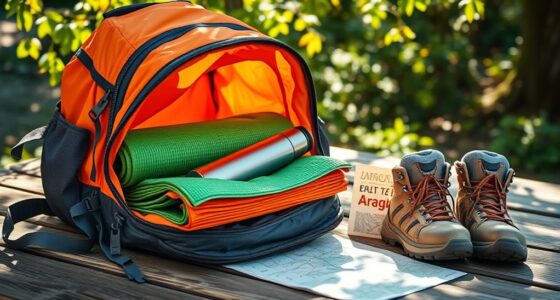
Weight reduction strategies extend beyond just gear choice. Pack only what you need and no more. Consider the trip’s duration, weather forecast, and terrain when deciding what to bring. If you’re heading into warm weather, skip the heavy insulation and focus on lightweight clothing layers. Use a minimalist packing approach—limit duplicates, and avoid packing non-essential luxury items. Additionally, pack your gear efficiently; utilize compression sacks and packing cubes to save space and reduce bulk. This not only lightens your load but also keeps your gear organized and accessible.
To further optimize your pack, explore the use of natural materials that are lightweight and sustainable, aligning with eco-friendly practices. Finally, stay flexible and open to adjustments. Try out your gear during practice hikes, and be willing to swap out items that don’t perform as expected. Over time, you’ll develop a keen sense for what’s necessary versus what’s just extra weight. Remember, the key to successful ultralight packing is discipline—being honest about what you need and eliminating anything that doesn’t serve a critical purpose. By honing your gear selection and applying smart weight reduction strategies, you’ll enjoy a more comfortable, less burdensome trek into the wild.

Naturehike YL08 Ultralight Camping Chair, 2.38 LBS Portable Backpacking Chair with Anti-Sinking Feet, Lightweight Compact Folding Hiking Camp Chair
⚡ 15-SECOND LIGHTNING SETUP: Snap the aluminum frame together—the internal bungee cord auto-tensions for instant stability. Just attach…
As an affiliate, we earn on qualifying purchases.
As an affiliate, we earn on qualifying purchases.
Frequently Asked Questions
How Do I Choose Ultralight Gear for Different Climates?
When choosing ultralight gear for different climates, you should focus on climate-specific gear that suits the temperature and weather conditions you’ll face. Pack versatile equipment like a lightweight rain jacket or multi-use clothing layers to adapt easily. Consider insulation options for cold environments and breathable, moisture-wicking gear for warm climates. Always research the forecast and pack smart, balancing weight with the need for protection and comfort in varying conditions.
What Are the Best Ways to Prevent Gear Loss?
To prevent gear loss, you should focus on gear organization and theft prevention. Keep your gear neatly packed in labeled, easily accessible compartments, so nothing slips out. Always stay aware of your surroundings, especially in crowded areas, and consider locking your backpack or using theft-proof gear. Regularly check that zippers and closures are secure, and avoid leaving your pack unattended. These habits help protect your gear and keep it safe from theft.
How Can I Stay Warm With Minimal Clothing?
To stay warm with minimal clothing, focus on effective layering strategies. Wear a moisture-wicking base layer next to your skin, add an insulated mid-layer like a down or synthetic jacket, and top with a lightweight, windproof outer shell. Keep your core insulated, as it retains most body heat. Use a hat and gloves as needed, and always carry a compact insulated layer for extra warmth during cold nights.
What Are Common Mistakes in Ultralight Packing?
You often make mistakes in ultralight packing by neglecting a solid packing strategy, leading to overpacking or missing essentials. You might overlook gear durability, choosing lighter but less reliable items that could fail in tough conditions. To avoid these errors, prioritize quality over quantity, think critically about what’s essential, and pack efficiently, ensuring each item is durable and serves multiple purposes. This way, your pack stays light without sacrificing safety or functionality.
How Do I Balance Weight With Comfort and Safety?
You gotta strike a balance between weight, comfort, and safety to avoid biting off more than you can chew. Focus on gear organization to keep essentials accessible without excess weight. Prioritize lightweight, high-quality gear and plan your nutrition carefully to stay energized. Remember, it’s about making smart choices—sacrificing a little comfort for safety and efficiency guarantees you enjoy your adventure without unnecessary risks.

LiteOutdoors Silnylon Tarp – 11.6 Oz. – Ultralight Backpacking Tarp or Hammock Shelter (Grey, 8' x 10')
✔️ INCREDIBLY LIGHT WEIGHT – At only 11.6 oz (329g) for the 8'x10', 13.9 oz (394g) for the…
As an affiliate, we earn on qualifying purchases.
As an affiliate, we earn on qualifying purchases.
Conclusion
By embracing these ultralight packing tips, you transform every hike into a liberating adventure. Imagine shedding the weight of unnecessary gear, feeling lighter with each step, and truly connecting with the trail beneath your feet. Remember, less is more—like trimming a bonsai to reveal its beauty, packing smart reveals the essence of your journey. So, pack wisely, move freely, and let the trail become your canvas for discovery. Your adventure awaits—are you ready to lighten the load?

GliCraft 5 Pcs 5L/10L/15L/20L/35L Camping Sleeping Bag Compression Sacks for Backpacking Water Resistant Sleeping Bag Stuff Sack Space Saving Storage Sack for Hiking Gear(Bright Colors)
Make Your Trip More Convenient: waterproof compression sack is equipped with 2 strong compression straps and 2 quick…
As an affiliate, we earn on qualifying purchases.
As an affiliate, we earn on qualifying purchases.

Fire-Maple "Fixed Star 1" Backpacking and Camping Stove System | Outdoor Propane Cooking Gear | Portable Pot/Jet Burner Set | Ideal for Hiking, Trekking, Fishing, Hunting Trips and Emergency Use
HIGHLY EFFICIENT – Our industry leading heat exchange technology minimizes wind impact and reduces boiling times by up…
As an affiliate, we earn on qualifying purchases.
As an affiliate, we earn on qualifying purchases.