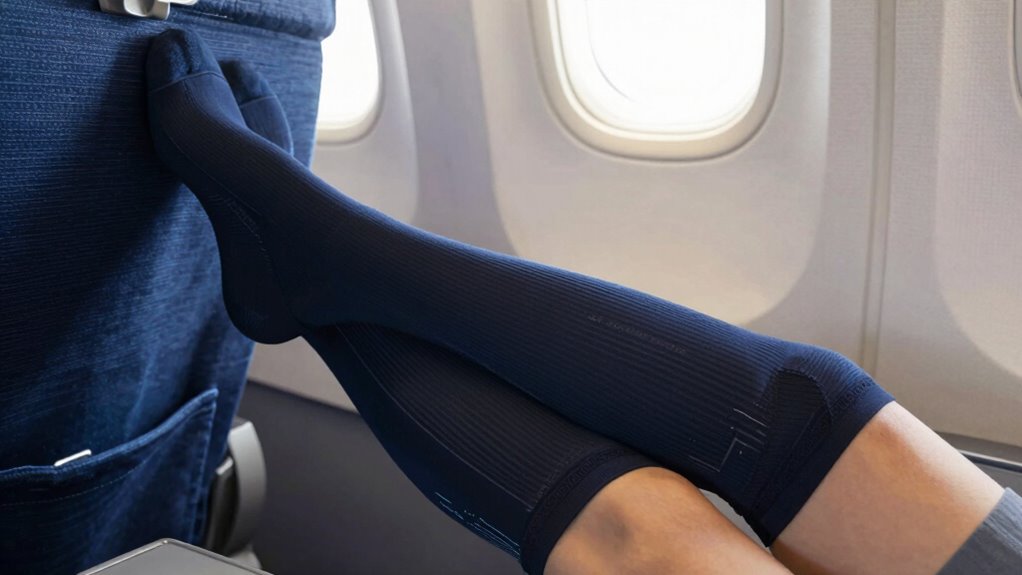

Wearing compression socks on long-haul flights helps improve your circulation by applying gentle pressure, which supports veins and muscles to keep blood flowing upward. They reduce swelling and numbness caused by limited air circulation and cabin pressure changes. Compression socks also lower your risk of blood clots and support overall vascular health during extended periods of sitting. If you want to discover more about how they can keep you comfortable and safe, you’ll find useful details ahead.
Open a free Amazon Business account
Business pricing, bulk buying and tax-exempt orders.
As an affiliate, we earn on qualifying purchases.
Key Takeaways
- They improve blood circulation, reducing the risk of blood clots like DVT during long periods of immobility.
- Compression socks support veins and muscles, preventing swelling and discomfort in the legs and ankles.
- They counteract effects of reduced cabin pressure and limited air circulation on blood flow.
- Wearing compression socks promotes faster recovery and reduces fatigue after long flights.
- They provide a snug fit that enhances comfort and minimizes restlessness during travel.
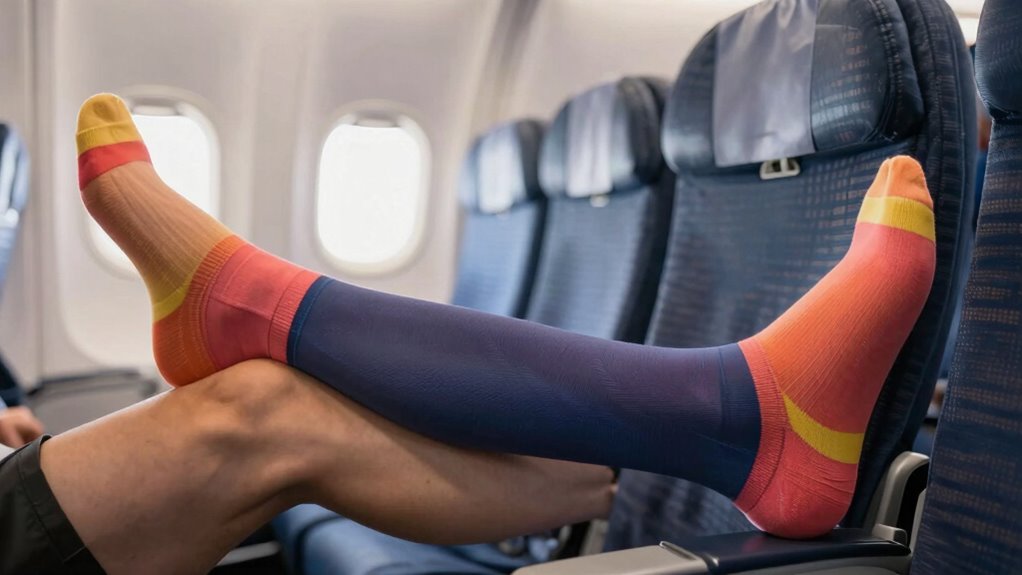
Long-haul flights can put you at risk for circulation issues and discomfort, which is why wearing compression socks is highly recommended. When you’re confined to a small seat for hours, your blood flow can slow down, leading to swelling, numbness, or even more serious conditions like deep vein thrombosis. Compression socks help by applying gentle pressure to your legs, promoting better blood flow and reducing these risks. They work by supporting your veins and muscles, encouraging blood to move upward toward your heart, which is especially important when air circulation within the cabin is limited and cabin pressure fluctuates during the flight.
Wearing compression socks improves blood flow and reduces risks during long flights with limited cabin air circulation and pressure fluctuations.
Cabin pressure is typically lower than at sea level, which can cause your blood vessels to constrict and make circulation more difficult. This change in pressure decreases the amount of oxygen in your blood, leading to feelings of fatigue and discomfort. Wearing compression socks helps counteract these effects by improving blood flow despite the lower cabin pressure. They squeeze your legs just enough to prevent blood from pooling in your lower extremities, keeping circulation steady. As a result, your legs stay comfortable, and you reduce the chance of swelling or aching that often accompanies long flights.
Air circulation inside the aircraft is limited compared to fresh outdoor air, which can contribute to a feeling of sluggishness or heaviness in your legs. Compression socks assist in maintaining healthy circulation, ensuring your muscles and tissues receive adequate oxygen and nutrients even when air quality isn’t ideal. This support is crucial because poor circulation can weaken your muscles over time, making it harder for your body to recover once you land. Additionally, better circulation helps your body eliminate waste products, reducing inflammation and soreness after the flight. Improving circulation is also linked to healthier blood flow, which can have long-term benefits for your vascular health, especially during travel.
Furthermore, understanding the benefits of supportive clothing like compression socks can help you make informed choices to improve your overall health during travel. When you wear compression socks, you’re actively supporting your circulatory system during the flight. This is especially important if you have pre-existing conditions like varicose veins or a history of blood clots, but even healthy travelers benefit from the added support. Plus, the snug fit of compression socks can make you feel more secure and less restless during long periods of sitting. You’ll notice less swelling in your ankles and calves, and you’ll arrive at your destination feeling more refreshed and ready to go.
In essence, compression socks are a practical, effective way to enhance your comfort and health on long flights. They address the challenges caused by limited air circulation and fluctuating cabin pressure, promoting healthier blood flow and reducing discomfort. By wearing them, you’re taking a proactive step toward a smoother, more comfortable journey from takeoff to touchdown.
compression socks for long flights
As an affiliate, we earn on qualifying purchases.
As an affiliate, we earn on qualifying purchases.
Frequently Asked Questions
Can Compression Socks Prevent Deep Vein Thrombosis (DVT)?
Yes, compression socks can help prevent deep vein thrombosis (DVT). They work by improving blood flow in your legs, which reduces the risk of blood clots forming during long periods of immobility. By applying graduated pressure, compression socks support clot prevention and keep your blood circulating smoothly. Wearing them during long flights or extended sitting periods is a simple, effective way to lower your DVT risk.
Are Compression Socks Suitable for All Ages?
Compression socks are suitable for all ages, as research shows they provide pediatric comfort for children and elderly support for seniors. You should consider their use if you experience circulation issues or spend long hours sitting. While they’re generally safe, consult a healthcare professional to confirm proper fit and pressure level, especially for young children or seniors with specific health conditions. This ensures you gain maximum benefits without discomfort.
How Tight Should Compression Socks Feel?
Compression socks should feel snug but not painfully tight. You want material comfort that provides gentle pressure without restricting blood flow. The right compression level depends on your needs, typically ranging from mild to firm. For long flights, medium compression (15-20 mmHg) offers a good balance, ensuring your legs stay comfortable and supported. If they’re too tight, you’ll notice discomfort or difficulty putting them on; if too loose, they won’t be effective.
Can I Wear Compression Socks During Sleep?
Yes, you can wear compression socks during sleep if they boost your sleep comfort. Choose socks made from breathable, soft materials like cotton blends or moisture-wicking fabrics to prevent discomfort. Wearing them overnight can help improve circulation and reduce swelling, especially if you have circulation issues. Just make certain they aren’t too tight, and if you experience any discomfort, remove them. Always follow your healthcare provider’s advice for best results.
Do Compression Socks Require a Doctor’s Prescription?
No, you don’t always need a doctor’s prescription for compression socks, but it depends on the type. Medical-grade compression socks require a prescription, while over-the-counter options are available for general use. When shopping, compare compression sock types—mild, moderate, or firm—and consider your needs. Look for proper fit and quality, and don’t hesitate to consult a healthcare professional if you have circulation issues or medical conditions.
travel compression socks for men women
As an affiliate, we earn on qualifying purchases.
As an affiliate, we earn on qualifying purchases.
Conclusion
Just as a long flight can stretch your patience, it can also strain your body. Wearing compression socks offers a simple, effective way to counteract this, promoting circulation and reducing discomfort. While the plane’s confined space seems to limit your options, these socks give you a small, powerful tool to stay comfortable and healthy. So, next time you fly, don’t just endure the journey—wear compression socks and take control of your well-being.
compression stockings for DVT prevention
As an affiliate, we earn on qualifying purchases.
As an affiliate, we earn on qualifying purchases.
best compression socks for flying
As an affiliate, we earn on qualifying purchases.
As an affiliate, we earn on qualifying purchases.
Flea & tick season Picks
flea and tick prevention
As an affiliate, we earn on qualifying purchases.