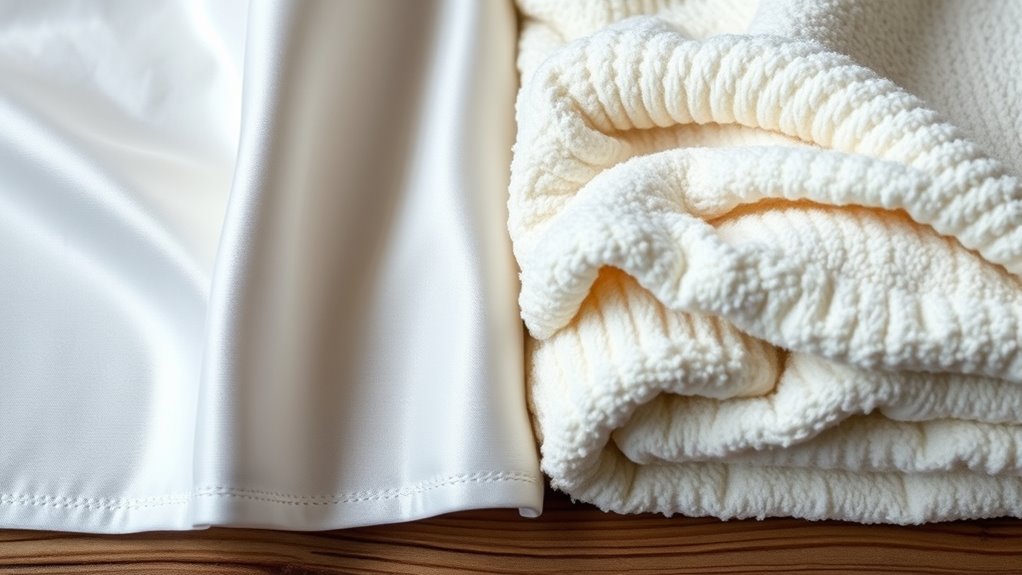

When choosing a travel towel, consider microfiber for quick drying, lightweight packing, and durability, making it ideal for backpackers and fast-paced trips. Cotton towels offer plush comfort and high absorbency, perfect for relaxing after a swim or shower, but tend to be bulkier and slower to dry. Your travel style and needs will determine the best option. Keep exploring to discover which material suits your journey best.

Get travel and outdoor gear delivered free with Prime
- Fast, free delivery on millions of items
- Prime Video, Amazon Music and more included
- Member-only deals all year
Key Takeaways
- Microfiber towels dry faster, making them ideal for quick-drying needs during travel.
- Cotton towels offer superior softness and comfort but are bulkier and take longer to dry.
- Microfiber towels are lightweight and compact, perfect for saving space in luggage.
- Cotton towels are durable but may wear out faster if not properly maintained.
- Choose microfiber for practicality and space-saving, and cotton for comfort and plushness after showers.

When choosing a travel towel, selecting one that balances compactness, absorbency, and quick-drying capabilities is essential for convenience on the go. You want a towel that doesn’t take up too much space in your pack but still performs well when you need it. This is where understanding the differences between microfiber and cotton towels becomes important. Both materials have distinct advantages, especially when it comes to quick drying fabrics and compact packing, which are vital for travel efficiency. Microfiber towels are typically made from synthetic fibers like polyester and polyamide. They’re known for their lightweight nature, which makes them easy to pack and carry without adding bulk. Their fine fibers create a large surface area, allowing them to absorb water quickly while also drying much faster than traditional cotton towels. This quick turnaround means you won’t have to wait long for your towel to be ready to use again, a significant advantage when you’re on the move. The compact packing of microfiber towels is another benefit; they roll or fold down into a small size, fitting easily into your backpack or luggage. Plus, microfiber’s durability means it withstands frequent washing and use, maintaining its performance over time. Cotton towels, on the other hand, are celebrated for their softness and natural feel. They tend to be more absorbent than microfiber towels, especially thick, plush varieties, making them ideal for drying off after a swim or shower. However, cotton towels are often bulkier and heavier, which can be a drawback when space and weight are limited. They also tend to take longer to dry once wet, which can be inconvenient on extended trips. If you prefer the plush comfort of cotton and don’t mind the extra bulk, choosing a thinner, quick-drying cotton towel can still help balance comfort with practicality. But generally, microfiber’s quick drying fabrics and lightweight nature make it the better choice for travelers seeking efficiency and ease of packing. When you pick a microfiber travel towel, you’ll appreciate how it shrinks down to a minimal size, fits comfortably in your bag, and dries rapidly, saving you time and space. Whether you’re backpacking through remote areas or heading to a busy beach, microfiber towels offer a practical solution for those who prioritize quick drying and compact packing. In the end, your decision should align with your travel style, but understanding these material differences helps you choose a towel that truly meets your needs.
Frequently Asked Questions
How Durable Are Microfiber Towels Compared to Cotton?
Microfiber towels are generally more durable than cotton, especially with frequent use. They resist fabric softness loss and maintain vibrant color retention longer, even after multiple washes. You’ll find microfiber’s synthetic fibers withstand wear and tear better, making it a smart choice for travel. Cotton towels, while soft initially, can fade and wear out faster, especially if you prefer a rougher feel over time.
Are Microfiber Towels More Environmentally Friendly Than Cotton?
You might find microfiber towels a bit more eco-friendly than cotton, thanks to their reusability and quick-drying nature. They use less water and energy during production, reducing their eco impact over time. Plus, since they dry faster, you can wash and reuse them more often, making them a sustainable choice for travel. While cotton is natural, microfiber’s efficiency and longevity often make it a smarter, greener option.
Can Microfiber Towels Prevent Bacteria Buildup?
Microfiber towels can help prevent bacteria buildup because their material promotes better microfiber cleaning, which reduces bacteria resistance. You should regularly wash your microfiber towel and let it dry thoroughly to maintain its antibacterial properties. Unlike cotton, microfiber’s fine fibers trap fewer bacteria and dry faster, limiting bacterial growth. So, if you want a towel that resists bacteria, microfiber is a smart choice, especially for travel where hygiene is essential.
Which Towel Dries Faster in Humid Conditions?
Like a swift river cutting through still water, microfiber towels dry faster in humid conditions. Their superior absorption capacity pulls moisture away quickly, and their lightweight, compact nature makes them easy to pack and carry. Cotton towels, by contrast, hold onto water longer, becoming heavier and less portable. So, if rapid drying in humidity is your goal, microfiber becomes your trusty stream, flowing effortlessly to keep you dry and comfortable.
Are There Any Skin Sensitivities Associated With Microfiber?
Microfiber towels can sometimes cause skin irritation or allergy risks, especially if you have sensitive skin. The synthetic fibers may trap bacteria or cause friction, leading to redness or discomfort. If you notice skin irritation after using microfiber, consider switching to natural cotton towels. Always wash your towel regularly and choose hypoallergenic options if you’re prone to allergies, ensuring a comfortable, irritation-free experience during your travels.
Conclusion
When choosing between microfiber and cotton towels, consider your travel needs. Microfiber towels dry faster and are more compact, making them ideal for backpackers, while cotton towels offer natural softness. Did you know that travelers who pack lightweight gear, like microfiber towels, save an average of 15% on luggage weight? So, pick the towel that best suits your adventure, and enjoy a more comfortable, hassle-free trip. Your perfect travel towel is just a decision away!
Halloween Picks
halloween
As an affiliate, we earn on qualifying purchases.