
TL;DR

Get travel and outdoor gear delivered free — and shop member deals
- Fast, free delivery on millions of items
- Access to Prime Big Deal Days deals on October 6–7
- Prime Video, Amazon Music and more included
Several hospitals in Irkutsk reportedly imposed three-week quarantines after laboratory technician Darya Shipilova, an employee of the Irkutsk Anti-Plague Institute, died following an illness described by Russia’s public health agency as pneumonia of unknown cause. Rospotrebnadzor says the regional situation is stable and that no microorganisms linked to her work were found in her body; a plague diagnosis has not been confirmed in the available agency statement.
Several hospitals in Irkutsk reportedly imposed three-week quarantines after Darya Shipilova, a 28-year-old laboratory technician at the Irkutsk Anti-Plague Institute, died following an illness that Russia’s public health watchdog described as pneumonia of unknown cause. Rospotrebnadzor said the situation in the Irkutsk region, including Irkutsk and Shelekhov, was stable and that no microorganisms associated with Shipilova’s professional work had been found in her body.
The local outlet People of Baikal reported on October 4 that City Clinical Hospitals No. 1, No. 3 and No. 10, as well as Ivano-Matreninskaya Children’s Hospital, were closed under quarantine measures. Relatives of a woman giving birth at a local maternity hospital also told the outlet that the facility had imposed a quarantine. The reported restrictions were set for three weeks; the available account does not establish that every facility in the city was closed.
Shipilova was hospitalized on September 29 in Shelekhov, a city near Irkutsk, and died two days later, according to the report. Rospotrebnadzor said the response followed a case of pneumonia of unknown cause in an employee of the institute. The agency said it had introduced “a series of special measures,” but its statement did not identify the illness as plague. It also said testing found no microorganisms associated with the woman’s professional work.
People of Baikal cited a health care source saying doctors were openly discussing plague, while noting that documents sent to hospitals did not name that diagnosis. Earlier media accounts offered different explanations for Shipilova’s illness: one said she had been admitted with pneumonic plague after returning from Thailand; another said she had accidentally broken a test tube containing the plague pathogen. Rospotrebnadzor said there had been no accidents involving pathogenic microorganisms at the institute. These accounts have not established that she had plague.
Hospital Access and Public Health Measures
The reported closures and quarantine measures may affect patients and families seeking routine or urgent care, including people using the children’s and maternity hospitals. The source material does not specify what services continued, how patients were redirected, or whether the restrictions applied to all departments. Those details matter to residents trying to access care while authorities investigate the illness.
The case has drawn attention because Shipilova worked at an anti-plague institute and because reports about her illness have included an unconfirmed plague diagnosis. That connection alone does not establish that plague caused her death. Rospotrebnadzor’s public statement instead described pneumonia of unknown cause and said no work-related microorganisms were found in her body, while also reporting special public health measures.
Separately, masks became mandatory on October 3 at the Irkutsk Aluminum Plant in Shelekhov. The plant’s director, Artyom Fominykh, described the requirement as preventive. The measure indicates precautions at a major local workplace, but it does not by itself confirm an outbreak or a particular diagnosis.
personal protective equipment PPE for healthcare workers
As an affiliate, we earn on qualifying purchases.
As an affiliate, we earn on qualifying purchases.
Timeline of the Shelekhov Case
Shipilova was admitted to hospital on September 29 and died on October 1, according to the reported timeline. Media accounts subsequently circulated conflicting claims about her illness and possible exposure. On October 2, Irkutsk Governor Igor Kobzev said he had met with Russia’s chief public health officer, Anna Popova, after reports of a suspected case of a particularly dangerous infectious disease in the region. His statement did not publicly confirm plague.
Also on October 2, Izvestia reported that 197 people had been quarantined; Rospotrebnadzor said those people showed no signs of illness. The number is a reported count at that date, not a confirmed total for later days. On October 3, Baikalsk’s city administration urged residents not to travel to Shelekhov, citing unofficial reports of a plague diagnosis, then deleted the post. REN TV also deleted five social media posts about plague spreading in Shelekhov.
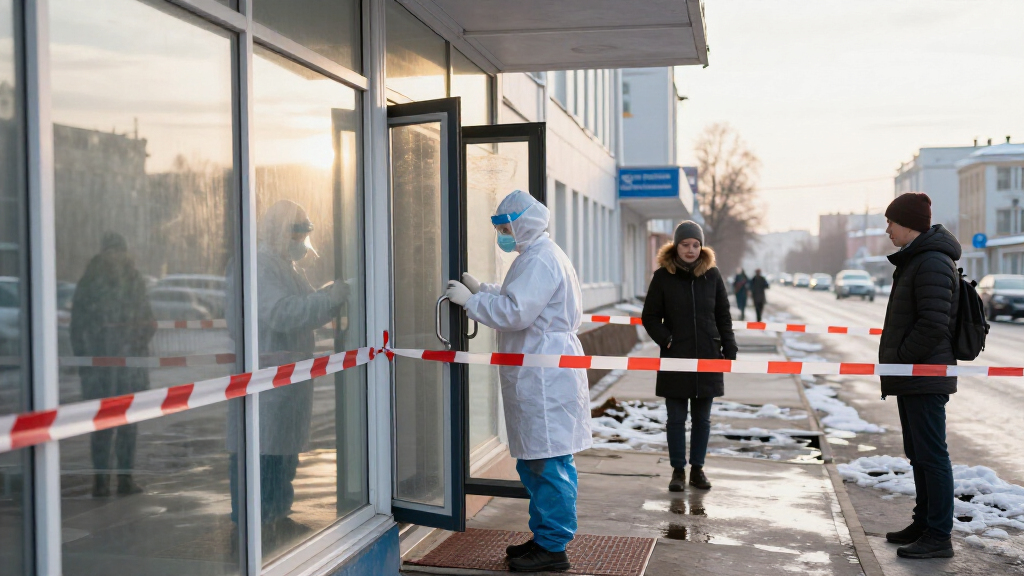
People of Baikal reported that residents had seen people wearing protective suits, masks and gloves in Shelekhov. The outlet’s sources said FSB officers began escorting ambulances carrying people who had been in contact with Shipilova for examinations on October 1. These are reported observations and source accounts; they do not independently confirm the disease or its spread.
““Better safe than sorry — take precautions.””
— Artyom Fominykh, director of the Irkutsk Aluminum Plant
portable infrared thermometer for fever detection
As an affiliate, we earn on qualifying purchases.
As an affiliate, we earn on qualifying purchases.
Diagnosis and Quarantine Scope
The cause of Shipilova’s illness and death remains unconfirmed in the public statements described in the reporting. Rospotrebnadzor called the case pneumonia of unknown cause, while accounts alleging pneumonic plague or a broken test tube have not been substantiated in the material available. The agency said there had been no laboratory accident involving pathogenic microorganisms and that no work-associated microorganisms were found in her body.
It is also unclear which hospitals’ quarantines were formally ordered, which services were suspended, and whether the reported three-week period applies uniformly. Rospotrebnadzor has not, in the cited statement, provided a full account of the measures, the investigation’s findings, or any updated count of people under observation. The report of 197 people quarantined was attributed to Izvestia as of October 2, and the agency said that group showed no signs of illness.
As an affiliate, we earn on qualifying purchases.
Further clarification would need to come from Rospotrebnadzor and regional health officials, including a confirmed diagnosis, details of any testing and contact monitoring, and the status of hospital restrictions. Residents and patients will also need current information on which facilities are accepting patients and what services remain available. The cited reports do not provide a timeline for a final investigation or for the lifting of quarantines.
For now, the confirmed public position is that Rospotrebnadzor considers the regional epidemiological situation stable and has taken special measures after an employee’s pneumonia of unknown cause. Reports of plague, exposure through a laboratory accident, and broader transmission should be treated as unconfirmed unless authorities provide supporting findings.
As an affiliate, we earn on qualifying purchases.
Key Questions
Has plague been confirmed in Irkutsk?
No confirmed plague diagnosis appears in the cited public health statement. Rospotrebnadzor described Shipilova’s illness as pneumonia of unknown cause and said no microorganisms associated with her work were found in her body. Media reports have included plague allegations, but they remain unconfirmed in the available information.
Which hospitals reportedly imposed quarantines?
People of Baikal reported that City Clinical Hospitals No. 1, No. 3 and No. 10 and Ivano-Matreninskaya Children’s Hospital were closed. Relatives also told the outlet that a maternity hospital had imposed a quarantine. The report does not specify which departments were affected or what services continued.
How many people were quarantined?
Izvestia reported that 197 people were quarantined as of October 2. Rospotrebnadzor said they showed no signs of illness. The cited material does not give a later total.
What does Rospotrebnadzor say about the situation?
The agency said the public health situation in the Irkutsk region and in Irkutsk and Shelekhov was stable. It also said it had implemented special measures in response to a case of pneumonia of unknown cause in an institute employee.
Source: rss
Halloween Picks
halloween
As an affiliate, we earn on qualifying purchases.