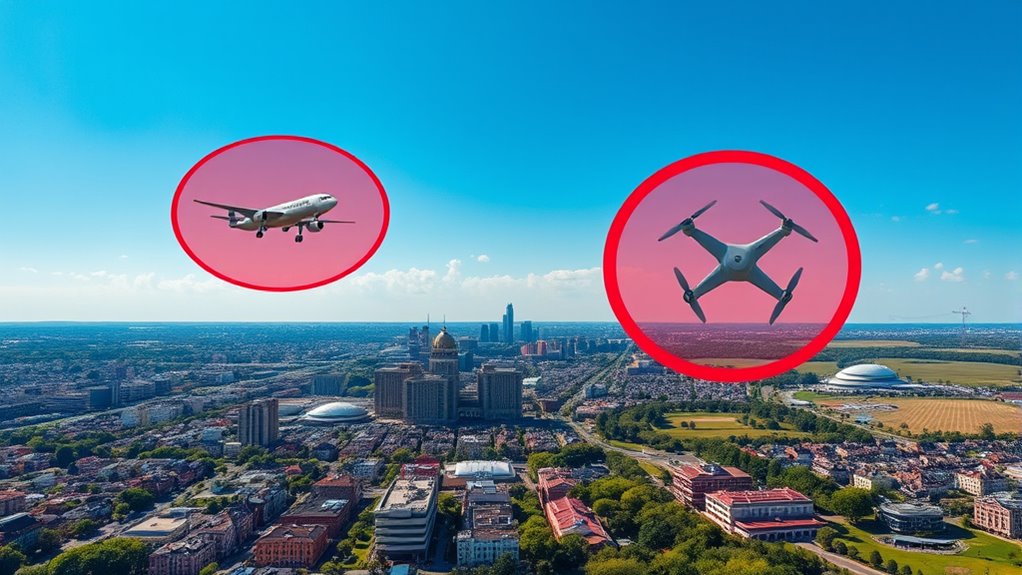

You can’t fly your drone near airports, government buildings, military bases, or in densely populated areas without permission. Temporary restrictions often apply during events or emergencies, so check official maps and drone apps for real-time updates. Avoid private property to respect privacy and prevent legal issues. Knowing where no-fly zones are helps keep you safe and compliant. If you want to learn about specific restricted areas and how to stay within legal bounds, keep exploring further.
Open a free Amazon Business account
Business pricing, bulk buying and tax-exempt orders.
As an affiliate, we earn on qualifying purchases.
Key Takeaways
- No-fly zones include around airports, government buildings, military bases, and densely populated urban areas.
- Use official maps and drone apps to identify geographic boundaries and restrictions before flying.
- Temporary restrictions apply during events, emergencies, or special occasions, requiring real-time updates.
- Ignoring no-fly zones can result in fines, legal penalties, and confiscation of your drone.
- Always operate within permitted areas and monitor for restrictions to ensure safe and legal drone flights.
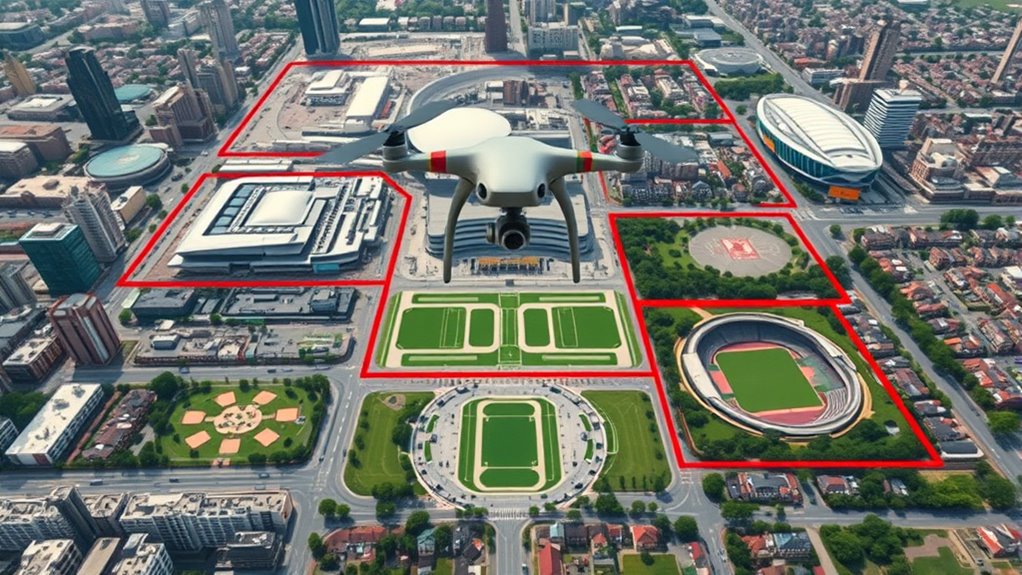
Drone no-fly zones are designated areas where flying unmanned aircraft is prohibited or restricted to guarantee safety, privacy, and security. These zones are established to prevent accidents, protect sensitive locations, and respect people’s privacy. When you plan to fly your drone, understanding these no-fly zones is essential for maintaining legal compliance and avoiding penalties. Ignoring airspace restrictions can lead to hefty fines, confiscation of your drone, or even criminal charges. It’s your responsibility to familiarize yourself with the areas where drone flight is limited or forbidden, especially around airports, government buildings, military bases, and densely populated areas.
Airspace restrictions are clearly defined by authorities like the FAA in the United States or similar agencies worldwide. These rules are designed to keep manned aircraft and drones safely separated, especially near airports or heliports. You’ll find that many no-fly zones are marked with geographic boundaries, often highlighted on drone apps or official maps. These tools help you determine where you can legally operate your drone and where you should avoid flying altogether. Following these restrictions isn’t just about avoiding legal trouble; it’s about ensuring everyone’s safety. For example, flying near airports increases the risk of collisions with commercial aircraft, which can have catastrophic consequences.
Airspace restrictions are set by authorities like the FAA to keep aircraft and drones safe near airports and heliports.
Besides avoiding legal penalties, respecting no-fly zones helps protect the privacy of individuals and organizations. Certain sensitive locations, like government buildings, military installations, or private properties with privacy concerns, are off-limits for drone flights. Flying into these zones can be perceived as intrusive or even illegal, and you might face civil or criminal charges if you do so intentionally or recklessly. To stay compliant, always check for temporary restrictions, like those during major events or emergencies, which can be enforced with temporary flight bans.
Additionally, advancements in drone technology have led to better tools for identifying and avoiding no-fly zones, making it easier for operators to comply with regulations. To ensure legal compliance, you should also keep your drone within the designated airspace where flying is permitted. Make use of drone-specific apps and tools that provide real-time alerts about airspace restrictions. These resources are invaluable for planning your flights and avoiding no-fly zones. Remember, even if you believe your drone won’t cause harm, ignoring restrictions can lead to serious consequences. Being aware of and respecting these boundaries demonstrates responsible drone operation and helps preserve the integrity of shared airspace. Ultimately, knowing where you can and cannot fly your drone ensures a safe, enjoyable experience while keeping you within the bounds of the law.
As an affiliate, we earn on qualifying purchases.
Frequently Asked Questions
Can I Fly My Drone in National Parks?
You can’t fly your drone in national parks because of strict regulations. National park regulations prohibit drone photography to protect wildlife and visitors’ experience. Always check the specific park’s rules before visiting, as violations can result in hefty fines. Follow drone photography guidelines carefully, and consider alternative locations outside parks. Respect these rules to ensure the preservation of natural beauty and avoid legal issues.
Are There Specific Time Restrictions for Drone Flying?
Yes, there are specific time restrictions for drone flying. You should check local regulations for seasonal restrictions, as some areas limit drone use during certain times of the year or day to protect wildlife or for safety reasons. Always review rules before flying, especially in parks or urban areas, to avoid fines or penalties. Being aware of these restrictions helps ensure responsible flying and compliance with laws.
How Do I Get Permission to Fly in Restricted Zones?
Getting permission to fly in restricted zones is like knocking on a locked door—you need the right key. You must submit a formal request through the FAA’s online portal, detailing your drone’s purpose and flight plan. Follow their permission procedures carefully, and meet all authorization requirements. Once approved, carry your approval documentation, and stay updated on any restrictions to avoid unintended violations.
What Are the Penalties for Illegal Drone Flying?
If you fly your drone illegally, you could face serious legal consequences, including hefty fines and penalties. Authorities may impose fines ranging from hundreds to thousands of dollars, and in some cases, you could even face criminal charges or jail time. It’s essential to follow regulations and avoid restricted zones to prevent these penalties. Always stay informed and fly responsibly to keep yourself safe from legal trouble.
Do Drone No-Fly Zones Apply to All Drone Types?
Like a river flowing into different channels, drone no-fly zones bend rules for all drone types. Drone regulations and airspace classifications apply universally, regardless of whether you’re flying a tiny quadcopter or a professional drone. These zones are designed to protect sensitive areas, so always check local rules. Ignoring them risks fines and safety hazards, no matter what kind of drone you’re operating. Stay informed and fly responsibly.
As an affiliate, we earn on qualifying purchases.
Conclusion
Remember, respecting drone no-fly zones keeps you out of trouble—think of it like avoiding the town square’s gossip during the 16th century. Always check local regulations before you take to the skies, whether you’re capturing historic landmarks or just flying in your backyard. Ignoring these rules could land you in hot water, or worse, a fine straight out of a Dickens novel. Stay informed, fly responsibly, and enjoy your aerial adventures safely.
As an affiliate, we earn on qualifying purchases.
As an affiliate, we earn on qualifying purchases.
Fall Picks
fall essentials
As an affiliate, we earn on qualifying purchases.