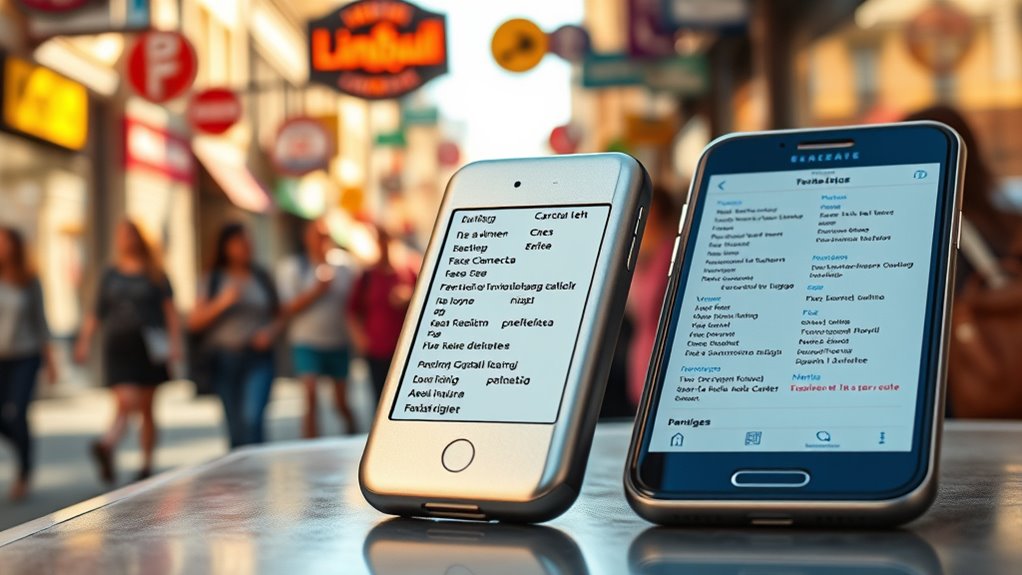

If you value clear pronunciation and offline reliability, a dedicated pocket translator device generally works better abroad. It handles complex words, phrases, and cultural nuances more accurately, providing more natural communication without needing internet. Apps offer broader language options and quick access, but may struggle offline or with pronunciation. To find the best fit for your travel style, explore the detailed pros and cons closer to your departure.
Open a free Amazon Business account
Business pricing, bulk buying and tax-exempt orders.
As an affiliate, we earn on qualifying purchases.
Key Takeaways
- Pocket translators excel in offline, pronunciation accuracy, and handling cultural nuances, ideal for remote or complex conversations.
- Translation apps offer broader language options, real-time voice translation, and quick access on smartphones, suitable for flexible travel.
- Dedicated devices provide more natural speech and better interpretation of idioms, while apps may sound robotic and struggle offline.
- Offline packs in apps are limited compared to dedicated devices, which are optimized for consistent performance without internet.
- Choice depends on travel needs: prioritize pronunciation and cultural understanding with a device, or flexibility and broad language coverage with an app.
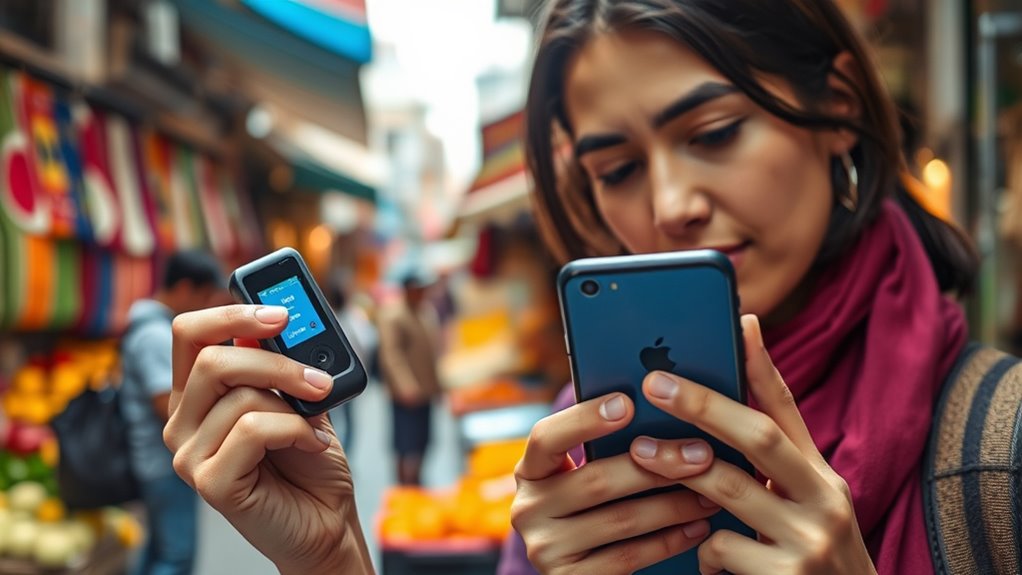
When it comes to breaking down language barriers, you have two main options: a pocket translator device or a translation app. Both can be incredibly useful when you’re abroad, but understanding their differences helps you choose what works best for your needs. A pocket translator device is a dedicated gadget designed specifically for translating languages quickly and with minimal fuss. It often offers more reliable pronunciation accuracy, which is vital when you’re trying to communicate clearly. Accurate pronunciation allows you to be understood better, especially in regions where tone and intonation impact meaning. These devices tend to handle complex words and phrases more smoothly, giving you a more natural flow of conversation. They are also typically optimized for offline use, meaning you don’t always need an internet connection, which is a big advantage in remote areas or places with poor connectivity. Additionally, pocket translators often come with features that address cultural nuances, helping you avoid misunderstandings that can arise from literal translations. They’re designed to interpret idioms, gestures, or contextual cues that might be lost on a standard app, making your interactions feel more genuine and respectful. Moreover, some pocket translators incorporate dedicated translation technology that enhances their speed and accuracy compared to general-purpose apps.
On the other hand, translation apps are incredibly versatile, offering a wide range of languages and functionalities. They’re usually free or low-cost, and on your smartphone, they’re always accessible. With a good internet connection, these apps provide real-time translations, sometimes even with voice recognition, making spontaneous conversations smoother. Apps like Google Translate or Microsoft Translator leverage vast language databases, which helps them grasp the subtle cultural nuances that might trip up a pocket translator. However, pronunciation accuracy in apps can vary depending on the quality of the voice recognition and the language pair. Sometimes, pronunciation may sound robotic or unnatural, which can hinder effective communication. Also, while many apps have offline capabilities, they often require pre-downloaded language packs, and these packs may not be as exhaustive or updated as dedicated devices. Despite this, apps excel at translating longer texts, providing contextual explanations, and offering features like camera translation for signs and menus, making them highly adaptable.
Ultimately, your choice depends on your travel style and priorities. If you value dedicated tools with a focus on pronunciation accuracy and cultural nuance, a pocket translator device might serve you better. But if you prefer flexibility, quick access, and a broad language range, a translation app can be more convenient. Both options have their strengths, so understanding what matters most to you during your travels helps you decide which will work better abroad.
offline pocket translator device
As an affiliate, we earn on qualifying purchases.
As an affiliate, we earn on qualifying purchases.
Frequently Asked Questions
How Long Does a Pocket Translator Device Typically Last on a Single Charge?
A pocket translator device usually lasts around 8 to 12 hours on a single charge, depending on usage. You can expect a battery life of about a full day of continuous use, making it ideal for travel. Charging time typically takes 1 to 2 hours to reach a full charge. To maximize battery life, avoid overusing features and recharge the device overnight or during breaks.
Are Translation Apps More Accurate Than Dedicated Devices in Complex Conversations?
Sure, translation apps are great for quick chats, but in complex conversations, they often stumble. They might struggle with context accuracy or slang adaptation, making you sound like you’re speaking a foreign language—literally. Dedicated devices usually have better algorithms tuned for nuance, so if you want precision and natural flow, they’re your best bet. Apps can’t quite match the finesse of a purpose-built device in tricky, layered dialogues.
Can Pocket Translator Devices Learn and Adapt to New Slang or Dialects?
Pocket translator devices generally can’t learn and adapt to new slang or dialects on their own. They rely on pre-programmed language databases, which may not keep up with rapid language evolution. While some advanced models include updates for dialect adaptation, most still fall short in capturing the nuances of evolving slang. For the latest language changes, translation apps with online connectivity tend to be more effective, as they can access real-time language evolution data.
Do Translation Apps Require Internet Access to Function Effectively Abroad?
Think of translation apps as a car needing fuel; without internet access, their engine stalls. Many apps require online connection for real-time translations, but some offer offline functionality, turning them into reliable travel companions. Keep in mind, using offline modes boosts data security, protecting your personal info from potential breaches. So, before your trip, download language packs to ensure smooth communication without worrying about internet or data security issues.
Which Option Offers Better Privacy—Device or App—When Translating Sensitive Information?
A dedicated translator device generally offers better privacy because it stores less data and processes translations locally, reducing risks to your data security and user privacy. Apps, on the other hand, often transmit your sensitive information to servers, increasing vulnerability. If privacy matters most, choose a device that keeps your translations offline and minimizes data sharing, ensuring your sensitive conversations stay secure and private.
best language translation device for travel
As an affiliate, we earn on qualifying purchases.
As an affiliate, we earn on qualifying purchases.
Conclusion
When it comes to translating abroad, choosing between a pocket translator device and an app can feel overwhelming. But remember, your decision could be the difference between missing a life-changing opportunity or seizing it effortlessly. While apps are convenient, a dedicated device offers instant, reliable translations that won’t let you down like a flaky Wi-Fi connection. Trust me, with the right tool, you’ll communicate so fluently, you’ll feel like you have a superpower—nothing less!
translation app with offline packs
As an affiliate, we earn on qualifying purchases.
As an affiliate, we earn on qualifying purchases.
portable language translator gadget
As an affiliate, we earn on qualifying purchases.
As an affiliate, we earn on qualifying purchases.
Flea & tick season Picks
flea and tick prevention
As an affiliate, we earn on qualifying purchases.