A universal travel adapter lets you connect your devices worldwide by accommodating different plug shapes, sizes, and pin configurations like Type A, B, C, G, and I. It also helps you manage voltage differences between regions—some devices are dual voltage, while others need a converter. Using the right adapter and understanding regional standards keeps your gadgets safe. Keep exploring to discover how to choose the best options and stay safe abroad.
Key Takeaways
- Recognize common plug types worldwide (e.g., Types A, B, C, G, I) to select appropriate adapters.
- Verify regional voltage and frequency standards to prevent device damage during travel.
- Understand the difference between voltage converters and travel adapters for high-power electronics.
- Use safety features like fuse protection and surge guards to prevent overloads and electrical hazards.
- Pack versatile, high-quality adapters with multiple plug types and safety features for seamless international travel.
Understanding Different Plug Types Around the World

To effectively use your devices abroad, understanding the different plug types around the world is essential. You’ll quickly realize that plugs compatibility varies greatly, which means not every plug fits every socket. Socket diversity is a key factor to contemplate when traveling, as countries have different shapes, sizes, and pin configurations. Some regions use two round pins, while others rely on flat blades or a combination. Recognizing these differences helps you avoid frustration and ensures your devices stay powered. Knowing the variety of plug types also helps you determine whether you need a travel adapter or a specific converter. Selecting the appropriate plug adapter types can prevent damage to your devices and ensure safe operation. Being aware of these distinctions saves you time and hassle, making your journey smoother and more enjoyable. Understanding plug compatibility is an important aspect of safe and effective device use abroad.
The Common Types of Travel Plugs and Sockets
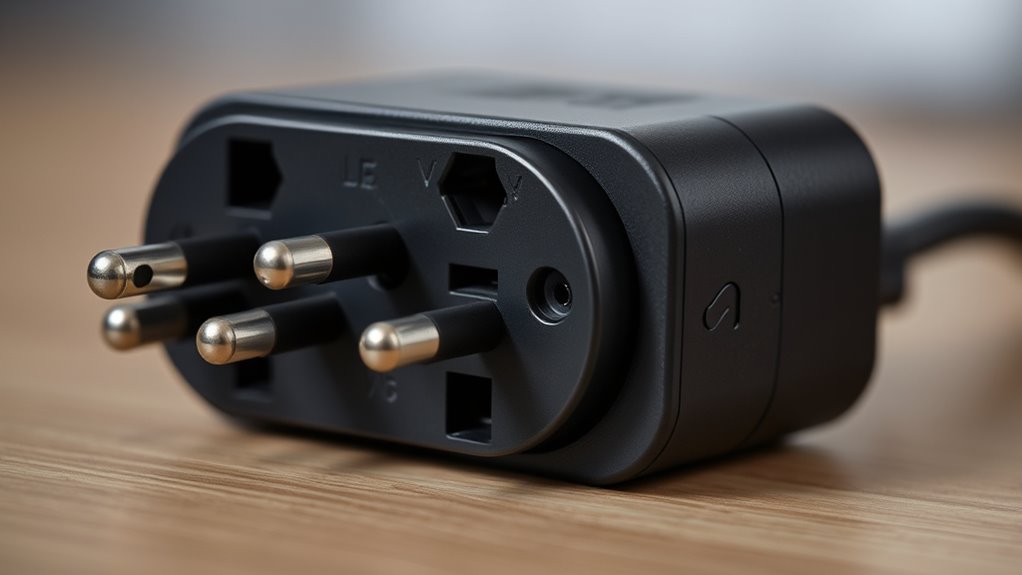
Understanding the most common types of travel plugs and sockets can considerably simplify your journey. Electric outlet types vary worldwide, but a few socket standards dominate international travel. Type A and B are common in North America, featuring flat pins. Type C, with two round pins, is widespread across Europe, Asia, and Africa. Type G, used mainly in the UK, has three rectangular prongs. Type I, found in Australia and parts of Asia, has an angled flat pin design. Recognizing these socket standards helps you prepare the right adapter. Socket standard recognition can prevent compatibility issues and ensure your devices work seamlessly abroad. Additionally, understanding voltage and frequency differences is crucial to avoid damaging your electronics or experiencing performance issues. While some countries use multiple types, most travelers encounter a handful of common electric outlet types. Being familiar with these helps you prepare the right adapter. Properly identifying Electric outlet types can also aid in selecting the most versatile adapters for various regions. Knowing the regional variations in voltage can prevent costly damage to your devices. While some countries use multiple types, most travelers encounter a handful of common electric outlet types. Being familiar with these helps your devices fit securely and operate safely, making your travel smoother and more convenient.
How to Identify Your Destination’s Plug and Socket Standards
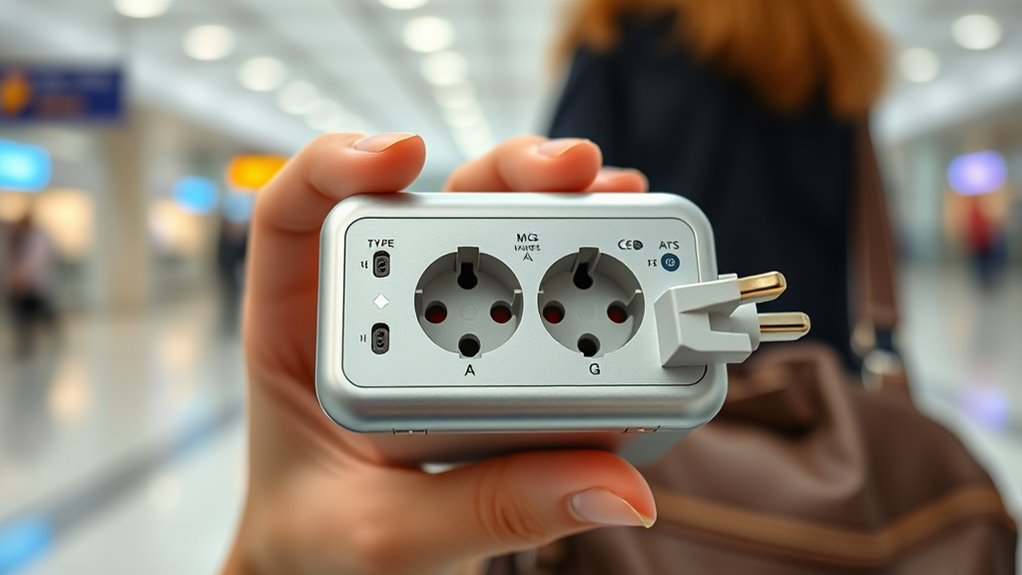
Knowing the specific plug and socket standards at your destination is key to packing the right adapters. To do plug identification, start by researching the country’s standard plug types—look for images or descriptions online. Pay attention to the shape, number of pins, and size of the plug. For socket standards, check the configuration and voltage ratings. Many travel sites or official tourism resources provide detailed information about local socket standards. Some countries use multiple types, so confirm which are most common. If you’re unsure, bring a universal travel adapter that covers multiple standards. Proper plug identification ensures you won’t face compatibility issues, and understanding socket standards helps you select an adapter that fits securely and safely. Being informed saves time, space, and frustration during your trip. Additionally, understanding the safety of electric heated mattress pads can help you make safer choices with electrical devices abroad. Being aware of the various plug types and voltages used worldwide can further prevent electrical mishaps. Understanding the latest technological innovations in electrical safety can further enhance your preparedness and ensure a secure travel experience. Moreover, considering the potential pitfalls in adopting new payment technologies when traveling internationally can help you avoid security or compatibility issues with digital payments.
The Importance of Voltage and Frequency Compatibility
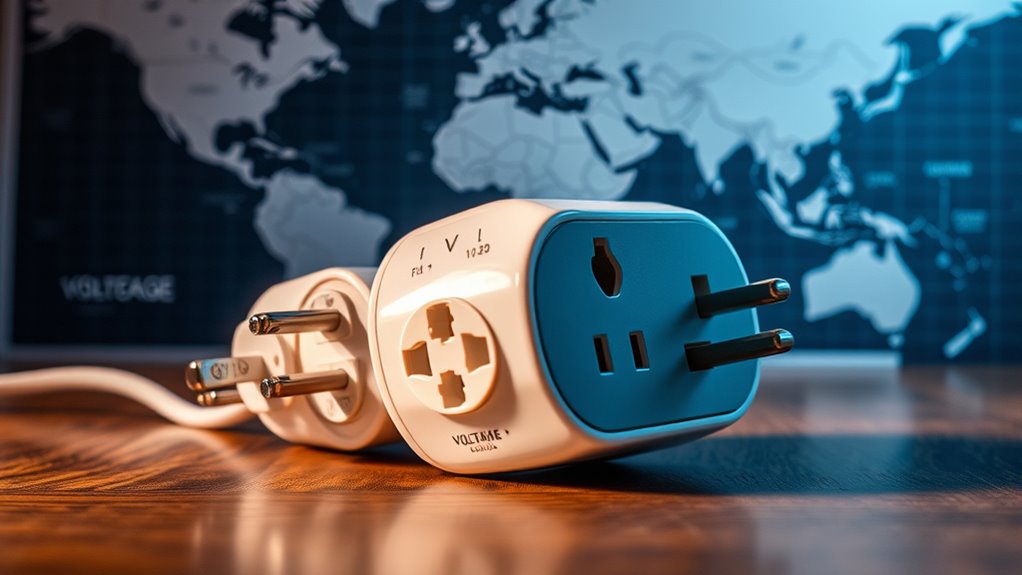
Voltage and frequency differences can cause serious issues with your electronic devices if you don’t check them before plugging in. Incompatible voltage can lead to overheating, malfunction, or permanent damage, so guaranteeing voltage compatibility is essential. Many countries use different voltage levels, so verify your device’s voltage range and whether your travel adapter can handle it. Understanding power compatibility helps prevent costly damage and guarantees your devices operate safely and effectively during your travels. Additionally, being aware of regional power standards can help you select the right adapter and avoid potential hazards. Recognizing voltage and frequency differences is crucial for safe and effective device use abroad. Being familiar with aura variations can also provide insights into regional energy patterns, enhancing your understanding of local environments. It’s also helpful to consider power conversion requirements to ensure your devices function properly across different regions.
Voltage Converters vs. Travel Adapters: What’s the Difference?
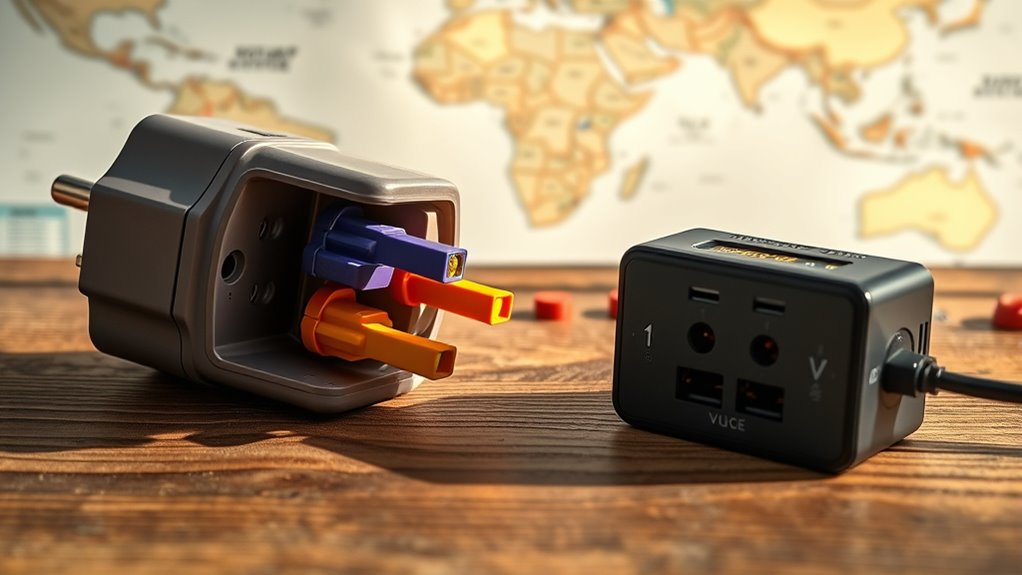
When traveling internationally, it’s important to distinguish between voltage converters and travel adapters, as they serve different purposes. Voltage converters perform power conversion, allowing your devices to handle different voltage levels safely, which is essential for high-power electronics like hairdryers or razors. Travel adapters, on the other hand, simply adapt plug types to fit different sockets but don’t change voltage. Using a travel adapter alone with a device that isn’t compatible with the local voltage can damage your electronics. To ensure device compatibility and safety, check whether your device supports dual voltage. If it doesn’t, you’ll need a voltage converter. Otherwise, a simple travel adapter will suffice for most electronics like phones and chargers. Understanding the difference between converters and adapters helps prevent damage and ensures smooth travel. Store hours vary by location, so it’s wise to verify hours beforehand to avoid inconvenience.
Choosing the Right Universal Travel Adapter for Your Trip
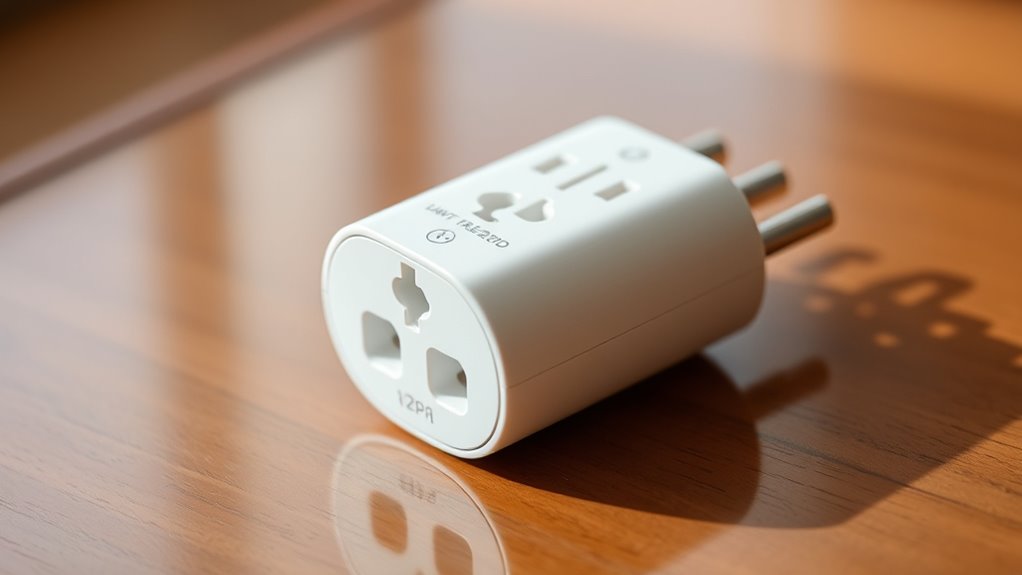
Choosing the right universal travel adapter can simplify your trip and protect your devices. To guarantee smooth charging, consider the charging speed the adapter offers—faster speeds save you time and keep your devices ready. Device compatibility is equally important; check that the adapter supports your specific gadgets, especially if you have high-power devices like tablets or cameras. Look for a model with multiple plug types and built-in safety features such as surge protection. Think about the countries you’ll visit and pick an adapter that covers those regions. A versatile, well-matched adapter minimizes the need for multiple adapters and reduces the risk of damage to your electronics. Ultimately, choosing wisely makes your trip more convenient and your devices safer.
Tips for Using Multiple Devices Safely Abroad

When using multiple devices abroad, make certain to select the correct fuse size to prevent damage or safety hazards. Don’t overload circuits by plugging in too many gadgets at once, as this can cause tripping or fires. Always check your adapter and device ratings to ensure safe operation in unfamiliar outlets. Incorporating AI-powered safety features in your travel adapters can further enhance security and reduce risks. Additionally, choosing a dog-friendly travel environment can help ensure a comfortable trip for your pet. Regularly monitoring the indoor air quality at your destination can also contribute to a healthier travel experience. Practicing mindfulness during your trip can help reduce stress and improve overall well-being, making your travel more enjoyable. Being aware of celebrity lifestyle insights can offer useful tips on staying comfortable and safe during your trip.
Proper Fuse Selection
To guarantee your devices stay safe and functional while abroad, selecting the proper fuse is essential. Fuse ratings determine how much current a fuse can handle before it blows, providing critical circuit protection. Always check your travel adapter’s recommended fuse ratings and match them with your devices’ power requirements. Using a fuse with a too-high rating may fail to protect your equipment, risking damage or fire. Conversely, a fuse rated too low could blow unnecessarily, disrupting your charging. When replacing fuses, choose the correct type recommended by the manufacturer. This ensures your adapters are protected from power surges or overloads, keeping your devices safe and your travels worry-free. Proper fuse selection is a simple yet vital step in safe multi-device usage abroad. Understanding electrical safety principles can further help prevent accidents during your travels. Additionally, understanding circuit protection can help you better grasp how fuses safeguard your devices. Recognizing voltage compatibility is also important to prevent potential electrical issues when connecting to foreign power supplies. Being aware of power ratings helps you match your devices with appropriate fuses and avoid electrical mishaps. Moreover, consulting local regulations can ensure you comply with safety standards during your international trip.
Avoid Overloading Circuits
Using multiple devices at once can easily overload your travel adapter’s circuit if you’re not careful. When too many appliances draw power simultaneously, you risk causing a circuit overload, which can damage your devices or trip the fuse. Overloading also increases the chance of power surges, which can harm sensitive electronics. To prevent this, avoid plugging in high-wattage devices like hairdryers or chargers together. Check the wattage limits of your adapter and keep total device power below that threshold. Use a power strip with a built-in fuse for added safety, and never force multiple devices into a single outlet. Staying mindful of your device load reduces the risk of power surges and keeps your gadgets safe while abroad.
Troubleshooting Compatibility Issues With Travel Electronics

Compatibility issues can arise unexpectedly when you plug your electronics into a foreign outlet, causing devices to malfunction or not work at all. To troubleshoot, first check if your device has proper electrical grounding; lack of grounding can lead to electrical shocks or damage. Make certain your travel adapter provides a secure connection and matches the outlet type. Using surge protection is vital, especially in areas prone to voltage spikes, as it safeguards your electronics from damage. If your device still doesn’t operate correctly, verify the voltage compatibility and consider using a voltage converter if necessary. Sometimes, compatibility problems stem from incompatible plug types or insufficient power supply. Always test your setup before relying on it for critical electronics, and invest in a high-quality adapter with built-in surge protection to avoid surprises.
Packing Smart: Essential Accessories for International Travel

When packing for international trips, choose accessories that are compact and lightweight to save space and reduce baggage weight. Look for travel adapters with universal compatibility features to use your devices seamlessly across different countries. Don’t forget to include safety essentials like surge protectors and proper grounding to protect your electronics during your journey.
Compact and Lightweight Design
Have you ever struggled with bulky travel accessories cluttering your bag? A compact design makes all the difference, allowing you to pack your travel adapter without sacrificing space. Look for options that emphasize lightweight portability, so you can carry it easily in your carry-on or pocket. These adapters are specifically built to be small and unobtrusive, saving precious room in your luggage. Their slim profile ensures they won’t add unnecessary weight or bulk, making them ideal for frequent travelers. By choosing a lightweight, compact travel adapter, you’ll enjoy convenience and efficiency without the hassle of bulky gear. This simple upgrade helps you stay organized and stress-free, letting you focus on your trip rather than managing cumbersome accessories.
Universal Compatibility Features
To guarantee your travel adapter works seamlessly across different countries, look for models with universal compatibility features. These adapters often include multiple plug types that automatically adjust to different socket designs. Focus on models with well-designed plug insulation, which enhances safety by preventing accidental contact with live parts during use. Additionally, consider socket ergonomics—an adapter with easy-to-insert sockets ensures a secure connection and reduces frustration. Universal compatibility also means the adapter can handle various voltage standards, but always verify voltage support before plugging in your devices. By choosing an adapter with versatile plug options, insulated components, and ergonomic socket design, you ensure a safe, efficient, and hassle-free charging experience no matter where your travels take you.
Additional Power Safety Tips
Packing the right accessories can make a significant difference in ensuring your devices stay safe during international travel. To protect your electronics, consider these power safety tips:
- Use adapters with built-in grounding safety to prevent electrical shocks and ensure safe connections.
- Choose surge protection adapters to guard your devices against voltage spikes caused by unstable power sources.
- Carry portable surge protectors for added safety, especially if you’ll be using multiple devices at once.
These accessories help minimize the risk of damage from power fluctuations and grounding issues. Always verify that your travel adapters meet safety standards and have proper grounding safety features. By being proactive, you protect your gadgets and enjoy a worry-free trip without power-related mishaps.
Frequently Asked Questions
Can a Travel Adapter Also Convert Voltage?
A travel adapter alone doesn’t convert voltage; it only adapts plug types for compatibility. If you need voltage conversion, look for a combined adapter and converter that handles voltage conversion safely. Using just an adapter without proper voltage conversion can damage your devices or pose safety risks. Always check your device’s voltage requirements and choose an adapter with built-in voltage conversion to ensure safe and effective use during your travels.
Are All Universal Adapters Compatible With High-Power Devices?
Coincidentally, not all universal adapters are compatible with high-power devices. You need to verify device compatibility before plugging in your appliances. Many adapters aren’t designed to handle the wattage of items like hair dryers or coffee makers, risking damage or safety hazards. Always follow safety precautions, read the specifications carefully, and select an adapter rated for your device’s power needs to ensure safe, reliable use abroad.
How Do I Know if My Device Supports Dual Voltage?
You can determine if your device supports dual voltage by checking its voltage compatibility label or manual. Look for dual voltage identification, often marked as “100-240V” or similar. If your device lists a wide voltage range, it’s dual voltage compatible. This means you can safely use it with different voltages worldwide. Always verify this before plugging in to avoid damage or safety issues.
Can I Use a Travel Adapter With a USB Charger?
Imagine your USB charger is a key fitting a lock; if it’s compatible, it’ll work seamlessly. You can definitely use a travel adapter with a USB charger, but check charger compatibility first. Using an incompatible adapter risks device safety and proper charging. Confirm your charger supports the voltage range of your destination, and always verify that it’s rated for universal use. This way, your devices stay safe and ready to go.
Is It Safe to Leave a Device Plugged in Overnight Abroad?
It’s generally safe to leave a device plugged in overnight abroad if you follow safety precautions. Use a reliable travel adapter and guarantee your charger is compatible with the local voltage. Avoid overloading outlets and unplug devices once fully charged. Keep an eye on your device’s temperature and avoid charging in humid or unsafe environments. Being cautious helps prevent overheating or electrical issues during overnight charging.
Conclusion
Traveling abroad means maneuvering different plug types and voltage standards. Did you know that over 15,000 different plug types exist worldwide? By understanding your destination’s standards and choosing the right adapter, you’ll stay connected and safe. Remember, a universal travel adapter isn’t just convenient—it’s essential for smooth international trips. Prepare ahead, pack smart, and enjoy your journey without tech worries!