Outdoor portable water filters come in three broad flavors — straw-style filters, pump systems, and gravity setups — and the right choice depends almost entirely on how you travel and how many people you’re hydrating. For most buyers, the Purewell Portable Electric RO Water Filter System with UV Light earns the top spot because it’s the only option here that tackles PFAS, viruses, and heavy metals in one unit, something no straw or pump in this lineup can claim. If you’d rather keep things cheap and featherweight, the LifeStraw Personal Water Filter remains the category’s default answer, while the Gravity Water Filtration System with dual hanging bags is the smarter pick for groups who filter in bulk at camp. The core tradeoff you’ll face throughout this roundup is power and thoroughness versus weight, speed, and price — the more serious the contamination you want to handle, the more you carry and pay. Read on for the full breakdown of all 13 filters and who each one actually suits.

Get travel and outdoor gear delivered free with Prime
- Fast, free delivery on millions of items
- Prime Video, Amazon Music and more included
- Member-only deals all year
Complete the kit


Key Takeaways
- Only one filter in this lineup — the Purewell Electric RO with UV — addresses PFAS, viruses, and dissolved contaminants; every straw and pump option is limited to bacteria and protozoa.
- Multi-pack straw entries (Practical Survival 2-Pack and 5-Pack, Purewell 8PCS, the 3-Pack bundle) emerged as the cheapest per-unit backup strategy, but none matched LifeStraw or Membrane Solutions S1 on filtration consistency.
- Gravity systems (the dual hanging bag system and SimPure 3L) were the only practical choice for filtering more than a few liters a day — pumps and straws become tedious at group scale.
- The Survivor Filter PRO and Timain pump struck the best balance of speed and portability for moving water, but both demand more effort and maintenance than passive straw options.
- Budget filters under roughly $15 per unit consistently cut corners on filter lifespan and flow rate, which is fine for emergency kits but frustrating as a primary backcountry filter.
| Purewell Portable Electric RO Water Filter System with UV Light, Remove PFAS | 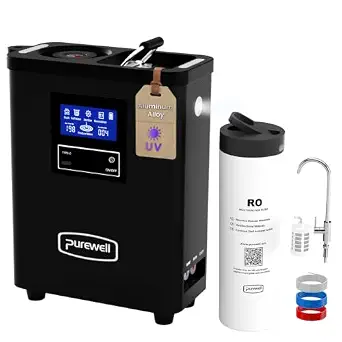 | Best for Contaminant Removal | Filtration Method: Reverse Osmosis with UV Light | Purification Rate: Up to 95% | Filter Lifespan: 12-36 months | VIEW LATEST PRICE | See Our Full Breakdown |
| Timain Outdoor Portable Water Filter Pump |  | Best Manual Pump for Groups | Capacity: 4,500 liters | Filtration Efficiency: Removes 99.99% of E. coli and microplastics | Materials: Food-grade, leak-proof, break-resistant | VIEW LATEST PRICE | See Our Full Breakdown |
| Gravity Water Filtration System – 2 High Capacity Lightweight Hanging Bags |  | Best Basecamp Value | Capacity: 6 gallons (two 6L bags) | Filter Life: 1,800 gallons | Max Flow Rate: 0.6 gpm | VIEW LATEST PRICE | See Our Full Breakdown |
| LifeStraw Personal Water Filter for Hiking, Travel and Emergency, Blue, 1 Pack |  | Best Ultralight Backup | Removes: 99.999999% bacteria, 99.999% parasites, microplastics to 1 micron | Capacity: 4,000 liters (1,000 gallons) | Materials: BPA-free | VIEW LATEST PRICE | See Our Full Breakdown |
| Survivor Filter PRO Portable Water Filter for Camping, Survival & Emergency |  | Best Filtration Depth | Filtration System: Three-stage (Pre-Filter, Carbon, Ultra Filter) | Removes: Viruses, bacteria, protozoa, heavy metals | Capacity: 100,000 liters | VIEW LATEST PRICE | See Our Full Breakdown |
| SimPure Portable Gravity-Fed Water Filter with 3L Bag |  | Best Gravity Setup for Group Hydration | Capacity: 3 liters | Weight: 3.2 ounces | Flow Rate: 27 liters per hour | VIEW LATEST PRICE | See Our Full Breakdown |
| Practical Survival Reusable Emergency Water Filter Straws, 2-Pack |  | Best Emergency Kit Pair | Weight: 2 oz per straw | Length: 8 inches | Filtration Efficiency: 99.99%+ bacteria and parasites | VIEW LATEST PRICE | See Our Full Breakdown |
| Uzima UZ-2 Camping Water Filter and Drinking Water Filter System |  | Best for Adding Chemical Purification | Type: Gravity-fed water filter system | Filtration Efficiency: Removes 99.999% of bacteria | Power Source: Manual, no electricity needed | VIEW LATEST PRICE | See Our Full Breakdown |
| Membrane Solutions Personal Water Filter Straw S1 |  | Best Certified Straw Filter | Certification: NSF/ANSI 42, 372, 401 | Filtration Capacity: 1,320 gallons (5,000 liters) | Pore Size: 0.1 micron | VIEW LATEST PRICE | See Our Full Breakdown |
| Practical Survival Reusable Emergency Water Filter Straws, 5-Pack |  | Best Bulk Buy for Families | Quantity: 5 filter straws | Weight: 2 oz per filter | Length: 8 inches | VIEW LATEST PRICE | See Our Full Breakdown |
| Purewell Outdoor Water Filter Personal Water Filtration Straw (8-Pack) |  | Best Bulk Buy for Groups and Families | Filtration System: 5-stage | Filtration Accuracy: 0.01 microns | Flow Rate: 550 ml/min | VIEW LATEST PRICE | See Our Full Breakdown |
| Water Filter Straw 3 Pack – Outdoor Camping & Hiking Survival Gear |  | Best Longevity Per Dollar | Filtration Accuracy: 0.1 micron | Flow Rate: 800 ml/min | Capacity: 1,320 gallons (5,000 liters) per straw | VIEW LATEST PRICE | See Our Full Breakdown |
| BKLES 3-in-1 Water Filter System for Survival and Emergency Preparedness |  | Best Feature-Loaded Emergency System | Filtration Membranes: Dual 0.01-micron ultrafiltration membranes | Purification Stages: 6-stage system | Flow Rate: 800–1,000 ml/min | VIEW LATEST PRICE | See Our Full Breakdown |
| outdoor portable water filter | Weight | Material |
|---|---|---|
| Purewell Portable Electric RO | — | Aluminum alloy |
| Timain Outdoor Portable Water | — | — |
| Gravity Water Filtration Syste | Under 1 pound | — |
| LifeStraw Personal Water Filte | — | — |
| Survivor Filter PRO Portable W | 12.8 oz | BPA-free ABS |
| SimPure Portable Gravity-Fed W | 3.2 ounces | BPA-free plastic |
| Practical Survival Reusable Em | 2 oz per straw | BPA-free, FDA-compliant plastic |
| Uzima UZ-2 Camping Water Filte | — | — |
| Membrane Solutions Personal Wa | 2 ounces | BPA-free ABS plastic |
| Practical Survival Reusable Em | 2 oz per filter | Plastic |
| Purewell Outdoor Water Filter | Under 3.5 ounces each | Food-grade BPA-free plastic |
| Water Filter Straw 3 Pack | Under 1.8 oz per straw | BPA-free ABS |
| BKLES 3-in-1 Water Filter Syst | 450 grams (0.99 lb) | — |
More Details on Our Top Picks
Purewell Portable Electric RO Water Filter System with UV Light, Remove PFAS
This is the only option in this lineup that takes on chemical contamination — PFAS, heavy metals, and chemicals that hollow-fiber filters like the LifeStraw simply cannot touch. Reverse osmosis plus UV light pushes purification to a claimed 95% removal rate, which matters if your water sources include agricultural runoff or municipal supplies you don’t trust. Compared with the Timain pump, there’s no manual labor: it runs on a 6.5-hour battery with Type-C charging and can even reverse-charge your phone, doubling as an emergency power bank. The tradeoffs are real, though. The 2:1 wastewater ratio means you discard two liters for every liter purified, it can’t handle seawater, and the 54W power draw ties you to a charging routine the straw-style filters never worry about. Filter lifespan also swings widely depending on source water quality.
Pros:- Removes PFAS, heavy metals, and chemicals that straw filters miss
- Long 6.5-hour battery with reverse charging for devices
- Self-cleaning cycle extends filter life
- Aluminum alloy build stands up to rough handling
Cons:- 2:1 waste ratio discards two liters per liter purified
- Requires regular filter replacements and recharging
- Not suitable for ocean seawater
Best for: Campers and emergency preppers who need PFAS, heavy metal, and chemical removal — not just biological protection — and don’t mind managing battery charging
Not ideal for: Ultralight thru-hikers or anyone far from power for days — it’s heavier and power-dependent, and wasteful on scarce water supplies
- Filtration Method:Reverse Osmosis with UV Light
- Purification Rate:Up to 95%
- Filter Lifespan:12-36 months
- Battery Life:6.5 hours
- Charging:Type-C, supports reverse charging
- Water Waste Ratio:2:1
- Power:54W
- Material:Aluminum alloy
Our verdict“Buy this if chemical contaminants like PFAS are your concern; skip it if you only need biological protection from backcountry sources.”
Timain Outdoor Portable Water Filter Pump
Sitting between the LifeStraw (personal sipping only) and the gravity bag system (hands-off but slow), the Timain pump occupies a useful middle ground: you do the work, but you can fill bottles, pots, and the included foldable pouch for more than one person. The 4,500-liter capacity beats the LifeStraw’s 4,000 and the pump format means you’re not bent over a stream sucking through a straw. The bundled kit — carry case, spare tubing, wrench, even a compass — feels genuinely field-ready rather than filler. The catch is manual effort: pumping a liter is real work, especially at elevation or when you’re filtering for a whole camp. Compared with the electric Purewell, you trade convenience for zero dependence on batteries, which is exactly the tradeoff many backcountry users want.
Pros:- Filters 99.99% of E. coli and microplastics
- 4,500-liter capacity outlasts most straw filters
- Complete accessory kit including pouch and spare tubing
- Food-grade, break-resistant housing
Cons:- Manual pumping is tiring for high volumes
- Fresh water sources only — no chemical or saltwater capability
- Replacement filters needed after 4,500 liters
Best for: Small camping and hunting groups who need to fill multiple containers from fresh water and prefer battery-free reliability
Not ideal for: Solo fast-packers who’ll find a pump overkill when a 2-ounce straw does the same job
- Capacity:4,500 liters
- Filtration Efficiency:Removes 99.99% of E. coli and microplastics
- Materials:Food-grade, leak-proof, break-resistant
- Type:Manual pump
- Accessories:Foldable pouch, carry case, wrench, extra tubing, compass
- Water Source:Fresh water only
Our verdict“The right pick when you need pumped water for several people without relying on batteries or gravity setup.”
Gravity Water Filtration System – 2 High Capacity Lightweight Hanging Bags
For group camping, nothing beats gravity: fill two 6-liter bags, hang them from a tree, and walk away while the filter does the work. That’s the fundamental advantage over the Timain pump — no one stands around pumping liters by hand — and over the LifeStraw, which only serves one mouth at a time. The claimed 1,800-gallon filter life dwarfs everything else here, and the sub-1-pound weight makes it viable for backpacking groups splitting gear. Setup in under a minute is realistic once you’ve done it once. Two honest caveats: the 0.6 gpm flow rate means a full cook-and-drink cycle for a big group takes patience, and you’re locked into screw-on replacement filters, so check availability before committing. It also handles biological threats only — for chemicals or PFAS you’d need the Purewell RO system instead.
Pros:- Removes 99.99% of bacteria, parasites, and microplastics
- 1,800-gallon filter life leads this lineup
- Under 1 pound despite 12 liters of total bag capacity
- Sets up in about 60 seconds
Cons:- 0.6 gpm flow is slow when multiple people are waiting
- Limited to screw-on connector replacement filters
- Biological filtration only — no chemical removal
Best for: Basecamp groups and backpacking parties who want hands-off, high-volume filtration without anyone doing manual work
Not ideal for: Day hikers and solo travelers moving light and fast — a hanging bag system is more capacity than one person needs
- Capacity:6 gallons (two 6L bags)
- Filter Life:1,800 gallons
- Max Flow Rate:0.6 gpm
- Purification Method:Hollow fiber membrane
- Weight:Under 1 pound
- Supported TDS Level:Up to 1000 ppm
- Claimed Duration:10 years
Our verdict“The best choice for feeding water to a camp of several people; overkill for solo day trips.”
LifeStraw Personal Water Filter for Hiking, Travel and Emergency, Blue, 1 Pack
The LifeStraw earned its reputation by doing one thing at an impossibly low weight and price: drink straight from the source through a 2-ounce straw. Compared with the Survivor Filter PRO, it lacks virus protection and replaceable cartridges; compared with the gravity bag system, it can’t fill bottles for a group. But none of those matter when the goal is a survival insurance policy that lives forgotten in a pack pocket or glovebox until the day it’s needed. The 4,000-liter lifetime means most users will never exhaust it, and the filtration claims against bacteria and parasites are best-in-class documented. The tradeoffs: you drink on demand rather than carrying filtered water, sucking through the membrane takes genuine effort especially as it ages, and there’s no way to share hygienically with others.
Pros:- Removes 99.999999% of bacteria and 99.999% of parasites
- 4,000-liter lifetime exceeds years of typical use
- BPA-free and genuinely pocket-sized
- Cheapest reliable brand-name protection in this roundup
Cons:- Direct-sucking requires real effort, especially near end of life
- No bottle or storage — drink-from-source only
- Single-user tool with no group utility
Best for: Day hikers, travelers, and preparedness-minded people who want a near-weightless emergency filter they’ll forget they’re carrying
Not ideal for: Group trips or anyone who needs to store filtered water in bottles — it only works as a direct-drink straw
- Removes:99.999999% bacteria, 99.999% parasites, microplastics to 1 micron
- Capacity:4,000 liters (1,000 gallons)
- Materials:BPA-free
- Type:Personal filter straw
- Color:Blue
- Pack Size:1 pack
Our verdict“The definitive lightweight personal backup — just don’t expect it to hydrate anyone but you.”
Survivor Filter PRO Portable Water Filter for Camping, Survival & Emergency
The Survivor Filter PRO’s claim to fame is its three-stage system — pre-filter, carbon, and ultra-filter — which adds virus and heavy-metal reduction that the LifeStraw and the gravity bag system can’t match. That matters for international travel and disaster scenarios where viral contamination is a plausible risk, not just backcountry bacteria. At 12.8 ounces it’s heavier than a straw but still lighter than carrying the Purewell electric system, and the 100,000-liter capacity rating is the most ambitious in this entire roundup. The 500 ml/minute flow rate keeps pace with the Timain pump without the same arm workout. The honest downside: three stages means three cartridges to maintain and replace, carbon filters degrade faster than the headline number suggests, and there are no electronics — no indicator telling you when performance is slipping.
Pros:- Three-stage filtration adds virus and heavy-metal protection
- 100,000-liter rated capacity
- Fast 500 ml/minute flow
- Includes multiple accessories for versatile setups
Cons:- Three replacement cartridges to track and buy
- No indicators for filter condition or water quality
- Carbon stage needs more frequent replacement than the headline capacity implies
Best for: International travelers and serious survival planners who need virus-level protection without an electric system
Not ideal for: Casual weekend campers — the extra filtration stages and cartridge maintenance are overkill for clear North American backcountry water
- Filtration System:Three-stage (Pre-Filter, Carbon, Ultra Filter)
- Removes:Viruses, bacteria, protozoa, heavy metals
- Capacity:100,000 liters
- Flow Rate:500 ml per minute
- Weight:12.8 oz
- Material:BPA-free ABS
- Supported TDS Level:Up to 1000 ppm
- Temperature Range:32°F to 120°F
Our verdict“The deepest manual filtration here — worth it for viral-risk water sources, more than most domestic campers need.”
SimPure Portable Gravity-Fed Water Filter with 3L Bag
Among the gravity-fed options in this roundup, the SimPure 3L system stands out because it turns filtration into a hands-off chore: fill the bag, hang it from a tree with the included strap, and let 27 liters per hour flow through while you set up camp. Compared with the Uzima UZ-2, which filters at a similar gravity-fed pace but offers less in the way of included accessories, the SimPure’s extension tube and bottle compatibility make it noticeably more flexible at basecamp. The combination of ultrafiltration plus activated carbon also addresses taste and odor in ways basic straw filters like the Practical Survival 2-Pack simply cannot.
The tradeoff is bulk-to-capacity. Three liters empties fast for a group of four, so you will refill often on extended trips, and it is not something you sip from mid-hike the way you would a straw filter.
Pros:- Gravity-fed design filters 27 liters per hour with zero effort
- Ultrafiltration plus activated carbon improves taste as well as safety
- 3.5-year filter lifespan reduces replacement costs over time
- Includes tree strap, extension tube, and bottle compatibility out of the box
Cons:- 3-liter capacity requires frequent refills for groups on long trips
- Bulky compared to straw filters for on-trail use
- No powered option if you need faster throughput
Best for: Camping groups and basecamp users who want hands-free filtration of larger volumes without pumping or batteries
Not ideal for: Solo thru-hikers or anyone moving fast and light — the bag setup is overkill when a 2 oz straw like the Membrane Solutions S1 does the job
- Capacity:3 liters
- Weight:3.2 ounces
- Flow Rate:27 liters per hour
- Filter Life:3.5 years
- Material:BPA-free plastic
- Installation Type:Freestanding / hanging
- Max Supported TDS:1000 PPM
- Included:Tree strap, extension tube
Our verdict“Buy this if your trip revolves around a campsite where hanging a bag beats pumping or sucking through a straw all day.”
Practical Survival Reusable Emergency Water Filter Straws, 2-Pack
Buying two filters instead of one changes the math for preparedness buyers. The Practical Survival 2-Pack gives you a primary straw and a backup for the same price many single units cost, which is why it earns a spot ahead of pricier solo options like the LifeStraw Personal for emergency storage. Each straw filters down to 0.1 micron, catching bacteria, parasites, and microplastics, and the 10-year shelf life means you can stash one in a glovebox and forget about it until a hurricane warning appears.
What you give up is shared use. These are single-person tools — unlike the SimPure gravity bag, which hydrates a whole camp from one filter — and they demand regular backflushing to keep flow rates acceptable. Treat them as personal insurance, not group gear.
Pros:- Two filters for the price of many single-unit competitors
- Filters bacteria, parasites, and microplastics down to 0.1 micron
- 10-year / 1,800-gallon lifespan per straw for long-term storage
- Only 2 oz each — trivial to add to any kit
Cons:- Strictly single-user tools, unsuitable for group hydration
- Requires proper backflushing to maintain flow over time
- No included carrying case or storage protection
Best for: Preparedness-minded buyers who want redundant personal filters for go-bags, vehicles, and home emergency kits
Not ideal for: Families or groups needing shared filtration — one straw per person drinking directly means slow, awkward hydration
- Weight:2 oz per straw
- Length:8 inches
- Filtration Efficiency:99.99%+ bacteria and parasites
- Microplastic Filtration:Down to 0.1 micron
- Lifespan:Up to 10 years or 1,800 gallons
- Material:BPA-free, FDA-compliant plastic
Our verdict“Grab this pair if you want affordable, long-shelf-life personal coverage for two people or two locations.”
Uzima UZ-2 Camping Water Filter and Drinking Water Filter System
The Uzima UZ-2 occupies a clever middle ground in this lineup: it filters biologically like the SimPure gravity bag, but its compatibility with purification tablets lets you layer chemical treatment on top of filtration — something no straw filter here can match. That matters if your water sources include viruses or chemical concerns, since gravity and straw filtration alone generally miss those threats. Setup is straightforward, and like the SimPure it needs zero electricity, which makes it dependable when the grid is down.
Compared with the SimPure, though, the UZ-2 is the more barebones package — fewer accessories, more assembly required, and gravity flow that can feel glacial when a thirsty group is waiting. It rewards buyers who value layered protection over convenience.
Pros:- Compatible with purification tablets for layered virus protection
- Removes 99.999% of bacteria without any power source
- Portable and reasonably quick to assemble for a gravity system
- Versatile across camping, hunting, and bug-out scenarios
Cons:- Gravity-fed flow is slow for large volumes
- Does not filter chemicals or viruses on its own
- Requires assembly before first use
Best for: Survivalists and international travelers who want to combine filtration with purification tablets against viruses
Not ideal for: Impatient users or large groups — gravity flow is slow and assembly adds setup time at every water stop
- Type:Gravity-fed water filter system
- Filtration Efficiency:Removes 99.999% of bacteria
- Power Source:Manual, no electricity needed
- Tablet Compatibility:Yes, works with purification tablets
- Use Cases:Camping, hiking, hunting, survival, emergency kit
Our verdict“Pick the UZ-2 if you plan to pair filtration with tablets and want a tablet-friendly system, not a do-everything filter.”
Membrane Solutions Personal Water Filter Straw S1
Certification is what separates the Membrane Solutions S1 from the crowd of near-identical survival straws in this roundup. It carries NSF/ANSI 42, 372, and 401 certifications, meaning independent verification of its claims — something the Practical Survival straws and the Purewell 8-pack cannot say. Its 5-stage filtration with a 0.1-micron membrane removes 99.9999% of bacteria and microplastics while also addressing taste, and the 1,320-gallon capacity outlasts many competitors at this weight class. At 2 ounces and 7.1 inches, it disappears into a pocket.
The honest limitation: it does nothing about dissolved solids, chemicals, or viruses, and it needs occasional backflushing like every straw filter here. If your water source is brackish or chemically suspect, a system like the Purewell electric RO is the better tool — the S1 is for clear backcountry water with biological risk.
Pros:- NSF/ANSI certified (42, 372, 401) — independently verified performance
- 5-stage filtration improves taste alongside safety
- 1,320-gallon lifespan exceeds most straw competitors
- Pocketable at 2 oz and 7.1 inches
Cons:- Does not reduce TDS, minerals, chemicals, or viruses
- Requires cleaning and backflushing for long-term flow
- Sucking effort increases as the filter clogs
Best for: Detail-oriented backpackers who want independently certified filtration for clear backcountry water sources
Not ideal for: Anyone filtering chemically contaminated or high-TDS water — this straw ignores dissolved solids entirely
- Certification:NSF/ANSI 42, 372, 401
- Filtration Capacity:1,320 gallons (5,000 liters)
- Pore Size:0.1 micron
- Flow Rate:16.9 fl oz/min (500 ml/min)
- Weight:2 ounces
- Dimensions:7.1 x 1 inches
- Material:BPA-free ABS plastic
Our verdict“If you want a straw filter whose claims are lab-verified rather than marketing copy, this is the one to buy.”
Practical Survival Reusable Emergency Water Filter Straws, 5-Pack
When the goal is outfitting a household rather than an individual, the Practical Survival 5-Pack makes more sense than buying straws one at a time. Five filters at 1,800 gallons each means a family of five has 9,000 gallons of combined capacity — far more coverage than a single SimPure gravity bag or one Survivor Filter PRO could provide for the same spend. Each straw hits the familiar 0.1-micron standard for bacteria, parasites, and microplastics, with the same 10-year shelf life as the 2-Pack.
Two caveats keep it from a higher ranking. The 500 PPM TDS ceiling is stricter than the SimPure’s 1000 PPM, so it tolerates less questionable source water, and the total absence of cases or storage containers means you will need to supply your own protection for five loose straws rattling around a kit.
Pros:- Five filters with a combined 9,000-gallon capacity
- Lowest per-filter cost of any multi-pack here
- 10-year shelf life suits long-term emergency storage
- Removes bacteria, parasites, and microplastics at 0.1 micron
Cons:- TDS limit of 500 PPM restricts usable water sources
- No carrying cases or storage containers included
- Backflushing required to maintain flow over years of use
Best for: Families and preppers outfitting multiple people or multiple locations at the lowest per-filter cost
Not ideal for: Anyone with brackish or high-mineral water sources — the 500 PPM TDS limit is the lowest tolerance in this lineup
- Quantity:5 filter straws
- Weight:2 oz per filter
- Length:8 inches
- Filtration Capacity:1,800 gallons per filter
- Filter Lifespan:10 years
- Filtration Microbe Size:0.1 micron
- Max Supported TDS:500 PPM
- Material:Plastic
Our verdict“The smartest buy for a household that wants one straw per person without paying single-unit prices five times over.”
Purewell Outdoor Water Filter Personal Water Filtration Straw (8-Pack)
Most straw filters are sold as singles or pairs, which forces group leaders to piece together kits. This eight-pack from Purewell solves that in one purchase, and each straw still delivers SGS and TÜV certified filtration down to 0.01 microns — a finer rating than the 0.1-micron straws in the Water Filter Straw 3 Pack. The tradeoff for that tighter filtration is lifespan: 1,500 liters per straw versus 5,000 liters from the three-pack above, so individual units retire sooner even if the total household capacity is far larger. Compared with a single LifeStraw, this option makes sense the moment you have more than two people to outfit. Just know that, like all hollow-membrane straws, it won’t reduce TDS, so minerals and heavy-metal ions stay in the water.
Pros:- Eight certified filters in one purchase makes per-person cost very low
- 0.01-micron filtration is tighter than most budget straw competitors
- Fits standard 28mm threaded bottles for versatile drinking setups
- Under 3.5 ounces each, so everyone can carry their own
Cons:- Only 1,500 liters of life per straw — a third of the Water Filter Straw 3 Pack’s rating
- Does not reduce TDS, so dissolved minerals and salts remain
- Flow rate drops noticeably in silty or heavily contaminated water
Best for: Families, scout troops, and trip leaders who need to equip several people at once without buying individual filters
Not ideal for: Solo long-distance hikers who would rather carry one straw with a much longer lifespan than eight shorter-lived units
- Filtration System:5-stage
- Filtration Accuracy:0.01 microns
- Flow Rate:550 ml/min
- Lifespan:1,500 liters per straw
- Weight:Under 3.5 ounces each
- Hose Length:8.7 inches
- Material:Food-grade BPA-free plastic
- Compatibility:Fits 28mm threaded bottles
- Quantity:8 filters per pack
Our verdict“Buy this if you’re filtering for a group; skip it if you’re one hiker who wants maximum longevity from a single unit.”
Water Filter Straw 3 Pack – Outdoor Camping & Hiking Survival Gear
If the Purewell 8-pack is about equipping many people cheaply, this three-pack is about endurance. Each straw is rated for 5,000 liters — more than three times the Purewell’s lifespan — which translates to years of occasional camping trips instead of a single extended expedition. The catch is filtration size: at 0.1 microns, it matches the LifeStraw’s standard rather than the Purewell’s finer 0.01-micron membrane, so it targets bacteria and microplastics but won’t catch the smallest viruses. At under 1.8 ounces with an 800 ml/min flow rate, it drinks faster and packs lighter than almost anything else in this roundup. Backflushing keeps the membranes clear, though capacity still shrinks fast in muddy water, so pre-filtering silty sources is on you.
Pros:- 5,000-liter rating per straw gives exceptional total lifespan for the price
- Fastest class of flow rate here at 800 ml/min — less sucking effort
- Backflushable design extends usable life with simple maintenance
- Under 1.8 ounces each, among the lightest filters in this guide
Cons:- 0.1-micron filtration is coarser than the Purewell and BKLES membranes
- Clogs quickly in turbid water without pre-filtering or regular backflushing
- Strictly personal-use gear — no way to serve a camp or group efficiently
Best for: Budget-conscious solo hikers and couples who want years of backup filtration tucked into emergency kits and packs
Not ideal for: Anyone traveling where viral contamination is a concern, since 0.1-micron pores are too coarse for virus removal
- Filtration Accuracy:0.1 micron
- Flow Rate:800 ml/min
- Capacity:1,320 gallons (5,000 liters) per straw
- Weight:Under 1.8 oz per straw
- Material:BPA-free ABS
- Quantity:3 filters per pack
Our verdict“The smart pick for lightweight travelers who value lifespan over ultra-fine filtration and don’t need to share.”
BKLES 3-in-1 Water Filter System for Survival and Emergency Preparedness
Where the straws in this roundup are single-purpose tools, the BKLES 3-in-1 behaves like a survival multitool. Its dual 0.01-micron ultrafiltration membranes match the Purewell’s filtration finesse while pumping 800–1,000 ml/min — enough to fill bottles for a small group, something no personal straw here can do. The real differentiator is redundant power: electric pumping via Type-C, solar charging, or a hand pump when batteries die. Then there’s the bonus layer — LED lighting, an SOS beacon, and reverse phone charging — genuinely useful in emergencies, though they add operating complexity that a Membrane Solutions straw owner never has to think about. At roughly one pound, it’s far heavier than any straw, and replacement filters are a long-term cost the straw buyers avoid entirely. Filter lifespan documentation is thin, so heavy users should budget for spares.
Pros:- Three pumping modes (electric, solar, hand pump) provide genuine redundancy off-grid
- Dual 0.01-micron membranes deliver fine filtration at group-friendly flow rates
- Built-in LED, SOS light, and phone charging replace separate emergency gear
- Filters up to 240,000 ml on a single charge for extended base-camp use
Cons:- At 450 grams, it’s heavier than every straw filter in this roundup combined with extra complexity
- Ongoing replacement filter costs, and lifespan specs are not clearly documented
- Multiple modes and features create a learning curve under stress
Best for: Emergency preppers and base-camp organizers who want powered group filtration plus built-in survival tools
Not ideal for: Ultralight thru-hikers — at nearly a pound with batteries and moving parts, it’s overkill when a 1.8-oz straw works
- Filtration Membranes:Dual 0.01-micron ultrafiltration membranes
- Purification Stages:6-stage system
- Flow Rate:800–1,000 ml/min
- Weight:450 grams (0.99 lb)
- Charging Methods:Solar and Type-C, plus manual hand pump
- Capacity Per Charge:Up to 240,000 ml
- Additional Features:LED lighting, SOS light, reverse mobile charging
Our verdict“Choose this when you’re preparing for real emergencies or serving a camp — not when you just need a straw for a weekend hike.”

How We Picked
I evaluated each filter against five buyer-facing criteria. Filtration performance came first: what the filter actually removes (bacteria, protozoa, chemicals, viruses, PFAS) and at what pore size or technology level. Capacity and flow rate mattered next, because a filter’s total lifetime gallon rating and how quickly it delivers water determine whether it works as a daily driver or an emergency-only tool. Then I weighed portability — packed weight and bulk — against versatility, meaning whether a filter serves one person, a group, or both, and whether it works with bottles, bags, or open sources.
Finally, I factored value: price per unit, price per filtered liter, and replacement cost. The ranking logic follows use case, not just specs. A technologically superior but heavy and expensive system like the Purewell RO tops the list for buyers who need maximum protection, while simpler straws rank lower not because they’re bad, but because they solve a narrower problem. Multi-pack products are ranked on cost-effectiveness for preparedness buyers rather than solo performance. This ordering rewards the filter that best matches the most common buying scenario at each tier, and every entry below explains exactly who it’s for and who should skip it.
Factors to Consider When Choosing Outdoor Portable Water Filters
Before settling on a specific filter, it helps to understand how differently these products behave once you’re actually in the field. The factors below shaped this ranking more than any spec sheet did.Filter Type: Match It to Your Travel Style
The single biggest decision is filter format, and it’s one buyers most often get wrong. Straw filters are one-person tools — you drink directly from the source, which means they’re useless for filling cooking pots or hydration bladders without awkward squeezing. Pump filters suit solo hikers and pairs who move between water sources during the day and want water on demand in any container. Gravity systems shine at camp for groups of three or more, filtering liters with zero effort while you set up tents. A common mistake is buying a gravity bag for solo fastpacking or a straw for family car camping — both scenarios leave you fighting your gear. If your trips vary, a pump with a bottle adapter covers the widest range of situations.
What’s Actually in Your Water
Most budget filters handle bacteria and protozoa, and for clear North American backcountry streams, that’s genuinely enough. The gap opens with viruses, chemicals, heavy metals, and PFAS — threats that matter near farmland, urban waterways, flood zones, or when traveling internationally. Hollow-fiber straws and pumps cannot remove dissolved chemicals or viruses; that requires reverse osmosis, activated carbon at meaningful volume, or UV treatment, which is why the Purewell Electric RO occupies its own tier here. Ask yourself honestly where you’ll drink: pristine alpine sources justify a $20 straw, while agricultural runoff, beaver-heavy lowlands, or developing-world tap water justify paying and carrying more. Overbuying filtration you’ll never need just adds weight; underbuying can ruin a trip or worse.
Weight and Packed Size Tradeoffs
Every ounce counts differently depending on your mode of travel. An ounce or two separates a straw you’ll forget is in your pack from a pump that makes you reconsider how often you refill. Gravity bags add bulk but little weight, and for canoe campers or base-camp hunters, that’s an easy trade. The electric RO system sits in a different weight class entirely, and battery dependency means it belongs with car campers, van lifers, and preppers rather than thru-hikers. A useful discipline: divide the weight by the realistic daily water need of your group. A 5-ounce straw serving one person often loses that math to a 14-ounce gravity bag serving four, because the bag’s capacity amortizes its weight across more users.
Filter Lifespan and Replacement Costs
The sticker price is rarely the full price. Some straws in this roundup are rated for a few hundred gallons while others claim thousands, and replacement elements for pump systems can cost nearly as much as a budget straw. Before buying, check whether the filter can be backflushed or cleaned — this single feature often triples effective lifespan in silty water. Cheap multi-pack straws can be false economies if each unit clogs after a season of weekend use. Also check availability: obscure brands sometimes discontinue replacement cartridges, turning a durable housing into landfill. If you’re stocking an emergency kit rather than replacing gear seasonally, sealed spares (the strength of multi-packs) may matter more than per-unit longevity.
Flow Rate and Effort in Real Conditions
Flow rates on packaging are measured with clean filters and clear water — neither of which describes your third day on trail. Straws slow noticeably as membranes load with sediment, and pumping effort increases the same way. Pre-filtering murky water through a cloth or settling it in a bottle before filtering does more for longevity than any product feature. Gravity systems degrade most visibly: a bag that fills a liter in three minutes when new can take ten by mid-trip unless you rinse the element. Electric systems hold their flow best but trade that for battery management. If you’ll regularly filter from muddy or tannin-stained sources, prioritize cleanable elements and generous capacity ratings over a slightly lower price.
Solo Versus Group Scenarios
Group size quietly dictates the right format more than any spec. One person can live happily with a straw plus a squeeze bag; two people stretch a pump; four or more need gravity or an electric system, or everyone waits. There’s also a redundancy angle: many experienced backpackers carry a primary filter plus a backup straw precisely because a single clogged or dropped filter can end a trip. This is where the multi-packs earn their place — not as primary gear, but as distributed spares across a group’s packs. Families with kids should lean toward systems that produce water into a common container rather than straw-at-source drinking, both for volume and for supervising what little ones are actually sipping.
Frequently Asked Questions
Do any of these filters remove PFAS and viruses, or just bacteria?
Within this lineup, only the Purewell Portable Electric RO System with UV addresses PFAS, viruses, and dissolved contaminants, because reverse osmosis physically strips molecules that hollow-fiber membranes can’t catch, and UV neutralizes viruses. Every straw, pump, and gravity bag in this roundup — including the LifeStraw, Survivor Filter PRO, and both gravity systems — is rated for bacteria and protozoa only. That’s fine for clear wilderness water in North America, where viral risk is low, but it’s a real limitation for agricultural runoff areas, flood-damaged regions, or international travel where viral contamination is plausible. If those scenarios apply to you, either buy the RO system or pair a conventional filter with chemical tablets or a UV pen. Don’t assume a 0.1-micron rating covers viruses, since most viruses fall well below that threshold.
Is it better to buy one premium straw or a multi-pack of budget ones?
It depends on whether you’re equipping a primary filter or building redundancy. A single LifeStraw or Membrane Solutions S1 offers more consistent flow and a better-documented track record than any budget multi-pack, which matters when that straw is your only water source on a multi-day trip. The multi-packs — the Practical Survival 2- and 5-Packs, the Purewell 8PCS, and the 3-Pack bundle — win on cost per unit, making them sensible for gloveboxes, go-bags, and distributing spares across a family. The honest weakness of budget straws is shorter effective lifespan and flow rates that drop quickly with sediment. A common pattern among experienced users is one quality primary filter plus cheap straws as distributed backups, which gets you reliability where it counts and redundancy everywhere else.
For a family camping trip, which format actually makes sense?
For three or more people, gravity wins on sheer practicality. The dual hanging bag system and the SimPure 3L filter liters unattended while you cook and set up camp, whereas a pump or straw means someone is actively working for every liter a family of four consumes — easily 8 to 12 liters a day with cooking. Pump systems like the Timain or Survivor Filter PRO make sense for a family that day-hikes away from camp and refills bottles on the move. Straw-only setups are the worst family choice, since straws can’t fill pots or bladders without fiddling. One caution with gravity bags: teach everyone to pre-filter silty water through a bandana, because a clogged group filter strands the whole camp, not just one person.
How long do these filters actually last before needing replacement?
Ratings vary more than prices do — from a few hundred gallons on budget straws to several thousand on premium hollow-fiber elements like the Survivor Filter PRO. Real-world lifespan is almost always shorter than the box claims, because sediment and tannins clog membranes faster than clear lab water does. Backflushable and cleanable elements effectively multiply lifespan; non-cleanable budget straws simply degrade. Watch for flow rate dropping as your replacement signal rather than counting gallons, since a slow filter is telling you the membrane is loading up. For emergency storage, note that hollow-fiber elements can be damaged by freezing, so a straw kept in a car through winter may already be compromised even if unused — worth remembering if your backup lives in a trunk.
Can I rely on these filters for international travel?
Only partially, and this is where buyers most often overestimate their gear. International tap and surface water frequently carries viral and chemical contamination that none of the hollow-fiber filters in this roundup remove. The Purewell Electric RO with UV is the one genuinely travel-ready option here, since RO plus UV covers viruses, chemicals, and PFAS — at the cost of weight, batteries, and price. A lighter alternative is pairing a quality straw or pump with chlorine dioxide tablets, which handle viruses for a few dollars and almost no weight. For hotel-based travel, also weigh whether a dedicated travel purifier bottle makes more sense than a backcountry filter. What you shouldn’t do is trust a $15 straw against tap water in a region with questionable sanitation.
Conclusion
After comparing all 13, the right choice maps cleanly to buyer type. For the best overall, the Purewell Portable Electric RO with UV stands apart as the only filter here that handles PFAS, viruses, and chemicals — ideal for preppers, van lifers, and travelers who refuse to compromise on water safety. For best value, the LifeStraw Personal Water Filter delivers proven bacteria and protozoa protection at a price that leaves room for a backup unit. The best pick for beginners is the Membrane Solutions S1 straw: simple, forgiving, and a low-cost way to learn what you actually need before upgrading. For groups and base campers, the dual hanging gravity system or SimPure 3L filters volume without effort, while the Timain pump and Survivor Filter PRO suit active hikers who refill mid-route. Finally, for emergency preparedness specifically, the Practical Survival multi-packs and Purewell 8PCS bundle offer cheap, distributed redundancy across vehicles and go-bags. Decide where you’ll drink and who you’ll hydrate — the answer narrows this list to one or two obvious picks fast.
Fall Picks

DJI Osmo Action 5 Pro Essential Combo Waterproof 4K Action Camera
As an affiliate, we earn on qualifying purchases.