Complete the kit


Get travel and outdoor gear delivered free with Prime
- Fast, free delivery on millions of items
- Prime Video, Amazon Music and more included
- Member-only deals all year
Key Takeaways
- Sub-250g drones like the DJI Mini 4K and DJI Neo significantly reduce legal friction in most EU member states, avoiding mandatory registration in many cases.
- Wind resistance is the biggest performance differentiator; heavier drones handle coastal breezes in places like Greece or Ireland far better than lightweight toy-grade models.
- Battery logistics matter more than advertised flight time; multi-battery combos are essential for European vacations where charging outlets vary by country.
- Integrated screen controllers, found on models like the Oddire 4K, eliminate the need to drain your smartphone battery while flying in remote areas.
- Entry-level drones under 100g often lack GPS hold, making them risky for cliffside or water-adjacent photography common in European destinations.


| travel drone for europe vacation | Flight time | Weight | Connectivity | Camera resolution |
|---|---|---|---|---|
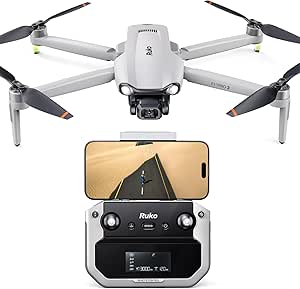
| Ruko F11PRO 2 Drone with 6K Ca | Up to 70 minutes with two batteries | — | Wi-Fi, RF | — |
| 4K UHD GPS Drone with Camera f | Up to 90 minutes with three batteries | 181 g | Wi-Fi | 4K |
| Oddire Drone with Camera | 25–28 minutes with two batteries | — | — | — |
| DJI Mini 4K Fly More Combo Dro | — | Under 249 g | — | 4K UHD |
| Drone with 2K Camera and 4.3" | Up to 30 minutes with two batteries | 140 g | Wi-Fi | 2K |
| Oddire 4K GPS Foldable Drone w | Up to 48 minutes | 249g | Wi-Fi | — |
| Ruko Drone with Camera for Adu | Up to 96 minutes with three batteries | 249g | — | — |
| GPS Drone with Camera for Adul | — | Under 250g | Wi-Fi | — |
| Drone with Camera and Built-in | Up to 25 minutes | — | — | — |
| GPS Drone with 1080P Camera | Up to 22 minutes | 206g | — | 1080p |
| Foldable Drone with 1080P HD C | — | — | 2.4GHz Wi-Fi and radio frequency | 1080p HD |
| FPV Drone with Camera 1080P HD | Up to 30 minutes with two batteries | 156 grams | — | — |
| DJI Neo Mini Drone with 4K UHD | — | 135 g | Bluetooth and Wi-Fi | 4K UHD |
| DCX Volo X EZ AI Drone with 4K | Up to 47 minutes | 14.4 ounces | — | 4K |
More Details on Our Top Picks
Ruko F11PRO 2 Drone with 6K Camera for Adults, 4K/30fps Video
For travelers who want more time to frame landscapes between battery changes, the Ruko F11PRO 2 pairs 4K/30fps video with a 3-axis mechanical gimbal and up to 70 minutes of flight across two batteries. That combination suits open coastal or countryside views better than the Oddire 1080P drone, whose simpler camera is geared more toward casual clips. GPS auto-return and beginner mode help reduce the workload of flying, though the advertised 10,000-foot maximum range is not a sensible target for sightseeing near people, buildings, or restricted airspace. The tradeoffs are its more involved remote setup, the need to remove the gimbal cover before flight, and a short stated coverage period. I’d choose it for camera quality and airtime, not for the lightest packing setup.
Pros:- 4K/30fps video and 6K photos provide more detail than the Oddire 1080P model.
- Three-axis mechanical gimbal helps smooth footage during movement.
- Two batteries provide up to 70 minutes of stated total flight time.
- GPS auto-return and beginner mode support more confident operation.
Cons:- Remote setup may feel complex for first-time pilots.
- Gimbal cover must be removed before flight.
- The listed warranty coverage is only 90 days.
Best for: Travelers planning open-area landscape flights who value stabilized 4K video and long sessions more than a minimal carry-on footprint.
Not ideal for: City-break travelers who need a compact, low-fuss drone or expect to fly near crowds and restricted European airspace.
- Video resolution:4K at 30fps
- Photo resolution:6K
- Effective still resolution:19 MP
- Gimbal:3-axis mechanical
- Battery capacity:3200 mAh
- Flight time:Up to 70 minutes with two batteries
- Maximum range:10,000 ft
- Connectivity:Wi-Fi, RF
Our verdict“Pick the Ruko F11PRO 2 for stabilized scenery footage and extended airtime when portability and simple setup are secondary.”
4K UHD GPS Drone with Camera for Adults N11 Pro, 90 Min Flight, 3 Batteries, Auto Return, Follow Me, Long Control Range, Brushless Motor, 5G FPV RC Quadcopter
The N11 Pro is the airtime-focused alternative in this group: three batteries are rated for up to 90 minutes combined, making it easier to spread flying across several scenic stops without relying on one long session. Its 4K camera, GPS auto-return, and Follow Me mode offer more travel-oriented features than the Oddire 1080P drone, while the DJI Mini 4K provides a stronger stated camera-stabilization package and a sub-249 g design. At 181 g, the N11 Pro is relatively light, but its listed 3,328-foot control range still does not mean it should be flown far away or beyond local line-of-sight rules. The 8.3 MP still resolution is modest, and its multiple flight modes may take practice. I’d shortlist it for battery flexibility, not for the best-supported imaging setup.
Pros:- Three batteries provide up to 90 minutes of stated combined flight time.
- GPS auto-return and Follow Me add useful automated flight options.
- 4K camera offers higher video resolution than the Oddire 1080P model.
- 181 g listed weight supports a lightweight travel setup.
Cons:- Effective still resolution is 8.3 MP, limiting detail for cropped or enlarged photos.
- The listed control range is not a substitute for line-of-sight flying or local rules.
- Multiple automated modes may add a learning curve for new pilots.
Best for: Travelers who want several shorter GPS-assisted flights during a trip and prefer having three batteries in the kit.
Not ideal for: Buyers prioritizing high-resolution stills, a mechanical gimbal, or the simplest possible first-flight experience.
- Camera resolution:4K
- Effective still resolution:8.3 MP
- Weight:181 g
- Flight time:Up to 90 minutes with three batteries
- Control range:3,328 ft
- Connectivity:Wi-Fi
- Flight features:GPS, auto return, Follow Me, optical flow positioning
- Motors:Brushless
Our verdict“Choose the N11 Pro if battery rotation and GPS features matter more than a gimbal-backed camera or stronger still-photo detail.”
Oddire Drone with Camera – 1080P HD, Trajectory Flight, Gravity Control, One Key Takeoff/Land, 3D Flip, Foldable Design, Carrying Case, 2 Batteries
The Oddire 1080P is the recreational pick here: a foldable body, carrying case, two batteries, and one-key takeoff and landing make it approachable for travelers who want occasional playful flights rather than polished aerial footage. Its adjustable 90-degree camera and trajectory controls offer more framing flexibility than a fixed-view toy drone, but image quality falls well behind the DJI Mini 4K’s stabilized 4K capture and the Ruko F11PRO 2’s 4K/30fps video. Photos and videos save directly to a phone, so there is no separate memory card to pack, though that also ties capture and control to the app and Wi-Fi connection. Calibration before each flight adds a small setup task. I’d pick it for casual use and portability, not as a dependable camera for a major vacation.
Pros:- Foldable design and included carrying case suit travel storage.
- Two batteries provide a stated 25–28 minutes of flight time.
- Adjustable camera angle supports more framing options than a fixed camera.
- Direct-to-phone storage removes the need to pack a separate SD card.
Cons:- 1080P capture offers less detail than the 4K cameras on the DJI Mini 4K and Ruko F11PRO 2.
- App and Wi-Fi control can make setup less convenient than a dedicated-screen controller.
- Requires calibration before each flight and has no automatic Follow Me feature.
Best for: Families or casual travelers who want an inexpensive-to-pack, foldable drone for short recreational flights and phone-based clips.
Not ideal for: Travel photographers seeking detailed 4K footage, stabilized cinematic shots, or GPS-based return functions.
- Camera:1080P HD, adjustable up to 90 degrees
- Flight time:25–28 minutes with two batteries
- Control:ODDIRE GO app via Wi-Fi
- Storage:Photos and videos saved directly to phone
- Flight features:Trajectory flight, gravity control, 3D flip, headless mode
- Speed modes:Three
- Batteries:Two rechargeable batteries
- Portability:Foldable design with carrying case
Our verdict“Choose the Oddire for light recreational flying and easy packing, but skip it if vacation footage is a priority.”
DJI Mini 4K Fly More Combo Drone with 4K UHD Camera, 3 Batteries, 3-Axis Gimbal, 10km Transmission, Auto Return, Under 249g
The DJI Mini 4K Fly More Combo earns the lead for this roundup by balancing travel-friendly weight with the most clearly specified filming setup: 4K UHD, a 3-axis gimbal, and three batteries. Its under-249 g weight is appealing for packing and may simplify some regulatory obligations, though it does not exempt a traveler from checking the rules at each destination. Compared with the Ruko F11PRO 2, DJI lists more total flight time—up to 93 minutes across three batteries—and a lighter design; unlike the Oddire, it is built around stabilized 4K video rather than casual 1080P clips. The main inconvenience is that the DJI Fly app must be downloaded from DJI’s website rather than Google Play. I’d choose this for travelers who want capable footage and a compact kit, while accepting some app setup.
Pros:- Under-249 g weight makes the drone easier to pack than the larger-feeling Ruko F11PRO 2.
- Three-axis gimbal supports smoother 4K footage than the Oddire’s 1080P camera setup.
- Three batteries provide up to 93 minutes of stated combined flight time.
- QuickShots offer guided camera moves for travelers learning aerial filming.
Cons:- Android users must download DJI Fly from DJI’s website rather than Google Play.
- Flight is best suited to open outdoor areas, limiting use in dense urban settings.
- Weight does not remove the need to check applicable European and local flight rules.
Best for: Travelers seeking a compact, stabilized 4K camera drone with multiple batteries for varied outdoor vacation footage.
Not ideal for: Android users who require app installation through Google Play, or travelers expecting to fly in crowded areas or without checking local rules.
- Weight:Under 249 g
- Camera resolution:4K UHD
- Gimbal:3-axis stabilization
- Maximum flight time:93 minutes with three batteries
- Maximum transmission range:10 km
- Wind resistance:Level 5
- Motors:Brushless
- App compatibility:DJI Fly; app download from DJI website
Our verdict“The DJI Mini 4K is my strongest all-around choice for vacationers who want stabilized 4K footage in a lightweight, multi-battery kit.”
Drone with 2K Camera and 4.3″ HD Screen Controller for Beginners, Brushless Motor, 360° Flip, One-Key Takeoff/Landing, Return, 2 Batteries, 30 Min Flight
This beginner-focused drone’s standout travel convenience is its 4.3-inch screen built into the controller, so the pilot can view the live feed without mounting a phone. That makes it a more self-contained option than the Oddire, which relies on app control and phone storage. The listed 140 g weight and two batteries also keep the kit relatively light, with up to 30 minutes of stated flight time. Its 2K camera, however, sits below the DJI Mini 4K’s 4K footage and three-axis stabilization, so I’d treat this as an easy-to-handle recreational flyer rather than a serious vacation camera. It also needs a microSD card for recording, which is not included, and some advanced functions still require an app. The built-in display is the reason to choose it; the imaging specs are not.
Pros:- Built-in 4.3-inch controller screen provides live viewing without a phone.
- Listed weight of 140 g supports a lightweight travel setup.
- Two batteries provide up to 30 minutes of stated flight time.
- Brushless motors and one-key takeoff and landing support beginner-friendly operation.
Cons:- 2K camera lacks the 4K resolution and three-axis gimbal listed for the DJI Mini 4K.
- MicroSD card is required for recording and is not included.
- Some advanced features still depend on app control.
Best for: Beginners who want a dedicated live-view screen and prefer not to use their phone as the controller display.
Not ideal for: Travelers prioritizing cinematic 4K footage, gimbal stabilization, or recording without buying and packing a microSD card.
- Camera resolution:2K
- Controller screen:4.3-inch HD
- Weight:140 g
- Flight time:Up to 30 minutes with two batteries
- Motor type:Brushless
- Connectivity:Wi-Fi
- Dimensions:8.1 × 6.4 × 2.3 in
- Storage:MicroSD card required; not included
Our verdict“Pick this model if a phone-free controller screen matters more than high-resolution, stabilized vacation footage.”
Oddire 4K GPS Foldable Drone with Camera, Auto Return, Waypoint Flight, Gesture Control, 48 Minutes Flight Time, 2 Batteries
For a European vacation where I want more than basic aerial clips without packing a larger setup, the Oddire 4K GPS Foldable Drone pairs a foldable 249g body with GPS auto-return and waypoint flight. Its two batteries provide up to 48 minutes of stated flight time, giving me more room to plan multiple short outings than the screen-equipped 1080p options in this group. The adjustable 4K camera and 12MP still resolution offer more capture detail than the GPS 1080p model with Follow Me, while the advertised transmission range is ample for open spaces. The tradeoff is that 5G Wi-Fi footage links and app setup can take extra attention, and the SD card is not included. I would also avoid treating its 500m transmission figure as permission to fly beyond local rules or line of sight.
Pros:- 249g listed weight and foldable design suit a compact travel kit.
- GPS auto-return and waypoint flight add useful control options for planned flights.
- Two batteries provide up to 48 minutes of stated combined flight time.
- Adjustable 4K camera with 12MP still resolution captures more detail than the 1080p GPS alternative in this batch.
Cons:- SD card is not included, so recording media needs to be arranged separately.
- App-dependent features may take setup before a trip.
- No gimbal or video-stabilization system is specified in the supplied details.
Best for: Travelers who want a sub-250g foldable drone with GPS return, waypoint flight, and two batteries for several planned outdoor sessions.
Not ideal for: Travel photographers prioritizing stabilized footage or a large sensor; this listing does not specify a gimbal, and setup and SD-card purchase add steps.
- Camera:4K UHD; adjustable lens
- Still resolution:12 MP
- Flight time:Up to 48 minutes
- Batteries:2 × 7.7V 1800mAh lithium polymer
- Maximum transmission range:1640 feet (500 meters)
- Weight:249g
- Connectivity:Wi-Fi
Our verdict“Choose the Oddire if GPS flight modes and two-battery endurance matter more than a documented gimbal or the controller screen on the 4.5-inch FPV model.”
Ruko Drone with Camera for Adults 4K Video & 8K Photo, 96 Minutes Flight Time
The Ruko stands apart here for travelers who want to spend a longer stretch shooting rather than frequently swapping batteries: its three-battery package is rated for up to 96 minutes. Its 1/2-inch 48MP sensor, 3-axis brushless gimbal, and EIS give this model a stronger stated imaging setup than the Oddire 4K GPS Foldable Drone, whose supplied specs do not mention a gimbal. That distinction matters when footage stability and detailed stills are higher priorities than simple portability. It is listed at 249g and includes GPS auto-return, but its 4K video tops out at 30fps, and obstacle avoidance is not specified. The advertised 6km range is not a reason to fly far from sight or local restrictions. For a short city break, this camera-focused feature set may be more than needed.
Pros:- Three batteries are rated for up to 96 minutes of total flight time.
- 1/2-inch 48MP sensor and 3-axis brushless gimbal provide a more photography-focused setup than the Oddire 4K model’s listed camera details.
- Captures 4K/30fps video and 8K still photos.
- 249g listed weight and GPS auto-return add travel convenience and a basic recovery feature.
Cons:- Video capture is limited to 30fps at 4K.
- Obstacle avoidance sensors are not mentioned in the supplied specifications.
- The long stated range may encourage expectations that are unsuitable for line-of-sight travel flying.
Best for: Travel photographers planning longer outdoor sessions who value a stated 3-axis gimbal, high-resolution stills, and multiple batteries.
Not ideal for: Travelers seeking the simplest, lowest-setup option or high-frame-rate video; the supplied video specification is limited to 4K/30fps, and obstacle avoidance is not listed.
- Sensor:1/2-inch CMOS, 48MP
- Video resolution:4K/30fps
- Still capture:8K photos
- Gimbal:3-axis brushless
- Flight time:Up to 96 minutes with three batteries
- Maximum range:20,000 feet (6 km)
- Weight:249g
Our verdict“Pick the Ruko for extended, photography-led outings and a listed gimbal, but choose a simpler model if compact, casual clips are your main goal.”
GPS Drone with Camera for Adults – FPV, Auto Return, Follow Me, Waypoint, Foldable, Brushless Motor, 250g
This foldable GPS model is the straightforward pick for travelers curious about Follow Me and waypoint functions but not committed to carrying a higher-resolution camera drone. It lists 1080p video, brushless motors, GPS, and auto-return, giving it more flight-mode emphasis than the screen-focused 1080p drone in this batch. Compared with the Oddire 4K GPS Foldable Drone, it gives up stated camera resolution and has no battery-life figure in the supplied details; that missing information makes it harder to plan a day of sightseeing around charging. Its under-250g listing and foldable form favor portability, but the stated weight does not by itself settle where or how a drone may be flown in Europe. I would treat the smart modes as useful extras, not a substitute for learning the controls or checking local flight rules.
Pros:- Foldable design and listed weight under 250g are convenient for travel packing.
- GPS includes auto-return and one-button return features.
- Follow Me and waypoint modes offer more automated framing options than a basic camera drone.
- Brushless motors are specified for flight stability.
Cons:- Battery type and flight time are not specified, making session planning uncertain.
- 1080p video offers less detail than the Oddire’s listed 4K camera.
- App and control features may require learning before travel use.
Best for: First-time drone buyers who want a foldable, GPS-equipped model with Follow Me and waypoint modes for casual 1080p vacation clips.
Not ideal for: Travelers with a tight shooting schedule or high image-quality expectations; flight time is unspecified and the listed camera is 1080p.
- Video resolution:1080p
- Weight:Under 250g
- Connectivity:Wi-Fi
- Control:Remote control
- Flight features:GPS, auto follow, auto return home, waypoint
- Motor type:Brushless
Our verdict“Choose this model for portable GPS flight modes on a casual budget-minded trip, but favor the Oddire if camera detail and stated battery endurance matter more.”
Drone with Camera and Built-in Screen on Controller
The built-in controller screen is the defining reason to choose this foldable 1080p drone: I can frame a shot and check flight information without relying on a phone display. That makes it a more self-contained choice than the GPS Drone with 1080P Camera, 4.5-inch FPV Screen, whose supplied details list a dedicated screen but less information about control range. This model states a control range below 30 meters, so I would keep it to close, controlled flights rather than open-country exploration. Two batteries are included, but the listed flight time is up to 25 minutes, and the 80° adjustable lens, propeller guards, and emergency stop point toward casual or indoor use. Its camera resolution is lower than the Oddire 4K model, and an SD card is still needed to save footage.
Pros:- Built-in controller screen reduces reliance on a phone for live framing.
- Two included batteries and up to 25 minutes of stated flight time support short practice sessions.
- Propeller guards and emergency stop add practical safeguards for beginner use.
- Adjustable 80° lens supports some framing changes without repositioning the drone.
Cons:- Control range below 30 meters is restrictive for outdoor travel photography.
- 1080p camera provides less detail than the Oddire 4K GPS model.
- SD card is required for saving images and video but is not included.
Best for: Families and casual vacation users who want a controller display, close-range flying, and propeller guards for supervised practice.
Not ideal for: Travelers seeking long-range landscapes or extensive outdoor coverage; the stated control range is below 30 meters and video is 1080p.
- Camera:1080P HD with 80° adjustable lens
- Control modes:Remote control and app control
- Flight time:Up to 25 minutes
- Control range:Below 30 meters
- Included batteries:2
- Flight features:One-key takeoff/landing, waypoint fly, emergency stop, gesture control
Our verdict“Choose this for close-range practice with a built-in screen, not for covering wide European landscapes or capturing higher-detail footage.”
GPS Drone with 1080P Camera, 4.5″ FPV Screen, 5GHz Transmission
At a listed 206g, this is the lightest option in this batch with a dedicated controller screen, making it appealing when I want to leave phone-based framing out of the flight setup. Its 4.5-inch display, 5GHz transmission, and foldable body suit quick practice sessions on a trip; GPS return, Follow Me, and orbit modes add more automated options than the basic screen-equipped drone with a sub-30m control range. The tradeoff is modest endurance: the stated flight time is up to 22 minutes, slightly below that model’s listed 25 minutes, and the camera remains 1080p despite EIS. Micro SD support is capped at 32GB, with no card included. Compared with the Oddire 4K GPS model, this prioritizes a lighter package and direct screen viewing over resolution and longer stated flight time.
Pros:- 206g listed weight and foldable construction suit a compact travel kit.
- Built-in 4.5-inch FPV screen provides a phone-free viewing option.
- GPS modes include auto-return, Follow Me, and orbit.
- EIS is specified for 1080p footage, and the motor is brushless.
Cons:- Up to 22 minutes of stated flight time limits each outing.
- Video is 1080p, below the Oddire model’s listed 4K resolution.
- Micro SD support is limited to 32GB, and a card is not included.
Best for: Light-packing travelers who want a controller-mounted FPV screen, GPS flight modes, and a foldable drone for short 1080p sessions.
Not ideal for: Travel photographers seeking 4K footage, longer flights, or generous storage options; this model is limited to 1080p, 22 minutes, and 32GB microSD support.
- Camera resolution:1080p
- Effective still resolution:8.85 MP
- Controller display:4.5-inch FPV screen
- Flight time:Up to 22 minutes
- Weight:206g
- Transmission frequency:5GHz
- Micro SD support:Up to 32GB
Our verdict“Pick this for a lightweight, screen-equipped 1080p travel drone, but choose the Oddire if you want higher resolution and longer stated flight time.”
Foldable Drone with 1080P HD Camera
For a European trip where I want a compact drone for casual photos and short practice flights, this foldable model keeps the setup straightforward. Its 1080p camera, adjustable lens and optical-flow positioning suit nearby sights better than distant landscapes, while one-key takeoff and altitude hold reduce the learning curve. The stated 200-foot range is the main constraint: it asks me to keep flights close, unlike the DJI Neo Mini Drone, whose listed range is much longer. Foldability helps with packing, but the listing does not give a weight, so I would check the actual travel dimensions and local rules before flying in Europe. The built-in LCD FPV display is useful for framing without relying solely on a phone, though the missing microSD card means I need to bring storage separately.
Pros:- Foldable design is convenient to pack.
- Adjustable 1080p camera supports basic aerial photos and video.
- Optical-flow positioning and altitude hold help with beginner control.
- Built-in LCD FPV display avoids relying solely on a phone screen.
Cons:- The listed 200-foot maximum range limits how far it can follow a scene.
- A microSD card is not included.
- No weight is provided, making travel packing and European category checks harder.
Best for: First-time flyers who want a foldable drone for nearby vacation views and simple practice flights.
Not ideal for: Travel photographers seeking stabilized 4K footage, long-range exploration or a specified lightweight carry-on setup.
- Camera resolution:1080p HD
- Effective still resolution:12 MP
- Maximum range:200 feet
- Connectivity:2.4GHz Wi-Fi and radio frequency
- Positioning:Optical flow
- Battery:Lithium-ion modular battery
- Material:ABS plastic
- Included components:Drone, modular battery, remote control and USB charging cable
Our verdict“Choose it for close-range beginner flights and skip it if you need long reach or stabilized 4K vacation footage.”
FPV Drone with Camera 1080P HD – Foldable RC Quadcopter for Beginners and Kids
This bundle is aimed at travelers who want extra flight practice without making their first outing complicated. The two included batteries provide a stated total of up to 30 minutes, and the carrying case makes it easier to keep the drone and accessories together between destinations. One-key start and landing, altitude hold, propeller guards and emergency alerts give it a more protective beginner setup than the Foldable Drone with 1080P HD Camera, which lists basic flight aids but not guards or a case. Its 156-gram weight is handy for packing, though light drones can be pushed around by wind, and the listing specifically warns that outdoor performance varies with conditions. The 1080p camera and adjustable angle work for casual FPV clips, but this is not the pick for travelers who want the DJI Neo’s 4K stabilized video.
Pros:- Two batteries provide up to 30 minutes of stated flight time.
- Foldable design and included carrying case support travel packing.
- Propeller guards and emergency alerts add beginner-focused safeguards.
- One-key start and landing simplify basic operation.
Cons:- Its light 156-gram build may be less steady in strong winds.
- 1080p video lacks the 4K resolution and stabilization offered by the DJI Neo.
- Voice, gesture and stunt controls may take practice to use confidently.
Best for: Families and first-time flyers who value a carrying case, propeller guards and spare battery time for casual vacation use.
Not ideal for: Travelers planning windy coastal flights or looking for high-detail, stabilized footage and more advanced image quality.
- Camera:1080p HD FPV, adjustable to 90°
- Flight time:Up to 30 minutes with two batteries
- Weight:156 grams
- Control features:One-key start and landing, altitude hold, headless mode, three speed settings, voice and gesture control
- Safety features:Propeller guards, emergency alerts, optical-flow positioning and barometric altitude hold
- Stunt capabilities:360° flips and rolls
- Design:Foldable; portable carrying case included
- App features:Live video feed and trajectory flight
Our verdict“Pick this bundle for beginner-friendly practice and spare-battery convenience, not for windy locations or polished 4K footage.”
DJI Neo Mini Drone with 4K UHD Camera, Palm Takeoff, Subject Tracking, QuickShots, Stabilized Video, Propeller Guards
The DJI Neo Mini is the strongest fit here for travelers who want 4K footage in a compact, 135-gram drone rather than a larger kit with longer stated endurance. Stabilization, subject tracking and QuickShots turn short sightseeing stops into easier-to-frame clips, while palm takeoff and landing reduce setup fuss. Compared with the two 1080p foldable models in this group, the Neo offers a clear step up in video resolution and a more travel-friendly weight. Its listed 10 km maximum range is not a reason to fly that far: European flight rules, visibility and location restrictions still matter. The main practical drawback is setup, since the DJI Fly app must be downloaded from DJI’s official website due to platform compatibility issues. Battery-life details are absent from the supplied data, so I would not choose it based on expectations of all-day filming.
Pros:- 135-gram weight makes it especially easy to pack.
- 4K camera with stabilization supports smoother, more detailed vacation footage.
- Subject tracking and QuickShots simplify capturing moving subjects and short sequences.
- Palm takeoff and landing offer a quick setup option.
Cons:- Battery life is not specified in the supplied product data.
- DJI Fly app installation requires downloading from DJI’s official website due to platform compatibility issues.
- App-based operation may not suit travelers who prefer a dedicated remote controller.
Best for: Vacation creators who prioritize compact packing, stabilized 4K clips and easy subject-following shots over long sessions between charges.
Not ideal for: Travelers who need clearly specified battery endurance, prefer a conventional remote-only setup or do not want to install the DJI Fly app from DJI’s website.
- Weight:135 g
- Camera resolution:4K UHD
- Effective still resolution:12 MP
- Maximum range:10 km
- Control options:App control, voice control and controller-free operation
- Connectivity:Bluetooth and Wi-Fi
- Battery capacity:1435 mAh
- Video format:MP4
Our verdict“Choose the Neo for compact, stabilized 4K travel clips, but look elsewhere if verified flight endurance is your priority.”
DCX Volo X EZ AI Drone with 4K Camera & 360° Obstacle Avoidance
Among these four, the Volo X EZ is the choice for travelers who value longer stated flight time and assisted tracking more than the smallest possible packing footprint. Its up-to-47-minute flight time, 4K camera and 3-axis gimbal give it a better case for extended landscape sessions than the DJI Neo, whose battery duration is not specified here. AI-assisted Follow Me and 360° obstacle avoidance may ease piloting, but they do not replace checking European flight restrictions or maintaining control. The tradeoff is size: at 14.4 ounces and listed dimensions of 17 by 4.5 by 4 inches, it is a much less effortless travel companion than the Neo at 135 grams. Its Wi-Fi connectivity and feature-rich controls also make it a more involved option than the simple 1080p beginner drones. I would inspect the foam padding before first use, as the listing says it must be removed.
Pros:- Up to 47 minutes of stated flight time supports longer outings.
- 4K camera with a 3-axis gimbal is suited to smoother landscape footage.
- AI-assisted Follow Me and 360° obstacle avoidance provide flight aids.
- Foldable design makes storage easier than a non-folding drone of similar capability.
Cons:- At 14.4 ounces, it is substantially heavier than the 135-gram DJI Neo.
- Wi-Fi-only connectivity may limit practical connection range.
- The feature set may feel complex to beginners, and foam padding must be removed before use.
Best for: Travelers with room for a larger kit who want longer flight sessions, gimbal-stabilized 4K footage and AI-assisted following.
Not ideal for: Light-packers and casual beginners who want a small, simple drone or need dependable connectivity beyond the listed Wi-Fi setup.
- Weight:14.4 ounces
- Dimensions:17 × 4.5 × 4 inches
- Camera resolution:4K
- Flight time:Up to 47 minutes
- Battery:5000 mAh, 11.4 V
- Control range:4 miles
- Control type:Remote control
- Special features:AI-assisted flight, 360° obstacle avoidance, electronic image stabilization, night mode and LED spotlight
Our verdict“Pick the Volo X EZ for longer gimbal-stabilized filming sessions if you can accept more weight and setup complexity.”

How We Picked
My selection process prioritized regulatory compatibility and packability above raw specs. I evaluated each drone based on its weight class relative to EASA (European Union Aviation Safety Agency) standards, specifically looking for models under 250g that bypass complex registration requirements in many popular tourist destinations. I also assessed the physical footprint of each unit, favoring foldable designs that fit easily into carry-on luggage or small daypacks. Beyond compliance, I compared flight stability and ease of setup. European vacations often involve spontaneous flying in unfamiliar environments, so I favored drones with robust GPS positioning and automatic return-to-home features. I also weighed the value of bundled accessories, such as extra batteries and carrying cases, which are critical for maximizing shooting time during a short trip. Products lacking essential safety features like geofencing or obstacle avoidance were ranked lower unless their low cost made them suitable only for casual, low-risk backyard use.Factors to Consider When Choosing Travel Drone For Europe Vacations
Selecting a drone for European travel is distinct from buying one for domestic use due to strict airspace regulations and diverse terrain. This guide breaks down the specific factors that impact your experience on the continent.Understanding Weight Classes and Legal Thresholds
The 250g weight limit is the single most important factor in European drone law. Drones under this weight generally fall into the “Open” category with fewer operational restrictions, meaning you can often fly without registering with the national aviation authority or obtaining a pilot license. Heavier drones, even by a few grams, may require you to complete an online exam and register as a remote pilot, a process that can take weeks and is impractical for short vacations. When comparing models, verify the actual takeoff weight with batteries installed, as some manufacturers quote body weight only. Choosing a sub-250g model eliminates a significant layer of administrative burden and anxiety about local enforcement.
Wind Resistance and Flight Stability
European destinations, particularly coastal areas in Spain, Italy, and Greece, often present challenging wind conditions. Lightweight drones, while legally convenient, can struggle to maintain position in gusts exceeding 10-15 mph. I looked for models with brushless motors and aerodynamic designs that cut through wind rather than getting tossed around. If you plan to fly near cliffs or over water, a heavier drone with active stabilization is safer, provided you comply with local registration rules. For city trips in Paris or Rome, wind is less of an issue, but the need for precise hovering in narrow streets remains, making GPS accuracy a key differentiator.
Battery Life and Charging Logistics
Advertised flight times rarely match real-world conditions, especially when accounting for wind and camera recording. A drone advertised at 30 minutes may only deliver 20-22 minutes in practice. For a vacation, this means a single battery is insufficient for a productive shooting session. I prioritized models sold in Fly More Combos or bundles that include at least three batteries and a multi-charger. This ensures you can shoot for hours without needing to hunt for power outlets, which can be scarce in historic European city centers. Also, consider the charging method; USB-C charging is far more convenient than proprietary docks when traveling light.
Controller Ergonomics and Screen Integration
Traditional drones require you to mount your smartphone on the controller, which drains your phone battery and exposes it to damage. Some newer models, like the Oddire 4K and certain DJI variants, feature controllers with built-in screens or offer separate screen-equipped remotes. This separation is valuable on vacation because it keeps your primary phone free for maps, bookings, and communication. When evaluating these options, consider the screen brightness; European summer sun can wash out low-quality displays, making it hard to frame shots accurately. A high-contrast, bright screen is a subtle but significant quality-of-life feature for outdoor shooting.
Privacy and No-Fly Zones in Historic Areas
Many European cities have strict no-fly zones over historic centers, airports, and government buildings. Flying illegally can result in heavy fines and confiscation of equipment. Before purchasing, research the specific restrictions of your destination. Drones with geofencing capabilities that automatically prevent takeoff in restricted zones are safer investments. I favored models that integrate with reputable airspace data platforms, providing real-time alerts about local restrictions. This feature prevents accidental violations that could ruin a trip. Always assume that flying over crowds is prohibited, regardless of drone weight, as this is a universal safety rule in the EU.
Frequently Asked Questions
Do I need a license to fly a sub-250g drone in Europe?
In most EU countries, flying a drone under 250g does not require a formal pilot license or registration with the national aviation authority, provided you fly in the “Open” category (visual line of sight, below 120m, no flying over crowds). However, you are still required to follow local airspace rules and respect privacy laws. Some countries, like Germany and France, have specific local restrictions even for light drones. Always check the specific country’s aviation authority website before traveling, as rules can vary slightly between member states despite EU-wide harmonization.Is it safe to fly a drone over water or cliffs in Europe?
Flying over water or near cliffs carries inherent risks, particularly if the drone loses signal or battery power. Lightweight drones are more susceptible to wind gusts that can push them out of control. I recommend using models with return-to-home (RTH) functionality and setting your RTH altitude higher than the tallest obstacle in the area. Additionally, never fly beyond visual line of sight. If you are unsure about conditions, stick to open fields away from water and crowds. Insurance is also a wise precaution, as many travel insurance policies do not cover drone accidents.Can I bring a drone in my carry-on luggage on European flights?
Yes, you can bring a drone in your carry-on luggage. However, lithium batteries must be carried on board, not in checked baggage, due to fire safety regulations. The drone body itself can go in either, but keeping it with you prevents damage. Ensure batteries are protected from short-circuiting by keeping them in original packaging or battery bags. Some airlines may have specific rules about the size of the battery or the total watt-hour capacity, so check with your carrier. The DJI Mini series is particularly popular for travelers because its compact size fits easily in overhead bins.Why do some drones lack obstacle avoidance, and is that a dealbreaker?
Many budget and sub-250g drones omit obstacle avoidance to reduce weight and cost. This is a significant tradeoff because flying in complex environments like forests or urban areas becomes riskier without sensors to detect branches or buildings. For experienced pilots who fly in open spaces, this is manageable. For beginners or those planning to fly in tight city streets, obstacle avoidance is a valuable safety net. The DJI Neo and some Ruko models offer basic forward-facing avoidance, which helps with forward flight but not lateral or rearward obstacles. If you plan to fly in dense areas, prioritize models with multi-directional sensing or fly with extreme caution.How does the DJI Neo compare to the DJI Mini 4K for travel?
The DJI Neo is designed for extreme portability and social media content creation, featuring palm takeoff and no controller required for basic flights. It is ideal for quick, spontaneous shots in safe, open areas. The DJI Mini 4K, however, offers a traditional controller, longer range, and superior wind resistance, making it better for serious travel photography and longer flights. The Neo is better for casual users who want zero setup time, while the Mini 4K is better for those who want more control and reliability in varied European weather conditions. Choose the Neo for convenience and the Mini 4K for performance.Conclusion
For most travelers, the DJI Mini 4K Fly More Combo is the best overall choice for European vacations due to its perfect balance of sub-250g weight, professional camera quality, and reliable flight performance. It minimizes legal hurdles while delivering impressive results. If you are looking for the best value and can tolerate slightly heavier regulations or lower build quality, the Ruko F11PRO 2 offers impressive specs at a lower cost. For beginners or those prioritizing ease of use above all else, the DJI Neo provides the simplest entry point with its palm takeoff and intuitive controls. If you need a compact option with a built-in screen to save phone battery, the Oddire 4K GPS Foldable Drone is a strong contender. Ultimately, match the drone’s capabilities to your specific travel itinerary: choose lighter, simpler models for city hops and more robust, feature-rich drones for coastal or mountainous adventures.Fall Picks

DJI Osmo Action 5 Pro Essential Combo Waterproof 4K Action Camera
As an affiliate, we earn on qualifying purchases.