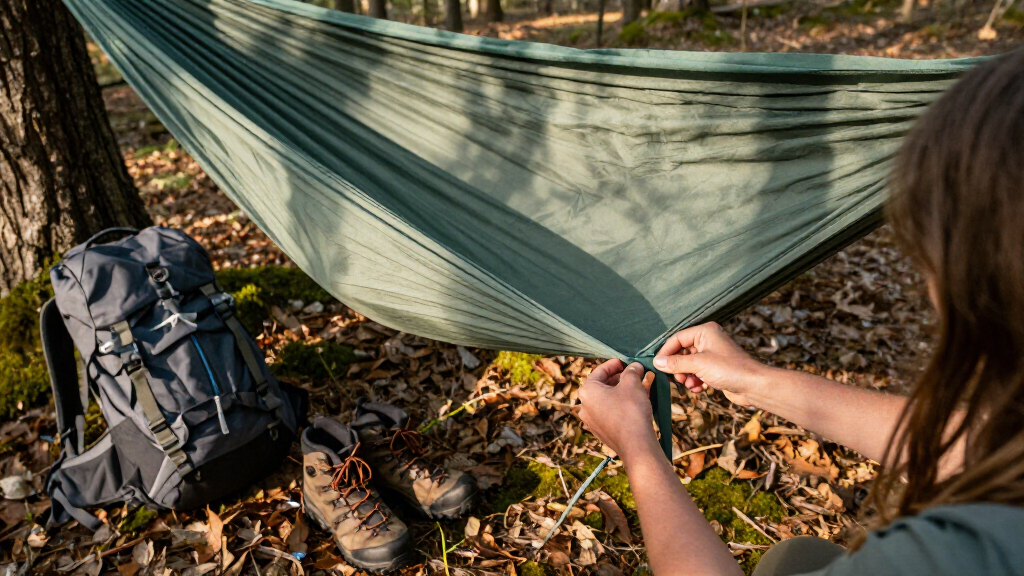

When shopping for a portable camping hammock, the most useful first comparison is usually a single model against a double—not one brand against another. Both can pack into a small stuff sack and work for lounging or sleeping, but they make different compromises: a single keeps the carry light and the setup compact, while a double offers more room to shift position, spread out, or share the hammock.

Get travel and outdoor gear delivered free — and shop member deals
- Fast, free delivery on millions of items
- Access to Prime Big Deal Days deals on October 6–7
- Prime Video, Amazon Music and more included

Wise Owl Outfitters Single Camping Hammock – Portable Lightweight Parachute Nylon (Black & Grey)
- ✔ Dimensions: 9 ft x 4.5 ft
- ✔ Weight: 16 oz
- ✔ Weight capacity: 400 lbs
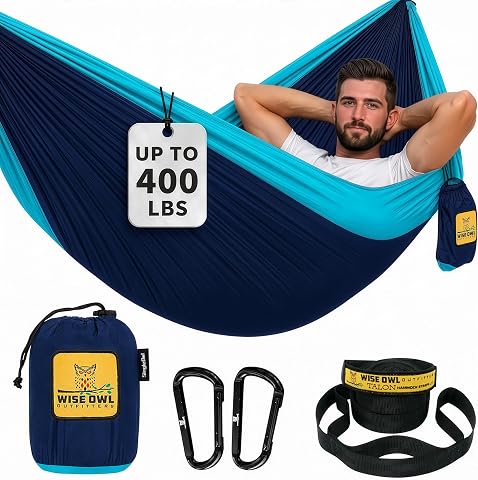
Wise Owl Outfitters Camping Hammock – Portable, Up to 500 lbs, Tree Straps Included
- ✔ Single dimensions: 9 ft x 4.5 ft
- ✔ Double dimensions: 10 ft x 6.5 ft
- ✔ Listed weight: 16 oz

Camping Hammock Lightweight Portable Parachute Hammock with Two Tree Straps – Single or Double Travel Swing Nylon, Blue
- ✔ Capacity: 600 lbs
- ✔ Use: Single or double
- ✔ Material: Colorfast nylon
That difference matters most on foot-powered trips, where every ounce and bit of pack space counts, and on relaxed camps where comfort may matter more than minimum weight. This guide compares the two sizes across the criteria that affect actual use. Choose a single if you want a simpler, lighter solo setup; choose a double if you value extra space and accept the added carry burden. A double is not automatically a two-person hammock, and either size still needs suitable suspension and safe, appropriately spaced trees.
At a Glance
| Criteria | Single portable camping hammock | Double portable camping hammock | Winner |
|---|---|---|---|
| Packed weight and bulk | Usually lighter and more compact; exact weight depends on fabric, suspension, and included accessories. | Usually heavier and bulkier because it uses more fabric; accessories can widen the gap. | A |
| Room to sleep | Adequate for many solo users, but narrower fabric can make diagonal positioning and movement feel constrained. | More fabric gives many solo users room to spread out and find a comfortable position. | B |
| Two-person use | Usually intended for one person; sharing may feel cramped and can concentrate load. | Can fit two people for casual use, but comfort, load limits, and fabric dimensions vary; not guaranteed. | Depends |
| Setup and campsite fit | Smaller footprint can suit tight campsites and reduce excess fabric during setup. | Needs a little more room to hang and may leave extra fabric when used by one person. | A |
| Weather protection compatibility | Works with compatible tarps and bug nets; check sizing and attachment points for the specific model. | May call for a wider tarp or compatible bug net; verify dimensions rather than assuming accessories fit. | Depends |
| Value and versatility | Often the economical choice if the hammock will mainly serve one person and weight matters. | Costs more in many ranges, but its extra room can make it a more useful lounge or shared-camp option. | Depends |
Wise Owl Outfitters Single Camping Hammock – Portable Lightweight Parachute Nylon (Black & Grey)
For campers who want a simple hammock that is easy to account for in a backpack, this is the most balanced choice in the group. Its 16-ounce listed weight and defined 9-by-4.5-foot single size give us more concrete portability guidance than the blue option, whose packed weight and dimensions are not supplied. The included tree straps, carabiners, built-in stuff sack, and five-loop height adjusters also mean the basic hanging setup is part of the package rather than a separate planning step.The 400-pound stated capacity and triple-stitched seams described in the product information offer a useful margin for a single-person model, but capacity should not be confused with room for two: this hammock is explicitly designed for one user. Compared with the other Wise Owl, it has a lower listed maximum load and no stated double-size option. That makes its role clearer, not broader: it is the better fit when solo sizing and pack weight matter more than flexibility. Quick-dry parachute nylon may also suit trips where damp gear is a concern, though it does not remove the need to choose secure anchor points.We would skip it if we want to lounge as a couple or need a hammock that stands without trees. Its single-use layout is the defining limitation, and the 9-foot length may not meet every camper’s preference for more room to lie diagonally. Still, among these picks, its documented weight, dimensions, and supplied hardware make it the easiest to evaluate for a lightweight solo kit.
Pros:
- Listed at 16 ounces, making pack weight easy to compare and plan around.
- Defined 9-by-4.5-foot single dimensions suit a straightforward solo setup.
- Includes tree straps, carabiners, a built-in stuff sack, and five-loop adjusters.
- Product details state a 400-pound capacity and triple-stitched seams.
Cons:
- Designed for one person and not presented as a shared-use hammock.
- Requires two sturdy anchor points and cannot replace a standalone support.
Best for: Solo backpackers who prioritize a clearly specified 16-ounce hammock and want straps and carabiners included.
Not ideal for: Couples, campers who want a documented double-size option, or anyone without two suitable anchor points.
Bottom line: We rank this first for solo camping because its low listed weight, specific dimensions, and complete setup kit make it the clearest portable choice.
“We rank this first for solo camping because its low listed weight, specific dimensions, and complete setup kit make it the clearest portable choice.”
Wise Owl Outfitters Camping Hammock – Portable, Up to 500 lbs, Tree Straps Included
We place this model second because it retains the most important packability claim of our top pick—a listed weight of 16 ounces—while giving buyers a choice between a 9-by-4.5-foot single and a larger 10-by-6.5-foot double. That choice makes it more adaptable than the strictly single Wise Owl hammock, particularly for campers who sometimes go out alone and sometimes want a wider lounging area. Its stated 500-pound maximum capacity is also higher than the single model’s 400-pound figure.The broader size choice comes with a practical caveat: the supplied details do not clarify whether the 16-ounce figure applies to both sizes. We should therefore avoid assuming that the double version packs or weighs exactly like the single. Compared with the blue 600-pound hammock, this Wise Owl provides more concrete size information and lists carabiners alongside tree straps, but its stated maximum capacity is lower. It is the more informative option for planning fit; the blue model may suit buyers who put the highest stated capacity first.Quick-dry, weather-resistant parachute nylon and machine-washable care make this a versatile travel option on paper, but fabric features do not solve the anchoring requirement. Like the other Wise Owl, it needs two sturdy points and is not described as compatible with a standalone stand. We would choose it when single-or-double flexibility is valuable, and pass if we want a single, fully unambiguous weight-and-size combination without checking which variant is selected.
Pros:
- Product details list a 16-ounce weight and include a built-in stuff sack for packing.
- Offers stated single and double dimensions, including a 10-by-6.5-foot double.
- Includes tree straps and carabiners for setup between suitable anchor points.
- Lists a 500-pound maximum load and quick-dry parachute nylon.
Cons:
- The supplied details do not specify whether the 16-ounce weight applies to both sizes.
- Requires two sturdy anchor points and is not described for standalone use.
Best for: Campers who want the option of a defined single or double size and value a listed 16-ounce weight plus included hanging hardware.
Not ideal for: Buyers who need a standalone setup, or those unwilling to confirm which size the listed weight applies to.
Bottom line: We recommend it over the single-size Wise Owl when size flexibility matters, provided we verify the selected variant’s weight and dimensions.
“We recommend it over the single-size Wise Owl when size flexibility matters, provided we verify the selected variant’s weight and dimensions.”
Camping Hammock Lightweight Portable Parachute Hammock with Two Tree Straps – Single or Double Travel Swing Nylon, Blue
This blue hammock earns its place for campers who value extra-large space and a 600-pound stated capacity more than a precisely documented pack weight. The product information describes it as suitable for solo or couple use, giving it a broader lounging role than the single-size Wise Owl. Compared with the Wise Owl double, it also has the highest listed capacity in this lineup. That can make it appealing for shared use, though the supplied details do not specify its dimensions, so we cannot compare its actual width or length directly with the 10-by-6.5-foot Wise Owl double.Portability is claimed, and two tree straps are included, but the listing details provided here do not state a packed weight, dimensions, carabiners, or an attached stuff sack. For a backpacking buyer trying to manage a load, those omissions matter: the 16-ounce Wise Owl options are easier to assess before leaving home. The blue hammock’s strength is instead its shared-use emphasis and practical cleaning claim. The nylon is described as breathable, colorfast, and machine washable, which may suit trips where the hammock is used for lounging and needs washing afterward.Care has a limitation: it is recommended to air-dry rather than tumble-dry. More importantly, a high stated capacity does not make the hammock a two-person sleeping system or establish its comfort for every pair of users. We would pick it for spacious lounging when capacity is the leading comparison point; we would favor either Wise Owl when pack weight, exact dimensions, or a more fully specified setup kit is central to the decision.
Pros:
- Lists a 600-pound capacity, the highest stated figure in this comparison.
- Described as extra-large and suitable for solo or couple use.
- Includes two tree straps for hanging between appropriate anchor points.
- Machine-washable nylon is intended to simplify cleaning.
Cons:
- The supplied details do not give dimensions or packed weight.
- Air-drying is recommended; tumble-drying is not.
- Carabiners and a stuff sack are not specified in the supplied accessory details.
Best for: Campers seeking a roomy solo-or-couple lounging hammock and prioritizing the highest stated load capacity among these three.
Not ideal for: Backpackers who need a known packed weight and dimensions, or buyers who require listed carabiners or a stuff sack.
Bottom line: We choose this for shared lounging and its highest stated capacity, but not as our first backpacking pick because key portability measurements are missing.
“We choose this for shared lounging and its highest stated capacity, but not as our first backpacking pick because key portability measurements are missing.”
As an Amazon Associate we earn from qualifying purchases.
Key Differences
The core tradeoff is simple: a single hammock is easier to justify when you carry it far, while a double is easier to justify when you want space once you arrive. Extra width can help a solo sleeper lie diagonally and avoid feeling wrapped tightly in the fabric. That can make a meaningful comfort difference, but it does not change the basic requirements for a safe hang: use appropriate suspension, follow the product’s load limit, and choose sound anchor points.
Weight and fit are linked to the rest of the shelter system. A larger hammock may need a wider tarp or a compatible bug net, and those added pieces can cost more and take up space. Check the complete packed system rather than comparing hammock bodies alone. If you mostly lounge near camp or want one hammock for solo and occasional shared use, the extra capacity may earn its place. For a lightweight backpacking kit, a double’s comfort is a poor bargain if its added fabric and accessories stay unused.
Detailed Comparison
Packed weight and bulk (Single portable camping hammock wins — moderate)
The single wins; the gap is usually moderate. A smaller hammock generally uses less fabric and packs smaller, which can make it the more sensible choice when carrying gear over long distances. The real difference depends on construction and what comes in the package: a heavy single with thick straps can outweigh a minimalist double. Compare listed packed weights for the full setup, including suspension, bug net, and stuff sack, before deciding.
Room to sleep (Double portable camping hammock wins — moderate)
The double wins; the gap is moderate to major for comfort-sensitive solo users. More width gives a person extra fabric to work with, often making it easier to settle diagonally and change position. A single can still work well for sleeping, especially for smaller users or those used to hammock camping, but some people find its narrower cut restrictive. Dimensions matter more than the label: compare actual width and length with your height and preferred sleeping position.
Two-person use (moderate difference)
This depends on the hammock’s dimensions and rated capacity, not its name alone. A double is the more plausible choice for sitting together or sharing briefly, but two people may still find it cramped or uncomfortable for a full night’s sleep. A single is generally a poor fit for shared use. Check the manufacturer’s maximum load, and remember that a stated capacity does not promise comfortable two-person sleeping or replace careful hanging practice.
Setup and campsite fit (Single portable camping hammock wins — minor)
The single has a minor practical advantage. Its smaller body is easier to place in a confined site and can be less awkward to arrange when trees are close together. Neither size removes the need for suitable anchor points, and site geometry matters more than hammock width alone. A double may hang perfectly well in a typical campsite, but it offers little benefit if available space or tree placement prevents a comfortable setup.
Weather protection compatibility (moderate difference)
There is no universal winner; accessory fit decides it. Both sizes can be used with a rain tarp and, where needed, a bug net. However, a wider hammock may call for a broader tarp or net designed for its dimensions, adding weight and expense. A single can be simpler to pair with compact shelter gear, but only if the selected accessories provide adequate coverage. Confirm compatibility and coverage rather than assuming every tarp or net fits both sizes.
Value and versatility (moderate difference)
It depends on how often the added space gets used. A single is better value for a solo backpacker who wants a dependable place to rest without paying or carrying more for unused fabric. A double can justify its higher cost if it serves as a roomier solo bed, a shared lounging spot, or a more flexible camp hammock. It is not automatically a better buy: verify that its weight and compatible accessories still fit your kit.
Single portable camping hammock: Pros and Cons
Pros:
- Typically the lighter, less bulky choice for a solo carry.
- Smaller footprint can be convenient at compact campsites.
- Often costs less than a comparable double.
- A straightforward fit for solo lounging and hammock camping.
Cons:
- Less room to spread out or lie diagonally.
- Usually a poor option for sharing.
- May feel restrictive for taller or broad-shouldered users.
- Weight advantage can disappear when comparing different fabrics or suspension kits.
Double portable camping hammock: Pros and Cons
Pros:
- More width gives solo users additional room to adjust position.
- More comfortable for many people who dislike a narrow hammock.
- Can serve as a shared lounging spot when capacity and dimensions allow.
- Offers more flexibility for camp use beyond sleeping.
Cons:
- Generally heavier and bulkier to carry.
- May require a larger or specifically compatible tarp and bug net.
- Higher cost can be wasted if the extra room is rarely used.
- The word double does not guarantee comfortable overnight use by two people.
Who Should Choose What
Choose Single portable camping hammock if:
- You mostly travel alone and prioritize low pack weight and compact storage.
- You have limited space in your pack or expect to hang in smaller campsites.
- You already know a narrower hammock suits your sleeping position.
- You want a lower-cost hammock for occasional solo lounging or trips.
Choose Double portable camping hammock if:
- You want more room to move or lie diagonally when sleeping solo.
- Comfort at camp matters more to you than minimizing every ounce.
- You plan to use it for shared lounging as well as solo rest, within its rated limits.
- You have checked the full-system weight and can accommodate compatible shelter accessories.
Skip both if: Neither size is a good buy if your campsites lack safe, appropriately spaced anchor points, or if you need a complete weatherproof sleeping shelter but are only comparing hammock bodies. Look at a supported tent or another shelter suited to your route and conditions.
Value for Money
Pay more for a double only when you will use its width. For a solo backpacker counting ounces, a single is usually the better value because it meets the basic need with less fabric, less pack bulk, and often a lower price. That advantage is strongest on longer hikes, where reduced carry weight matters every day.
A double can be worth the extra cost for someone who sleeps more comfortably with room to spread out or wants a camp hammock that also works for shared lounging. Compare the cost and weight of the full setup, not just the hammock: a wider body can affect tarp and bug-net choices. If the extra space changes how often you use the hammock, paying more may make sense. If it only sounds reassuring on a product label, keep the money and weight.
Final Verdict
For most people who will carry a hammock on solo backpacking trips, choose a single: it is the clearer fit for low weight, small packing volume, and a one-person job. Choose a double if you already know that extra width improves your comfort, or if you will use the added room for shared camp lounging and are willing to carry compatible accessories.
The deciding factor is not whether one size is universally better; it is whether the double’s added space earns its weight on your trips. If it does, the double is a worthwhile comfort upgrade. If not, the single is the more practical purchase. Do not buy either on the assumption that hammock size alone provides weather protection or guarantees comfortable two-person sleeping.
Frequently Asked Questions
Can two people sleep in a double camping hammock?
Sometimes, but the label does not guarantee comfortable overnight use for two. Check the hammock’s dimensions and rated capacity, and treat shared sleeping as a separate comfort question. Many double hammocks are best understood as roomier solo hammocks or shared lounging options.
Is a double hammock always heavier than a single?
No. Doubles generally use more fabric and are often heavier, but fabric weight, construction, suspension, and included accessories can change the result. Compare packed weights for the complete systems you are considering.
Which size is better for a tall person?
A double’s added width may help, but length and overall dimensions matter too. Check the manufacturer’s measurements against your height and preferred sleeping position. A single hammock that is long enough may suit you better than a short double.
Do I need a tarp and bug net with either size?
For exposed or buggy conditions, many campers use a tarp and bug protection with either size. Neither is always included, and fit varies. Confirm that the accessories cover the hammock properly and attach to the model you choose.
Evergreen bestsellers Picks
bestsellers
As an affiliate, we earn on qualifying purchases.