TL;DR

Get travel and outdoor gear delivered free with Prime
- Fast, free delivery on millions of items
- Prime Video, Amazon Music and more included
- Member-only deals all year
At least 69 people were killed and more than 100 injured when a Renfe high-speed train struck a stationary Iryo train near Urda, south of Madrid, on Wednesday morning. Spain has declared three days of national mourning; investigators are examining a reported computer failure and instructions given to the trains, but the cause has not been established.
At least 69 people were killed when a state-operated Renfe high-speed train struck the back of a stationary Iryo train near Urda, south of Madrid, on Wednesday morning, Spanish authorities said. More than 100 people were treated for injuries, and investigators are examining a reported computer failure and the decisions made by rail controllers before the collision; the cause has not been determined.
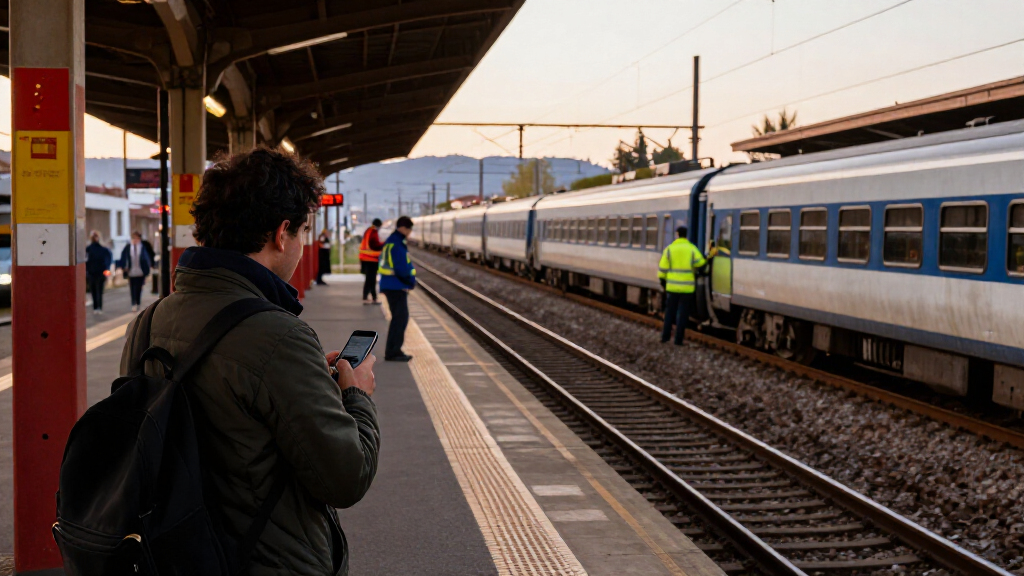
The collision happened at 08:53 local time between the municipalities of Mora and Orgaz, about 140km south of Madrid, according to an account from the Spanish government. The trains were travelling on the high-speed route to Seville. The impact sent some carriages down an embankment, and rail traffic on the line was stopped.
More than 540 people were aboard the two trains. Castilla-La Mancha government spokesperson Esther Padilla told Spanish broadcaster TVE that the Iryo train carried 146 passengers and a baby, while the Renfe train carried 397 passengers. By the day after the crash, authorities said more than 100 people had received treatment and 50 remained in hospital, including 15 in critical condition.
Iryo said its train was “struck from behind” by a Renfe train for reasons that remained unknown. Renfe said services between Madrid, Ciudad Real and Andalusia were suspended. The report identifies two people killed as athlete Julieta Gallego and former government minister Fátima Báñez.
Deaths Prompt Rail Safety Scrutiny
The scale of the loss has made the collision a major national tragedy and placed the operation of Spain’s high-speed rail network under close scrutiny. The crash has disrupted services on a key route linking Madrid with Andalusia, while families await information about victims and survivors continue to receive medical care.
The investigation also has wider implications for rail safety: officials are examining how trains were controlled after a reported technical failure, including whether instructions and operating procedures were followed. Those questions are not settled. Establishing the sequence of events will matter both for determining responsibility and for deciding whether any safety measures need to change.
Prime Minister Pedro Sánchez said the government would investigate the origin of the crash and address any failures found. Political leaders have also called for answers about the state of the country’s rail infrastructure, though responsibility has not been established.
Products Worth Considering

DJI Osmo Pocket 4 Gimbal Camera Pro Kit, 18-Piece Bundle

Samsonite Element 21-Inch Expandable Softside Carry-On Spinner Suitcase, Black

Amazon Kindle Paperwhite Signature Edition (12th Generation, 2024), 32 GB, Metallic Black
As an affiliate, we earn on qualifying purchases.
A Technical Failure Before Impact
Transport Minister Óscar Puente said a computer failure at about 08:30 caused six moving trains, including the two involved in the collision, to stop. He said the control centre then took over and allowed trains to move again without speed restrictions, describing that decision as made “under inexplicable circumstances.” His account is an official explanation of events under investigation, not a final finding on the cause.
Spanish media obtained audio recordings that appear to capture exchanges between train drivers and controllers at Adif, the rail infrastructure company. In one, a controller tells the Renfe driver to disconnect and reconnect the LZB speed-monitoring system, then continue at normal speed. The report says normal protocols would have limited movement to 40km/h, guided by line of sight, when operating under the alternative signalling procedure. The line is designed for speeds of up to 200km/h.
In another recording, the Iryo driver says the train is stopped at an entry signal near Urda. Later, the driver reportedly tells the control centre that the train’s security system will not allow it to move. The recordings may help establish what controllers knew and when, but their full context and the technical sequence still need to be assessed by investigators.
““In the event of a system failure, the control centre takes over.””
— Spanish Transport Minister Óscar Puente
Cause and Control Decisions Unresolved
The cause of the collision has not been officially established. The reported computer failure, the conditions under which trains were allowed to move again, and the information available to the control centre remain under examination. Audio reported by Spanish media appears to document some exchanges, but it does not by itself establish whether procedures were breached or who, if anyone, was negligent.
Authorities have not provided a final technical account of how the signalling and train safety systems operated, why the Iryo train remained stopped, or precisely when the Renfe train’s crew and controllers became aware of its position. The final casualty and injury toll may also change as recovery and medical updates continue.
Investigation and Service Recovery
Investigators are expected to reconstruct the trains’ movements and review signalling, technical records, control-centre communications and the reported audio exchanges. The government has said it will seek to determine the origin of the crash. No final timetable for investigative findings was included in the available reporting.
Spain’s three days of official mourning began on Thursday, and emergency and recovery work is continuing. Rail services on the affected route were suspended, with Renfe reporting that services between Madrid, Ciudad Real and Andalusia had stopped. The available information does not give a confirmed reopening schedule; passengers should check current operator notices before travelling.
Key Questions
Where did the Spain train crash happen?
The collision happened near Urda, between Mora and Orgaz, about 140km south of Madrid, on the high-speed line to Seville.
How many people were killed or injured?
Authorities reported at least 69 deaths and more than 100 people treated for injuries. By the following day, 50 people remained in hospital, 15 of them in critical condition.
What caused the trains to collide?
The cause is still under investigation. Transport Minister Óscar Puente said a computer failure had stopped trains before the control centre allowed them to move again. Investigators have not issued a final account of the failure or the decisions that preceded the collision.
Which trains were involved?
A Renfe high-speed train struck the back of a stationary train operated by Iryo. More than 540 passengers were aboard the two trains, according to regional government figures.
Are trains running on the affected route?
Renfe reported that services between Madrid, Ciudad Real and Andalusia were suspended. The available reporting does not give a reopening time, so passengers should check with the rail operator for current service information.
Source: bbc.com