TL;DR

Get travel and outdoor gear delivered free with Prime
- Fast, free delivery on millions of items
- Prime Video, Amazon Music and more included
- Member-only deals all year
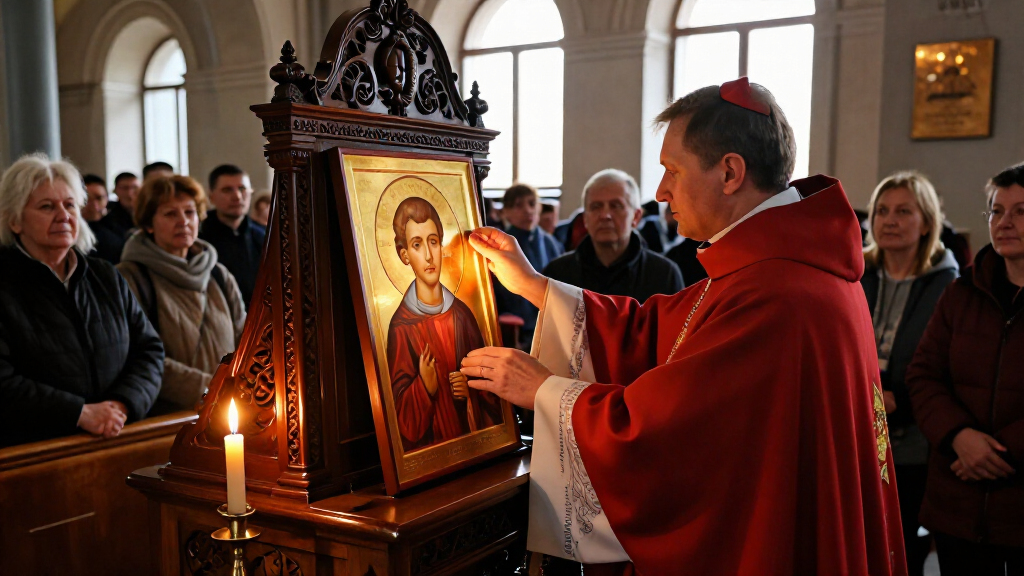
Archbishop Tadeusz Kondrusiewicz blessed an AI-generated image of Carlo Acutis on October 11 at the Church of St. Mary Magdalene in Novolukoml, according to Belarusian outlet Katolik.life. The report says some believers objected on social media that an AI-generated image cannot be considered an icon; details about the image’s production and the church’s response were not reported.
Archbishop Tadeusz Kondrusiewicz, the former head of the Catholic Church in Belarus, blessed an AI-generated image of Carlo Acutis on October 11 at the Church of St. Mary of Magdalene in Novolukoml, Belarus, according to the Belarusian outlet Katolik.life. The report has drawn attention to a dispute among believers over whether an image created with artificial intelligence can be regarded as an icon.
Katolik.life reported that the image depicts Carlo Acutis, an Italian teenager canonized by the Vatican in 2025. The outlet said believers criticized the blessing on social media, arguing that an image generated by artificial intelligence cannot be considered an icon. The report did not identify the critics or provide details about the image’s creator, the AI system used, or the process by which the image was produced.
The account of the blessing and the online reaction comes from Katolik.life, as cited in a report by Meduza. The available reporting does not include a public statement from Kondrusiewicz explaining his decision, nor a response from the church in Novolukoml addressing the criticism. It also does not establish whether the blessing was intended as an endorsement of AI-generated religious art or was limited to this particular image.
Katolik.life described the event as the first blessing of an AI-generated icon in Belarus. That characterization is the outlet’s report, not an independently verified global or historical finding. Meduza said it could not find information about similar images being blessed in other countries, including Russia; that search result does not establish that no such cases have occurred elsewhere.
AI Art Meets Religious Tradition
The episode puts a practical question about artificial intelligence and religious imagery into a local church setting: what counts as an icon, and what role do an artist’s choices or the method of creation play? The reported objections show that at least some believers regard the use of AI as relevant to whether the image should carry that designation. The available reports do not establish a broader consensus among Belarusian Catholics or a formal church ruling on the issue.
The distinction matters because the image is not simply a portrait of a contemporary public figure. It depicts Acutis, a canonized saint, whose life has been associated with digital technology. Blessing the image may be interpreted by observers as a religious act, but the report does not state what Kondrusiewicz intended it to signify. The event therefore raises questions about how religious communities may respond to emerging image-making tools without, by itself, resolving them.
For readers following AI’s spread into cultural and religious life, the story offers a specific, reported example rather than evidence of a settled trend. The reported social-media criticism indicates disagreement, while the lack of a documented official response leaves the scope and institutional significance of that disagreement uncertain.
As an affiliate, we earn on qualifying purchases.
Acutis and Digital Evangelization
Acutis was born in Italy and became a practicing Catholic as a child. He learned to code and created websites for Catholic organizations, including a site documenting accounts of miracles around the world. He died of leukemia in 2006 at age 15. The Vatican canonized him in 2025; he is often described as the “patron saint of the internet.”
That background helps explain why an image of Acutis created with AI may attract attention: his biography is closely linked to digital communication, while the image itself raises questions about the use of new technology in religious art. The reporting supplied here does not say that Acutis or the Vatican had any connection to the image’s creation, or that the Vatican has issued a specific position on this blessing.
Kondrusiewicz is identified in the report as the former head of the Catholic Church in Belarus. The image is located at the Church of St. Mary of Magdalene in Novolukoml. The available account does not describe a change in church policy or indicate that the blessing formed part of a wider national initiative.
“An AI-generated image cannot be considered an icon.”
— Believers cited by Katolik.life
As an affiliate, we earn on qualifying purchases.
Questions About the Image and Objections
The published account does not explain how the image was generated, who made it, or whether a human artist edited or directed the result. It also does not include Kondrusiewicz’s explanation of the blessing, a statement from the church in Novolukoml, or an official church assessment of whether the image should be called an icon.
The extent of the criticism is also unclear. Katolik.life reported social-media objections but did not provide figures showing how many people objected or whether the comments reflect a wider debate among church members. Its description of the event as Belarus’s first of its kind, and Meduza’s inability to find examples elsewhere, should not be read as conclusive proof that no earlier blessing took place in another country.
As an affiliate, we earn on qualifying purchases.
Whether Church Leaders Respond
The next development to watch for is a public explanation from Kondrusiewicz or a response from church officials about the image and the objections. The reporting available so far does not identify a scheduled church review, further ceremony, or policy announcement. Unless such information is released, the event remains a reported local blessing accompanied by online criticism, rather than evidence of a formal decision about AI-generated icons across the Catholic Church in Belarus.
As an affiliate, we earn on qualifying purchases.
Key Questions
Who blessed the AI-generated image?
Archbishop Tadeusz Kondrusiewicz, described by the report as the former head of the Catholic Church in Belarus, blessed it on October 11, according to Katolik.life.
Where was the image blessed?
The image was at the Church of St. Mary of Magdalene in Novolukoml, Belarus, where the blessing was reported to have taken place.
Who is Carlo Acutis?
Acutis was an Italian teenager who built websites for Catholic organizations and documented reported miracles online. He died of leukemia at 15 and was canonized by the Vatican in 2025.
Why did some believers object?
Katolik.life reported that some believers argued on social media that an AI-generated image cannot be considered an icon. The report does not identify the commenters or describe an official church ruling on their argument.
Was this the first AI-generated icon blessed anywhere?
That is not established. Katolik.life called it the first such blessing in Belarus, while Meduza said it could not find reports of similar cases elsewhere. Neither statement proves that no earlier blessing occurred in another country.
Source: rss
Columbus Day / Indigenous Peoples' Day Picks
long weekend sales
As an affiliate, we earn on qualifying purchases.