
TL;DR

Get travel and outdoor gear delivered free — and shop member deals
- Fast, free delivery on millions of items
- Access to Prime Big Deal Days deals on October 6–7
- Prime Video, Amazon Music and more included
Russia plans to allocate nearly 60 billion rubles over the next three years to operate its internet filtering and blocking system, according to a draft budget appendix reviewed by Forbes Russia. The reason for the near-doubling from the previous plan has not been explained; experts cited by Meduza point to rising equipment costs, growing traffic and sanctions-related supply difficulties.
Russia plans to spend nearly 60 billion rubles over the next three years on its system for filtering and blocking internet resources, according to an appendix to a draft budget reviewed by Forbes Russia. The proposed allocation is almost twice the 32 billion rubles set aside for the system over a comparable period in an earlier plan, but officials have not publicly explained the increase.
The money is slated for the Chief Radio Frequency Center (GRChTs), an entity under Roskomnadzor, Russia’s federal media regulator. GRChTs operates the automated system that secures the Russian segment of the internet, known by its Russian acronym as ASBI. The system includes equipment that can filter, slow or block internet traffic.
The earlier funding plan covered ASBI’s operation over the same three-year period and called for 32 billion rubles, Meduza reported. The new draft budget appendix reviewed by Forbes Russia puts the planned figure at nearly 60 billion rubles. The source material does not specify the exact years covered by the new allocation or provide a breakdown of the proposed spending.
Forbes Russia sought comment from the Finance Ministry and the Digital Development Ministry, but their press services did not respond, according to Meduza. A source close to the Digital Development Ministry said explanations had not yet been included in the draft and were expected by the end of the year.
Higher Costs for Traffic Controls
The proposed increase would expand the planned public funding for infrastructure used to control access to online resources in Russia. Under the country’s “sovereign Runet” law, telecom operators must install traffic-filtering equipment, called TSPU, on their networks. That gives Roskomnadzor technical means to filter, slow and block traffic across those networks.
Experts cited by Meduza said the system faces growing operating and equipment costs as internet traffic volumes rise and filtering requires more processing power, memory and storage. They also pointed to increasing component prices and sanctions that make imported equipment harder for Russia to obtain. These are expert explanations, not an official account of why the draft allocation has nearly doubled.
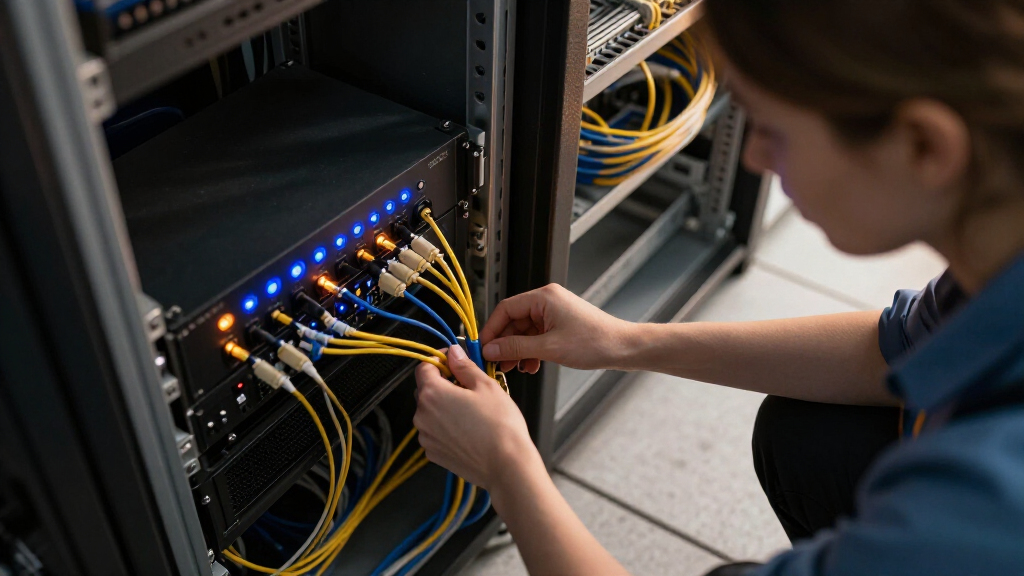
internet traffic filtering equipment
As an affiliate, we earn on qualifying purchases.
As an affiliate, we earn on qualifying purchases.
System Expansion and Equipment
ASBI and the TSPU are part of Russia’s effort to manage internet traffic within the country. Telecom operators are required under the sovereign Runet law to install TSPU equipment on their networks, enabling filtering and blocking to be carried out through network infrastructure. The planned funding goes to GRChTs, which operates ASBI under Roskomnadzor.
The system’s geographical reach may also affect costs. Alexey Amelkin, president of the Association of Telecom Operators Makatel, told Meduza that TSPU equipment had not yet been installed on operator networks in Ukraine’s occupied territories. Amelkin said new equipment would cost more amid sanctions and global price increases for components such as RAM. He also raised the possibility that adding artificial intelligence capabilities to TSPU could require further funding.
“New equipment for the TSPU will cost more because of sanctions and the global rise in prices for certain components like RAM.”
— Alexey Amelkin, president of the Association of Telecom Operators Makatel, as reported by Meduza
network traffic monitoring devices
As an affiliate, we earn on qualifying purchases.
As an affiliate, we earn on qualifying purchases.
Budget Rationale Still Missing
The available reporting does not establish why the planned amount has nearly doubled or how the nearly 60 billion rubles would be divided among operating expenses, new equipment and any expansion. The Finance Ministry and Digital Development Ministry had not responded to Forbes Russia’s requests for comment, and the draft reportedly lacked an explanation at the time of reporting.
It is also unclear whether the allocation will appear unchanged in the final budget, what precise years it covers, and whether AI capabilities are part of any approved equipment plan. Amelkin discussed AI as a possible cost factor; the reporting does not confirm that TSPU is being upgraded to use it.
As an affiliate, we earn on qualifying purchases.
Final Budget May Add Reasons
The next development is expected to be further detail in the budget bill. The source close to the Digital Development Ministry told Meduza that explanations for the increased funding should be expected by the end of 2026. The final budget and any ministry comment could clarify the covered years, spending categories and whether the proposed sum changes before approval.
Until those details are published, the near-doubling remains a proposed funding increase without a confirmed official rationale. Any account of equipment prices, traffic growth or system expansion as the direct cause should be treated as explanation from experts rather than a government-confirmed breakdown.
As an affiliate, we earn on qualifying purchases.
Key Questions
How much does Russia plan to spend on internet filtering?
The draft budget appendix reviewed by Forbes Russia provides for nearly 60 billion rubles over the next three years for the system’s operation.
How does that compare with the earlier plan?
An earlier plan allocated 32 billion rubles for ASBI over the same period, according to Meduza. The reporting does not give a detailed line-by-line comparison of the two plans.
What does the filtering system do?
Roskomnadzor’s TSPU equipment can filter, slow or block internet traffic on telecom operators’ networks. Operators are required to install it under Russia’s sovereign Runet law.
Why is the planned spending increasing?
The government has not provided an official explanation in the reporting. Experts cited by Meduza pointed to rising traffic, more demanding equipment, higher component prices and sanctions that complicate access to imported parts.
When could more details be available?
A source close to the Digital Development Ministry said explanations were expected to be added to the bill by the end of 2026. The final budget could also clarify the spending breakdown.
Source: rss
Halloween Picks
halloween
As an affiliate, we earn on qualifying purchases.