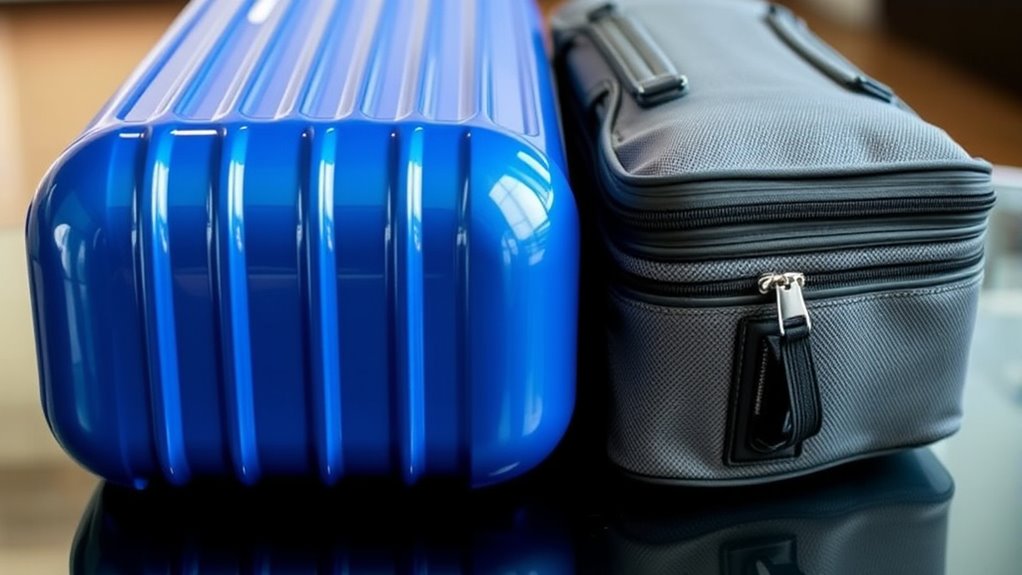

If you prioritize durability and impact protection, hard-shell suitcases are your best choice, offering a sturdy, scratch-resistant exterior that keeps fragile items safe. If you prefer lightweight, flexible options with better organization and expandability, softshell suitcases are ideal, allowing easier packing and handling. Security features vary, with hard shells generally providing more tamper-resistant locks. For style, both offer diverse options, but your travel habits and needs will help determine the best fit—explore further to find your ideal match.

Get travel and outdoor gear delivered free with Prime
- Fast, free delivery on millions of items
- Prime Video, Amazon Music and more included
- Member-only deals all year
Key Takeaways
- Hard-shell suitcases offer superior impact protection and durability, ideal for fragile items and rough handling.
- Softshell suitcases are lighter, more flexible, and often provide better organization with multiple compartments.
- Hard shells have a sleek, modern look with less expandability, while soft shells offer diverse designs and color options.
- Softshell luggage generally weighs less, making it easier to carry and maneuver through busy airports or stations.
- Choose hard-shell if security and impact resistance are priorities; opt for softshell if flexibility, weight, and organization matter more.
As an affiliate, we earn on qualifying purchases.
Durability and Protection
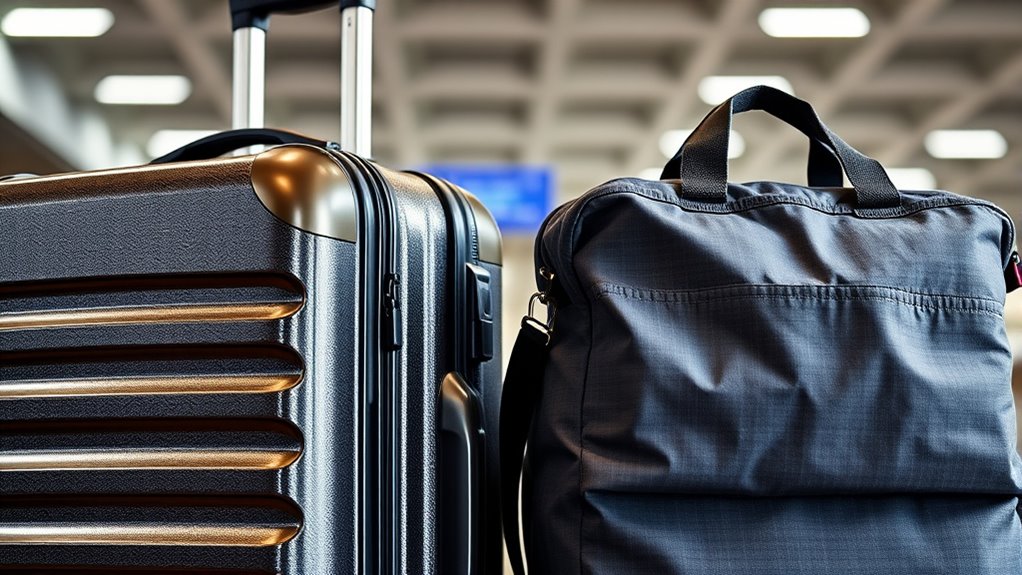
When it comes to durability and protection, hard-shell suitcases typically excel because their rigid exteriors resist impacts and crushing forces better than softshell options. Their material resilience ensures they withstand rough handling during transit, protecting your belongings from damage. The impact resistance of hard shells means they’re less likely to crack or deform if accidentally dropped or stacked under heavy luggage. This sturdiness makes them ideal for frequent travelers or those maneuvering busy airports. The tough outer layer acts as a shield against scratches, abrasions, and minor collisions, keeping your suitcase looking newer longer. Additionally, advancements in material technology have further enhanced the strength and lightweight properties of modern hard-shell luggage, making it even more durable without adding extra weight. Many hard-shell cases now feature reinforced corners and edges, which provide additional impact resistance where it’s needed most. Furthermore, hard-shell suitcases often incorporate protective features such as built-in locks and tamper-proof mechanisms to enhance security during travel. Incorporating shock absorption features can also help safeguard fragile items inside the suitcase during rough handling. Regularly, the durability of materials used in construction plays a crucial role in ensuring these protective qualities are maintained over time.
As an affiliate, we earn on qualifying purchases.
Weight and Portability

Hard-shell suitcases tend to be heavier than softshell options because their rigid materials add extra bulk, which can make handling and lifting more challenging. When considering weight and portability, look at the handle design—some models feature ergonomic handles that make maneuvering easier. Softshell suitcases generally weigh less, making them more convenient for travelers who need to lift or carry their luggage frequently. Additionally, softshell models often come with a variety of color options, allowing you to choose a style that suits your personality while keeping the weight down. Keep in mind that a lighter suitcase can markedly reduce strain, especially during long walks through airports or train stations. The material composition of a suitcase can also influence its overall weight and durability, helping you balance portability with protection for your belongings. Moreover, the famous quote about luggage reminds travelers to prioritize convenience without sacrificing quality. To enhance your travel experience, consider the advantages of lightweight luggage, which can significantly improve ease of transport and reduce fatigue. Ultimately, weigh your priorities between durability and ease of transport to find the best fit.
impact resistant hardside luggage
As an affiliate, we earn on qualifying purchases.
As an affiliate, we earn on qualifying purchases.
Security Features

Security features play a significant role in choosing between hard-shell and softshell suitcases, especially if you frequently travel through busy airports or unfamiliar destinations. A quality lock mechanism is essential for keeping your belongings safe, so look for suitcases with integrated TSA-approved locks or lock points. Hard-shell cases often feature built-in locks that are tamper-resistant, making it harder for someone to access your items without your knowledge. Softshell suitcases may rely on external padlocks or zipper locks, which can sometimes be easier to tamper with. Ultimately, your choice should prioritize tamper resistance and reliable locking solutions. Investing in suitcases with strong security features gives you peace of mind, knowing your belongings are protected during transit and storage. Additionally, considering security features that are durable and difficult to bypass can further enhance the safety of your luggage. As AI-driven security innovations advance, some modern luggage now incorporate smart lock technology that offers enhanced protection against theft. Incorporating advanced security options can also help deter tampering and unauthorized access, providing an added layer of safety during your travels. For example, selecting luggage with multi-layer locking systems can add extra security to your belongings.
lightweight softshell suitcase with compartments
As an affiliate, we earn on qualifying purchases.
As an affiliate, we earn on qualifying purchases.
Organization and Storage
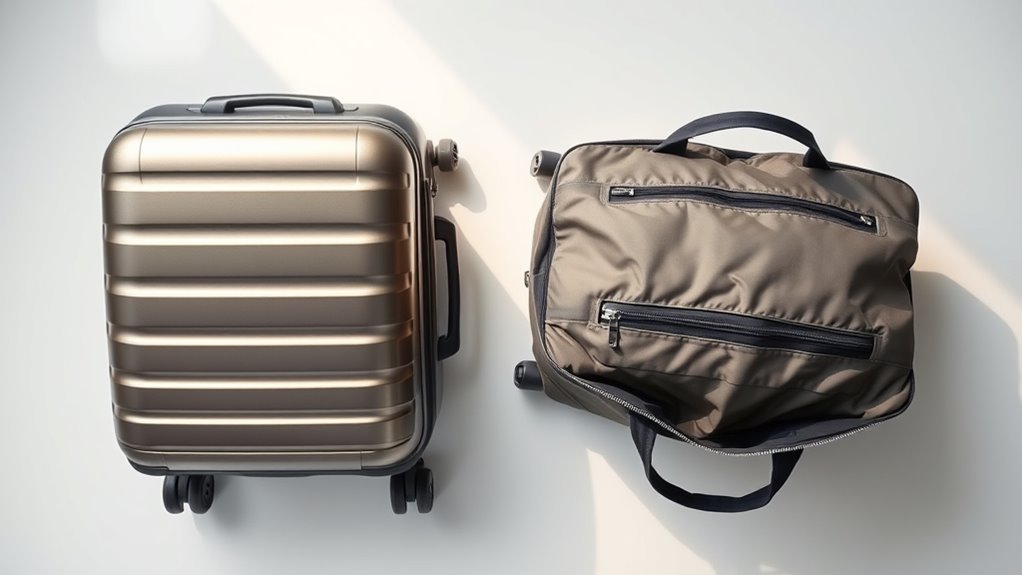
Organization and storage are crucial factors to contemplate because they directly impact how efficiently you can pack and access your belongings. Hardshell suitcases often feature fewer interior compartments, making organized packing trickier. Softshell options typically come with multiple interior compartments and pockets, allowing you to separate items easily. Color options also influence your ability to identify luggage quickly. Consider whether you prefer a suitcase with vibrant colors for easy spotting or a neutral tone for a sleek look. Additionally, softshell suitcases usually provide more expandable storage, which can be beneficial for longer trips or additional packing space. Incorporating organization features can further enhance your packing efficiency and accessibility, especially when considering luggage customization options to suit your travel needs. Being aware of material differences can also help you choose a suitcase that balances durability with weight for your specific travel requirements.
Style and Aesthetics
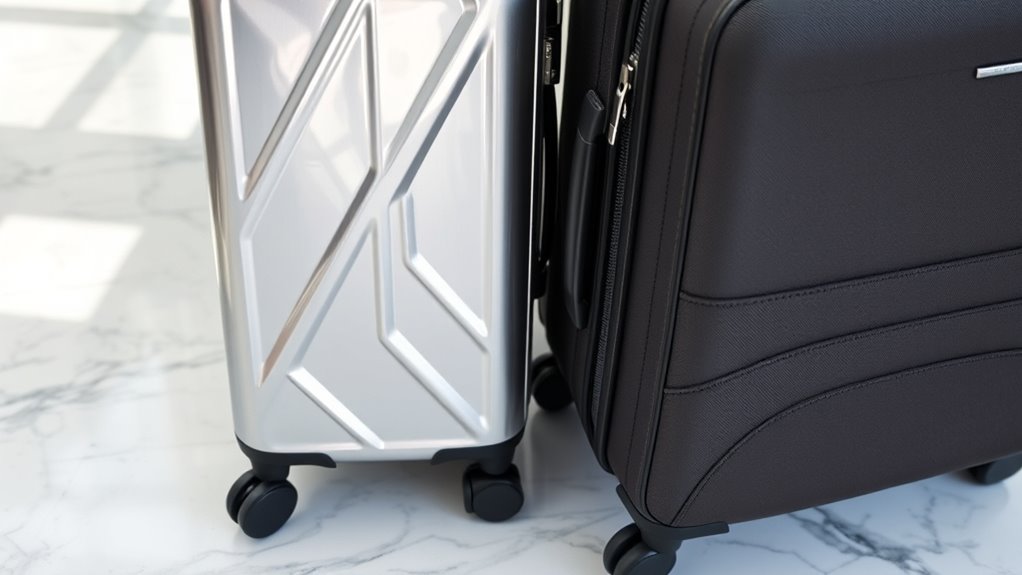
When choosing a suitcase, style and aesthetics play a significant role in reflecting your personality and travel preferences. With a wide range of color options, you can select a piece that stands out or blends seamlessly with your gear. Softshell suitcases often feature a design variety that allows for more customization, including patterns, textures, and modern finishes. Hardshell options tend to have sleek, minimalist looks with glossy or matte surfaces, making them ideal if you prefer a clean, polished appearance. Your choice depends on whether you want a vibrant, eye-catching piece or something understated and sophisticated. Additionally, design versatility in softshell suitcases allows for easier modification and personalization to suit your aesthetic preferences. The material differences also impact the overall look, with durability playing a key role in maintaining the suitcase’s appearance over time. Incorporating aesthetic appeal alongside practical features can help ensure your luggage complements your travel style while remaining functional. Choosing the right suitcase involves balancing style with material quality, which influences both appearance and longevity.
Frequently Asked Questions
Which Type of Suitcase Is Better for International Travel?
For international travel, softshell suitcases often work better because they’re lightweight, helping you stay within carry-on restrictions and weight considerations. They’re flexible, making it easier to fit into tight spaces and overhead compartments. Plus, many have external pockets for quick access to essentials. Hardshells offer durability, but softshells provide convenience and lighten your load, which is essential for maneuvering airports and different airlines’ baggage policies.
Can Softshell Suitcases Withstand Harsh Weather Conditions?
Softshell suitcases offer moderate weather resistance, but they aren’t as durable in harsh conditions as hardshell options. You might find them vulnerable to heavy rain, snow, or impacts, which can compromise your belongings. Regarding durability comparison, softshells excel with flexibility and lighter weight, but they don’t provide the same level of protection against extreme weather as hardshell suitcases do. Consider your travel environment before choosing.
Are Hardshell Suitcases More Eco-Friendly Than Softshell Options?
Like choosing a path through a forest, your luggage’s eco-friendliness reflects your values. Hardshell suitcases often use recyclable materials and have a lower manufacturing impact, making them more eco-friendly than softshell options. You can feel good about reducing waste and supporting sustainable practices. So, if protecting the environment matters to you, hardshells can be a greener choice, helping you travel responsibly while keeping your belongings safe.
How Do Hardshell and Softshell Suitcases Compare in Price?
You’ll find that hardshell suitcases generally have a higher price difference compared to softshell options, mainly due to their durable construction. When comparing durability, hardshell cases often last longer and resist impacts better, justifying their cost. Softshell suitcases tend to be more affordable upfront, but they may wear out faster. Your choice depends on your budget and how much protection you need for your belongings during travel.
Which Suitcase Type Offers Better Value Over Time?
You’ll find softshell suitcases offer better value over time because they excel in storage and portability, fitting easily into tight spaces and being lightweight for travel. However, hardshell suitcases tend to be more durable and require less maintenance, making them a cost-effective choice long-term. Consider your travel habits; if durability and low maintenance matter most, a hardshell might be your best bet, but for flexibility, softshells excel.
Conclusion
Choosing between a hardshell and softshell suitcase ultimately depends on your travel style and priorities. Do you value maximum protection and durability, or prefer lightweight convenience and flexibility? By weighing the features that matter most to you—whether it’s security, organization, or style—you can find the perfect fit. After all, isn’t the right suitcase just as important as your destination? Make your choice confidently and travel with peace of mind.
Halloween Picks
halloween
As an affiliate, we earn on qualifying purchases.