
To prevent mold and odors when storing luggage, make sure it’s completely dry before putting it away and use moisture absorbers like silica gel or activated charcoal inside. Store your luggage in a cool, dry, and well-ventilated space away from direct sunlight, dust, and humidity. Use protective covers or dust bags, and periodically air out the luggage to keep it fresh. Following these steps can keep your luggage in top shape for next time—learn more to see how!

Get travel and outdoor gear delivered free — and shop member deals
- Fast, free delivery on millions of items
- Access to Prime Big Deal Days deals on October 6–7
- Prime Video, Amazon Music and more included
Key Takeaways
- Ensure luggage is completely dry before storing to prevent mold growth and odors.
- Use moisture absorbers like silica gel packets inside the luggage to control humidity.
- Store luggage in a cool, dry, and well-ventilated area away from direct sunlight.
- Protect luggage with dust covers or sealed plastic bags to prevent dust and pest intrusion.
- Regularly inspect and air out the luggage to maintain freshness and prevent mold or musty smells.
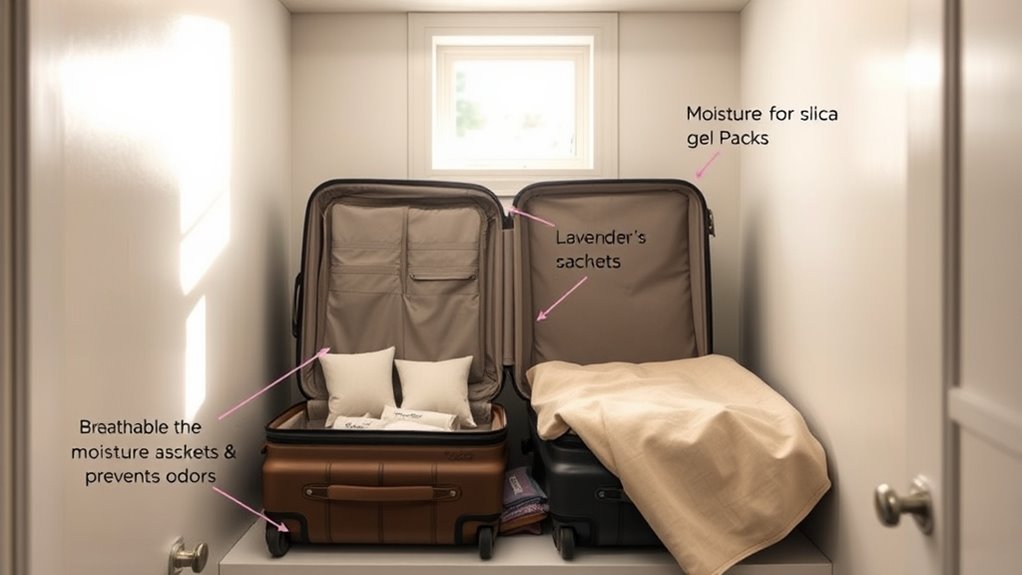
When you’re not traveling, finding a safe and convenient way to store your luggage is essential to keep your space organized and your belongings secure. Proper storage helps prevent damage, keeps your items in good condition, and makes packing easier for your next trip. One of the most important aspects of storing luggage is ensuring clothing protection. You want to shield your clothes from dust, dirt, and potential pests. Using a breathable garment bag or large fabric cover can prevent dust accumulation while still allowing air circulation. If your luggage has compartments or pockets, consider packing your clothes in sealed plastic bags or packing cubes. These not only help organize your items but also create a barrier against moisture and pests, maintaining the integrity of your clothing.
Protect your clothing during storage with breathable covers and sealed bags to prevent dust, pests, and moisture damage.
Odor prevention is another vital factor. Luggage can develop musty smells over time, especially if stored in humid environments. To keep odors at bay, make sure your luggage is completely dry before putting it away. Consider placing moisture absorbers, like silica gel packets or activated charcoal pouches, inside your suitcase. These help absorb excess humidity and prevent mold growth, which is a common cause of musty odors. Regularly airing out your luggage, even when not in use, can also help keep it fresh. Open your suitcase periodically, especially in well-ventilated spaces, to allow fresh air to circulate and release any trapped smells. Additionally, choosing a European cloud server storage location can offer a more controlled environment, reducing the risk of humidity and temperature fluctuations that can harm your belongings.
Choosing the right storage location is key. Keep your luggage in a cool, dry place away from direct sunlight, which can cause fading or warping. Avoid storing luggage in basements or attics if these areas are prone to dampness or extreme temperature fluctuations. Instead, opt for closet shelves or storage cabinets that offer a controlled environment. Storing luggage upright or on its side depends on the suitcase design, but make sure it’s supported properly to prevent deformation. Using storage bins or dust covers can further protect against dust and accidental spills.
Finally, make a habit of inspecting your stored luggage periodically. Check for signs of moisture, pests, or mold, and address issues promptly. Clean and air out your luggage as needed, reapply moisture absorbers, and reseal your clothing. With these steps, you’ll keep your luggage in excellent condition, guaranteeing clothing protection and odor prevention, ready for your next adventure. Proper storage not only preserves your belongings but also keeps your home organized and clutter-free.
As an affiliate, we earn on qualifying purchases.
Frequently Asked Questions
How Often Should I Check Stored Luggage for Mold?
You should check your stored luggage at least once every 1-2 months. During your inspection routine, look for any signs of mold or musty odors, and perform moisture checks to guarantee no dampness is present. Regular inspections help catch problems early, preventing mold growth and odors from developing. Keep your luggage dry and well-ventilated, and address any issues promptly to maintain its condition.
Can I Store Luggage Outdoors Safely?
Storing your luggage outdoors is like planting a delicate flower—you need the right conditions to thrive. Outdoor storage can be safe if you consider weather conditions; avoid exposing your luggage to rain, humidity, or extreme heat. Use waterproof covers and choose a shaded, dry spot. Regularly check for signs of moisture or mold, and make sure it’s well-ventilated to prevent odors. This keeps your luggage protected and ready for your next adventure.
What Natural Remedies Deter Mold and Odors?
You can deter mold and odors naturally by using herbal sachets and essential oils. Place herbal sachets filled with lavender, cedar, or eucalyptus inside your luggage to absorb moisture and keep smells at bay. Additionally, add a few drops of essential oils like tea tree or lemon to cotton balls and leave them in your luggage. This combo helps prevent mold growth and keeps your belongings smelling fresh when stored long-term.
How Do I Prevent Pests From Nesting in Luggage?
To prevent pests from nesting in your luggage, you should focus on pest prevention and luggage sealing. Clean and thoroughly dry your luggage before storing it. Use airtight bags or sealable plastic containers to keep pests out. Store your luggage in a cool, dry place away from food or organic materials. Regularly inspect and air out your luggage to deter pests from making it their home, ensuring it stays pest-free.
Is It Safe to Use Chemical Dehumidifiers Long-Term?
Chemical dehumidifiers are generally safe for long-term moisture control if you follow the manufacturer’s instructions. You should guarantee proper ventilation and avoid direct contact with skin or eyes. Regularly check the dehumidifier’s condition, replacing or recharging it as needed. While they’re effective for preventing mold and odors, don’t rely on them exclusively—combine with good storage practices to keep your luggage dry and safe over time.
As an affiliate, we earn on qualifying purchases.
Conclusion
When you store your luggage properly, it becomes a quiet guardian of your belongings, waiting patiently for your next adventure. Imagine a tidy closet, with your suitcase sitting pristine and fresh, free from musty odors and mold. By taking these simple steps, you guarantee your luggage stays inviting and ready whenever wanderlust strikes again. Keep it dry, clean, and well-ventilated — and your travel companion will be just as lively and welcoming as your memories.
vacuum storage bags for clothing
As an affiliate, we earn on qualifying purchases.
As an affiliate, we earn on qualifying purchases.
As an affiliate, we earn on qualifying purchases.
Fall Picks
fall essentials
As an affiliate, we earn on qualifying purchases.