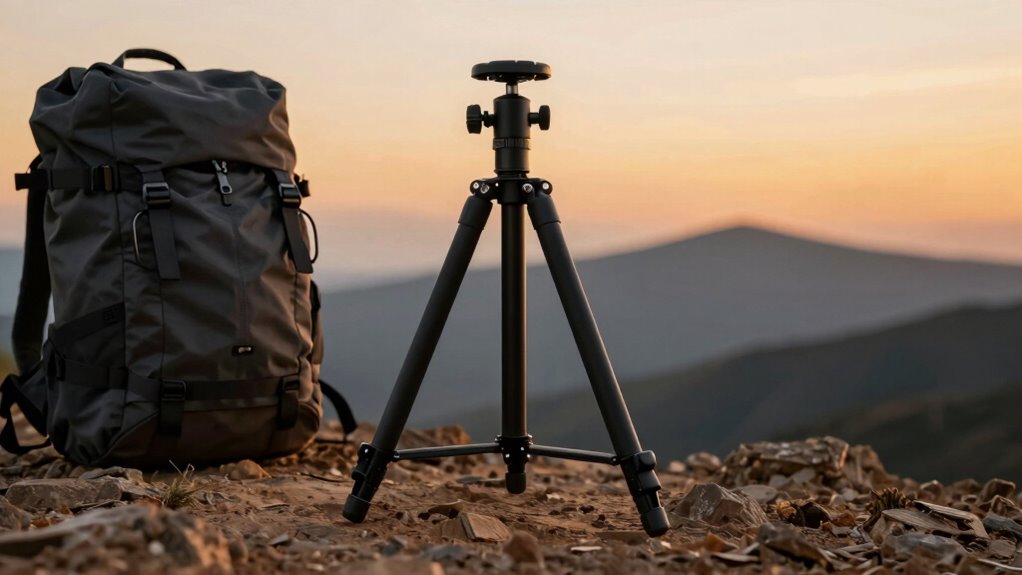

To choose a travel tripod you’ll actually carry, focus on a lightweight, compact design that’s easy to transport, while still offering good stability. Look for models with durable materials like carbon fiber or aluminum, and check that the legs lock smoothly for quick setup. Consider features like weather resistance and rubber feet for different surfaces. Balancing weight, stability, and build quality makes a tripod more likely to become your go-to travel companion. Keep exploring to find out more tips.

Get travel and outdoor gear delivered free with Prime
- Fast, free delivery on millions of items
- Prime Video, Amazon Music and more included
- Member-only deals all year
Key Takeaways
- Prioritize lightweight materials like carbon fiber or aluminum for easier carrying during travel.
- Choose a compact, foldable design with minimal folded length for quick packing.
- Ensure the tripod has a good weight-to-stability ratio with reliable leg locks for quick setup.
- Opt for tripods with weather-resistant coatings and rubber feet for durability on various surfaces.
- Balance maximum height with folded size to maintain versatility without sacrificing portability.
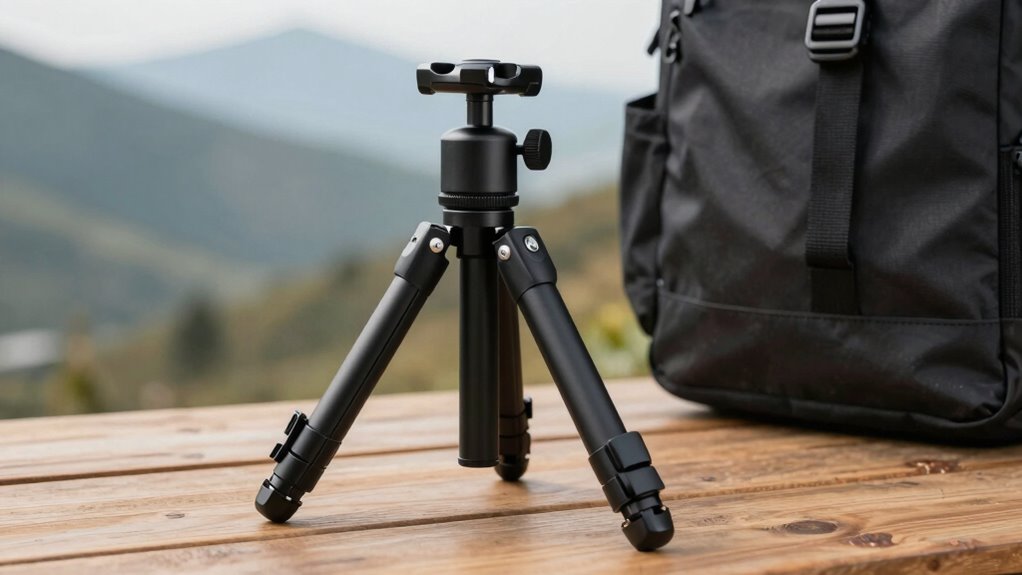
When selecting a travel tripod, your main goal should be finding a lightweight, compact option that doesn’t sacrifice stability or durability. Travel tripods are meant to go wherever your camera adventures take you, so you need something that’s easy to carry but still reliable enough to keep your shots steady. Camera stability is essential, especially when shooting in low light or capturing long exposures. The right tripod ensures your camera remains perfectly still, preventing blurry images. To achieve this, pay attention to how the tripod’s build influences stability; a solid, well-designed tripod offers better camera stability even on uneven surfaces. Additionally, portability is a key factor because a tripod that is difficult to carry will likely go unused, defeating its purpose. Weight distribution plays a critical role in how portable and stable your tripod feels in practice. A well-balanced tripod evenly distributes weight across its legs and center column, making it easier to set up quickly and more stable in challenging conditions. When you’re hiking or moving from location to location, a tripod with good weight distribution feels less cumbersome, so you’re more likely to carry it around without hesitation. Look for models that balance lightweight materials with sturdy construction, such as aluminum or carbon fiber. Carbon fiber tripods are lighter but often pricier, while aluminum options tend to be more affordable and still durable enough for travel. Another important factor is how compact the tripod folds down. You want something that can slip into your backpack or carry-on without adding bulk. Check the maximum height, but also consider the folded length—the shorter, the better for portability. A tripod that extends high but folds down small is ideal because it offers versatility without sacrificing packability. Also, consider the leg locks and joints; smooth, reliable locking mechanisms make setup quicker and more secure, ensuring your camera stays stable during shots. Additionally, durability is crucial because travel tripods face rough handling and varying weather conditions, so choose one made from resilient materials. A lightweight tripod shouldn’t feel flimsy or fragile, so researching material quality can help you find options that withstand the rigors of travel. Incorporating features like weather-resistant coatings can further enhance a tripod’s longevity and performance in different environments. Look for features like rubber feet for stability on slippery surfaces and sturdy locking systems that won’t slip over time. Ultimately, the perfect travel tripod strikes a balance between weight, size, stability, and durability. When you pick the right one, carrying it becomes effortless, and your camera remains steady, giving you confidence to capture sharp, beautiful images wherever you go.
Products Worth Considering

DJI Osmo Pocket 3 Gimbal Camera

DJI Osmo Pocket 4 Gimbal Camera Pro Kit, 18-Piece Bundle

DJI Osmo Pocket 3 4K Camera Creator Bundle with Mic Mini Wireless Microphone System
As an affiliate, we earn on qualifying purchases.
Frequently Asked Questions
How Lightweight Should a Travel Tripod Ideally Be?
A travel tripod should ideally weigh between 2 to 3 pounds for easy portability. You want a balance between lightweight material durability, like aluminum or carbon fiber, and sturdy construction. Keep price considerations in mind: carbon fiber tripods tend to be lighter and more durable but cost more. Choose a model that’s lightweight enough to carry comfortably yet sturdy enough to support your camera gear securely on the go.
Can a Travel Tripod Support Heavy Camera Equipment?
A travel tripod can support heavy camera equipment if you choose the right one. Think of it as a sturdy tree supporting a swinging branch; stability matters. Focus on camera compatibility and tripod material—carbon fiber often offers strength without weight, while aluminum provides durability at a lower cost. Make certain the tripod’s weight capacity exceeds your gear’s weight for safe, reliable support during your adventures.
Are Compact Tripods as Stable as Larger Ones?
Compact tripods aren’t always as stable as larger ones, but it depends on their tripod materials. Lightweight materials like aluminum or carbon fiber improve portability without sacrificing too much stability. While smaller tripods are easier to carry, they might wobble in strong winds or with heavier cameras. You should balance portability versus stability based on your shooting needs, and choose a tripod that offers the best compromise for your travel adventures.
What Is the Typical Lifespan of a Travel Tripod?
A travel tripod typically lasts 3 to 5 years with proper care, but it can extend longer depending on the tripod material and warranty coverage. Aluminum tripods tend to be more durable, while carbon fiber options offer added longevity. Regularly check for wear and tear, and choose a tripod with a solid warranty to guarantee support if parts need replacing, helping you get the most out of your investment.
How Do I Maintain and Clean My Travel Tripod?
To maintain and clean your travel tripod, start by inspecting the tripod material—metal, carbon fiber, or plastic—and choose appropriate cleaning techniques. Use a soft brush or cloth to remove dirt and dust, avoiding harsh chemicals. For metal parts, gently wipe with a damp cloth; for carbon fiber, use a mild detergent if needed. Regular cleaning keeps your tripod in top shape, ensuring smooth operation and longevity during your travels.
Conclusion
So, when selecting your travel tripod, think of it as finding a trusty sidekick that’s just the right fit—light enough to keep your journey smooth, sturdy enough to support your creative spirit. Embrace the one that whispers “yes” to your needs, slipping easily into your bag. With the perfect companion by your side, every adventure becomes a graceful dance, inviting you to capture the world’s beauty effortlessly and joyfully.