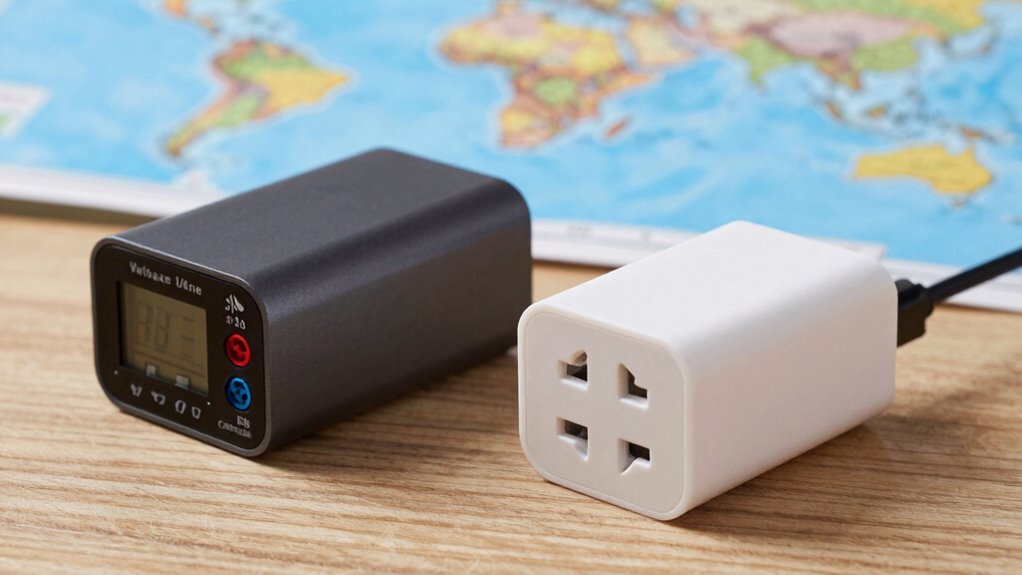

If your device supports a wide voltage range (like 100-240V), you only need a plug adapter to match the power outlet shape. However, if your device is not compatible with the local voltage, you’ll need a voltage converter to safely step up or down the power. Always check your device’s voltage label before traveling. To avoid damage or safety hazards, understanding when to use a converter or just an adapter can save you headaches—more details await.
Key Takeaways
- Check if your device supports the local voltage range; if yes, only an adapter is needed.
- Use a voltage converter for devices that are not compatible with the local voltage.
- Adapters only change plug shape; converters alter voltage levels.
- High-power or sensitive electronics typically require a converter to prevent damage.
- Rechargeable devices with multiple voltage support can usually be used with just an adapter.
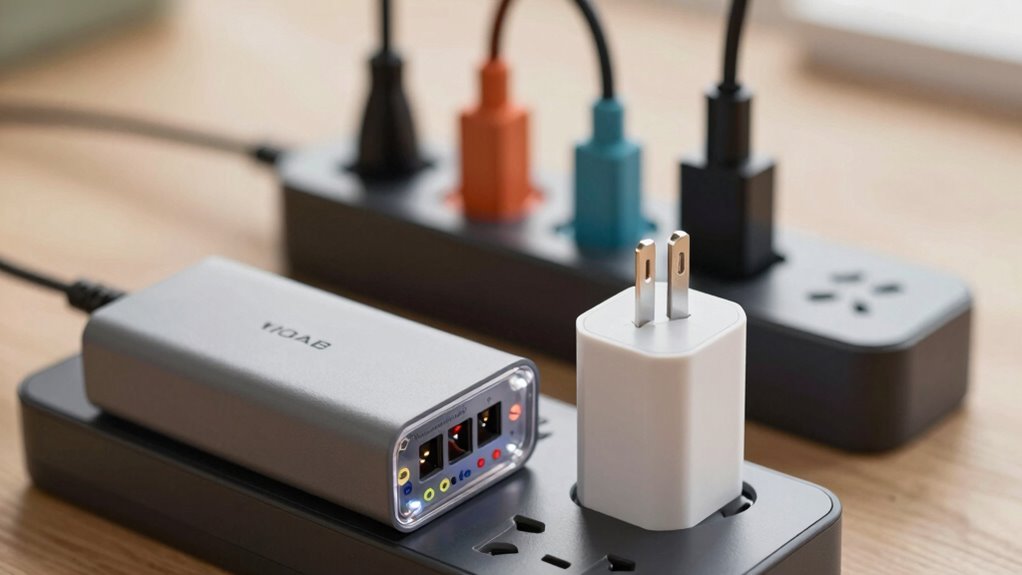
When traveling or using electronic devices in different countries, understanding whether you need a voltage converter or an adapter is crucial. Many travelers assume one device does it all, but knowing the difference can save your gadgets from damage and guarantee they work properly. The key factors to consider are battery compatibility and plug standards. Not all devices are created equal, and some are designed to handle a range of voltages, while others are more sensitive.
First, look at your device’s voltage requirements. This information is usually printed on the charger or the device itself. If it states something like “Input: 100-240V, 50/60Hz,” then your device is compatible with worldwide voltages. In this case, you only need a plug adapter to match the local outlet shape. Plug standards vary by country, so a simple adapter allows you to connect your device’s plug to the socket. These adapters are lightweight and inexpensive, making them convenient for travelers. However, if your device only supports a specific voltage, using it in a different country without proper precautions can cause damage or pose safety hazards.
Battery compatibility also plays a significant role. If your device has a rechargeable battery, check whether it’s designed to handle the voltage differences. For example, some laptops and cameras are built to work across multiple voltages, but certain hairdryers, shavers, or specialized electronics are not. In those cases, a voltage converter becomes necessary. A voltage converter steps down or up the voltage to match your device’s requirements, protecting the internal components from power surges or mismatches. Understanding voltage compatibility can help prevent damage and ensure safe usage of your electronics abroad. Additionally, it’s important to consider the wattage capacity of the converter, especially for high-power appliances, to avoid overheating or failure.
Knowing whether your device is voltage sensitive can also guide you in choosing the right equipment. Remember, a converter is more bulky and pricier than an adapter, so it’s worth investing in if your device isn’t compatible with the local voltage. Being aware of the power requirements of your electronics can help you select the appropriate device and avoid potential hazards.

Ceptics 45W Universal Travel Adapter w/ 3 USB-A, 2 USB-C & Universal Input
- Trusted US Design: Designed in the USA for reliability
- Charge 5 Devices Simultaneously: Includes USB-A and USB-C ports with fast charging
- Universal Compatibility: Supports Type A, I, C, G outlets worldwide
As an affiliate, we earn on qualifying purchases.
As an affiliate, we earn on qualifying purchases.
Frequently Asked Questions
Can I Use a Travel Adapter for High-Power Appliances?
You shouldn’t use a travel adapter for high-power appliances because it doesn’t handle power surges or voltage differences. Travel adapters mainly guarantee plug compatibility, but high-power devices need a voltage converter to prevent damage. Plugging them into an adapter without proper voltage conversion risks overheating, failure, or even fire. Always check your appliance’s voltage requirements and use a converter if needed to keep your devices safe during travel.
How Do I Know if My Device Needs a Converter or Just an Adapter?
You need a converter if your device’s power compatibility doesn’t match the destination country’s voltage—otherwise, a simple adapter won’t protect your device. Check the label for voltage and wattage info; if it exceeds local standards or differs considerably, a converter is crucial for device safety. Ignoring this could cause damage or even dangerous malfunctions. Don’t risk it—identify your device’s power needs before travel to guarantee safe, trouble-free use.
Are Voltage Converters Safe for Sensitive Electronics?
Voltage converters are generally safe for sensitive electronics if they provide stable voltage and protect against electrical surges. Look for converters with voltage regulation features and surge protection to guarantee your devices stay safe. While high-quality converters are designed for this purpose, cheaper or poorly made ones can risk voltage fluctuations. Always choose a converter suited to your device’s power needs and make sure it offers adequate voltage stability to prevent damage.
What Is the Lifespan of a Typical Voltage Converter?
Think of a voltage converter as a sturdy bridge that endures the river’s flow. Its lifespan usually spans 8 to 10 years, depending on voltage stability and how often you face power fluctuations. Like a bridge weathering storms, a converter’s durability hinges on quality and usage. Regular maintenance and avoiding excessive surges help extend its life, ensuring your devices stay safe and connected for years to come.
Can I Use a Single Converter for Multiple Devices?
You shouldn’t use a single converter for multiple devices because power compatibility varies and can compromise device safety. Each device has specific voltage and wattage requirements, and a single converter might not handle the combined load or match the power needs. To guarantee safety and proper functioning, use a dedicated converter for each device or one designed to support multiple devices safely. Always check the specifications before connecting multiple gadgets.

Key Power 230-Watt Step Down 220V to 110V Voltage Converter
- Worldwide Compatibility: Supports UK, US, AU, IN, EU sockets
- Voltage Conversion: Converts 220/240V to 110/120V
- Patented Design: US patent US10270355B1 for enhanced features
As an affiliate, we earn on qualifying purchases.
As an affiliate, we earn on qualifying purchases.
Conclusion
Whether you need a voltage converter or just an adapter depends on your device’s dance with voltage. Think of a converter as a translator, making sure your gadget understands the local electrical language, while an adapter is simply a passport for physical fit. Choose wisely to keep your devices humming smoothly. After all, mismatched tools can turn your trip into a tangled web—so pick the right partner and enjoy your journey without sparks flying!
Ceptics 45W Universal Travel Adapter w/ 3 USB-A, 2 USB-C & Universal Input
- Trusted US Design: Designed in the USA for reliability
- Charge 5 Devices Simultaneously: Includes USB-A and USB-C ports with fast charging
- Universal Compatibility: Supports Type A, I, C, G outlets worldwide
As an affiliate, we earn on qualifying purchases.
As an affiliate, we earn on qualifying purchases.

HYTED 1600W 220V to 110V Converter, No Load-Type Restrictions – Plug & Play
- Pure Sine Wave Voltage Conversion: Converts 220-250V to stable 120V
- Universal Travel Adapter: Includes 4 international plug types
- Wide Compatibility: Supports appliances up to 1600W
As an affiliate, we earn on qualifying purchases.
As an affiliate, we earn on qualifying purchases.