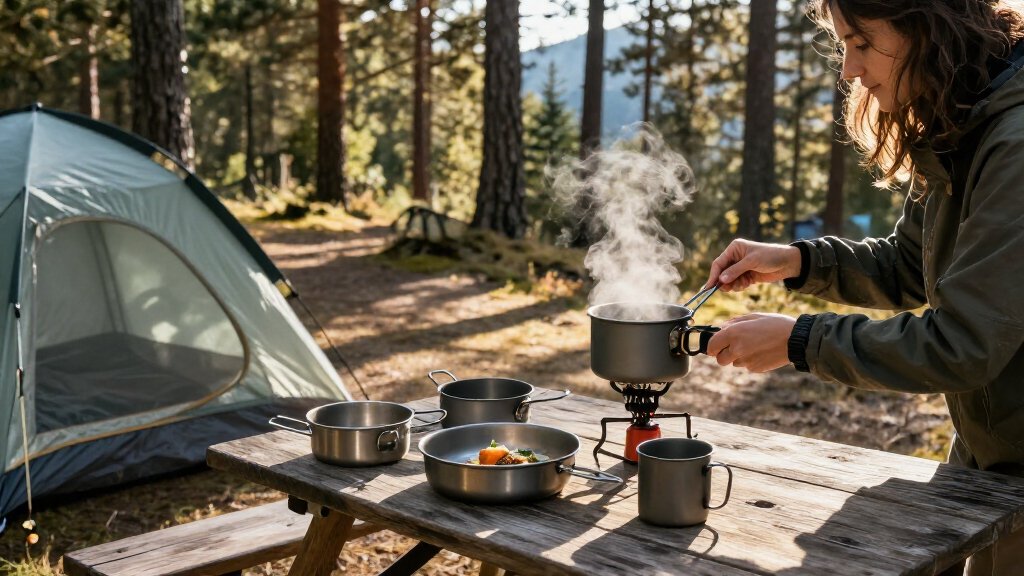

Choosing compact travel cookware means balancing how much you carry against how well dinner cooks. Hard-anodized aluminum sets and titanium sets both pack into small bundles, but they suit different trips: aluminum spreads heat more evenly and usually costs less, while titanium is lighter and highly resistant to corrosion. The key decision is whether shaving weight matters more than forgiving cooking and value. Choose aluminum for varied meals, shared camp cooking, and a tighter budget; choose titanium when every ounce matters and your meals are simple.

Get travel and outdoor gear delivered free with Prime
- Fast, free delivery on millions of items
- Prime Video, Amazon Music and more included
- Member-only deals all year

17pcs Camping Cookware Mess Kit, for Camping, Backpacking, Picnic
- ✔ Piece count: 17
- ✔ Stated weight: 2.4 lb
- ✔ Packed dimensions: 7.5 × 7.5 × 5 in

27Pcs Camping Cookware Set for 4, Pots, Pan, Kettle, Tableware, Camping
- ✔ Piece count: 27
- ✔ Stated weight: 3.6 lb
- ✔ Intended group size: 2–4 campers
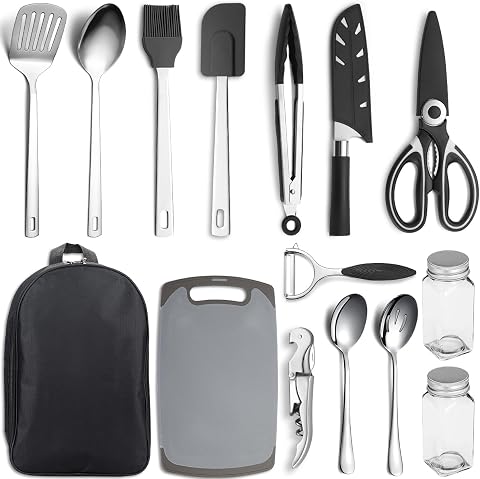
Kyraton Camping Cooking Set 15 Pack, Portable Camping Kitchen Utensil Set
- ✔ Piece count: 15
- ✔ Stated weight: 1.96 kg (about 4.3 lb)
- ✔ Material: Stainless steel (set description)
At a Glance
| Criteria | Hard-anodized aluminum cookware sets | Titanium cookware sets | Winner |
|---|---|---|---|
| Pack weight | Generally heavier for a comparable set | Usually lighter for a comparable set | B |
| Heat distribution | More even heating; easier to avoid scorching | Heats quickly but can develop hot spots | A |
| Durability and corrosion resistance | Hard surface resists wear, but can be dented or scratched | Highly corrosion-resistant; thin walls can dent or deform | B |
| Cooking versatility | Better for simmering and varied meals | Best for boiling water and simple meals; requires attention over flame | A |
| Set capacity and packing | Often available in broader set configurations | Compact nesting sets are common, though capacities vary | Depends |
| Price and value | Usually lower cost for the cooking performance | Often costs more; value depends on how much weight savings matter | A |
| Best trip fit | Car camping, backpacking where weight is not the only priority, and group meals | Ultralight backpacking and trips where corrosion resistance is useful | Depends |
17pcs Camping Cookware Mess Kit, for Camping, Backpacking, Picnic
For travelers who want actual cookware in a compact package, the 17-piece THTYBROS is the most balanced option here. Its 1.70-liter pot, 7-inch frying pan and 1.15-liter kettle cover basic camp cooking and boiling, while two cups, plates and cutlery make it a plausible kit for a pair. The set is listed at 2.4 pounds and packs into a 7.5-by-7.5-by-5-inch package, giving us more concrete portability information than the other options.Compared with the 27-piece THTYBROS, this kit prioritizes a smaller load over serving a group of four or carrying as many extras. It also includes a bamboo spoon, cleaning cloth and cleaning ball, which help with meal preparation and cleanup without turning the kit into an oversized kitchen. Hard-anodized aluminum is described as quick-heating, and the silicone handles are intended to improve grip when handling hot cookware.The compromise is capacity: two cups, two plates and two cutlery sets leave little flexibility for a third camper. Its 7-inch pan is modest for larger meals, and the supplied description doesn’t establish that the coating is non-stick. We’d choose it as the best all-around set in this comparison for couples and small, space-conscious trips; groups or cooks needing a larger pan should look at the 27-piece kit instead.
Pros:
- Includes a pot, frying pan and kettle for a range of basic cooking tasks.
- Serving pieces and cutlery are included for two people.
- Listed packed size is 7.5 × 7.5 × 5 inches, with a 2.4-pound stated weight.
- Includes a bamboo spoon, cleaning cloth and cleaning ball.
Cons:
- The two-person tableware set offers little spare capacity for a group.
- The 7-inch frying pan may be limiting for larger meals.
- The provided details do not specify a non-stick coating.
Best for: Two campers who want a nested pot, pan, kettle and matching tableware in a clearly specified compact package.
Not ideal for: Groups of three or four, or cooks who need a larger frying surface or verified non-stick cookware.
Bottom line: For a pair prioritizing a complete cooking-and-serving kit in a small stated package, this is the most versatile compact choice.
“For a pair prioritizing a complete cooking-and-serving kit in a small stated package, this is the most versatile compact choice.”
27Pcs Camping Cookware Set for 4, Pots, Pan, Kettle, Tableware, Camping
If we’re equipping more than a pair, the 27-piece THTYBROS has the clearest group-oriented advantage. It’s described for two to four campers and includes two pots, a 7.6-inch pan, a kettle, stainless steel plates, cutlery, a spatula, storage bags and a quick-dry cloth. The pieces nest inside the pots, including the kettle, so the expanded inventory is designed to travel as one bundle rather than as loose kitchen gear.That makes it more capable as a shared camp kitchen than the 17-piece set: there’s an extra pot and tableware intended for a larger group. The pan is also slightly wider than the 17-piece kit’s 7-inch pan. Its listed weight is 3.6 pounds, however, compared with 2.4 pounds for the 17-piece option. For car camping, an RV or a group packing across several people, those extra pieces may earn their place; for a solo backpacker or a pair counting every ounce, the lighter kit is the more sensible fit.The cookware uses aluminum with a food-safe non-stick coating, while the plates and utensils are stainless steel. That mix offers different benefits in different parts of the kit, but the set still carries more weight, and its claimed compactness is not backed by a packed-dimension measurement in the supplied details. The 3.6-pound load and lack of a stated pack size are the main checks before choosing it for a tight backpacking setup.
Pros:
- Designed around serving two to four campers.
- Includes two pots, a pan, kettle, plates, cutlery and a spatula.
- Nesting design fits the kettle and other pieces inside the pots.
- Non-stick coated cookware and stainless steel serving pieces are specified.
Cons:
- At a stated 3.6 pounds, it is heavier than the 17-piece set.
- No packed dimensions are provided in the supplied details.
- The expanded contents may be unnecessary bulk for one or two campers.
Best for: Two to four campers, especially car campers or RV travelers who want cookware, tableware and organizing bags together.
Not ideal for: Ultralight backpackers or anyone who needs a verified packed size before committing space in a small pack.
Bottom line: Choose this group-focused kit when the extra pot and serving pieces matter more than minimizing carried weight.
“Choose this group-focused kit when the extra pot and serving pieces matter more than minimizing carried weight.”
Kyraton Camping Cooking Set 15 Pack, Portable Camping Kitchen Utensil Set
The Kyraton 15-piece set fills a different role from both THTYBROS kits: it bundles the tools used to prepare and serve food, rather than pots and pans for cooking it. Its listed contents include a chef’s knife, paring knife, chopping board, scissors, tongs, oil brush, scraper, spatulas, spoons, spice bottles and a bottle opener. For a campsite with cookware already on hand, this can make the food-prep side of the kitchen more organized.That specialization is also its biggest limitation for a roundup of compact cookware. Neither a pot nor a pan appears in the supplied contents, so we would need to pack those separately. The THTYBROS 17-piece set is a more complete standalone choice for backpacking because it combines vessels with tableware; the 27-piece set goes further for group cooking. Kyraton’s advantage is the variety of dedicated prep tools, not a ready-to-cook nested kit.The set is described as stainless steel and comes with a zippered carrying bag, but its listed 1.96 kg weight (about 4.3 pounds) is the heaviest stated weight here. That’s a meaningful tradeoff for travel where carried weight and pack volume matter. We’d consider it for car camping, picnics or an existing camp kitchen that lacks utensils, while backpackers seeking one compact cookware bundle should skip it unless they specifically need this prep assortment.
Pros:
- Includes a broad selection of food-prep and serving tools.
- Comes with a zippered carrying bag for storage and transport.
- Stainless steel construction is specified for the set.
- Useful as a complement to cookware already in a camp kitchen.
Cons:
- No pot, kettle or frying pan is listed, so it cannot serve as standalone cookware.
- Its listed weight of 1.96 kg is higher than either THTYBROS set.
- No packed dimensions or nesting arrangement are specified.
Best for: Car campers and picnic cooks who already own pots and pans and want a bundled set of food-preparation tools.
Not ideal for: Backpackers seeking a standalone cookware kit, or travelers who want to minimize the weight of kitchen accessories.
Bottom line: This is a prep-tool organizer for an existing camp kitchen, not a substitute for a compact pot-and-pan set.
“This is a prep-tool organizer for an existing camp kitchen, not a substitute for a compact pot-and-pan set.”
As an Amazon Associate we earn from qualifying purchases.
Key Differences
The most consequential difference is at the stove. Aluminum distributes heat more evenly, so sauces, grains, and meals that need a steady simmer are easier to manage. Titanium heats quickly and keeps pack weight down, but the concentrated heat can scorch food in one spot. That makes titanium a strong match for boiling water, rehydrating meals, and straightforward cooking; aluminum is more forgiving when the menu varies.
Weight and price pull in opposite directions. A titanium set can reduce carried weight, which matters on long routes or when a carefully trimmed pack is the goal. That benefit may not matter much on a short trip, where aluminum’s lower price and broader cooking utility can be better value. Both materials can last with sensible care, though thin titanium can dent and aluminum can suffer surface damage. Compare the actual set’s weight, capacity, included pieces, and stove compatibility before buying: material alone does not determine how well a set fits your kit.
Detailed Comparison
Pack weight (Titanium cookware sets wins — major)
Titanium wins; the difference is moderate to major depending on the specific sets. Titanium cookware is typically the lighter choice for comparable capacity. That reduction earns its keep on long hikes, steep routes, and trips where every carried item adds up. For car camping or short walks to camp, the extra weight of aluminum is unlikely to change the trip much, so paying a premium solely for ounces saved may not make sense.
Heat distribution (Hard-anodized aluminum cookware sets wins — major)
Aluminum wins; the practical gap is major for hands-on cooking. Aluminum spreads heat more evenly, helping food cook with fewer hot spots. Titanium responds quickly but can concentrate heat over a flame, so food may scorch unless the cook stirs, adjusts the pot, or keeps the flame modest. If meals involve simmering, grains, or sauces, aluminum is the easier material to use. For boiling water, the difference matters less.
Durability and corrosion resistance (Titanium cookware sets wins — moderate)
Titanium wins narrowly for corrosion resistance; overall durability depends on thickness and construction. Titanium resists corrosion and is well suited to damp trips. That does not make every titanium pot indestructible: thin walls can dent or deform under impact. Hard-anodized aluminum has a durable treated surface, though it can be scratched and the pot can still dent. For rough handling, inspect the actual build rather than assuming either material will withstand abuse.
Cooking versatility (Hard-anodized aluminum cookware sets wins — moderate)
Aluminum wins by a moderate margin. Its more even heat makes it the more forgiving option for varied recipes and longer cooking. Titanium is highly capable for the basic job of heating water, and it suits simple meals when the cook watches the flame. If the set will support one-pot meals beyond boiling, aluminum offers more flexibility. If the plan is mostly hot drinks and dehydrated food, titanium’s cooking limitation may barely affect use.
Set capacity and packing (moderate difference)
There is no material-wide winner; this depends on the set. Both types can nest into compact bundles, but piece count, pot volume, lid shape, and handle design determine how well a set packs into a particular bag. Some titanium sets prioritize a minimal bundle, while aluminum sets may offer more pieces for group cooking. Check dimensions and whether the set fits your stove, fuel, and other packed items. A lighter set that cannot hold enough food is not a useful upgrade.
Price and value (Hard-anodized aluminum cookware sets wins — moderate)
Aluminum wins for most buyers; the gap is often moderate. Hard-anodized aluminum generally costs less while offering better heat distribution, making it the stronger all-round value for ordinary camping and backpacking. Titanium’s higher price can be justified when its lower weight materially improves a long or demanding trip. If the cookware mostly stays at a campsite or gets occasional use, the weight savings are less likely to repay the added cost.
Best trip fit (major difference)
It depends on the trip, with a clear split in priorities. Titanium is the better fit for ultralight backpackers who mostly boil water and want to reduce carried weight. Aluminum is the better fit for cooks who value versatility, shared meals, and lower cost. On car camping trips, where carried weight has little impact, aluminum is usually the more sensible choice. On long routes, titanium can be worth its premium if a lighter kit is a core priority.
Hard-anodized aluminum cookware sets: Pros and Cons
Pros:
- More even heat makes simmering and varied meals easier
- Usually costs less than a comparable titanium set
- Strong all-round choice for solo or shared camp cooking
Cons:
- Typically heavier than titanium cookware of similar capacity
- Can be scratched or dented if handled roughly
- Weight savings are unavailable for long or ultralight routes
Titanium cookware sets: Pros and Cons
Pros:
- Usually the lighter choice for comparable capacity
- Resists corrosion, useful in damp conditions
- Well suited to boiling water and simple trail meals
Cons:
- Often costs more than hard-anodized aluminum
- Can develop hot spots that scorch food
- Thin construction may dent or deform under impact
Who Should Choose What
Choose Hard-anodized aluminum cookware sets if:
- You cook meals that need simmering, stirring, or even heat.
- You want a capable set at a lower price.
- You camp by car or can carry a little more weight for better cooking control.
Choose Titanium cookware sets if:
- You are trimming pack weight for a long or demanding hike.
- Your usual meals mainly require boiling water.
- You value corrosion resistance and will pay extra for a lighter set.
Skip both if: Skip both if your trips only require boiling water and your existing pot already fits your stove, meal volume, and packing needs; a new set may add cost without solving a real problem.
Value for Money
For most campers, hard-anodized aluminum is the better value: it costs less and handles a broader range of cooking with less risk of scorching. Titanium earns its premium when reducing pack weight has a concrete benefit, such as making a long hike more manageable, or when corrosion resistance is a priority. Pay more for titanium if those advantages matter on your actual trips; if you mostly camp near a vehicle or cook full meals, the price difference is harder to justify.
Final Verdict
Choose hard-anodized aluminum for the best balance of cooking performance and price. Its even heat makes it the safer pick for varied meals and less attentive cooking. Choose titanium if you are an ultralight backpacker who mainly boils water and will feel the weight savings across many miles. The deciding factor is your cooking style: for meals beyond boiling, aluminum is the stronger recommendation; for a minimal pack and simple food, titanium is worth the extra cost.
Frequently Asked Questions
Is titanium cookware better than hard-anodized aluminum for backpacking?
It is better when low pack weight is the priority and meals are mostly boiled or rehydrated. Aluminum is usually the better pick when you want more even heating for varied camp cooking. Compare the actual set weights and capacities before deciding.
Does titanium cookware burn food more easily?
It can. Titanium heats quickly and may concentrate heat in one area, making scorching more likely during simmering. A modest flame, frequent stirring, and simpler meals help. Aluminum is more forgiving for longer cooking.
Is a titanium cookware set worth the higher price?
It can be worth paying more if you carry the cookware over long distances and the weight reduction matters to you. For car camping, occasional use, or meals that benefit from even heat, hard-anodized aluminum usually offers better value.
Which set is better for group camping?
Either can work if capacity and piece count suit the group. Aluminum is often the more practical choice for cooking shared meals because it handles simmering more evenly. Check the pot volume and total set weight rather than choosing by material alone.