
Choose and pack a compact travel cookware set that matches how you will travel, where you will cook, and what you plan to eat. This beginner guide helps campers, hikers, and road travelers compare materials, capacity, and packing size, then check the set before departure. Allow 30-60 minutes for planning and packing, plus time for a short test cook.

Get travel and outdoor gear delivered free with Prime
- Fast, free delivery on millions of items
- Prime Video, Amazon Music and more included
- Member-only deals all year

THTYBROS 17-Piece Camping Cookware Mess Kit
- ✔ Pieces: 17
- ✔ Pot capacity: 1.70 L
- ✔ Kettle capacity: 1.15 L

THTYBROS 27-Piece Camping Cookware Set for 4
- ✔ Pieces: 27
- ✔ Pot capacities: 0.63 gal and 0.4 gal
- ✔ Kettle capacity: 0.3 gal
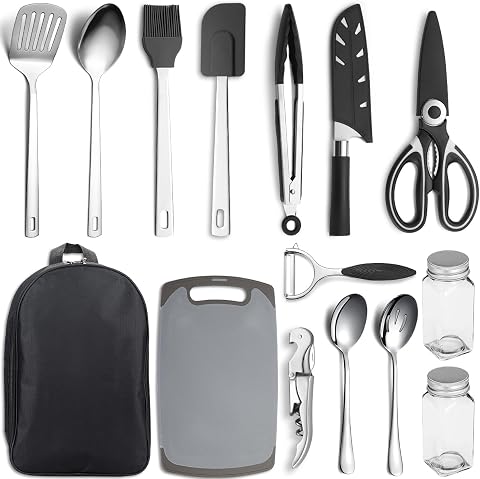
Kyraton Camping Cooking Set, 15 Pack
- ✔ Pieces: 15
- ✔ Listed weight: 1.96 kg
- ✔ Main material: Stainless steel
Difficulty: Beginner | Time: 30-60 minutes to choose and pack; allow extra time for a test cook
What You’ll Need
Tools & Materials:
- Trip itinerary and expected number of people
- Planned meals or a simple sample menu
- Luggage or pack to check for fit
- Access to the cooking appliance or heat source you plan to use
Knowledge:
- Know whether cooking will happen on a camp stove, over a permitted fire, or in a kitchen
- Know the approximate number of meals and people the cookware must serve
Check local fire rules, campsite facilities, and airline baggage rules if they apply. Cookware sets do not always include a stove, fuel, utensils, or cleaning supplies. Confirm what comes in the package before buying.
THTYBROS 17-Piece Camping Cookware Mess Kit
The 17-piece THTYBROS set earns our top spot by covering the central jobs of a travel kitchen without stretching into a full group kit. Its 1.70-liter pot, 7-inch pan and 1.15-liter kettle handle simple meals and hot drinks, while two cups, plates and cutlery make it a practical matched setup for a pair. Everything is described as nesting into a package measuring 7.5 × 7.5 × 5 inches, a useful level of packing detail that the other cookware set does not provide.Its hard-anodized aluminum cookware is described as light and quick to heat, which can help keep cooking time and fuel use down on trips. Stainless steel cups, plates and cutlery bring a different balance: they add durability, but they still contribute to the overall load. The listing reports both a 2.75-pound total weight and a separate 2.4-pound item-weight measurement. Because those figures do not match, we would verify the packed weight if every ounce matters.Compared with the 27-piece set, this kit is the more sensible carry for two people, trading larger vessels and four-person tableware for a smaller footprint. It also includes a bamboo spoon, cleaning cloth, cleaning ball and carrying bag, so basic cleanup is accounted for. The limitation is capacity: the 1.70-liter pot and two-place settings do not make it the natural choice for a family group. Choose it for a compact, all-in-one base kit; skip it if you need four portions or want a broader tool collection like Kyraton’s.
Pros:
- Includes a pot, pan, kettle and two sets of tableware.
- Nesting package dimensions are stated as 7.5 × 7.5 × 5 inches.
- Aluminum cookware is described as quick-heating and easy to clean.
- Comes with a carrying bag and basic cleanup accessories.
Cons:
- The listed total weight and item weight differ: 2.75 pounds versus 2.4 pounds.
- Two place settings and a 1.70-liter pot are limiting for larger groups.
- The set does not include the broader prep-tool selection found in Kyraton’s kit.
Best for: Two travelers who want nesting cookware, a kettle and two complete place settings in one compact package.
Not ideal for: Groups of three or four, or travelers who require a verified packed weight before planning an ultralight load.
Bottom line: For two people prioritizing a compact, complete cooking-and-eating kit, this is the strongest balance in the lineup, provided we confirm its packed weight.
“For two people prioritizing a compact, complete cooking-and-eating kit, this is the strongest balance in the lineup, provided we confirm its packed weight.”
THTYBROS 27-Piece Camping Cookware Set for 4
When we need one kit for more than a pair, the 27-piece THTYBROS set brings the most complete cooking-and-serving arrangement among the three. It includes two pots, a 7.6-inch pan, a kettle, stainless steel plates and cutlery, plus storage bags and a cleaning cloth. The listed capacities—0.63- and 0.4-gallon pots and a 0.3-gallon kettle—give us more room to cook and serve than the 17-piece set, which is designed around two place settings.The bigger set’s tradeoff is clear in its carry burden. The supplied item-weight figure is 3.6 pounds, while the product description says the total weight is under 4.1 pounds. Those may describe different measurements, but the listing does not explain the difference. It calls the nesting design smaller than a football, though it gives no packed dimensions. Compared with the 17-piece kit, we get more capacity and four-person tableware, but less certainty about the package size and a heavier load.Aluminum pots and pans are intended to heat efficiently, and the non-stick surfaces may make simple camp meals easier to release and clean. Stainless steel plates and utensils add serving durability. That combination favors car camping, RV travel or backpacking with a group that can divide shared gear. It is less compelling for solo hikers or couples who do not need the extra vessels and place settings. For those trips, the 17-piece set is a tighter match; Kyraton, meanwhile, adds tools rather than cookware capacity.
Pros:
- Includes two pots, a pan, kettle and tableware intended for up to four.
- Larger listed vessel capacities suit shared meals better than the 17-piece kit.
- Nesting design and multiple storage bags help keep camp gear organized.
- Non-stick cookware and stainless steel serving pieces cover different practical needs.
Cons:
- Heavier than the 17-piece cookware set, with weight figures that are not fully reconciled.
- No exact packed dimensions are provided.
- More pieces and capacity may be unnecessary bulk for one or two travelers.
Best for: Two to four campers who want cookware and tableware bundled together and can share the added load.
Not ideal for: Solo travelers, couples aiming to minimize carried weight, or buyers who need exact packed dimensions before purchasing.
Bottom line: This is our group pick when four-person coverage matters more than carrying the lightest cookware bundle.
“This is our group pick when four-person coverage matters more than carrying the lightest cookware bundle.”
Kyraton Camping Cooking Set, 15 Pack
The Kyraton 15-piece set is the lineup’s specialist: it fills a travel kitchen with prep and serving tools rather than cookware. Its contents include a chef’s knife and paring knife, cutting board, scissors, tongs, spatulas, spoons, an oil brush and spice bottles. That selection can make cooking at a campsite or picnic easier when we already have a pot and pan. It is the only entry focused on utensil organization, so its role is complementary rather than a direct replacement for either THTYBROS cookware bundle.For compact travel, the case is both an advantage and a caution. The listing describes a backpack-style storage bag with a zip closure, but provides no packed dimensions. At 1.96 kilograms—about 4.3 pounds—the stated item weight is substantial for a utensil-only set, especially beside the 17-piece THTYBROS kit’s listed 2.75-pound total. The larger THTYBROS bundle also supplies actual cookware and tableware while weighing less by the stated figures, although its own weight claims vary.Stainless steel tools are presented as durable and easy to clean, and the included board and knives provide more preparation capability than either pot-focused set. That can suit car camping, caravan travel or a shared camp kitchen where the tools stay in one place. On a backpacking trip, however, carrying a full knife-and-utensil assortment without pots, pans or dishes may not be efficient. We would choose Kyraton only when we specifically need a consolidated prep kit, and pair it with cookware separately.
Pros:
- Includes knives, cutting board, tongs, scissors, spatulas and serving spoons.
- Zipped storage bag keeps the tools together during travel.
- Stainless steel construction is described as durable and easy to clean.
- Adds food-prep capability absent from the two cookware-focused THTYBROS sets.
Cons:
- Does not include pots, pans, kettle, plates or cups.
- Listed weight of 1.96 kg is high for a utensil-only travel set.
- Packed dimensions are not provided, making space planning harder.
Best for: Car campers and picnic cooks who already own cookware and want a broad, organized collection of prep and serving tools.
Not ideal for: Backpackers seeking a complete cookware kit or travelers prioritizing the lightest possible utensil load.
Bottom line: Kyraton works as a portable prep-tool supplement, but it cannot serve as a standalone compact travel cookware set.
“Kyraton works as a portable prep-tool supplement, but it cannot serve as a standalone compact travel cookware set.”
As an Amazon Associate we earn from qualifying purchases.
Before You Start
Write down your cooking method, group size, meal plan, and available pack or luggage space. These four details narrow the choices quickly. For backpacking, carry weight and nested size usually matter more than having a full set of pots. For car camping or a rental kitchen, room for a larger pan may be worthwhile. Do not use cookware on a heat source unless its manufacturer says it is compatible.
Step-by-Step Instructions
Step 1: Match the set to your cooking method
Identify the heat source you will use, then choose cookware rated for it. For a backpacking stove, check that the pot sits stably on the burner and consider a heat exchanger if you want faster boiling. For a campfire, select cookware explicitly rated for open flame; many lightweight coatings and handles can be damaged by direct fire. For a rental kitchen, check whether the set works with induction, gas, or electric burners.
Tip:Check the manufacturer’s instructions for temperature limits and safe use. A set that works on a gas burner may not work on an induction hob.
Check: You can identify the planned heat source in the product specifications and confirm the set is approved for it.
Step 2: Set a weight and packed-size limit
Measure the space available in your pack or luggage and decide how much weight you can spare. Compare those limits with each set’s listed total weight, packed dimensions, and nesting design. For backpacking, compare the packed set with your available pack space and consider carrying only the pieces needed for your menu. For car travel, prioritize useful capacity and handling if storage space is available.
Tip:Product weights may exclude lids, bags, or accessories. Check the listed contents and total carry weight.
Check: The complete set fits inside your chosen pack or luggage, with room left for your other essentials.
Step 3: Choose a material that fits the trip
Compare each set’s material for weight, durability, heat response, and care needs. Select aluminum if low weight and fast heating suit your trip, while accounting for possible dents and any coating’s utensil requirements. Select stainless steel if durability matters more than weight, and account for its potential to heat unevenly. Select titanium if minimizing weight is a priority and the higher cost and potential hot spots work for your cooking. Read the care instructions, especially for nonstick surfaces.
Tip:If you plan to cook more than boil water, choose a pot or pan with enough surface area and heat control for your recipes.
Check: You can explain why the selected material suits your cooking style and are willing to follow its care instructions.
Step 4: Check capacity against your meals
Review your sample menu and compare its largest meal with the listed pot and pan capacities. Choose sizes that fit your planned portions and leave room to stir and simmer without filling the pot to the brim. Check whether the set includes a lid. If you will cook varied meals, choose a useful pot-and-pan combination rather than several small pots.
Tip:Manufacturers may list brim capacity, which is larger than a comfortable cooking fill. Leave room for stirring and simmering.
Check: The set can handle your planned portions and the most demanding meal on your menu.
Step 5: Inspect handles, lids, and included parts
Inspect how each handle attaches, whether it folds or detaches for packing, and whether it stays clear of the flame. Check that each lid fits securely and has a handle you can lift safely. Compare the package contents with your needs, including pots, pans, cups, bowls, storage sacks, or cleaning tools. Count only items you will use, and list anything you must buy separately.
Tip:Loose parts can rattle or scratch coatings. A storage sack or cloth wrap can help keep nested pieces together.
Check: You know exactly what is included, what is missing, and how each part will be stored and handled.
Step 6: Check cleaning and food-safety needs
Read the cleaning instructions and confirm you can maintain the set at your destination. Verify whether it is dishwasher-safe if that matters for your trip, and plan to wash it by hand while camping. Pack biodegradable soap only where permitted, a sponge or cloth, and a way to dispose of wastewater according to local rules. Keep raw-food preparation separate from clean cookware and utensils.
Tip:Do not pour dishwater into lakes or streams. Follow campsite guidance for wastewater disposal.
Check: You have a practical cleaning plan and the supplies required to carry it out at your destination.
Step 7: Pack the set and test it
Nest the cookware in the order recommended by its manufacturer. Secure lids and handles, add a cloth between pieces if needed to prevent scratches or rattling, and place the set where it is accessible without crushing fragile items. Before leaving, cook a simple meal using the intended stove or burner. Check stability, handle temperature, cooking capacity, and how easily the pot cleans afterward.
Tip:Test the actual combination of stove, pot, and fuel you plan to bring. Use a stable surface and follow the stove’s safety instructions.
Check: The packed set fits, stays together, cooks your test meal safely, and cleans without unexpected difficulty.
Common Mistakes to Avoid
- Buying by piece count alone. — Compare weight, packed size, useful capacity, and included parts against your menu and luggage space.
- Assuming any pot works with any stove or fire. — Check cookware and stove manufacturer guidance for heat-source compatibility before use.
- Packing a full set when only one pot is needed. — Match each piece to a planned meal and leave unused cookware at home.
- Ignoring coating care or cleaning needs. — Read care instructions and bring suitable utensils and cleaning supplies for the trip.
Troubleshooting
Problem: The cookware rocks or sits unevenly on the stove.
Solution: Stop cooking and check that the stove is on a stable, level surface. Confirm the pot base fits the burner supports; use a compatible pot or stove combination if it does not.
Problem: Food sticks or burns in the pan.
Solution: Lower the heat, add suitable liquid or cooking oil, and stir as the recipe requires. Check the material’s heat guidance and avoid placing empty nonstick cookware over high heat.
Problem: The set does not fit in the pack as expected.
Solution: Remove pieces you will not use, repack according to the nesting design, and check whether listed dimensions exclude handles or a carry bag. Choose a smaller set if it still will not fit.
Problem: A handle becomes loose or too hot.
Solution: Move the cookware off the heat if safe, and let it cool before checking the attachment. Keep handles away from flames and use a heat-resistant grip only if the manufacturer permits it. Do not use cookware with a damaged handle.
What Success Looks Like
Your selected set is compatible with your planned heat source, fits your luggage within your weight and space limits, and has enough capacity for your meals. You know which parts are included and how to clean and store them. A test cook confirms that the cookware sits securely, handles safely, and performs as expected.
Next Steps
After the test cook, dry every piece fully and repack it with the accessories you will carry. Add the set to your trip checklist along with fuel, utensils, and cleaning supplies as needed. After each trip, inspect handles and coatings, wash and dry the cookware, and replace damaged pieces before the next outing.
Frequently Asked Questions
What is the best material for a compact travel cookware set?
There is no single best material. Aluminum is light and heats quickly, stainless steel is durable but often heavier, and titanium keeps weight low but can cost more and develop hot spots. Choose based on your heat source, menu, weight limit, and care preferences.
How many pots do I need for travel cooking?
Use your menu to decide. A single pot may cover simple meals and boiling water. More varied meals or a larger group may call for a pan as well. Avoid carrying pieces without a planned use.
Can I use camping cookware on a regular stove?
Only if the manufacturer lists the stove type as compatible. Check this especially for induction cooktops and for cookware with coatings or specialized bases.
Should I buy a set with nonstick coating?
Nonstick cookware can make cleanup easier, but it needs suitable utensils and careful heat control. Follow the care instructions, avoid overheating an empty pan, and replace pieces if the coating becomes damaged.
How do I stop nested cookware from rattling?
Use the manufacturer’s storage bag or place a clean cloth between pieces if the care instructions allow it. Secure loose lids and handles, then shake the packed set gently before travel to check for movement.