
When choosing between an eSIM and a local SIM for travel, consider your convenience and budget. An eSIM offers easy plan switching and is ideal for multiple countries or frequent trips, reducing hassle and roaming fees. Local SIMs often provide cheaper data plans and reliable local connectivity but require physical replacement. To maximize your data experience and save money, weigh these options carefully—more details await to help you make the best choice for your journey.
Key Takeaways
- eSIMs offer quick, hassle-free plan switching via apps, ideal for multi-country trips, whereas local SIMs require physical card changes.
- eSIMs provide flexible, tailored data plans and reduce roaming costs, making them cost-effective for frequent travelers.
- Local SIMs often deliver better local rates and larger data allowances, suitable for longer stays.
- Setting up an eSIM is more convenient with no physical exchange, while local SIMs require buying and inserting a physical card.
- Both options support advanced connectivity (4G/5G), but choosing depends on travel duration, destination, and budget priorities.

When choosing between eSIM and a local SIM card, understanding their differences can help you make the best decision for your travel or communication needs. One of the main concerns for travelers is managing roaming charges, which can quickly add up if you’re not careful. With a traditional physical SIM card from your home carrier, you often face high roaming charges once you leave your home country. This is where eSIMs and local SIM cards offer significant advantages, especially regarding data plans.
An eSIM, embedded directly into your device, allows you to switch between multiple carriers without swapping physical cards. This means you can easily buy a local data plan through an eSIM provider, avoiding hefty roaming fees. You simply download a plan from an app or website, and you’re good to go, often with flexible options tailored to your travel duration and data needs. Since eSIMs support multiple profiles, you can switch between plans without changing physical SIMs, making it convenient for frequent travelers or those visiting multiple countries. This flexibility is especially useful if your main goal is to minimize roaming charges while maintaining reliable data access.
An eSIM allows seamless plan switching and local data purchases without swapping physical cards, ideal for frequent travelers.
On the other hand, a local SIM card involves physically purchasing a SIM from a local provider once you arrive at your destination. This traditional method also offers competitive data plans that are typically much cheaper than international roaming rates. When you buy a local SIM, you get a dedicated number for the country, and your data plans often include generous data allowances at a fraction of what you’d pay with roaming. The process might require a bit more effort—finding a store, providing identification, and inserting the SIM—but it’s often the most cost-effective way to access data locally, especially if you’re staying for an extended period.
Both options have their merits, but your choice depends on your priorities. If you want the convenience of switching plans without changing physical cards and prefer a seamless experience, an eSIM is a great choice. It’s especially useful if you’re traveling through multiple countries and want to avoid constant SIM swaps. Conversely, if you’re staying in one place for a while and want the absolute best rates for local data plans, purchasing a local SIM card might be better. It generally offers the most affordable data plans and ensures you’re not paying unnecessary roaming charges once you’re on the ground.
Ultimately, understanding how each option handles data plans and roaming charges allows you to select the one that best aligns with your travel plans and budget. Additionally, considering the 4G LTE or 5G connectivity capabilities can further improve your data experience during your travels.
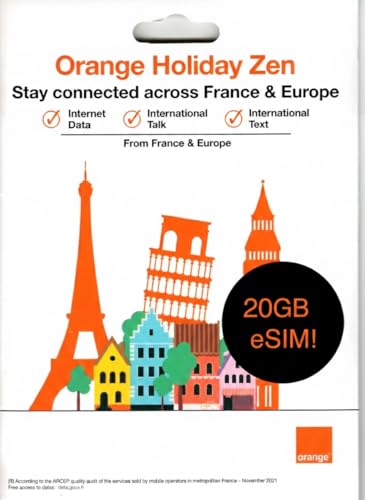
Europe eSIM 30 Days 20GB + Unlimited Local Calls + 30 Min Call Home | eSIM Available in 24 Hours | 48 Countries | 5G Data + Hotspot
- Europe eSIM with 20GB Data: 30-day high-speed data across Europe with hotspot
- Includes French Number & Calls: Unlimited local calls, 200 SMS, 30 min call home
- Instant eSIM Activation: QR code generated within 24 hours, no physical SIM
As an affiliate, we earn on qualifying purchases.
As an affiliate, we earn on qualifying purchases.
Frequently Asked Questions
Can I Switch Between Esim and Local SIM Easily?
Yes, you can switch between eSIM activation and a local SIM purchase easily. Most devices allow you to manage multiple profiles, so you can activate an eSIM or insert a local SIM card without much hassle. Just follow the setup instructions for eSIM activation or swap out your SIM card for a local one. Switching is straightforward, giving you flexibility when traveling and ensuring you stay connected wherever you go.
Which Option Offers Better Coverage in Rural Areas?
In rural areas, local SIM cards often provide better network reliability and signal strength because they connect you directly to regional networks. eSIMs can also offer good coverage if your provider has extensive partnerships, but they sometimes rely on roaming agreements that may limit signal quality. If staying connected in remote locations is a priority, a local SIM is usually the better choice for stronger signal and consistent coverage.
Are There Any Compatibility Issues With Devices?
You might face device compatibility issues with eSIMs if your device doesn’t support eSIM technology or isn’t liberated for international use. Local SIM cards generally work with any unlocked phone, but network restrictions could limit your options. Before traveling, check your device’s compatibility and whether your carrier imposes any restrictions. That way, you can choose the best data solution without surprises, ensuring seamless connectivity wherever you go.
How Do Pricing Plans Compare for Long-Term Travel?
You might worry about higher costs, but a pricing comparison shows that eSIM plans often offer better long-term value with flexible, customizable options. With plan flexibility, you can choose data packages that suit your travel duration, avoiding unnecessary charges. While local SIMs may seem cheaper initially, eSIMs provide the convenience of switching plans easily across countries, making them a smarter choice for long-term travel.
What Are the Security Differences Between Esim and Local SIM?
You’ll find that virtual SIMs, like eSIMs, often have robust network security features, reducing risks of physical theft or tampering. Since eSIMs are embedded, they eliminate the risk of losing your SIM card, enhancing safety. Local SIMs, however, depend on physical cards, which can be stolen or swapped. Overall, eSIMs offer better network security through encryption and remote management, making them a safer choice for traveling.

20GB 30 Day Orange Europe SIM Card, 30 Minutes Calls+200 Texts to Worldwide. Fresh Stock, Upgraded Offer! Parent (20GB X 30D)
- High-Speed Data in Europe: 20GB 4G/5G data with tethering
- Unlimited Local Calls: 30 minutes calls with French number
- Global Texts: 200 texts to USA and worldwide
As an affiliate, we earn on qualifying purchases.
As an affiliate, we earn on qualifying purchases.
Conclusion
Choosing between eSIM and local SIM is like deciding whether to ride a rocket or a bicycle for your travels. With an eSIM, you’ll blast through global networks at lightning speed, avoiding the hassle of swapping SIM cards. On the other hand, a local SIM might feel like crawling, but it could save you a fortune. Whichever you pick, your data experience will never be the same—it’s a game-changer you can’t afford to miss!

eSIM for Europe Travel 30 Day 5GB for 36 Countries | Refillable Super Economy Pack | Get eSIM in 24 Hours | High Coverage Multi-Operator 5G Network | Auto-Activating | Hotspot Allowed | Data Only
- Coverage in 36 Countries: High-speed data across 36 European countries
- Hotspot Sharing: Allows multiple devices to share data via hotspot
- High Network Coverage: Switches automatically among 77 operators for strong signal
As an affiliate, we earn on qualifying purchases.
As an affiliate, we earn on qualifying purchases.
20GB 30 Day Orange Europe SIM Card, 30 Minutes Calls+200 Texts to Worldwide. Fresh Stock, Upgraded Offer! Parent (20GB X 30D)
- High-Speed Data in Europe: 20GB 4G/5G data with tethering
- Unlimited Local Calls: 30 minutes calls with French number
- Global Texts: 200 texts to USA and worldwide
As an affiliate, we earn on qualifying purchases.
As an affiliate, we earn on qualifying purchases.