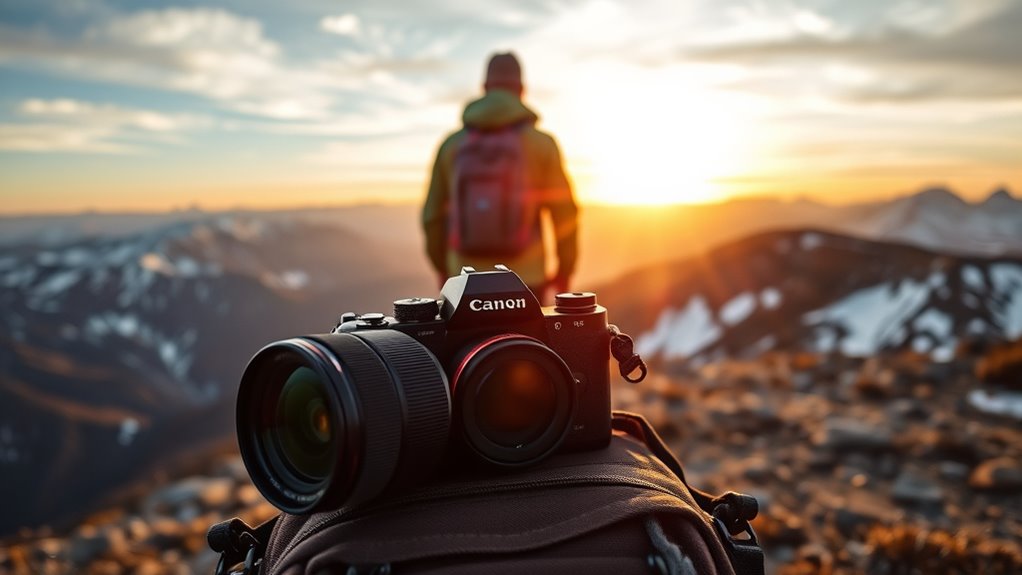

When choosing between prime and zoom lenses for travel photography, consider your priorities. Prime lenses deliver sharper images, better low-light performance, and encourage you to move for better composition. Zoom lenses offer flexibility and quick adaptation to different scenes, making them ideal for dynamic environments. If you prefer lightweight gear and intentional shots, primes are great; if versatility matters most, zooms work better. Keep exploring to discover which option suits your travel style best.
Open a free Amazon Business account
Business pricing, bulk buying and tax-exempt orders.
As an affiliate, we earn on qualifying purchases.
Key Takeaways
- Prime lenses offer sharper images and better low-light performance, ideal for detailed travel shots.
- Zoom lenses provide versatility and quick framing adjustments, suitable for dynamic travel environments.
- Primes are lightweight and compact, making them better for minimal, portable travel gear.
- Zooms reduce the need to carry multiple lenses, simplifying packing and gear management.
- The choice depends on travel style, scene types, and priority between image quality and flexibility.
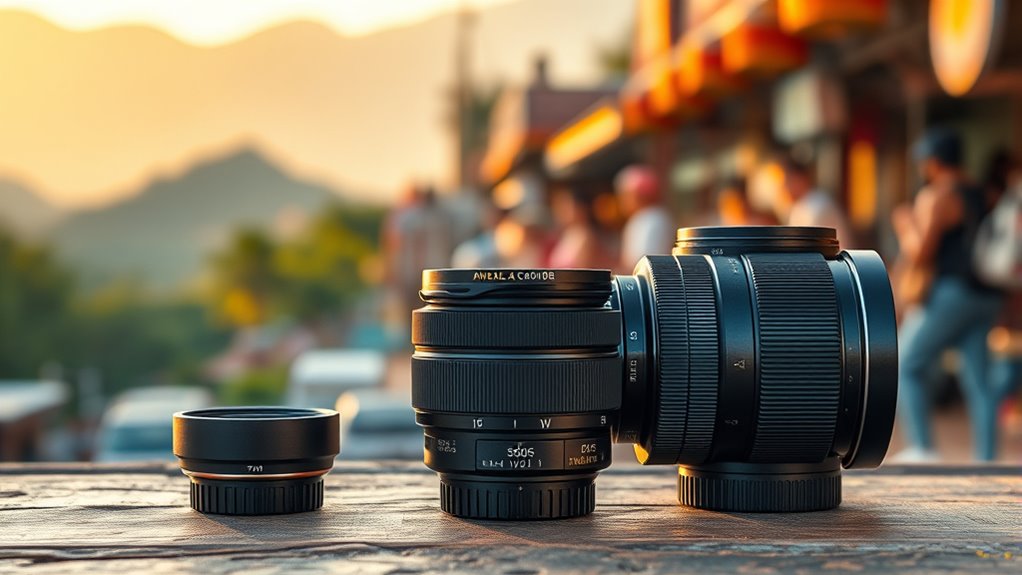
When you’re exploring new destinations, having the right camera lenses can make all the difference in capturing stunning travel photos. Choosing between prime and zoom lenses isn’t just about image quality; it’s also about how they fit into your travel kit, especially considering lens versatility and weight considerations. Prime lenses, with their fixed focal lengths, often deliver sharper images and better low-light performance. They force you to move your feet rather than rely on zoom, which can be a challenge but also encourages a more deliberate approach to composition. Their simplicity means fewer moving parts, often resulting in lighter, more compact lenses that won’t bog you down during long days of sightseeing. This lightweight aspect is especially important if you’re trying to minimize your gear weight or plan to carry your camera for extended periods.
Prime lenses are lightweight, sharp, and encourage deliberate composition, perfect for minimal travel gear.
On the other hand, zoom lenses offer incredible lens versatility, allowing you to capture a wide range of scenes without changing lenses. This flexibility is invaluable when you’re in fast-paced environments or trying to document spontaneous moments, as you can quickly switch from wide-angle landscapes to close-up details with a turn of the zoom ring. However, zoom lenses tend to be bulkier and heavier, which might be a drawback if you’re aiming for a lightweight travel setup. The added weight can become noticeable after hours of walking or *orchestrating* crowded streets, making your camera feel like a burden rather than a tool for capturing memories.
When you’re packing for your trip, it’s essential to weigh these factors carefully. If you prefer a minimalist approach and value sharp image quality, a few prime lenses with different focal lengths could be your best choice. They’re easier to carry, less conspicuous, and often more affordable. Conversely, if you want maximum flexibility and prefer to carry fewer lenses, a quality zoom might suit your needs better, even if it adds some weight. Think about the types of scenes you’re most likely to encounter—urban landscapes, wildlife, portraits—and choose a lens setup that balances lens versatility with weight considerations.
Additionally, understanding how high-quality optics influence your images can help you select lenses that meet your travel photography needs perfectly. Ultimately, your decision hinges on your travel style and photographic priorities. Both prime and zoom lenses have their strengths, but understanding how lens versatility and weight considerations impact your experience will help you make smarter choices. Whether you opt for the simplicity and sharpness of primes or the flexibility of zooms, selecting the right lenses ensures you’ll capture the essence of your journey in every shot.
best travel prime lenses for DSLR
As an affiliate, we earn on qualifying purchases.
As an affiliate, we earn on qualifying purchases.
Frequently Asked Questions
How Do Weather Conditions Affect Lens Choice for Travel Photography?
Weather conditions greatly influence your lens choice. You should prioritize lens durability and weather sealing to protect against moisture, dust, and extreme temperatures. A weather-sealed lens guarantees your gear stays safe during rain or snow, allowing you to focus on capturing moments without worry. Choosing a lens with robust construction means you can shoot confidently in diverse conditions, making your travel photography more reliable and enjoyable.
Are There Specific Lenses Recommended for Underwater Travel Photography?
For underwater travel photography, you should consider waterproof lenses and underwater macro lenses. Waterproof lenses are essential to safeguard your gear from water damage while capturing clear images beneath the surface. An underwater macro lens allows you to get close-up shots of marine life, revealing intricate details. Combining these lenses ensures you capture stunning underwater scenes, regardless of water conditions, while keeping your equipment safe and functional.
What Are the Best Storage Practices for Travel Camera Lenses?
To keep your travel camera lenses in top shape, always use lens cleaning tools like a blower and microfiber cloth to remove dust and smudges. Store your lenses in padded storage containers or cases to protect against impacts and humidity. Keep them in a cool, dry place, and consider silica gel packets to prevent moisture buildup. Proper storage prolongs your lenses’ lifespan and ensures clear, sharp photos on every trip.
How Do I Prevent Lens Fogging in Different Climates?
To prevent lens fogging in different climates, you should regularly clean your lens with a microfiber cloth and use anti-fog solutions before shooting in humid conditions. When moving between temperature extremes, keep your camera in a sealed plastic bag to gradually acclimate it. Avoid touching the lens glass with your fingers, and store your gear in a dry, climate-controlled environment when not in use for added protection.
Can I Use a Smartphone Lens Attachment Instead of Traditional Camera Lenses?
Yes, you can use a smartphone lens attachment instead of traditional camera lenses. Just guarantee the smartphone lenses are compatible with your device, checking for lens compatibility with your phone model. These attachments are portable and easy to use, offering versatile options for travel photography. Keep in mind that while smartphone lenses can enhance your shots, they may not match the quality and versatility of dedicated camera lenses, especially in challenging conditions.
compact zoom lenses for travel photography
As an affiliate, we earn on qualifying purchases.
As an affiliate, we earn on qualifying purchases.
Conclusion
So, whether you choose a prime or zoom lens for your travels, remember that your camera’s just a fancy box—your imagination and patience are the real travel essentials. Don’t stress over the perfect lens; after all, some of the most iconic shots come from a phone and a mischievous grin. Pack light, shoot often, and leave the gear obsession behind. Your memories will thank you, even if your photos aren’t perfectly zoomed or sharply prime.
As an affiliate, we earn on qualifying purchases.
lightweight travel camera lens kit
As an affiliate, we earn on qualifying purchases.
As an affiliate, we earn on qualifying purchases.
Fall Picks
fall essentials
As an affiliate, we earn on qualifying purchases.