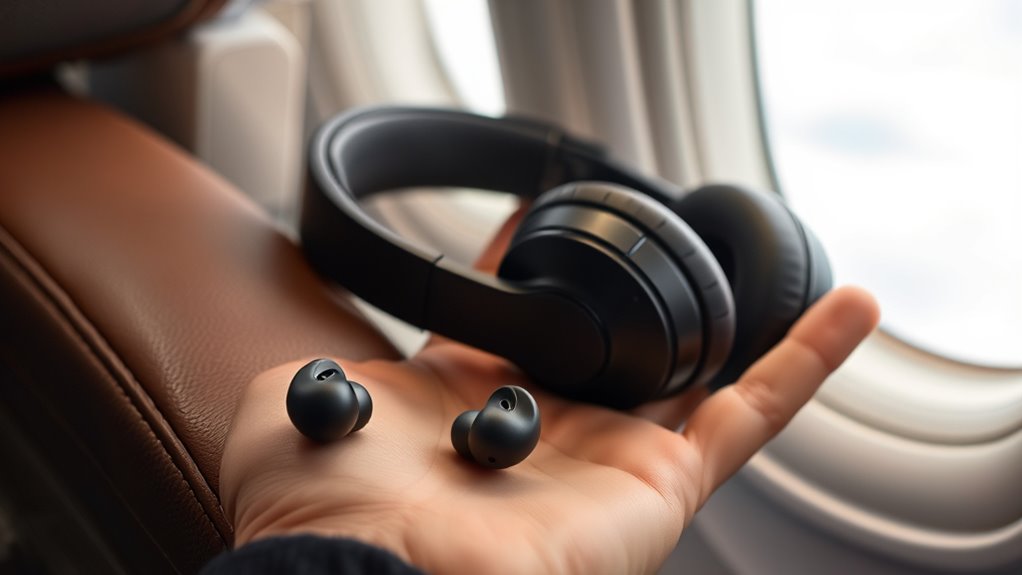

For travel, earbuds are more portable and convenient, fitting easily into your pocket with quick-charging cases for longer use. They’re lightweight but offer shorter battery life, typically 4-8 hours. Headphones tend to be bulkier but provide longer battery life of 20-30 hours, making them ideal for extended trips. Both options deliver reliable Bluetooth connections, though your choice depends on whether you prioritize portability or extended comfort. Learn more to determine which fits your travel style best.

Get travel and outdoor gear delivered free — and shop member deals
- Fast, free delivery on millions of items
- Access to Prime Big Deal Days deals on October 6–7
- Prime Video, Amazon Music and more included
Key Takeaways
- Earbuds are more portable and lightweight, ideal for quick, on-the-go use during travel.
- Noise-canceling headphones typically offer longer battery life for extended travel without recharging.
- Earbuds with charging cases provide quick recharges, ensuring continuous use during trips.
- Headphones are bulkier but often deliver better comfort and noise cancellation for long durations.
- Both options support stable Bluetooth connections, but earbuds are easier to carry and set up quickly.

When choosing between noise-canceling earbuds and headphones, understanding their differences can help you make the best decision for your needs. One key factor to contemplate is wireless connectivity. Earbuds are usually more compact and come with Bluetooth technology that allows for easy, tangle-free pairing with your devices. They often support quick pairing and maintain a stable connection, which is essential when you’re on the move or in busy environments like airports or trains. Headphones, on the other hand, typically offer a broader range of wireless options, including more advanced Bluetooth versions that can provide a more reliable connection over longer distances. If you value seamless connectivity with minimal dropouts during your travel, both options are viable, but earbuds tend to be more convenient for quick pairing and portability.
Battery life is another vital aspect. Noise-canceling headphones generally have larger batteries, which means they can last longer on a single charge—sometimes up to 20-30 hours with active noise cancellation enabled. This extended battery life is advantageous for long flights or multiple travel days without needing to recharge. Earbuds, however, usually have smaller batteries due to their compact size, so their playback time might range from 4 to 8 hours per charge. Many earbuds come with charging cases that provide multiple additional charges, helping you extend listening time throughout your trip. If you prioritize long-lasting power without frequent recharging, headphones might be the better choice. But if you prefer something lightweight that you can easily recharge multiple times during the day, earbuds with their portable cases can meet your needs.
Both options also differ in their charging convenience. Earbuds often come with quick-charge features, allowing you to get hours of playback with just a few minutes of charging. Headphones may take longer to recharge but can often run for extended periods once fully charged. When you’re traveling, having a reliable battery life is essential to avoid interruptions, so consider how long you’ll need your device to last without access to power sources.
noise-canceling wireless earbuds
As an affiliate, we earn on qualifying purchases.
As an affiliate, we earn on qualifying purchases.
Frequently Asked Questions
Which Is More Comfortable for Long Flights?
For long flights, you’ll find noise-canceling headphones more comfortable than earbuds. They often feature plush ear cups and better padding, reducing fatigue. Their design aesthetics tend to be more luxurious and ergonomic, offering a cozy fit for extended wear. When considering price comparison, headphones might cost more initially but provide greater comfort over time. Ultimately, choose what feels best for your head and ears, ensuring a pleasant, restful journey.
Do Earbuds Cause Ear Fatigue Over Extended Use?
Earbuds can cause ear fatigue over extended use, especially if they fit too tightly or aren’t the right size for you. You might notice discomfort or soreness after long listening sessions. To minimize ear fatigue, take regular breaks, choose well-fitting earbuds, and avoid listening at high volumes for too long. Being mindful of your comfort helps prevent ear fatigue and makes your travel experience more enjoyable.
How Durable Are Noise-Canceling Headphones for Travel?
Think of your headphones as a sturdy bridge—built to withstand the journey. Generally, noise-canceling headphones are quite durable for travel, especially if made with high-quality materials like metal or reinforced plastics. Durability concerns often hinge on material quality and design, so choose models known for ruggedness. Proper care guarantees they stay resilient on your adventures, providing reliable noise cancellation and comfort for many trips to come.
Can Earbuds Effectively Block Out Loud Engine Noises?
Yes, earbuds can effectively block out loud engine noises if you get a snug earbud fit. Properly fitting earbuds help create a seal that enhances noise cancellation and reduces noise leakage. Keep in mind, though, that some noise may still sneak in, especially if your fit isn’t perfect. Choose earbuds with active noise-canceling features for the best experience, and guarantee they fit well for maximum noise reduction during travel.
Are There Differences in Battery Life Between Earbuds and Headphones?
You’ll find that headphones generally boast longer battery longevity than earbuds, providing hours of uninterrupted silence like a dependable lighthouse guiding your journey. However, earbuds often charge faster, turning from empty to ready in minutes, so you can quickly recharge your musical escape. While headphones dominate in stamina, earbuds excel in quick recharges, making each device a different tool for your travel adventure.
long battery life noise-canceling headphones
As an affiliate, we earn on qualifying purchases.
As an affiliate, we earn on qualifying purchases.
Conclusion
Ultimately, choosing between noise-canceling earbuds and headphones depends on your travel needs. For example, if you prefer something lightweight for busy commutes, earbuds like the Sony WF-1000XM4 are perfect. But if you want full immersion on long flights, over-ear headphones like Bose QuietComfort 45 might be better. Think about your comfort and environment—your ideal choice can make every trip more enjoyable and less stressful. So, consider your travel style and pick what works best for you.
compact travel earbuds with charging case
As an affiliate, we earn on qualifying purchases.
As an affiliate, we earn on qualifying purchases.
comfortable noise-canceling headphones for flights
As an affiliate, we earn on qualifying purchases.
As an affiliate, we earn on qualifying purchases.
Fall Picks
fall essentials
As an affiliate, we earn on qualifying purchases.