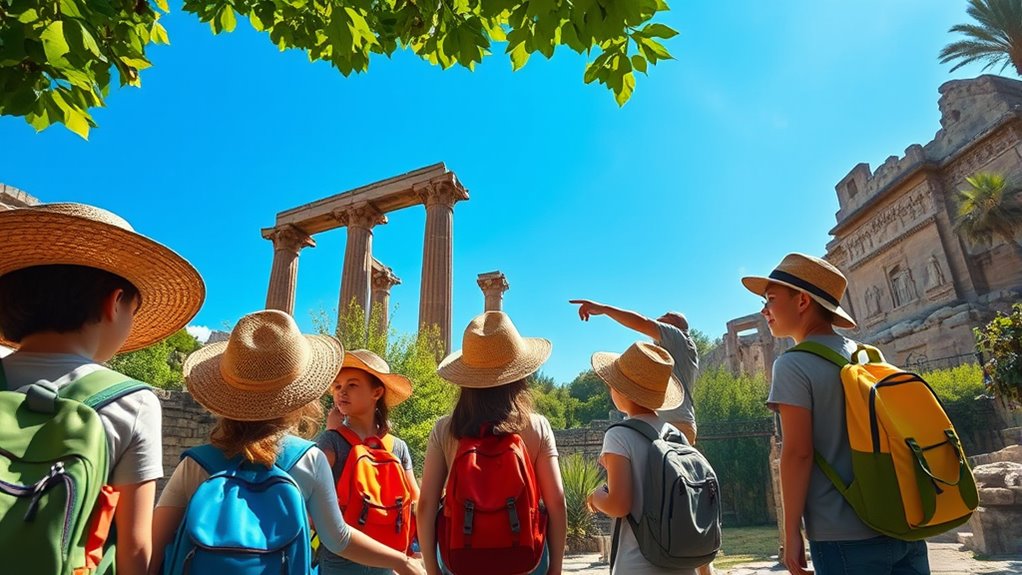

Turning trips into valuable learning experiences for kids involves choosing destinations suited to their age and interests, like museums, cultural festivals, or nature spots. Incorporate hands-on activities, interactive tours, and local cultural immersions to keep them engaged. Encourage reflection and creative expression afterward to cement what they’ve learned. Balancing fun with educational goals helps foster curiosity and growth. Keep exploring for more ideas on creating meaningful journeys that inspire lifelong learning.
Key Takeaways
- Select destinations aligned with children’s age and interests, such as museums, cultural festivals, or nature parks.
- Incorporate interactive activities like hands-on museum exhibits and cultural workshops to enhance engagement.
- Involve kids in trip planning to boost their curiosity, responsibility, and investment in the learning experience.
- Use technology tools like virtual tours and educational apps to reinforce learning during and after trips.
- Engage children with nature and cultural immersions through outdoor activities and local tradition experiences.
Choosing Educational Destinations for Young Learners

How do you select the best educational destinations for young learners? You want places that are engaging and enriching. Look for destinations rich in cultural festivals, where kids can experience local traditions firsthand. These festivals reveal a community’s history and values, making learning lively and memorable. Historical landmarks are equally important—they provide tangible connections to the past, sparking curiosity about history and architecture. Choose sites that balance fun and education, ensuring children stay interested and involved. Research destinations known for their interactive exhibits or guided tours that cater to young minds. By selecting locations with vibrant cultural festivals and significant historical landmarks, you create an immersive environment that inspires curiosity and lifelong learning.
Incorporating Interactive Learning Activities During Travel

You can make travel more engaging by including hands-on museum visits and cultural workshops that encourage active participation. Exploring nature through guided activities helps learners connect with their surroundings in meaningful ways. Incorporating these interactive experiences keeps young travelers excited and enhances their understanding of new environments. Using self-watering plant pots as a metaphor can also teach children about responsible watering and plant care during their trips.
Hands-On Museum Visits
Why do hands-on museum visits stand out as a key element of educational travel? They turn passive observation into active engagement, making learning memorable. During these visits, your kids participate directly in activities that deepen understanding and spark curiosity. Imagine them exploring ancient artifacts, manipulating models, or conducting simple experiments. This approach fosters interactive learning, making lessons come alive. Envision this scene:
| Hands-On Museum Visits | Engaged Learning Activities |
|---|---|
| Touching fossils | Building models from clay |
| Operating science demos | Solving puzzles in exhibits |
| Trying costumes or tools | Participating in workshops |
These vivid experiences create lasting impressions, transforming travel into a dynamic educational adventure.
Local Cultural Workshops
Building on the excitement of hands-on museum visits, participating in local cultural workshops transforms travel into an immersive educational experience. These workshops allow you and your kids to explore local crafts, creating authentic souvenirs and gaining appreciation for artisans’ skills. Engaging in cultural dance sessions helps kids understand the importance of tradition and rhythm in the community’s heritage. By actively participating, children learn through doing, which makes the experience memorable and meaningful. These workshops also foster curiosity about different customs and foster respect for diverse cultures. Plus, you get to bond as a family while exploring new art forms and traditions. Incorporating local crafts and dance into your trip enriches the journey, making it not just a sightseeing tour but a vibrant, educational adventure. Understanding cultural significance enhances the depth of your children’s learning and appreciation for local communities. Additionally, participating in these activities aligns with mindfulness practices, encouraging children to be present and engaged in the learning process. Engaging in interactive learning activities during travel can also boost confidence and social skills as children interact with local artisans and instructors. Embracing authentic local traditions helps children develop a deeper connection to the destination and its people. Exploring cultural heritage through active participation can inspire lifelong interest and respect for global diversity.
Nature Exploration Activities
Engaging in nature exploration activities transforms travel into an interactive learning adventure for kids. You can encourage them to participate in wildlife tracking, where they observe animal signs like footprints or nests, fostering curiosity about local ecosystems. Forest scavenger hunts add an exciting element, prompting children to find specific leaves, rocks, or insects, which sharpens their observational skills. These activities help kids connect with nature firsthand, making learning fun and memorable. As they identify different species or track animal movement, they develop a deeper appreciation for biodiversity. Additionally, understanding climate control can help plan trips more effectively, ensuring that educational travel remains financially sustainable. Moreover, incorporating environmental considerations into your planning can promote eco-friendly travel habits among young explorers. Plus, outdoor exploration promotes physical activity and curiosity, turning a simple trip into an educational journey that nurtures their understanding of the natural world. Incorporating privacy and cookie usage considerations into planning can also ensure a safe online environment for children during their educational activities.
Planning Educational Tours and Museum Visits
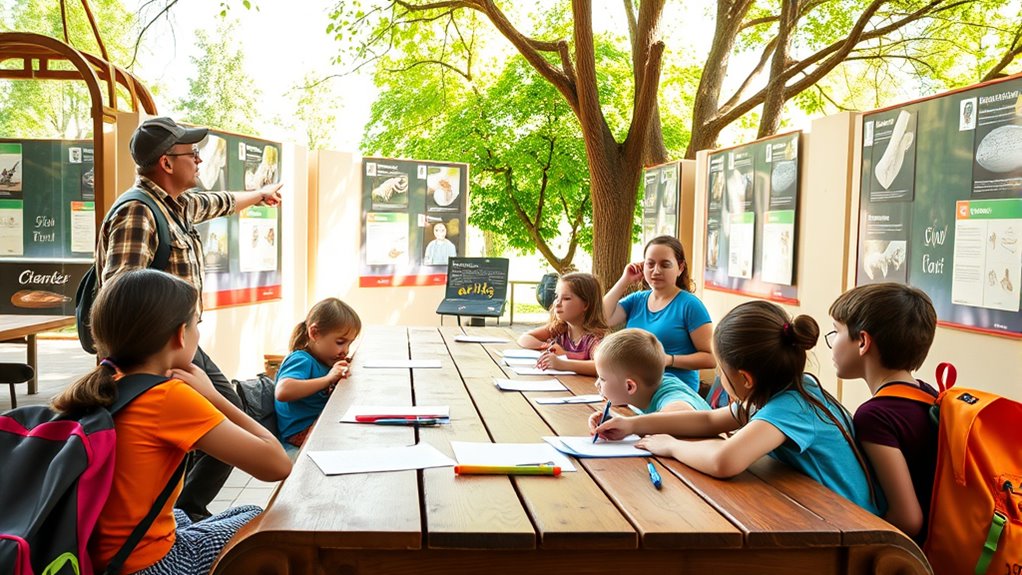
When planning educational tours and museum visits, you need to choose destinations suitable for your group’s age and interests. Incorporate interactive activities to keep students engaged and enhance their learning experience. Additionally, coordinating with educational experts can help tailor the visit to meet your specific learning goals. Ensuring that the signs of spoilage are properly identified in samples like lemon juice can teach students about food safety and preservation techniques. Staying aware of market trends and insights can also provide context for understanding the economic aspects of food production and safety standards. Familiarizing students with different types of butter varieties and their culinary uses can further enrich their understanding of food science and cultural cuisine. Using Montessori toys as part of interactive exhibits can also promote hands-on learning and sensory development during the visit. Incorporating knowledge about pregnancy safety can help students understand how food and health considerations vary in different contexts.
Selecting Age-Appropriate Destinations
Choosing destinations that match students’ age and developmental level is essential for a successful educational trip. Younger children benefit from interactive museum exhibits, while older students can explore cultural festivals or engage in adventure sports that challenge them physically and mentally. Selecting appropriate sites guarantees engagement and safety. Consider the interests and maturity of your group when planning. For example, a trip to a historical site with guided storytelling suits early learners, whereas teenagers might enjoy exploring adventure sports or cultural festivals. Use this table as a guide:
| Age Group | Suitable Destinations | Examples |
|---|---|---|
| Young Kids | Interactive museums | Science centers, aquariums |
| Middle School | Cultural festivals | Local traditions, art fairs |
| Teens | Adventure sports | Hiking, rafting |
| All Ages | Educational workshops | History reenactments, craft classes |
Matching destinations with age-specific interests maximizes learning and fun. Additionally, aligning activities with developmental learning needs ensures that each group gains the most from their experience. Recognizing the importance of appropriate activities helps create a balanced and enriching trip for all participants. Incorporating Water-based attractions such as aquatic centers or water parks can add fun and educational value, especially for younger children. Understanding the cultural significance of various destinations enriches the educational experience and fosters appreciation for diverse traditions. Moreover, considering safety protocols is vital to protect all participants during active or potentially risky activities.
Incorporating Interactive Activities
Incorporating interactive activities into educational trips transforms visits into memorable learning experiences. When planning museum visits or cultural tours, choose activities that engage kids actively, like scavenger hunts or hands-on workshops. These activities encourage curiosity while fostering cultural sensitivity, helping children appreciate diverse perspectives. Always prioritize travel safety by briefing kids on appropriate behavior and emergency procedures, especially in unfamiliar settings. Interactive tasks should be age-appropriate, ensuring children stay engaged without feeling overwhelmed. Incorporating technology, such as quizzes or augmented reality apps, can enhance learning and make the experience more dynamic. Additionally, understanding safety precautions can help prepare children for unexpected situations, ensuring a smooth and enjoyable trip. Building awareness of air purifier features and technologies can also serve as an engaging conversation starter about health and environment, making the trip both fun and meaningful. Moreover, discussing essential oils for health benefits can introduce children to natural remedies and their uses, enriching their understanding of wellness practices. Recognizing the importance of physical healing and recovery can also be a valuable lesson when visiting health-related exhibits or facilities. Remember, well-designed interactive activities not only reinforce educational content but also develop respect for different cultures, making the trip both fun and meaningful.
Coordinating With Educational Experts
To guarantee educational tours and museum visits are both engaging and informative, collaborating with educational experts is essential. Educational expert collaboration ensures that activities align with your curriculum, reinforcing key learning objectives. When planning, consult specialists who understand the subject matter and can tailor experiences to your students’ needs. They can help select appropriate sites, develop relevant discussion points, and design interactive components that complement classroom lessons. Effective coordination also involves sharing your curriculum goals, so the experts can suggest activities that reinforce core concepts. Additionally, understanding the role of content accuracy in educational settings can significantly impact the quality of the learning experience. Incorporating educational technology can further enhance engagement and provide additional learning opportunities during visits. Engaging experts in curriculum alignment also helps ensure that the activities support standardized learning outcomes and assessments. Recognizing the importance of vetted educational content ensures that the information presented is reliable and accurate, enriching the learning experience. This partnership not only enriches the learning experience but also ensures that the trip supports your educational standards. By working closely with experts, you create a seamless, impactful travel experience that maximizes educational value.
Engaging Kids With Cultural and Historical Immersions
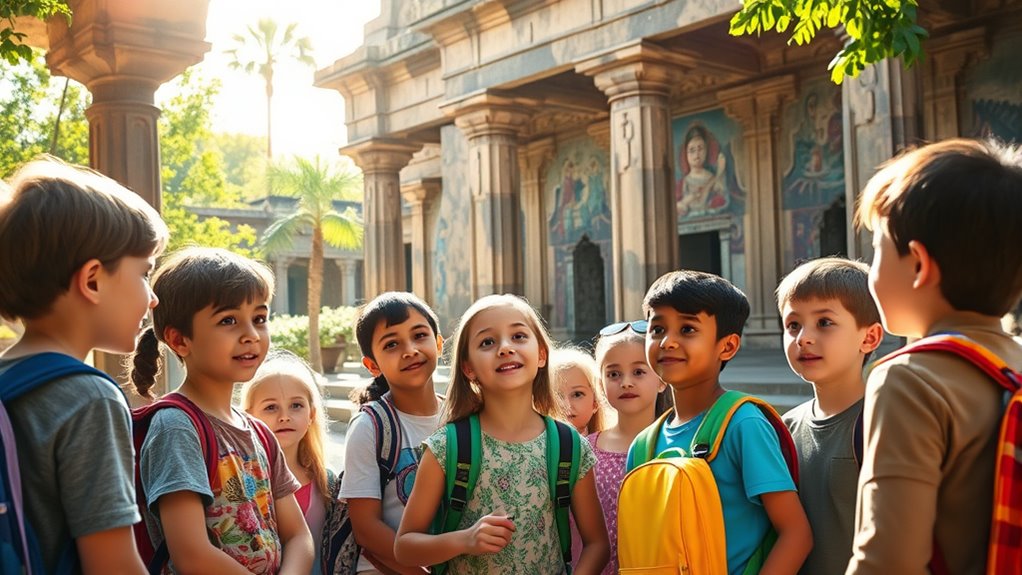
Engaging kids with cultural and historical immersions transforms learning into an exciting adventure that sparks curiosity and deepens understanding. When you incorporate activities like digital storytelling, children can create visual narratives about the places they visit, making history and culture personal and memorable. Language immersion also plays a crucial role; speaking with locals helps kids develop language skills and gain authentic cultural insights. To enhance the experience, consider these ideas:
Transform learning into adventure through digital storytelling and authentic cultural experiences.
- Encourage kids to craft digital stories about their trip, highlighting key historical sites or cultural experiences.
- Enroll them in language immersion programs or activities, like cooking classes or guided tours.
- Use local traditions and stories to foster a genuine connection with the destination’s history and culture.
These approaches make cultural learning interactive, engaging, and impactful.
Using Technology to Enhance Learning on the Road
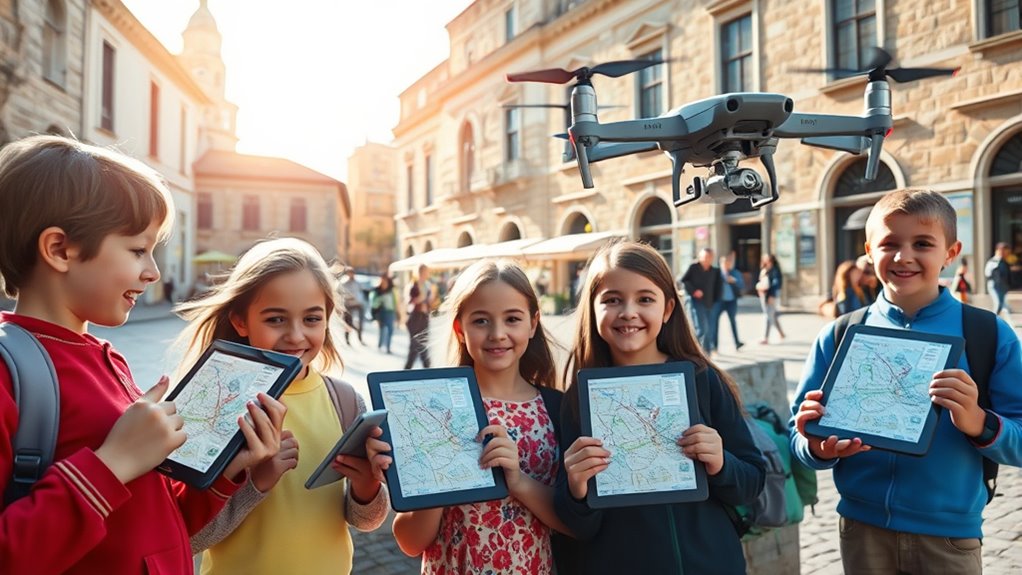
Harnessing technology transforms travel experiences into dynamic learning adventures. Virtual reality allows you to immerse your kids in historical sites, distant ecosystems, or even outer space without leaving their seats. This immersive experience deepens understanding and sparks curiosity. Additionally, online educational platforms offer access to interactive lessons, quizzes, and multimedia resources that complement what they see during visits. These tools make learning more engaging and personalized, helping kids retain information better. Before or after trips, you can explore virtual tours of museums or landmarks, reinforcing the trip’s lessons. By integrating technology like virtual reality and online platforms, you turn travel into an interactive, educational journey that sparks your child’s interest and enhances their learning beyond the classroom.
Encouraging Reflection and Creative Expression After Visits

After a trip, encouraging your kids to reflect and express what they’ve learned helps solidify their experiences. You can do this through creative activities that make their memories meaningful. Artistic journaling allows children to draw, write, and collage their thoughts and feelings about the visit. Storytelling exercises help them process what they’ve seen by narrating their own adventure, deepening understanding. To guide them, try these ideas:
- Create an artistic journal entry with drawings and captions.
- Write a short story based on their favorite part of the trip.
- Share and discuss their reflections with family or friends.
These activities promote reflection, boost creativity, and reinforce learning, turning a simple visit into a lasting educational experience.
Tips for Balancing Fun and Educational Value

Balancing fun and educational value during a trip guarantees kids stay motivated and engaged while learning. To achieve this, plan activities that blend entertainment with education, like visiting interactive museums or nature reserves. Keep kids energized with travel snacks that are both tasty and nutritious, preventing hunger from disrupting focus. Packing tips include bringing familiar snacks to ease progressions and avoid unnecessary fuss. Incorporate short, fun breaks to keep energy high, and choose activities that align with your child’s interests to boost enthusiasm. Mix structured learning with free exploration to maintain a relaxed atmosphere. Remember, the goal is to make learning feel like an adventure, not a chore. By thoughtfully balancing fun and education, your trip becomes a memorable and enriching experience for everyone.
Involving Children in Trip Planning for Greater Engagement

Getting children involved in trip planning can considerably boost their enthusiasm and investment in the journey. When kids help choose destinations or activities, they develop a sense of ownership, making travel more meaningful. To keep them engaged, involve them in planning aspects like safety, packing tips, and daily itineraries. This encourages responsibility and helps them understand travel safety measures. Here are some ideas:
- Let them pick a few activities or sights to visit, fostering curiosity.
- Involve them in packing by letting them choose their favorite snacks or toys, emphasizing packing tips for safety and convenience.
- Discuss safety rules and travel tips so they understand precautions and feel secure.
This active participation makes the trip more enjoyable and educational for everyone.
Assessing Learning Outcomes and Making the Most of Travel Experiences
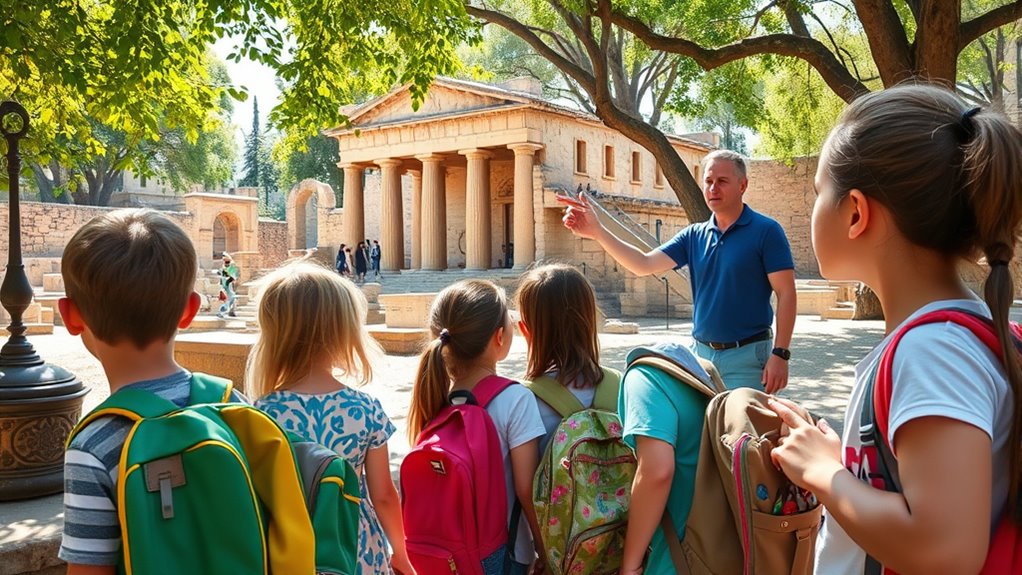
To truly maximize the educational value of travel experiences, it’s essential to assess what your children have learned and how they’ve grown throughout the trip. Use assessment metrics like quizzes, discussions, or journals to gauge their understanding and engagement. These tools help identify areas where learning reinforcement is needed, ensuring concepts stay fresh and meaningful. Reflect on their observations and questions to see how well they’ve connected new information to prior knowledge. Encourage your kids to share their experiences, which boosts retention and confidence. Tracking progress not only highlights successes but also guides future trips for even richer learning. By actively evaluating outcomes, you transform travel from mere sightseeing into a purposeful, educational journey that leaves lasting impressions.
Frequently Asked Questions
How Can Parents Assess if a Travel Destination Is Age-Appropriate for Learning?
You can assess if a travel destination is age-appropriate for learning by researching its cultural immersion opportunities and language exposure. Check if the activities are suitable for your child’s age, engaging, and educational. Read reviews from other parents and consult travel guides focused on family experiences. Confirm the environment offers safe, interactive ways for your child to explore new cultures, making learning both fun and meaningful.
What Are Effective Ways to Tailor Educational Activities to Different Age Groups?
Think of tailoring activities like crafting a personalized map for each age group. You can design group activities that spark curiosity, making learning feel like an adventure. For younger kids, focus on hands-on learning with tactile experiences that engage their senses. For older kids, challenge them with problem-solving tasks that deepen their understanding. Adjust complexity and interaction levels to keep everyone engaged, ensuring each journey is a meaningful voyage of discovery.
How Can Travel Experiences Be Adapted for Children With Special Educational Needs?
You can adapt travel experiences for children with special educational needs by incorporating sensory accommodations, like quiet spaces or sensory toys, to help them feel comfortable. Use clear communication strategies, such as visual aids or simple language, to guarantee they understand and stay engaged. Be flexible with activities, allowing extra breaks, and always observe their responses to adjust the experience, making travel enjoyable and inclusive for everyone.
What Safety Precautions Should Be Considered During Educational Excursions Abroad?
You should prioritize safety by securing extensive travel insurance, which covers unexpected incidents. While exploring new places, stay vigilant for potential hazards and maintain close supervision. Prepare for emergencies with a clear plan, including accessible emergency contacts and first aid kits. Balancing excitement with caution ensures your child’s safety, making the trip enjoyable and secure. Remember, proactive planning helps you handle unexpected situations swiftly and confidently.
How Can Parents Measure Long-Term Impact of Educational Travel on Their Child’s Development?
You can measure your child’s long-term development from educational travel by observing increased cultural understanding and language acquisition. Notice if they show curiosity about different cultures, engage more confidently in diverse environments, or pick up new words. Keep an eye on their adaptability, social skills, and openness to new experiences over time. These changes indicate the lasting impact of travel, helping you see how the trip fosters their growth beyond the journey.
Conclusion
By blending fun with education on your trips, you turn travel into a powerful learning journey for your kids. When you involve them in planning, choose meaningful destinations, and encourage reflection, you help them see the world as their classroom. Remember, a little preparation goes a long way—making every trip a golden opportunity for growth. So, seize the moment and let your adventures be the springboard for curiosity and discovery.