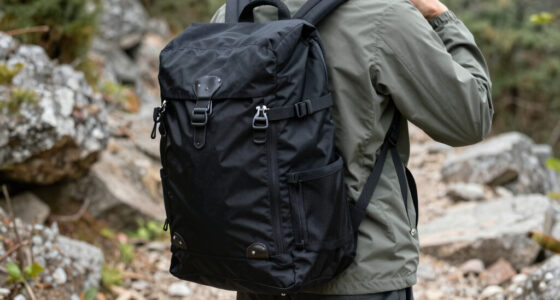
To attach a smaller bag to your suitcase, look for one with built-in trolley sleeves or straps designed for piggybacking. Slide the handle of your suitcase through the sleeve or secure the straps around the handle, ensuring they fit snugly to prevent slipping. Use quick-release buckles or velcro straps for easy attachment and removal. Properly secured, this setup makes travel smoother, and more tips await if you keep exploring.
Key Takeaways
- Use built-in trolley sleeves or straps on the small bag to slide over your suitcase handle securely.
- Ensure straps or sleeves are snugly fitted to prevent the bag from sliding or tipping.
- Secure the small bag with quick-release buckles, velcro straps, or luggage straps for easy attachment and removal.
- Match the bag’s size and design with your suitcase handle height for ergonomic compatibility.
- Confirm the setup provides stability and balance to facilitate smooth, hassle-free travel.
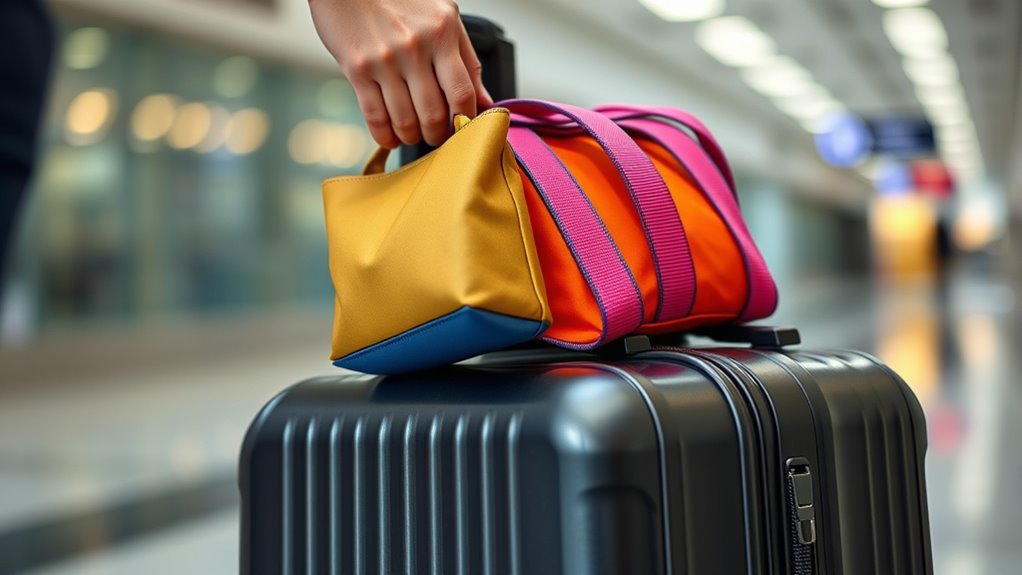
Ever wondered how to make traveling with multiple bags easier? Attaching a smaller bag to your suitcase, commonly known as piggybacking, is a smart way to streamline your journey. It allows you to carry more without the hassle of juggling multiple pieces. When choosing a smaller bag for this purpose, look for one that offers solid security features. Many smaller bags designed for piggybacking come with lockable zippers or hidden compartments, giving you peace of mind as you move through busy airports or crowded stations. These security features help prevent theft and ensure your valuables stay safe, especially when you’re steering through unfamiliar environments.
Choose smaller bags with lockable zippers or hidden compartments for secure, hassle-free piggybacking during travel.
In addition to security, ergonomic designs play a vital role in making this setup comfortable. Look for a smaller bag with adjustable straps or padded handles; these features help you carry the combined weight with less strain on your shoulders or back. Many models also incorporate lightweight materials that don’t add unnecessary bulk, making the overall load easier to manage. When attaching your smaller bag, position it in a way that distributes weight evenly across your suitcase and body. This minimizes fatigue and makes maneuvering through tight spaces more manageable.
To attach your smaller bag securely, most suitcases have a built-in trolley sleeve or a dedicated strap system that allows you to slide the smaller bag over the handle of your larger suitcase. Ensure the strap or sleeve is snug enough so the smaller bag doesn’t slide off during transit. Some bags come with quick-release buckles or velcro straps, making it simple to detach or reattach as needed. If your suitcase doesn’t have a built-in system, you can use a secure luggage strap or bungee cord to hold your smaller bag firmly in place. Just make sure everything stays stable and balanced so you don’t risk tipping over or losing your bag along the way.
Additionally, selecting a smaller bag that is compatible with European luggage standards can enhance the overall ease of piggybacking, ensuring it fits well and stays secure during your travels. Consider its compatibility with your suitcase’s handle height and design. A well-designed, ergonomic bag will align perfectly with your suitcase, making the overall setup more ergonomic and less awkward to carry or pull. Remember, the key to comfortable, hassle-free travel is choosing a smaller bag that enhances your security features, fits well with your luggage, and offers ergonomic support. This way, you can focus on enjoying your trip rather than worrying about managing multiple bags. With the right setup, piggybacking becomes a straightforward, efficient way to travel lighter and smarter.
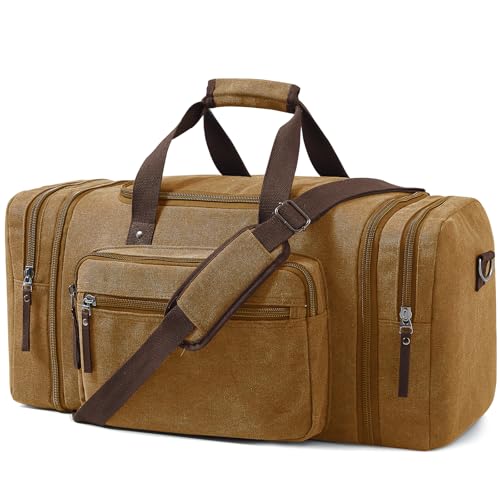
EKOROMIER Large Canvas Duffle Bag for Travel, Expandable 70L Weekender bags
- Expandable Capacity: Adjusts from 60L to 70L for versatility
- Premium Canvas Material: High-density cotton with durable hardware
- Vintage Style Design: Classic look suitable for men and women
As an affiliate, we earn on qualifying purchases.
As an affiliate, we earn on qualifying purchases.
Frequently Asked Questions
Can Piggyback Bags Be Used on All Suitcase Types?
Piggyback bags can be used on most suitcase types, but material compatibility and attachment mechanisms matter. If your suitcase has a sturdy, flat surface and a compatible attachment system like a sleeve or straps, you’ll find it easier to secure the smaller bag. However, soft-sided or uniquely designed suitcases may not support piggybacking well. Always check your suitcase’s material and attachment options to verify a secure fit.
Are There Weight Limits for Attached Smaller Bags?
Yes, there are weight restrictions for attached smaller bags. You might think you can load it up without consequences, but baggage regulations vary by airline and often limit total weight. Exceeding these limits could lead to unexpected fees or the need to repack. Always check your airline’s baggage regulations beforehand, so you stay within weight restrictions and avoid surprises at the airport. Stay informed and pack smart!
How Secure Is the Attachment During Transit?
Your attachment is generally secure during transit, but security concerns arise if attachments aren’t durable. Use sturdy straps or clips and double-check connections before moving. Avoid overloading, which can weaken attachment points. Keep an eye on your bags during transit, especially in busy or rough conditions. Properly secured and durable attachments minimize the risk of detachment, ensuring your smaller bag stays safely attached throughout your journey.
Can I Attach Multiple Smaller Bags Simultaneously?
Yes, you can attach multiple smaller bags simultaneously, as long as they are compatible with your suitcase’s attachment methods. Use sturdy straps, clips, or built-in luggage trolley systems designed for bag compatibility. Make certain each bag is securely fastened to prevent shifting during transit. Check the attachment points regularly to maintain stability, and avoid overloading, which can compromise the security of all attached bags.
Do Piggyback Attachments Affect Airline Baggage Policies?
Sure, piggyback attachments don’t magically escape airline restrictions, so don’t think you’re breaking the rules just because your bag is hitchhiking. Airlines are strict about baggage size and weight, and attaching a smaller bag won’t exempt you from these policies. They still count your combined baggage as one piece, so keep an eye on those restrictions or risk surprise fees. Your clever setup won’t save you from airline baggage policies!

Vigorport Luggage Connector, Straps for Suitcase, Add A Bag Adjustable Attachment Accessories 1.25" Endless for Connect Your 3 Luggage Together-2 Pack
- Heavy-duty nylon material: Secure and durable luggage strap
- Adjustable length: Fits luggage from 20.5 to 49.7 inches
- Double buckle design: Ensures secure and reliable fastening
As an affiliate, we earn on qualifying purchases.
As an affiliate, we earn on qualifying purchases.
Conclusion
Now you’re all set to piggyback your smaller bag onto your suitcase with ease. Just remember, once you master this trick, you’ll be able to breeze through the airport without a hitch. It’s like having an extra hand to help carry your load, making travel smoother and less stressful. With a little practice, you’ll be able to handle your luggage like a pro — and keep things running smoothly without missing a beat.

SURE LOCK TSA Approved Luggage Locks with Open Alert Indicator, 3 Digit Combination Cable Travel Lock for Suitcase, Backpack & Travel Bag, 2 Pack Black
- TSA Approved for Airport Security: Allows TSA inspection without damage
- Open Alert Indicator: Red alert shows if luggage was opened
- Resettable 3-Digit Combination: Easy to set and change code
As an affiliate, we earn on qualifying purchases.
As an affiliate, we earn on qualifying purchases.

Multi Use Strong Adjustable Luggage Connector Straps for Suitcases,2 Pack Flexible Luggage Accessories Elastic Fastening Bag Strap (Black)
- Convenience: The elastic luggage straps for…
- Built-in elastic cord in our luggage connector straps(great…
- Made with durable webbing, these luggage straps are…
As an affiliate, we earn on qualifying purchases.
As an affiliate, we earn on qualifying purchases.