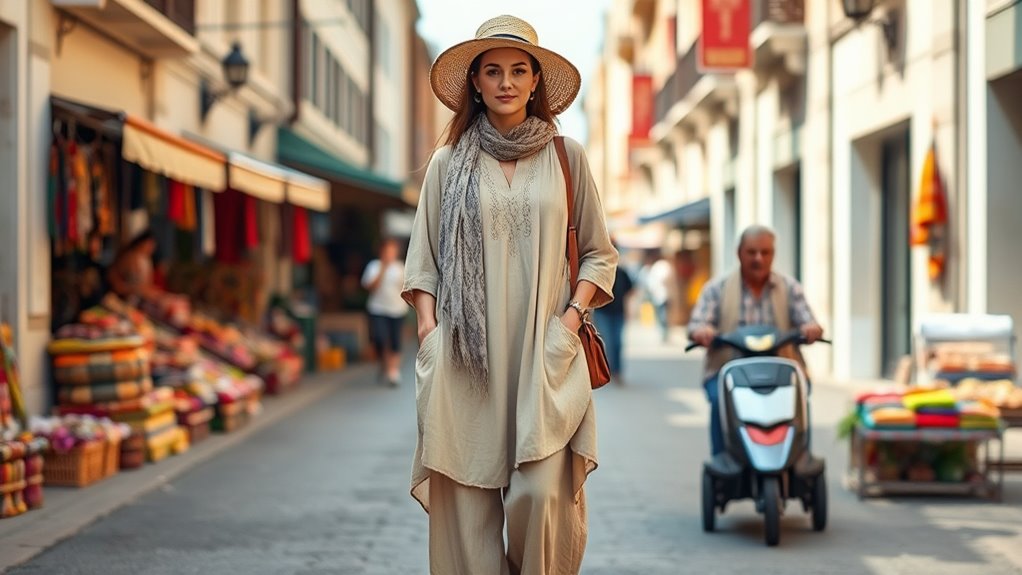

When packing for travel abroad, make sure you include culturally appropriate clothing to respect local customs and avoid offending locals. Research the dress codes of your destination—many places value modest dress, such as covering shoulders and knees, especially at religious sites. Wearing traditional or modest attire shows appreciation and can help you connect more authentically with the community. If you keep these tips in mind, you’ll be well-prepared to approach new environments respectfully and confidently.
Key Takeaways
- Research dress norms and cultural expectations for each destination before packing.
- Include modest, versatile clothing that covers shoulders and knees for conservative regions.
- Pack traditional attire or accessories to respect local customs and participate in cultural events.
- Avoid revealing clothing like sleeveless tops or shorts in religious or conservative sites.
- Incorporate culturally appropriate clothing to demonstrate respect and enhance authentic travel experiences.
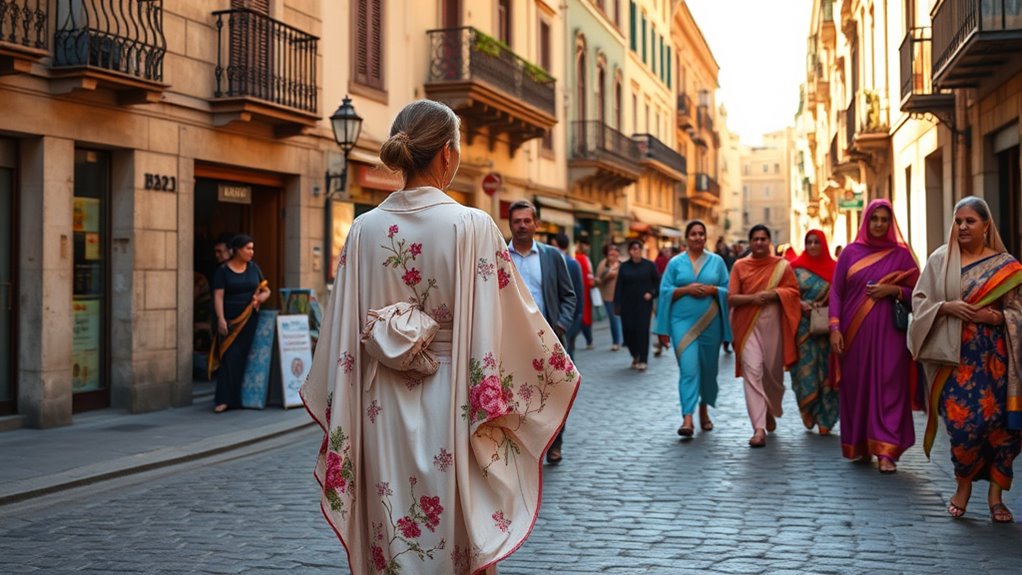
When traveling abroad, understanding and respecting local dress codes is essential to making a positive impression and avoiding unintended offenses. Clothing choices can reflect cultural values, social norms, and religious beliefs, so it’s important to research what’s appropriate before you pack. Many destinations have traditional attire that locals wear daily or during special occasions, and incorporating these into your wardrobe shows respect and appreciation for their culture. In some countries, traditional attire is a symbol of national pride, and visitors are encouraged to wear or at least acknowledge it when attending events or visiting religious sites. Wearing traditional clothing when appropriate not only helps you blend in but also enriches your travel experience by allowing you to connect more deeply with the culture.
Understanding local dress codes enhances respect and enriches your travel experience.
Modest clothing is another vital aspect to consider, especially in regions where conservative dress is the norm. Many countries in the Middle East, parts of Asia, and some religious communities emphasize modesty, meaning clothing that covers shoulders, elbows, and knees. When packing, aim for outfits that align with these expectations—think long skirts, loose-fitting tops, or lightweight layers that can be adjusted based on the setting. Covering up when visiting mosques, temples, or other sacred sites is often mandatory, and showing up in revealing attire can cause discomfort or even offend locals. Even in more relaxed destinations, dressing modestly demonstrates respect for local customs and makes it easier to engage with residents without feeling out of place.
You should also keep in mind that what’s considered modest or traditional varies widely across cultures. For instance, what’s acceptable in Western countries might differ considerably elsewhere. Some places might see sleeveless tops or shorts as casual and fine, while others consider them inappropriate. To avoid surprises, look up specific dress code guidelines for your destination. Packing versatile, culturally appropriate clothing means you’re prepared for a variety of settings, from markets and street cafes to religious sites and formal gatherings. This approach shows that you’re respectful and considerate, qualities that go a long way in creating positive interactions.
Ultimately, packing traditional attire or modest clothing isn’t about conforming but about showing respect and understanding. When you approach your wardrobe with cultural sensitivity, you not only avoid offending others but also open yourself to richer, more authentic travel experiences. Keep in mind that dressing appropriately helps you blend in more seamlessly, making your journey smoother and more enjoyable. By prioritizing cultural norms in your packing list, you demonstrate awareness and thoughtfulness, qualities that will leave a lasting positive impression wherever you go.

Sampeel Workout Sets for Women 2 Piece Set Summer Travel Vacation Outfits Cozy Wide Leg Pants Comfy Business Casual Work Clothes T Shirts Airport Jogger Set Black XL
✦Fabric: Crafted from a buttery-soft, cozy material that feels like a dream against your skin. Perfect for everyday…
As an affiliate, we earn on qualifying purchases.
As an affiliate, we earn on qualifying purchases.
Frequently Asked Questions
How Do I Handle Dress Code Expectations During Religious Ceremonies?
When attending religious ceremonies, you handle dress code expectations by showing cultural sensitivity through respectful attire. Research the specific customs beforehand, choose clothing that covers shoulders and knees if needed, and avoid revealing outfits. Wear modest, neutral colors if unsure. By dressing appropriately, you demonstrate respect and understanding, helping you blend in and honor local traditions, ensuring a meaningful experience during your visit.
Are There Specific Accessories I Should Avoid in Certain Countries?
You should avoid wearing provocative jewelry and, in some countries, traditional head coverings that don’t align with local customs. In conservative cultures, flashy or revealing accessories can offend locals or violate dress codes. Always research the country’s cultural norms beforehand. When in doubt, opt for modest jewelry and avoid accessories that draw unnecessary attention. Respecting local traditions helps you blend in and shows your appreciation for their culture.
What Should I Do if I Forget to Pack Culturally Appropriate Clothing?
If you forget to pack culturally appropriate clothing, don’t panic. Look for nearby stores to buy emergency clothing that’s modest and respectful of local customs. You can also get creative with adaptable fashion, like layering or using scarves and shawls to cover up. Always research local dress norms beforehand, so you’re prepared to quickly adapt if you find yourself in a pinch.
How Flexible Are Dress Code Rules in Informal Settings Abroad?
Ever wondered how strict dress code rules are in informal settings abroad? Generally, casual attire offers more flexibility, allowing you to dress comfortably while respecting local cultural dress variations. However, it’s wise to stay aware of customs—what’s acceptable in one place might be inappropriate elsewhere. While informal settings often loosen dress restrictions, always consider cultural sensitivities to avoid unintended offense. When in doubt, lean towards respectful, modest casual wear.
Are There Any Clothing Items Considered Offensive in Specific Cultures?
Yes, some clothing items can offend in certain cultures, especially if they violate cultural taboos or ignore traditional attire. For example, revealing outfits may be disrespectful in conservative societies, and wearing inappropriate symbols or colors can cause offense. Always research local customs, and when in doubt, opt for modest clothing that respects cultural sensitivities. Respecting these boundaries helps you avoid unintentional disrespect and shows cultural appreciation.
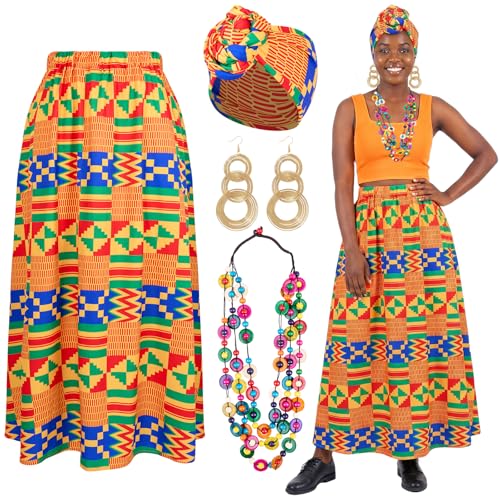
TFLNBYB 4 Pcs African Dresses for Women African Attire Print Skirt Traditional Costume Boho Head Wraps Necklace Earrings
【PACKAGE INCLUDES】 Refresh your style with this women's african attire set. Inspired by african dresses for women, it…
As an affiliate, we earn on qualifying purchases.
As an affiliate, we earn on qualifying purchases.
Conclusion
As you zip up your suitcase, imagine the vibrant streets you’ll wander—colors, textures, and traditions blending into a tapestry of culture. Dressing thoughtfully shows respect and opens doors to genuine connections. With each carefully chosen piece, you’re not just packing clothes—you’re carrying a gesture of understanding, ready to embrace new customs and create memorable moments. So, step forward confidently, clothed in respect, ready to immerse yourself in the world’s rich diversity.

Womens Abaya Muslim Long Sleeve Front Zipper Dress Prayer Islamic Clothes with Pockets Black Small
Fabric: Muslim prayer clothing long dress made of polyester, this elegant muslim maxi dresses suitable for women to…
As an affiliate, we earn on qualifying purchases.
As an affiliate, we earn on qualifying purchases.
Sampeel Workout Sets for Women 2 Piece Set Summer Travel Vacation Outfits Cozy Wide Leg Pants Comfy Business Casual Work Clothes T Shirts Airport Jogger Set Black XL
✦Fabric: Crafted from a buttery-soft, cozy material that feels like a dream against your skin. Perfect for everyday…
As an affiliate, we earn on qualifying purchases.
As an affiliate, we earn on qualifying purchases.


