
TL;DR

Get travel and outdoor gear delivered free with Prime
- Fast, free delivery on millions of items
- Prime Video, Amazon Music and more included
- Member-only deals all year
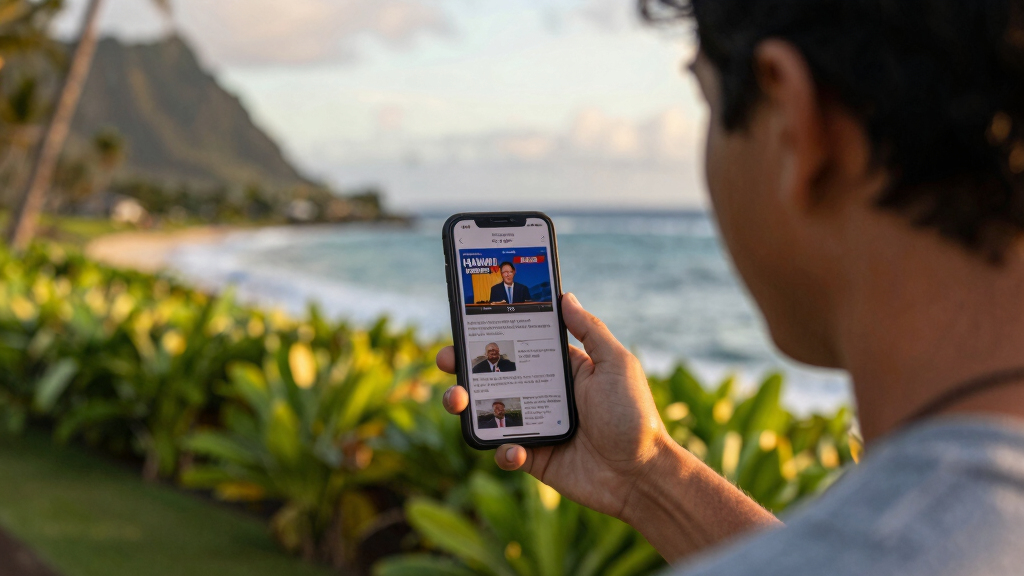
Hawaii’s legislature has passed a bill aiming to restrict corporate political spending, challenging the legal foundation of Citizens United. The bill now awaits governor approval, sparking legal and constitutional debate.
Hawaii’s legislature has nearly unanimously approved a bill that would restrict corporations from spending on most political causes, challenging the Supreme Court’s 2010 Citizens United decision.
The bill, sponsored by State Senator Jarrett Keohokalole, aims to limit the political spending of corporations, dark-money nonprofits, unions, and chambers of commerce within Hawaii. It makes exceptions for journalistic work and company-organized political action committees that pool individual donations.
The legislation, which Hawaii Governor Josh Green has yet to sign, is based on the legal argument that corporations are creations of state law and should not be granted inalienable rights under the U.S. Constitution. Supporters cite historic legal principles, such as Chief Justice John Marshall’s 1819 ruling in Dartmouth College v. Woodward, to justify their approach.
Legal experts and state officials have expressed skepticism. Hawaii Attorney General Anne Lopez warned that the bill could be challenged in court, arguing that it might violate federal constitutional protections for free speech, as established by Citizens United.
Why It Matters
This development is significant because it represents a direct challenge by a U.S. state to the Supreme Court’s ruling that corporations have free speech rights equal to individuals in the context of political spending. If enacted and upheld, it could set a precedent for other states seeking to limit corporate influence in elections.
The bill’s passage highlights growing public concern over the influence of money in politics, with polling showing majority support across party lines for restricting corporate political spending. It also raises questions about the legal boundaries of state authority versus federal constitutional protections.
political donation tracking software
As an affiliate, we earn on qualifying purchases.
As an affiliate, we earn on qualifying purchases.
Background
The 2010 Supreme Court decision in Citizens United v. FEC established that corporations and unions have First Amendment rights to political speech, allowing unlimited independent spending. Since then, political spending by corporations has surged, with dark-money groups spending over $1.4 billion in recent election cycles, according to reports from The Atlantic and other sources.
Efforts to challenge or circumvent Citizens United have emerged in several states, but Hawaii’s move is the first to pass legislation explicitly aimed at restricting corporate political speech based on state law. Similar initiatives are underway in Montana, where activists are gathering signatures for a ballot measure, and in other states considering legislative or ballot approaches.
“How can a creation of the state have inalienable rights? It doesn’t make any sense.”
— State Senator Jarrett Keohokalole
“If a state tries to remove a corporation’s power to engage in election activity, under Citizens United, it would be attempting to take away a corporation’s right to speak.”
— Hawaii Attorney General Anne Lopez
“This is not a campaign-finance regulation. You have to look at it differently—corporate charters predate the First Amendment and are state law, not constitutional rights.”
— Tom Moore, legal strategist
campaign finance compliance tools
As an affiliate, we earn on qualifying purchases.
As an affiliate, we earn on qualifying purchases.
What Remains Unclear
It is not yet clear whether Hawaii’s bill will withstand legal challenges in federal courts, given the strong constitutional protections established in Citizens United. The state’s legal and political battles over this issue remain ongoing.
dark money donation disclosure books
As an affiliate, we earn on qualifying purchases.
As an affiliate, we earn on qualifying purchases.
What’s Next
The next step is for Governor Josh Green to decide whether to sign the bill into law. If signed, legal challenges are expected, potentially leading to court rulings that could clarify the constitutionality of such state-level restrictions. Activists and opponents are closely watching this decision.
As an affiliate, we earn on qualifying purchases.
Key Questions
Will Hawaii’s bill become law?
The bill has passed the legislature and awaits Governor Green’s signature. His decision will determine its future, with supporters optimistic and opponents warning of legal challenges.
Could this challenge the Supreme Court’s Citizens United decision?
Legal experts believe that if the bill is enacted, it could be challenged in federal courts as unconstitutional under Citizens United, which affirms corporate speech rights.
What impact would this have on political spending in Hawaii?
If enacted, the bill could significantly reduce corporate and dark-money spending on campaigns within Hawaii, potentially influencing the state’s political landscape.
Are other states considering similar legislation?
Yes, efforts are underway in Montana and other states to introduce legislation or ballot initiatives aimed at limiting corporate political influence, but Hawaii is the first to pass such a law.
What are the legal arguments against the bill?
Opponents argue that the bill violates constitutional free speech protections established by Citizens United and that federal courts are likely to strike it down if challenged.
Halloween Picks
halloween
As an affiliate, we earn on qualifying purchases.